
As my summer garden is winding down – I’ve only got tomatoes and peppers left – there’s a little time to catch my breath from the chaos of summer (and virtual school – HALP!!!) and preserve some of the seeds I am hoping to use next year. This is my first attempt at seed saving so I am by no means an expert opinion but I figured it was worth trying.
In theory, it should be simple for most fruits and vegetables. Essentially, just let the plant “go to seed.” It’s not exactly that simple but sort of. Some things like butternut squash or peppers are super straightforward – I set the seeds aside after I’ve cut the vegetable, let them dry out completely for a few days, and then store.
So what does it mean for a plant to “go to seed”? As far as I understand, the plant needs to have gone through germination and sprouted, then it becomes a seedling, then it grows for a bit to get to the budding phase when flowers will appear. These flowers turn into fruit due to the handiwork of pollinators like birds, bees and butterflies (truly amazing and seemingly impossible when I think about it). Then, once the fruit/vegetable/leaf has been left long enough to become overripe, it can be picked for seed.
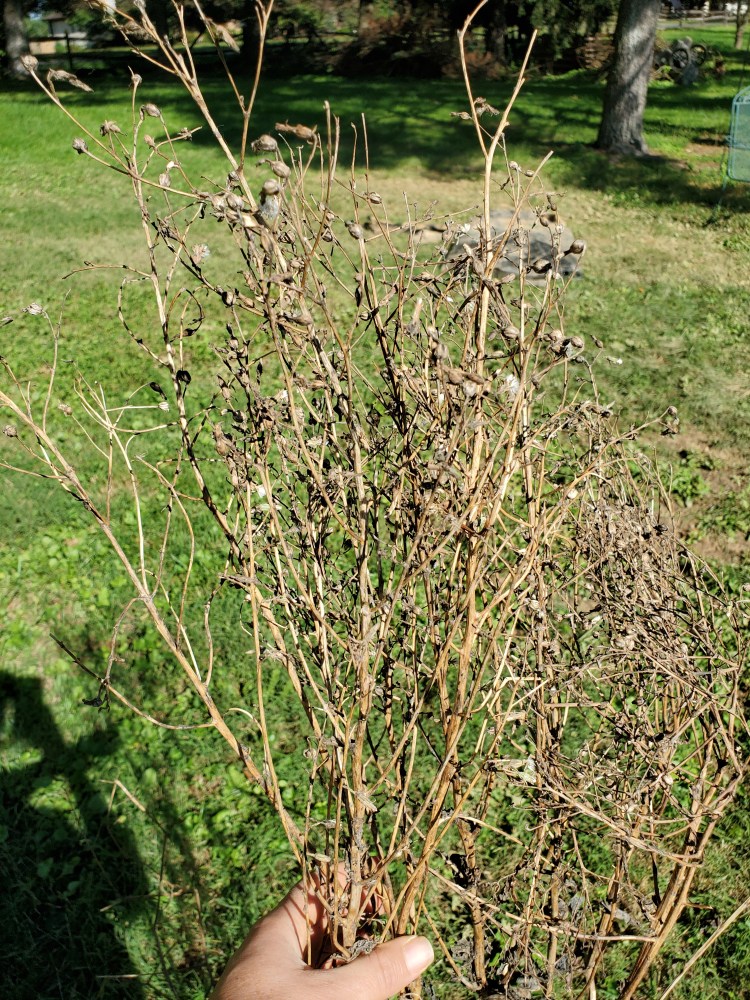
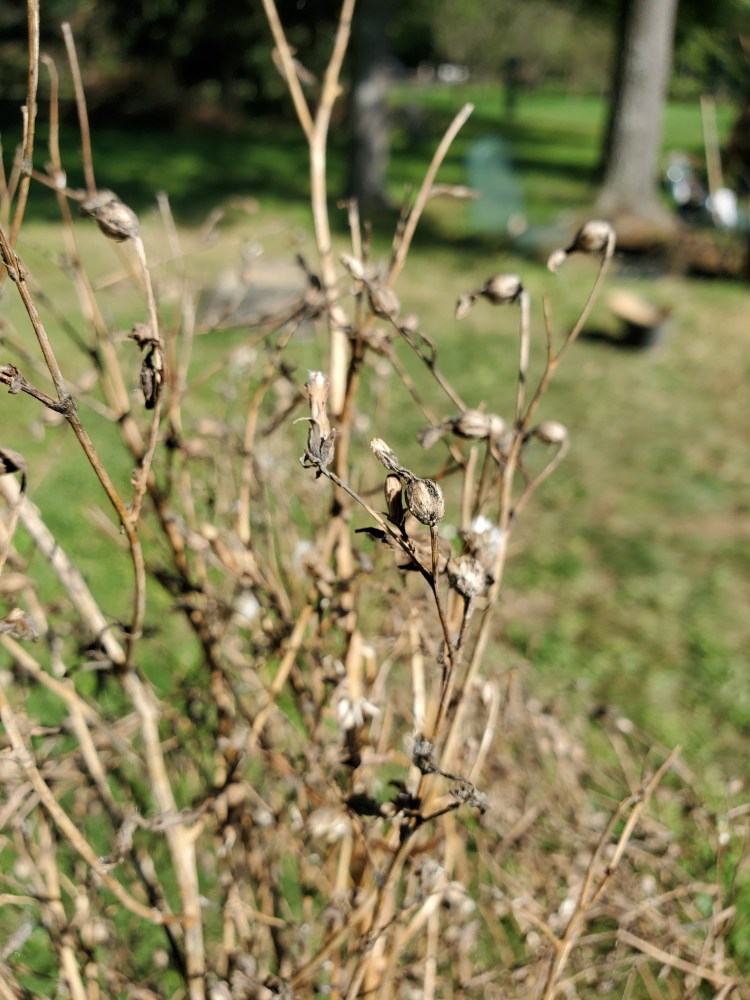
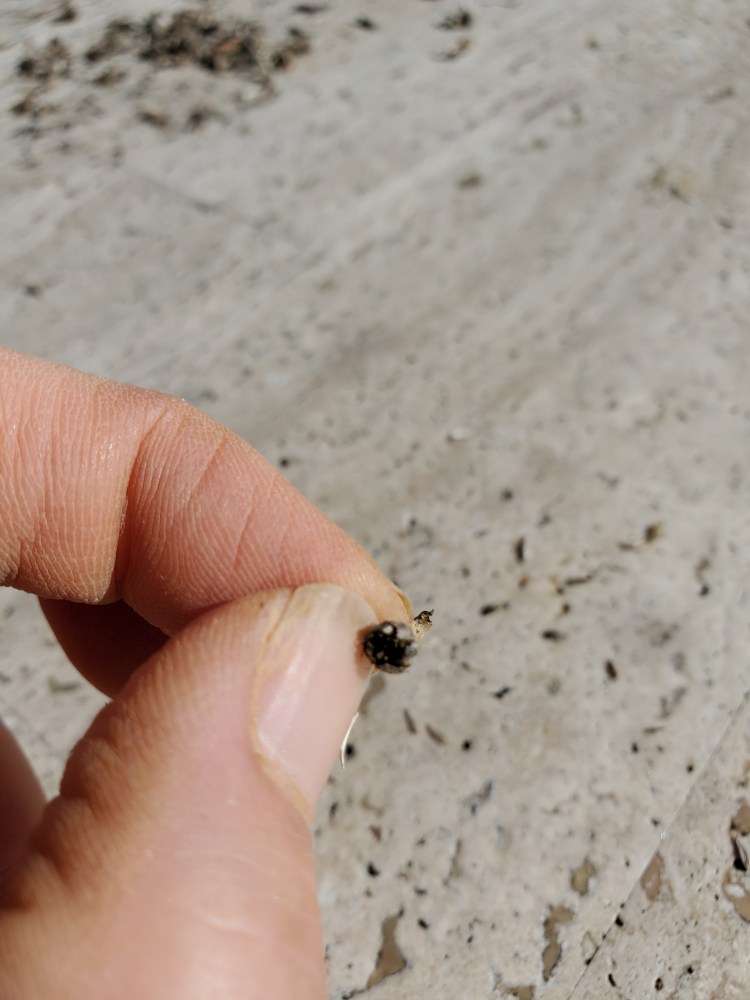
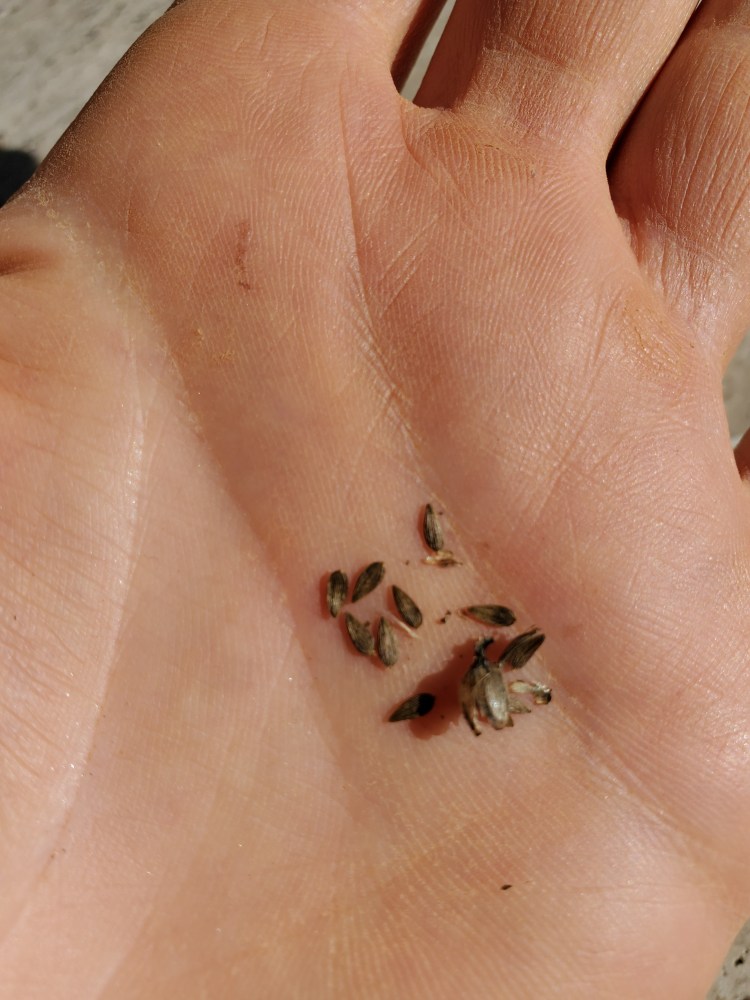
In this first attempt, I went for green beans and lettuce. Legumes in general are one of the easiest to seed save because you can just let the pod become dry and brown. Lettuce is fairly easy too because I just left it to bolt and flower, and then the little seed pods formed (pictured below).
Seed Saving Tips:
- Plant extra plants to begin with (maybe 2 or 3 depending on how much seed you want to save) so you have what you need at the end of the season for saving.
- Pick the best plants to seed save. This is a bit tricky because if it’s the best plant, you’ll likely want to eat the fruit, which you can’t do if you are letting it overripen.
- Understand that it takes time to separate the seeds. For this first attempt, it took me about 30-45 minutes for each. That’s not too long, but it’s also not a 30-second task.
- Make sure seeds are fully dry. Can’t stress this enough. Do not rush to store any seeds before they are fully dry because they will grow mold and be unusable the next year and all your hard work will be for naught.
- One of the most critical pieces of seed saving is how you store them. Always in paper, never in plastic, and in a cool, dry place. You don’t want moisture encouraging any mold to grow.
Of course there will always be a little suspense until the next year when you are able to plant the seeds you saved. But start small and see how it goes. Gardening is trial and error all the way and this is part of it.
 farmcharmblog.com