With Spring now in full swing, I wanted to expand my garden. My current garden consists of three 20-foot raised rows that are about 30 inches wide. It had previously been six separate raised beds but my father-in-law helped me dismantle them a year ago and turn them into three long rows.
I like these longer rows and have some more space on the eastern side of my berry bramble and thought it made sense to try a no-till raised row. This is a complete experiment with creating a raised row from scratch that I’ll keep you posted on.
I had read about this method a little while back in Raised Row Gardening by Jim & Mary Competti. I’m also seeing this referred to as Lasagna Gardening due to the layering. Whatever you want to call it, I call it easy. And let me get on my soapbox for a sec, tilling is not necessary. If we’re growing our own food, we care about healthy food, the planet, saving money, getting exercise, creativity, learning, or some combination of all of these. Tilling doesn’t align with any of these. Read 7 Reasons Not to Till. <And stepping down off soapbox.>
So here’s what I did:
- Marked off the general area. I was aiming for another 20-foot row, 30 inches wide. Definitely take into account your sun exposure as you are picking a location. Here in the mid-Atlantic, I want to take advantage of the southern exposure as the sun travels east to west so that my garden beds get 6-8 hours of full sun.
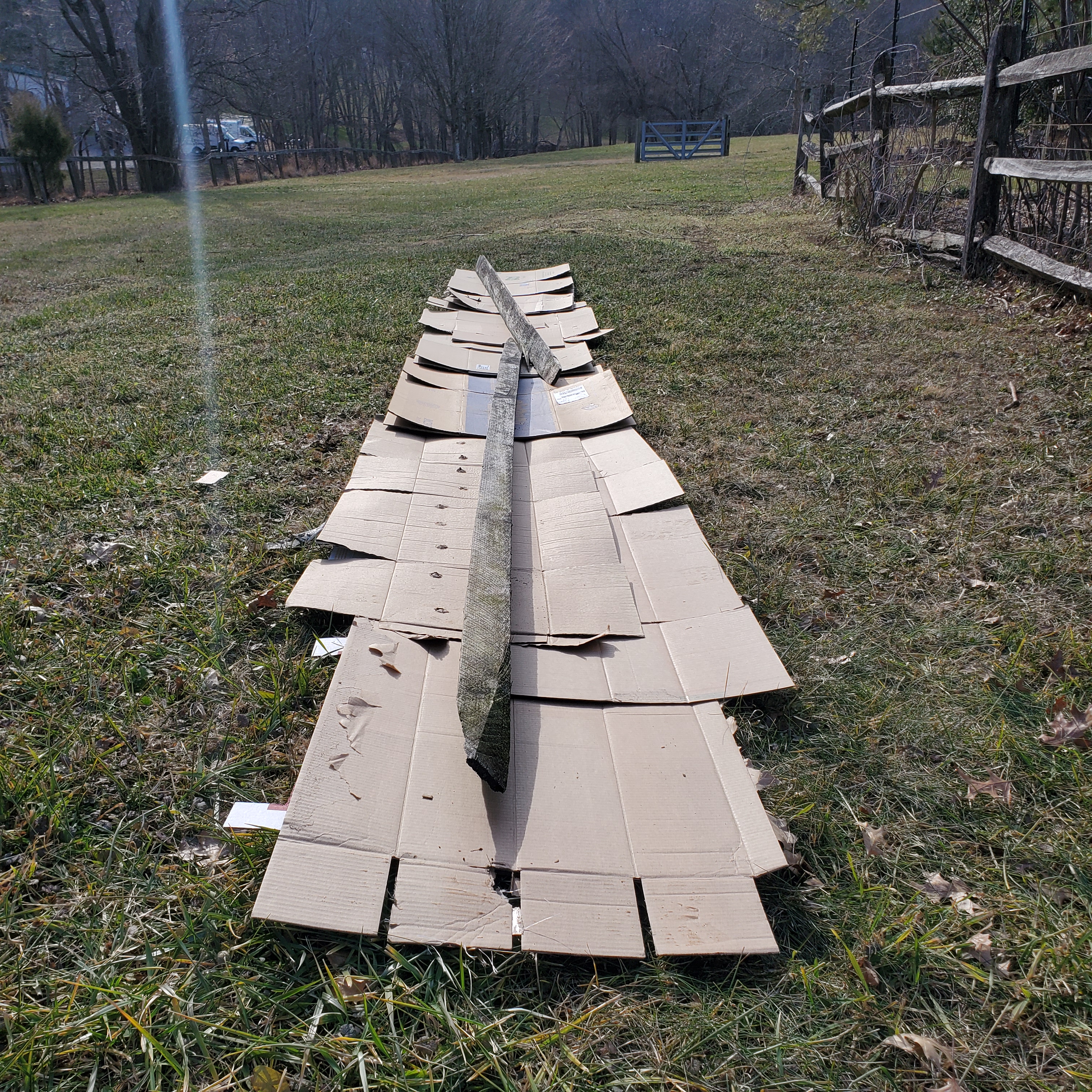
- Laid down cardboard for about a week. There was no specific reason to wait a week but it gave me time to keep coming back to the spot and checking it out so that I could see if any other ideas presented themselves.
- Covered the cardboard in a layer of mulch.
- Covered the mulch with leaves.
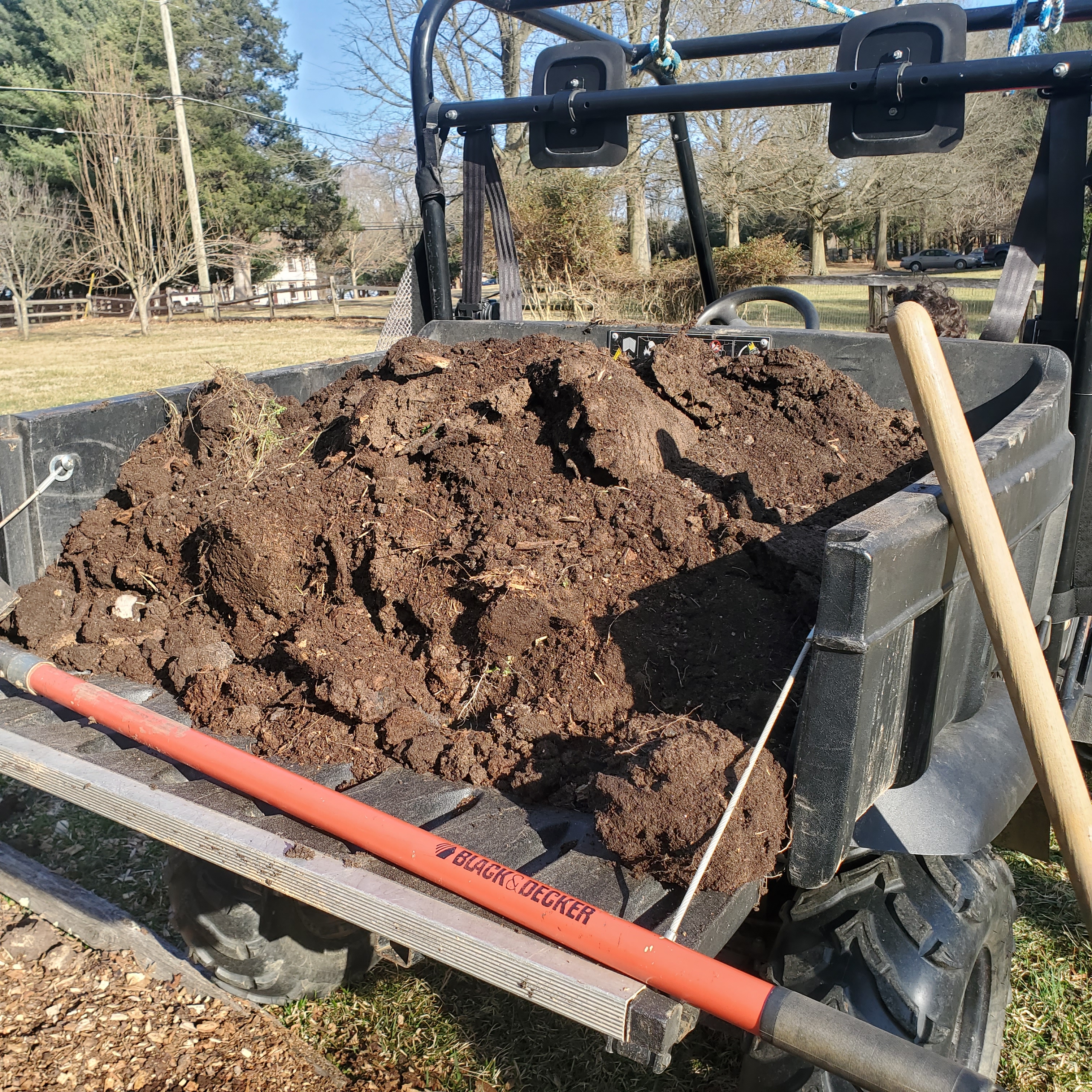
- Covered the leaves with some really great soil that was percolating under a big compost pile. You could also use compost.
I’m sure you’ve figured this out by now, but just in case, this is a raised row due to the multiple layers of material. As you look at from ground level, it’s gonna be a solid 6-10 inches high if not even higher. Each year you’ll add a few inches of leaves and compost and maybe some topsoil and never have to even touch a tiller.


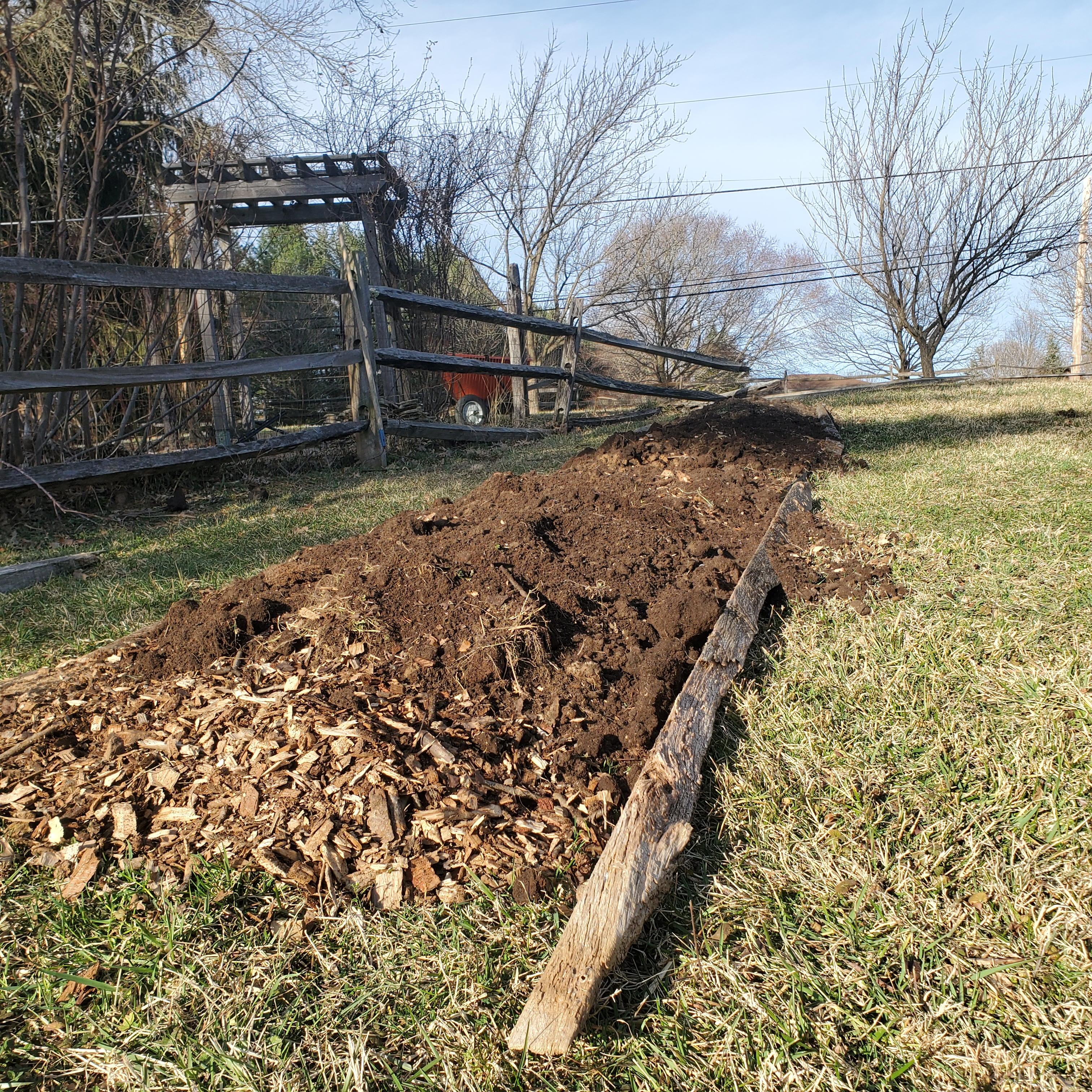
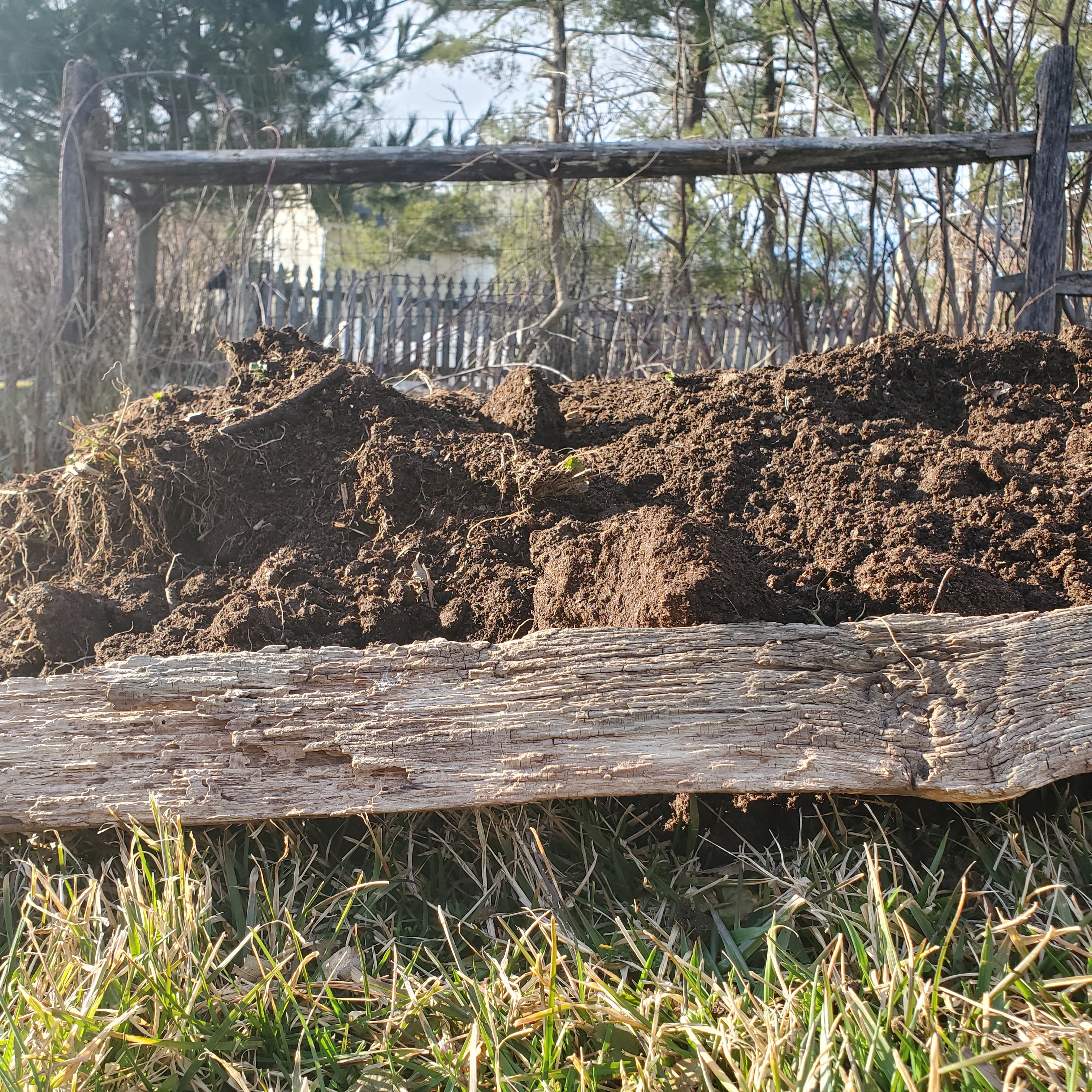
Now I’m just going to let it settle for a few weeks and likely plant some cover crops to get the soil as strong and healthy as possible for next year. I might try some fall crops, haven’t decided.
How did you start your garden beds? What would you do differently next time?
 farmcharmblog.com
Pingback: Chicks, Man!