I’ve never planted cover crops successfully. The last two years I’ve thrown down rye seeds at some point in the fall and just hoped for the best. Well, as they say, hope is not a plan so that approach didn’t really get too far.
This year I bought two different ½ pound bags to spread across my three garden beds that are about 3’ x 20’ each. I bought oats and field peas mix and hairy vetch from Hudson Valley Seed Co. I have three other smaller beds that are further from my water source and I had sprinkled seeds on these beds back in August but didn’t pay attention to watering them so guess what happened? Nothing. Absolutely nothing.
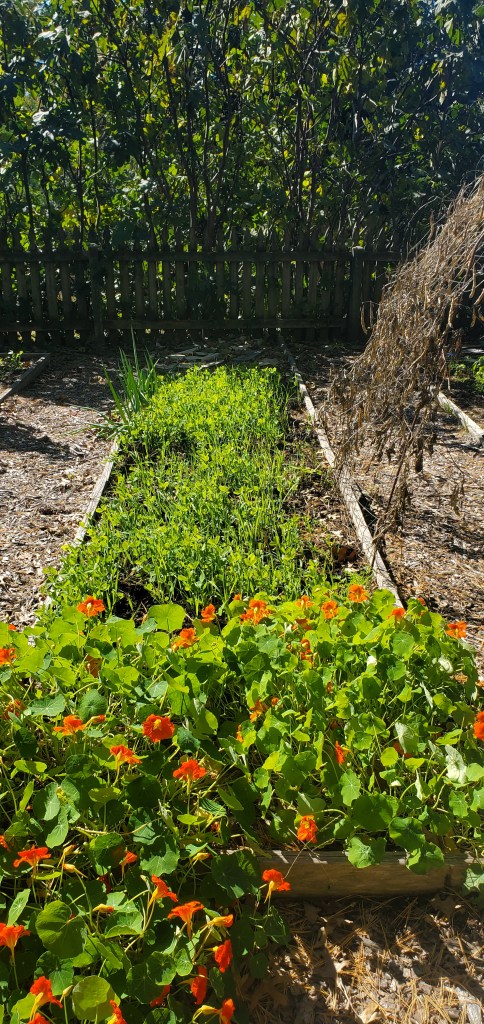
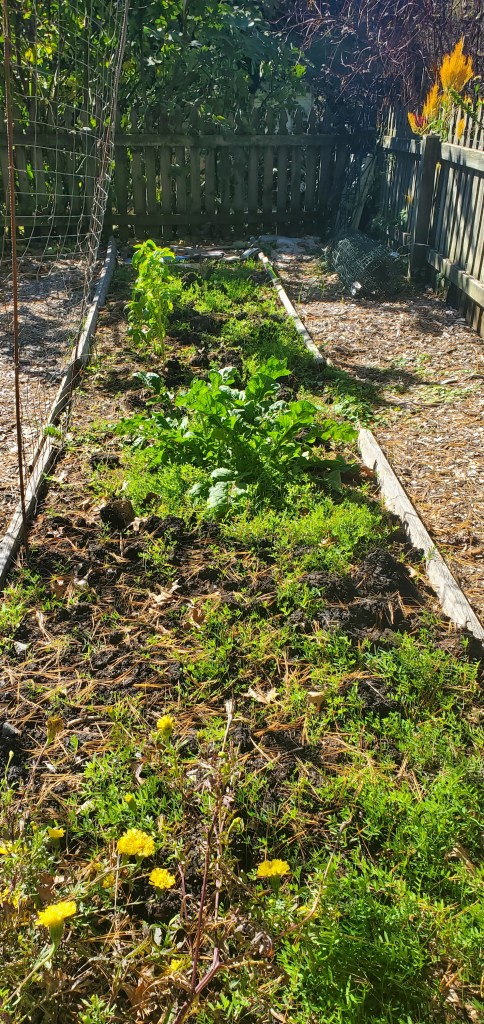
So what’s the deal with cover crops anyway? What are they good for and why should you plant them? I’ve been hearing about cover crops for the last five years or so but I didn’t really think of the concept pertaining to my small-scale garden. But I was wrong. There are many benefits and advantages to be gained from planting cover crops in nearly any size space.
Here are some of the points that sold me:
- Improve soil health – cover crops support all types of soil organisms that make a beautiful web of interdependence. Cover crops feed bacteria and fungi in the soil and worms and other insects eat the fungi and bacteria.
- Prevent erosion – cover crops help stabilize soil to better absorb intense rain and cover crop root channels help soil hold water in drier environments.
- Fix nutrients – cover crops hold on to nutrients such as nitrogen that can be released the next season to help the next year’s crops.
- Capture carbon – Cover crops remove carbon dioxide from the atmosphere and build it into the soil.
So no matter what size garden you are working with, give cover crops a chance. It’s truly a privilege to be a steward of a piece of the Earth, so help it be as healthy as possible.
 farmcharmblog.com