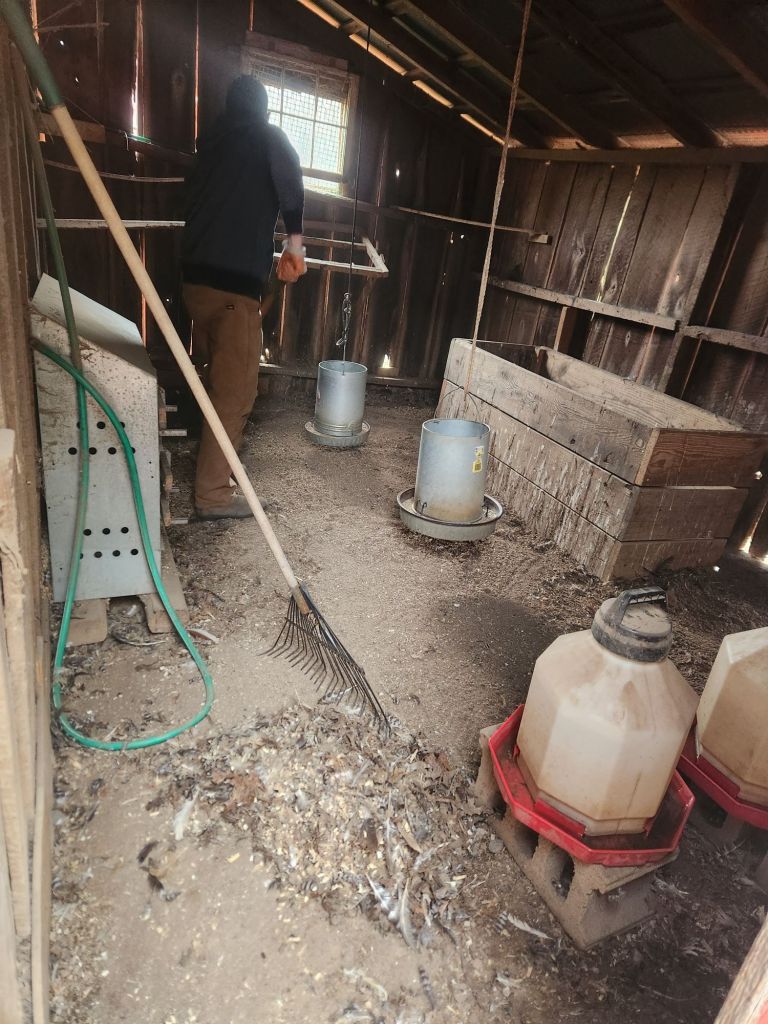
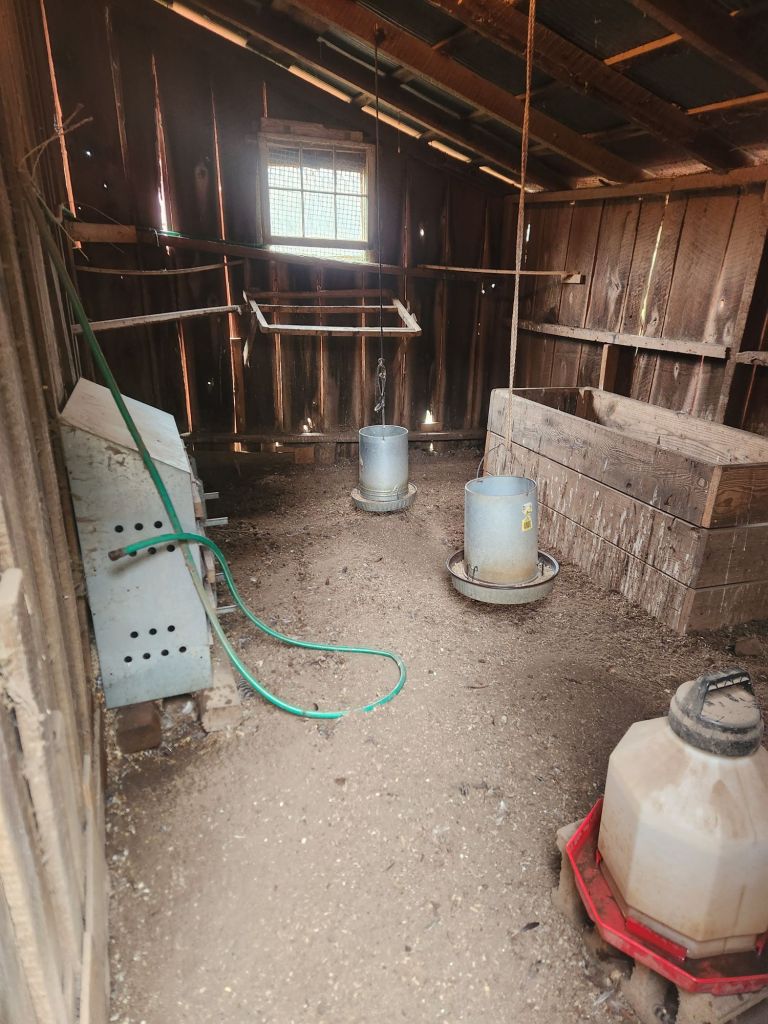
Cleaning out your chicken coop, while not the most glamorous way to spend a Saturday, is one of those tasks that brings so much satisfaction.
I aim to do this two times a year, usually Spring and Fall. Like most everything, I am running a tad behind schedule. How often you need to do it depends on how many chickens and how much space you have. I’ve read that if there’s a smell, it’s time to clean.
It’s one of those chores I build up in my mind and then when I actually do it, it takes like two hours and isn’t that bad. I will say this is a task for a COVID mask. The cobwebs, dust, debris, and whatever else you want to think is in a chicken coop are not things you want to inhale.
I follow these general steps for my coop cleaning:
Remove all waterers and feeders.
Empty wood shavings from nesting boxes onto the ground.
Rake and shovel out the top 3-5″ of ground cover. I haul it away in a wheelbarrow to a pile outside my garden to use as compost in my garden. Depending on how big your coop is, this could be 1-2 loads or many more.
I re-layer the ground with 3-5″ of fresh wood chips and fill the nesting boxes with fresh wood shavings.
I don’t know about you but my ladies are in low production mode. I’m hoping this helps them get more cozy for the winter.
Wow, nothing like going out with a bang. This is the most brutally cold weather I think I have ever experienced in December. January and February tend to be the coldest months in Maryland based on my recollection. It’s gonna be a rough winter if this is any indication of what’s to come.
With how quickly the temperature dropped and how cold it was going to be, I wanted to make sure my chickens had plenty of food, water and bedding. Their feathers are as thick as I’ve ever seen. I loaded up all the feeders and waterers and put extra wood shavings in the nesting boxes.
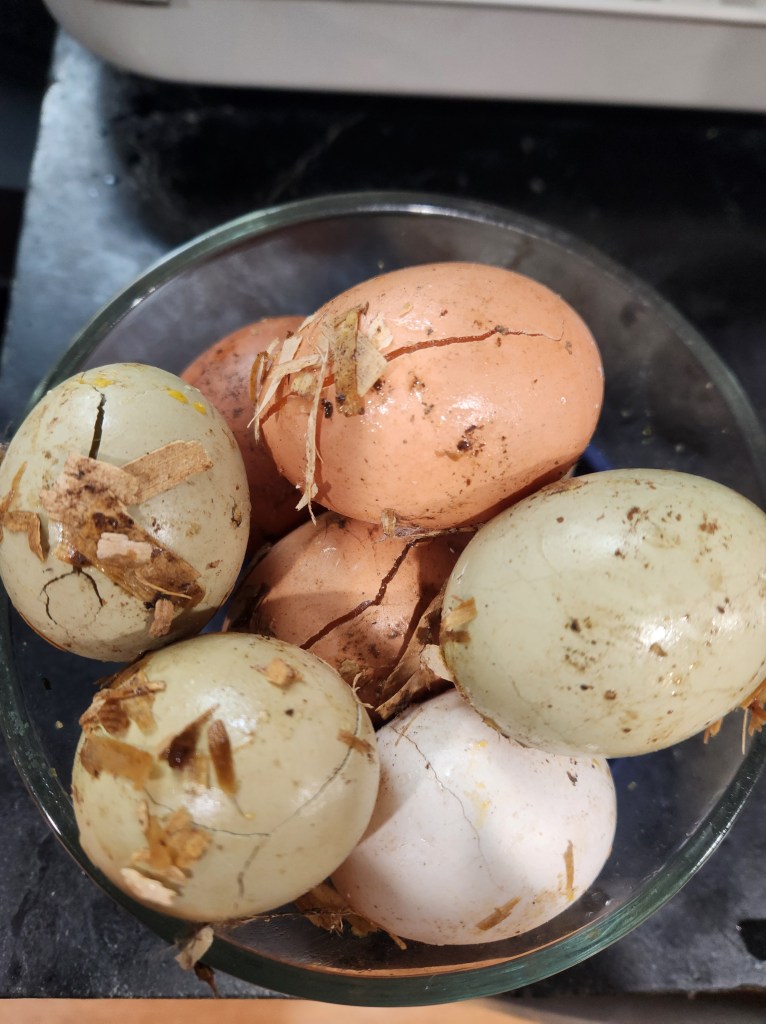
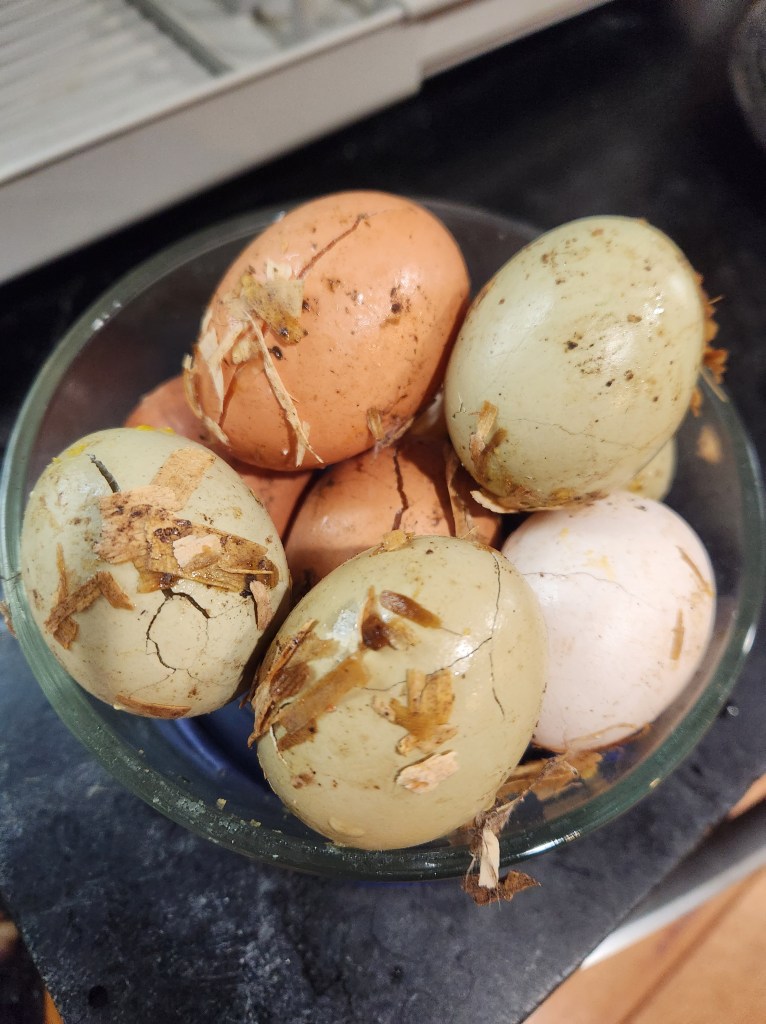
Everything went pretty well chicken-wise during the bomb cyclone. Aside from me not knowing how to time my egg collections each day, there were no casualties. It turned out to be a good thing that I had added extra bedding. I lost about 8 eggs to freezing and cracking and the bedding absorbed the liquid.
For the ones that were frozen solid, I tried to save them in the fridge so they could thaw but the consistency of the white and yolk was pretty strange. But, if these were the only losses, I’m not complaining.
I hope everyone had a wonderful Christmas, Hanukkah, Kwanzaa or whatever else you celebrate. I don’t really think the distinctions matter. The point is the same – to slow down, cherish your family, and appreciate what is good in your.
As summer draws to a close and the days grow shorter, I find myself immediately thinking ahead to next year and starting to plan what I’ll do differently. However, I am also always trying to remind myself to stay present. Enjoy and appreciate where I am. Bask in the metaphorical sunshine of today because tomorrow may be rain. I find that a hard balance to strike. Being happy with where I am while also pursuing new possibilities and challenges. Anybody else struggle with this? I feel like most of the messages we receive are to not be satisfied with what we have, that happiness is just around the corner.
The changing seasons do help me appreciate the end of something and the possibility of what’s to come. The cyclical nature of life. That whatever it is, we’ll pass through it. And what may feel insurmountable today will equip us for the next challenge.
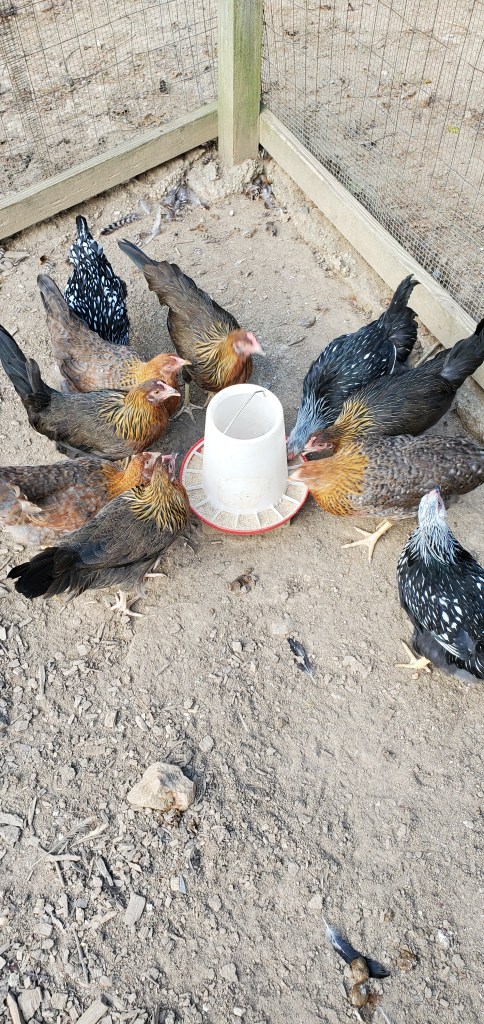
One of the recent changes Farm Charm had to go through was integrating our mature (19 birds) and juvenile (14 birds) chicken flocks. I’ve done this before pretty successfully and have usually waited until the juveniles were about 12 weeks old. This year I needed to do it closer to the 10-week mark because I was going out of town and the logistics I was performing each morning to separate the two flocks to ensure the babies had a couple of hours to eat their food while also making sure the hens could get to their nesting boxes was much too complicated to ask of our house sitter.
I joined the two flocks on a Saturday afternoon so I could watch them the rest of that day and all the next day while working in the yard. There were really no scuffles to speak of day one and the two flocks seemed to keep to themselves. The first night the babies did not know to go in the coop, which has happened before, so I shuffled them in at dusk. Sunday went smoothly as well throughout the day and once again I needed to scoot the babies in at sunset. By day three they were falling into a rhythm, eating separately each morning and then joining the whole group around midday. The rest of the week had no major issues and I didn’t see any noticeable signs of aggression or dominance by the mature hens. A peck here and there but nothing to make me concerned.
There was a tragedy the following Saturday, day eight, that I won’t go into the details of but the bottom line is one of the juveniles got pecked to death by a hen. This was a pretty traumatic experience for me and made me quite upset that I had somehow let my guard down or not done my due diligence for this to even be possible.
To save even one person and bird from this heartache, I have a few tips to keep in mind when joining flocks.
Have multiple feeders and waterers so there is no sense of competition. Check that all birds can fit around the feeders.
Be sure there are ample perches in the coop so that the respective flocks have their own space.
Don’t ever let one or two of the juveniles get separated from their flock.
If there is a smaller bird or runt, double and triple check that it stays with its flock during the day and at night.
If there is pecking by the mature hens, create a partition of some sort so the juveniles have a retreat or safe space.
Watch and observe regularly. I was out in the coop for about 30 minutes every day watching the ‘pecking order’ that was developing. The juveniles were being respectful of the hens and getting out of their way. And I didn’t see any hens being aggressive toward the juveniles other than a random peck when I threw out a few handfuls of scratch and a juvenile would bump into a hen.
Best of luck to everyone integrating flocks. If you have any tips, please share. And this time of year, you are likely seeing your birds start to molt so it’s a great opportunity to throw any last summer produce like tomatoes and herbs to your flock for extra nutrition.
If you keep chickens, ducks, or turkeys on your homestead, I’m guessing you are paying close attention to all the reports and information circulating about HPAI – highly pathogenic avian influenza. This is the first time I’ve had chickens to worry about when an avian flu is widespread. It’s also strange to me that there have been a few odd sicknesses impacting birds over the last year. Something’s happening here… what it is ain’t exactly clear…
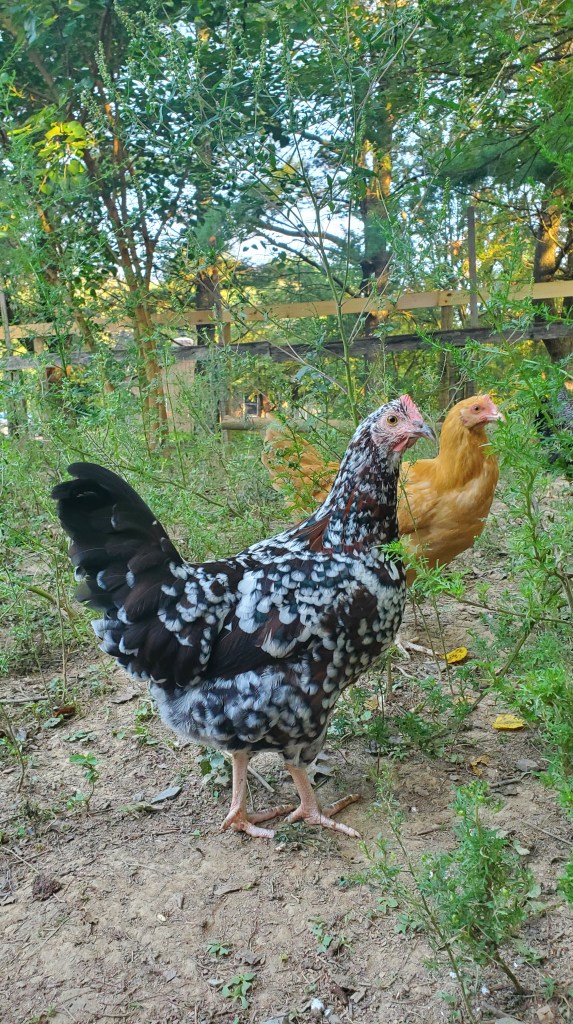
I’ve read a number of articles just to understand what precautions I could and should take to help protect my flock. To be completely honest, it’s quite confusing and I haven’t found anything to be that useful or clear with regard to prevention. I’m still not sure if there is anything I can do that will make a difference or if it’s just luck or bad luck of the draw as to whether your flock gets infected. Sadly, I did get an email from Murray McMurray Hatchery, who I had placed an order with in the winter for another 15 chicks, and they had a confirmed positive test for HPAI in one of their barns. Which means I won’t be getting the silver and golden Polish chicks I ordered, or the golden and blue laced Wyandottes. How sad for them. Truly tragic.
In the hopes of saving even one person from this heartache, here are the tips I’ve found. These seem like standard good hygiene practices to follow all the time.
Minimize the risk of contamination from outside your coop to inside your coop by doing the following:
Wash your shoes/boots before entering or wear shoe covers.
Use equipment and gear specific to your flock and nothing else.
Keep feeders and waterers in your coop so that wild birds aren’t using them.
Keep your feeders and waterers clean by washing them often.
Cover your pen or run so that droppings from wild birds can’t contaminate their space.
Wild waterfowl carry high levels of the HPAI virus. Keep ducks and geese away from your flock. If you raise ducks, keep them separate from your other flocks.
Only buy new birds from a trusted source, e.g. not craigslist.
Watch your flock closely for any signs of illness and report it to your veterinarian and local cooperative extension office immediately. Signs to look for include: lack of energy and appetite, lowered egg production, misshapen eggs, discolored comb and wattles, diarrhea or sudden death.
Has HPAI impacted your flock? What have you done to protect your birds? Please share any advice that will help all of us stay safe.
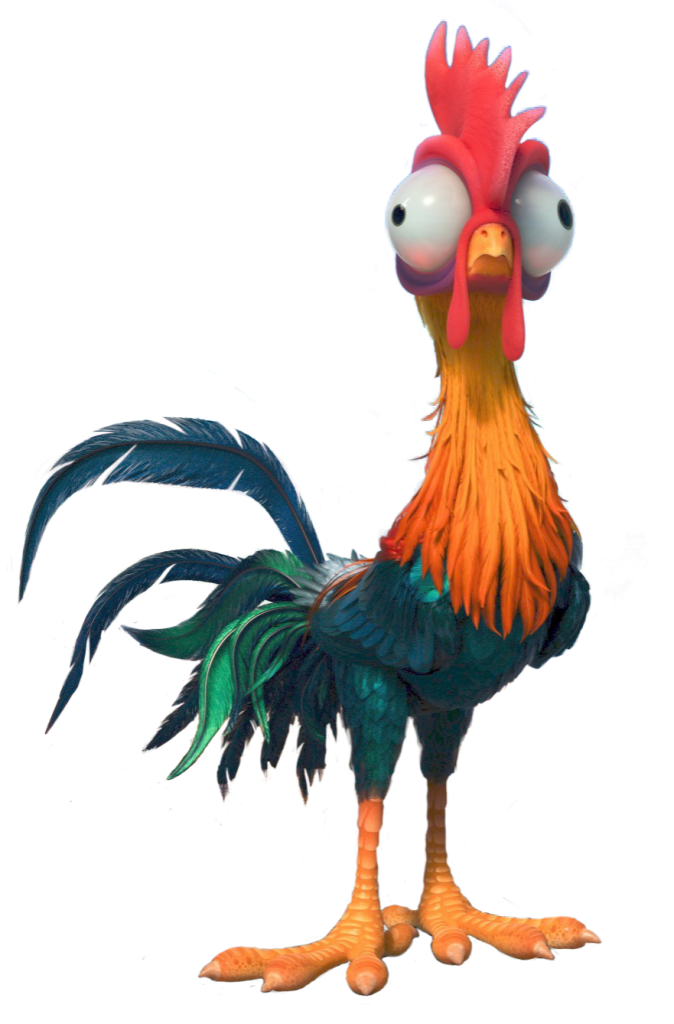
I walked out to my chicken coop the other day and was met with this sight – Hei Hei the chicken from Moana! My first thought was What the
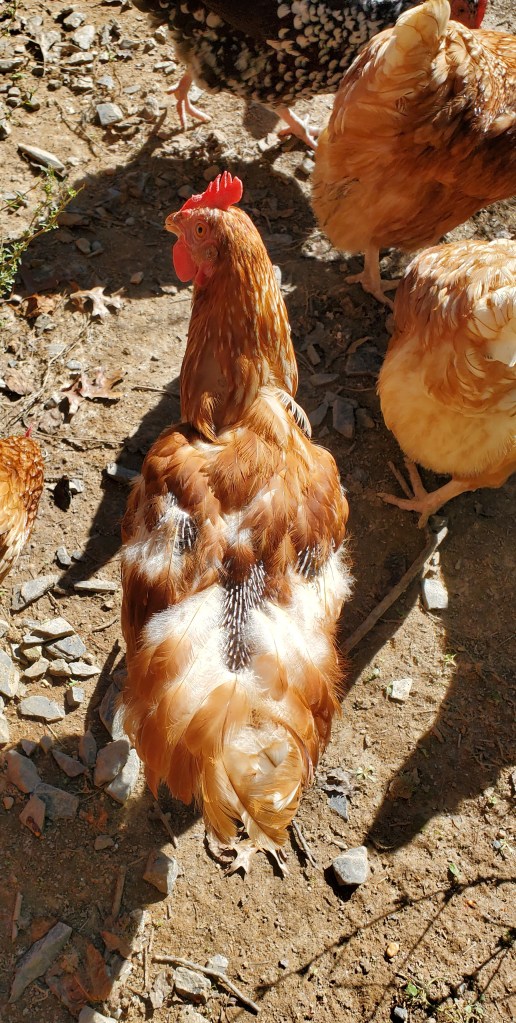
I walked out to my chicken coop the other day and was met with this sight – Hei Hei the chicken from Moana! My first thought was What the heck happened to you, little lady? and I started inspecting her for an injury. But she was walking and pecking around just fine, clucking just fine (pretty vocal actually), and eating and drinking.
The weather here is starting to slowly cool down so the conclusion I’ve come to is that she’s molting. I know this happens about once a year, but this feels a little odd to me. Why is it only happening to one chicken? Anybody else ever had this happen?
I know the usual reasons for losing feathers are stress, improper diet, lice and other parasites, annual molting, broodiness, and being pecked on by other chickens. My other thought is that she was my Broody Betty back in August who wouldn’t get out of the nesting box for like three weeks until I finally blocked the boxes. That was my first experience with a brooding hen and I should have acted sooner but I kept thinking “She’s gotta give up on this any day now.” What makes sense to me now is that from all the time she spent laying on those eggs (like 23 hours a day-serious dedication!), she most certainly experienced reduced nutrition and thus her feathers have taken the hit. I’m hopeful she bounces back quickly so am giving extra treats for a bit to boost the fat and protein intake for her and the rest of the flock.
Well, summer is rounding the corner into fall and I will be the first to say “Hallelujah!” It’s been a hot, tiring summer for me and I really can’t point to anything specific but I just have a lot less pep in my step most days. My garden has been motivating with lots of successes and lots of lessons learned for sure. I’m sure I’ll write a post about this sometime in October because it’s always valuable to look back and assess what was worth the effort and what wasn’t. It’s funny how things can go 80-90% right but that 10-20% that didn’t really nags at me. Gotta learn from it and move on. As they say “Can’t win ‘em all.”
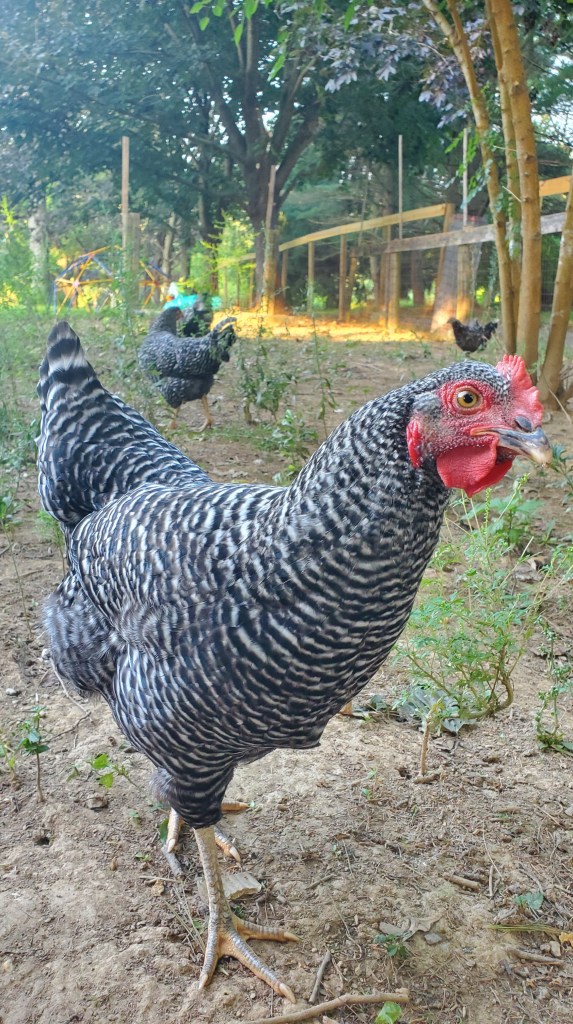
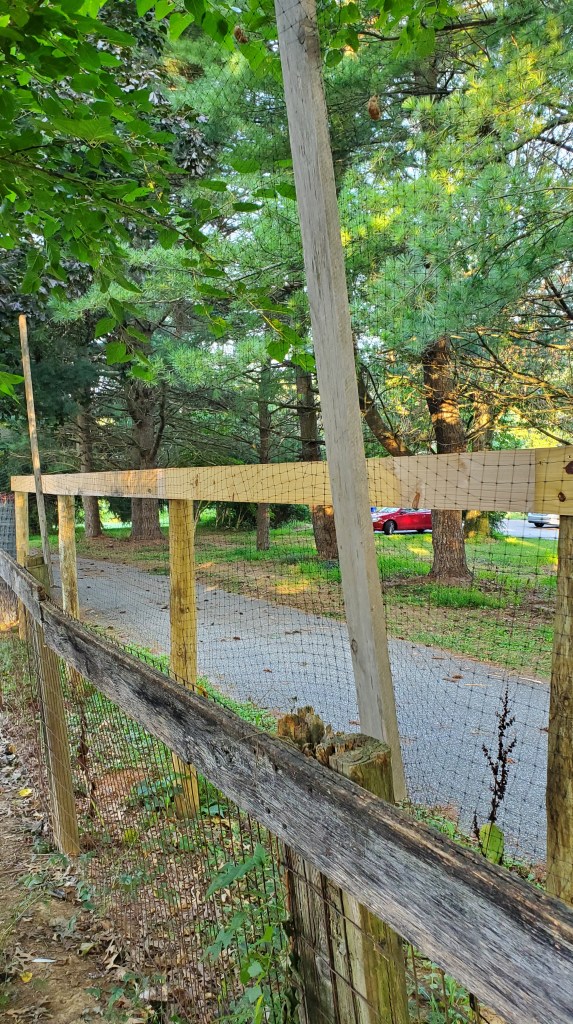
One of the successes throughout the last few months has been my chickens. Oh how I enjoy watching and listening to them. The chicks I got back on April 19 are now starting to lay eggs and they are far from being little fluffballs anymore. Just a week ago I would have been proud to say all are alive and well but we recently had some jail breaks. Each evening when I go to lock the coop I always do a head count. On Thursday, one of my browns was missing. Couldn’t find her anywhere and spent about 45 minutes looking in the dark with my head lamp. I eventually gave up and went to bed with a pit in my stomach. Thankfully, she was out pecking around on the wood pile the next morning and I was so relieved. Then, on Saturday evening one of my dominiques/barred rocks (still can’t tell the difference) was missing. Again, I spent about 30 minutes searching the yard and nearby low branches in case she was already perching but no luck. And sadly she was nowhere to be found the next morning either. Still haven’t found a trace of her which seems odd. But I didn’t want this to become a pattern with the chickens getting bolder and bolder so I asked Cactus to put up some higher mesh fencing which I hope helps.
If you have chickens, how do you keep them secure during the day? I want them to be as free range as possible but they have to be safe.
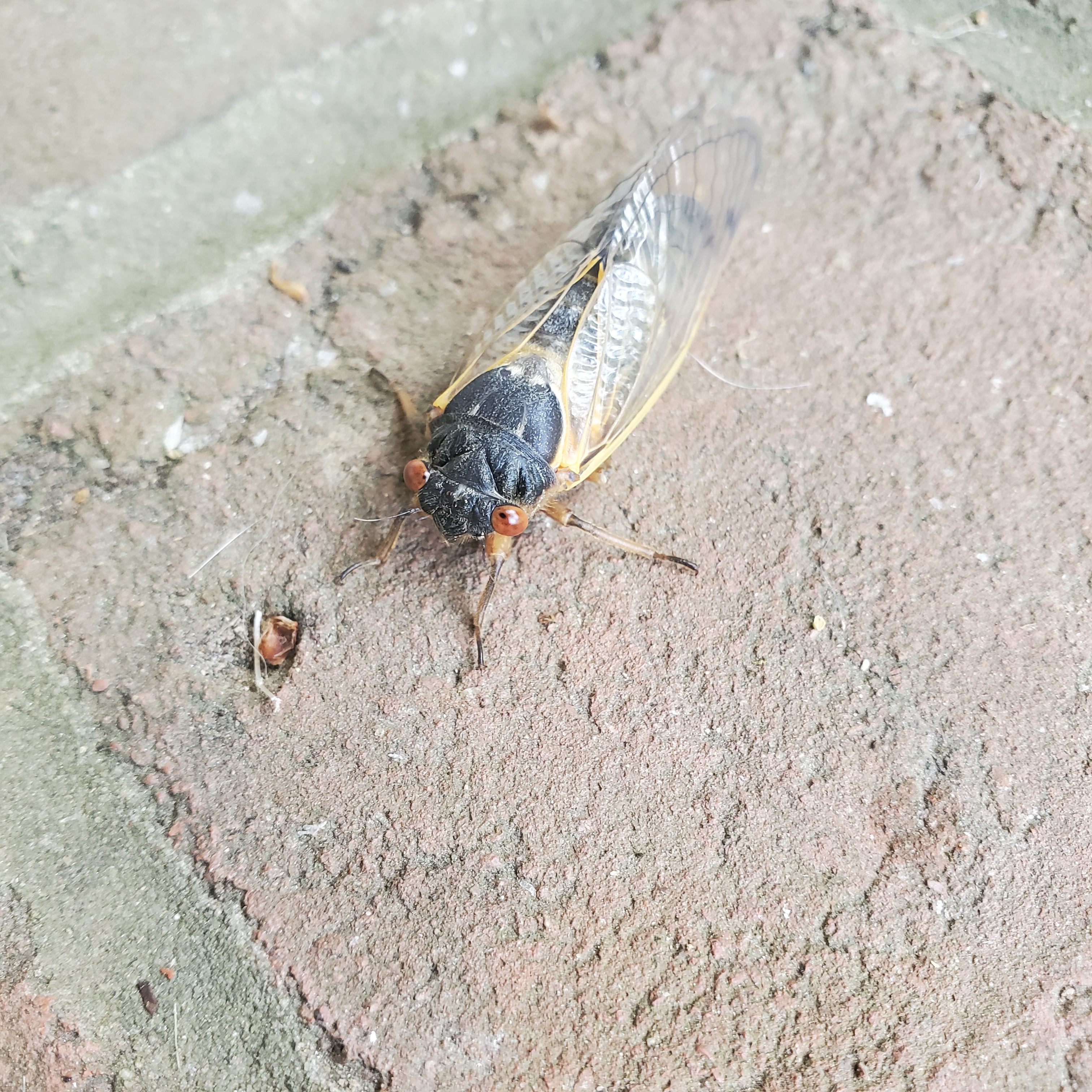
Aside from all the other things 2021 will likely be remembered for, I didn’t want the cicadas to be forgotten. I know we’re only a mere four months in and so much more is bound happen, but cicadas are not to be upstaged. As I thought about this post, I wasn’t even sure how much of a ‘thing’ cicadas are nationally or globally. Well, turns out there a site called Cicada Mania to answer all the burning questions you never knew you had. If you don’t want to go crazy, here are just a couple fun facts that I found interesting.
There are more than 190 different kinds of cicadas in North America, and more than 3,000 around the world.
The different cicada species have any of three different life cycles – annual, periodical, or protoperiodical. The ones we are excited about right now are Brood X (Great Eastern Brood), emerging every 17 years after being underground
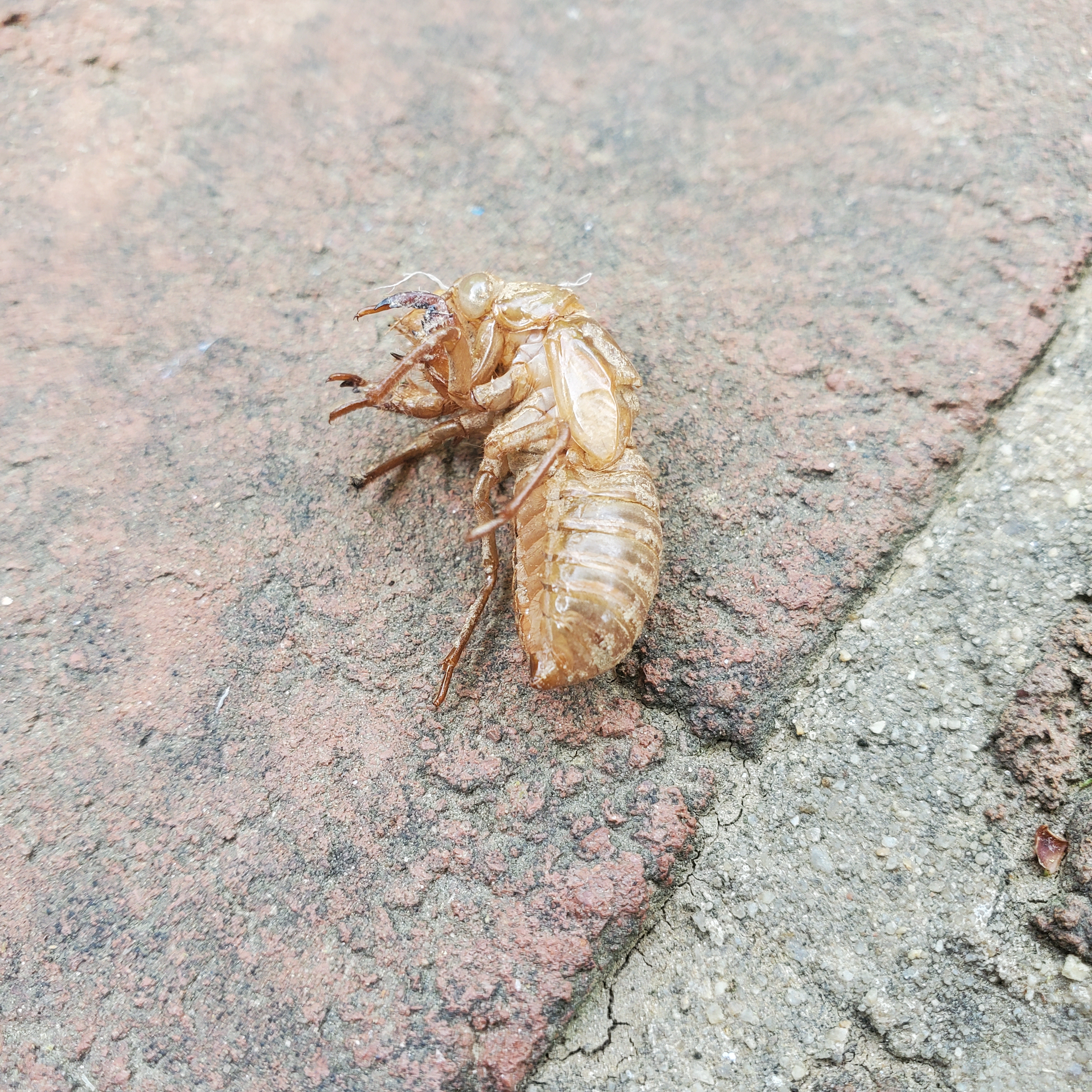
When they emerge, they shed their exoskeletons and then get to work looking for a mate. The females will then lay eggs and the whole cycle repeats itself with them growing underground. Pretty fascinating.
There’s A LOT of them. Like Billions. It feels like one of the plagues. I lived in Maryland in 2004 and this was the first exposure I ever had to them so I’m curious to see if we get carpeted with cicadas again. I’m not exaggerating when I say there was a layer of them on my car, the ground, everywhere!
They are LOUD. Different species have been recorded at more than 100 decibels. To give a reference point, a jackhammer, tractor and garbage truck are also 100 decibels loud.
Something I didn’t have in 2004 that I have now is chickens. Yup, I could and probably should rent my chickens out to my neighbors to clean up the cicadas. They LOVE them! Did someone say cicada omelet???
Do you have cicadas where you live? Ever dipped them in chocolate? I’m sure they are a great source of protein.
That title would only make sense to you if you watched Talk Soup on E! back in the 90s with Joel McHale. There was a segment that he would start with “Let’s talk about Chicks, Man.” Oh how I love Joel McHale. Did you watch his Tiger King interview last spring? Alright, I’ll stop.
Back in December, while home for about 10 days between Christmas and the New Year, I was getting excited about the spring and ways I was going to expand my garden and homesteading efforts. I just described a new garden row in this last post. My other goal was to identify five foods I no longer want to buy from a store and will instead grow and make myself. On that list are jelly, green beans, diced tomatoes, tomato paste, and eggs. The first four are garden focused and I’ll keep you posted on those efforts this summer. Eggs are the other item I don’t ever want to buy again.
So I set off on a journey to create my “dream flock” with all the breeds I find beautiful and interesting. Up til now I’ve been pretty basic with white leghorns and brown bovans (we won’t talk about my Wyandottes that dropped dead). And I haven’t had the best success with choosing hens and have ended up with nearly 50% roosters when I get chicks at Tractor Supply. I did a little research on the different hatcheries and decided to go with Murray McMurray because 1) I could choose females and 2) I could buy the exact quantity I wanted without having to meet a minimum.
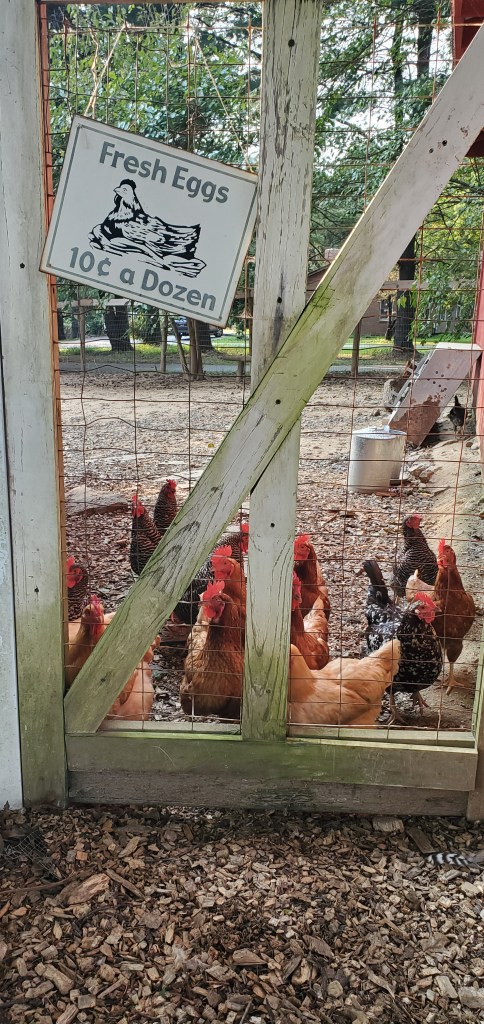
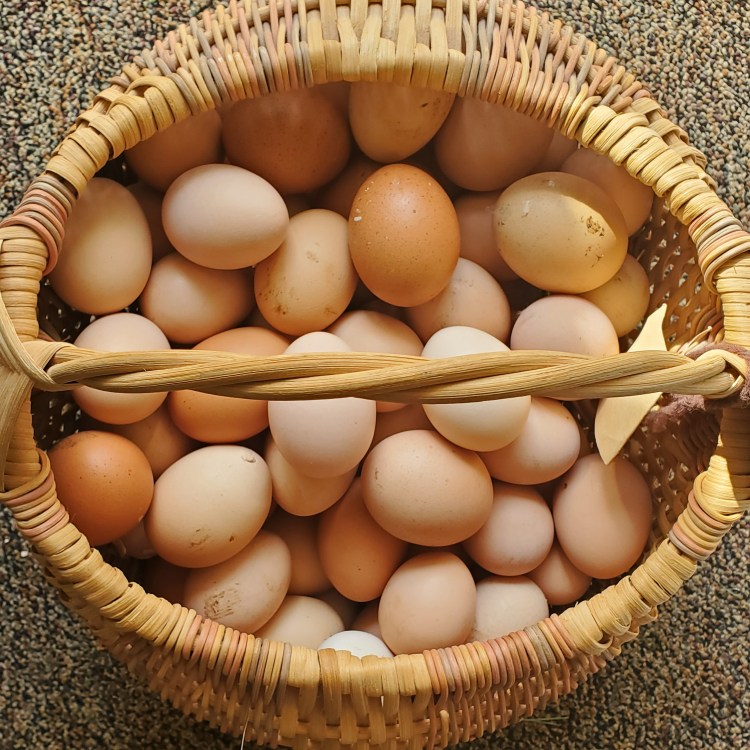
I decided to order 15 birds, to add to the 8 I already have so that I would get approximately two dozen eggs a day. My thinking here is to hopefully start selling eggs and cover my costs. This would get me roughly 14 dozen eggs/week, of which I will hopefully sell 12. If I charge anywhere from $4.50 to $5/dozen that will cover what I’m spending on feed and scratch. I do have some more calculations to firm this up since I’m not sure how much they will all eat once full grown.
2 dominiques – I can’t quite figure out how these are different from Barred Rocks, so will see if I can tell.
They threw in a “free surprise chick” and 17 chicks ended up arriving in total so you do the math 😊 I will say McMurray Hatchery was great to buy from. I got an email reminder about a month out and then some text message reminders as well. All chicks came alive and chipper. I immediately gave them some water with Hydro Hen 3-in-1 mixed in and they are all doing well.
With all of the chicks in my bathtub, I am a bit nervous I bit off more than I can chew but nothing ventured, nothing gained right?
What about you? What do-it-yourself business have you tried and how did it work out? What do you wish you had known?
If I asked you to close your eyes and picture a smart, regal, gentlemanly, and protective farm animal, what comes to mind? A horse. A duck. A cat. All of those answers could be correct, but it’s not the one I’m thinking about.
Last November I started looking online for a new canine member to join our family. As you may recall, that is how we came to have Molly (aka Ms. Mess – she is the messiest and most bizarre eater I have ever come across but that is a story for another day). As I was searching, I regularly checked our county’s animal control and adoption center. I kept seeing a rooster in their listings and told myself if he was still available for adoption at the end of the year, I would go see him. Well, you’ll never guess what happened…
I had the week off between Christmas and New Year’s so on December 30 I made an appointment to go meet him with my girls. I told them they would decide if we applied to adopt him based on what they thought of his personality and temperament. I wanted them to have a vote in the process and to be sure they would still feel comfortable going in the chicken coop (with supervision, of course). I had to like him too.
The staff who took us to his kennel said we were the first people to visit him and he had been there since October. So sad! He was being kept in the most isolated kennel so that dogs weren’t right next to him. This meant he was in the far back corner with three out of four walls made of concrete, a chain link fence entrance, and fluorescent lighting. No natural light whatsoever. And I don’t mean this in any way to denigrate the conditions – it was clean, he had a perch, and food. My point is this was far from an ideal chicken habitat and I immediately felt sorry for him.
The woman walked in the kennel and picked him right up like he was a bunny. I was so amazed. She said he was friendly and easy to be around and hadn’t been aggressive at all. The girls petted his neck feathers and quickly lost interest, then went to check out other dogs in nearby kennels. I asked the staff member some questions about his demeanor and other things she knew about rooster behavior. Honestly, I didn’t have much beyond “Is he an a-hole?” because I’ve dealt with the man fighters and didn’t want that again. She didn’t seem to think this was his personality but of course you can’t be sure until he’s in a flock and his territorial instincts kick in.
I filled out an application and they said we might hear back as soon as the next day, December 31 but more likely Monday, January 4. I was kind of like, “Umm, he’s had no visitors in three months… what do you need to verify?” but it was totally fine. They wanted to confirm that my other pets are licensed and vaccinated as proof that I’m not a horrible pet owner. I get it.
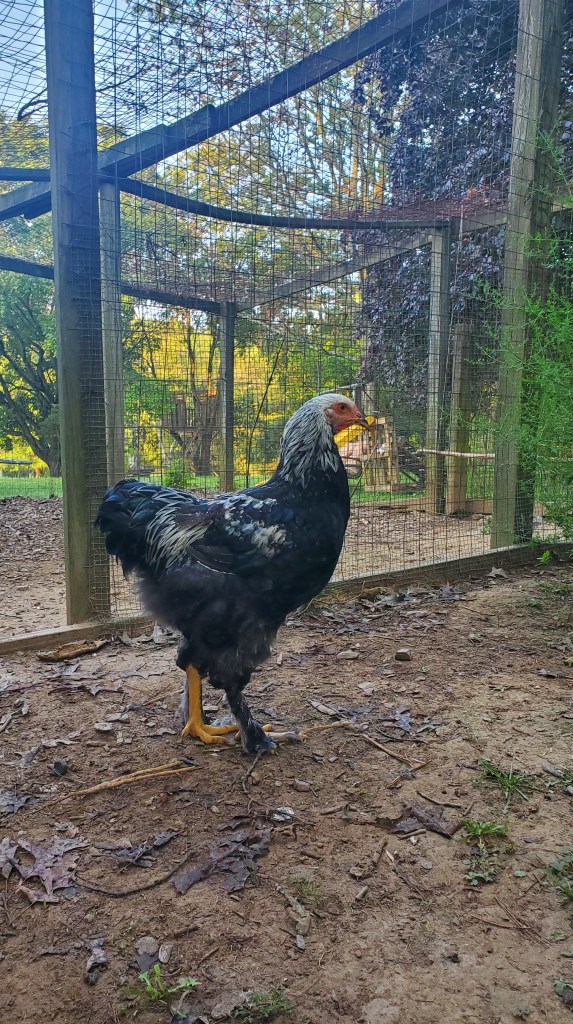
Over the weekend I watched a bunch of rooster taming videos and got an idea of how I would approach being the alpha rooster. On Monday we got the call that we were approved to adopt him and I went to go get him. We kept him isolated from the flockers for five days and each day I spent time picking him up and carrying him around so that we could bond. It was grand! I’m being 100% serious. It was a really good confidence builder for me and I think made him realize I’m in charge. Ha!
I’m not in complete agreement with how he has his way with the ladies, but he lets them eat first and seems to put himself between the flock and the cats when they wander into the coop so I think he’s doing a good job.

 farmcharmblog.com