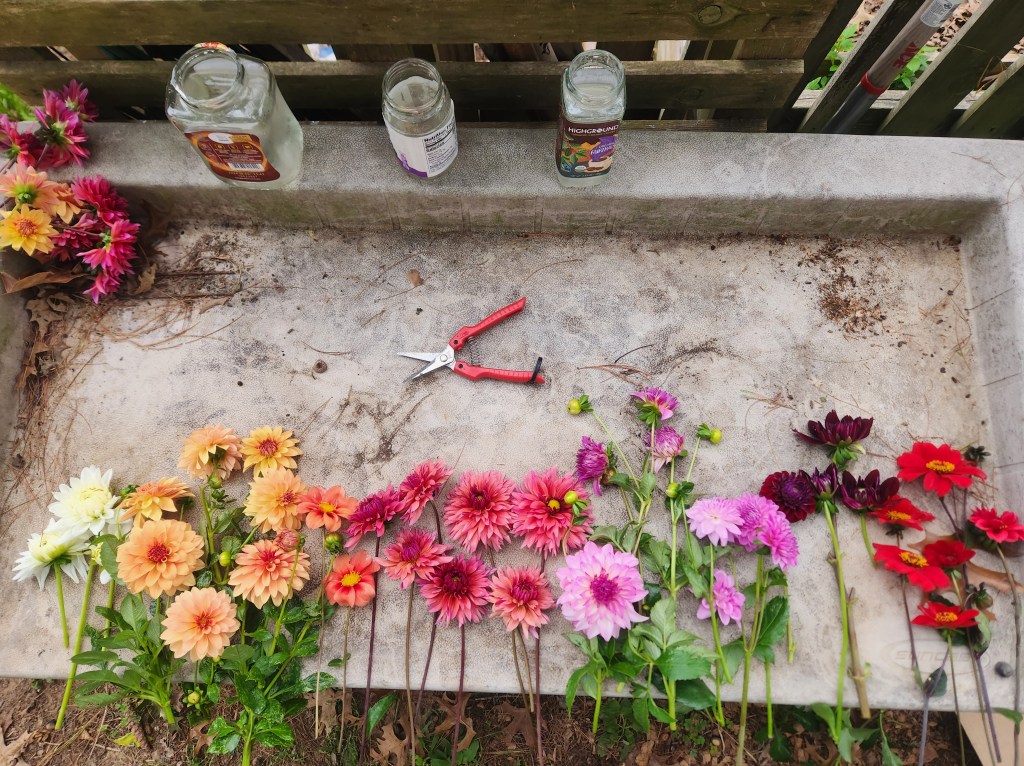
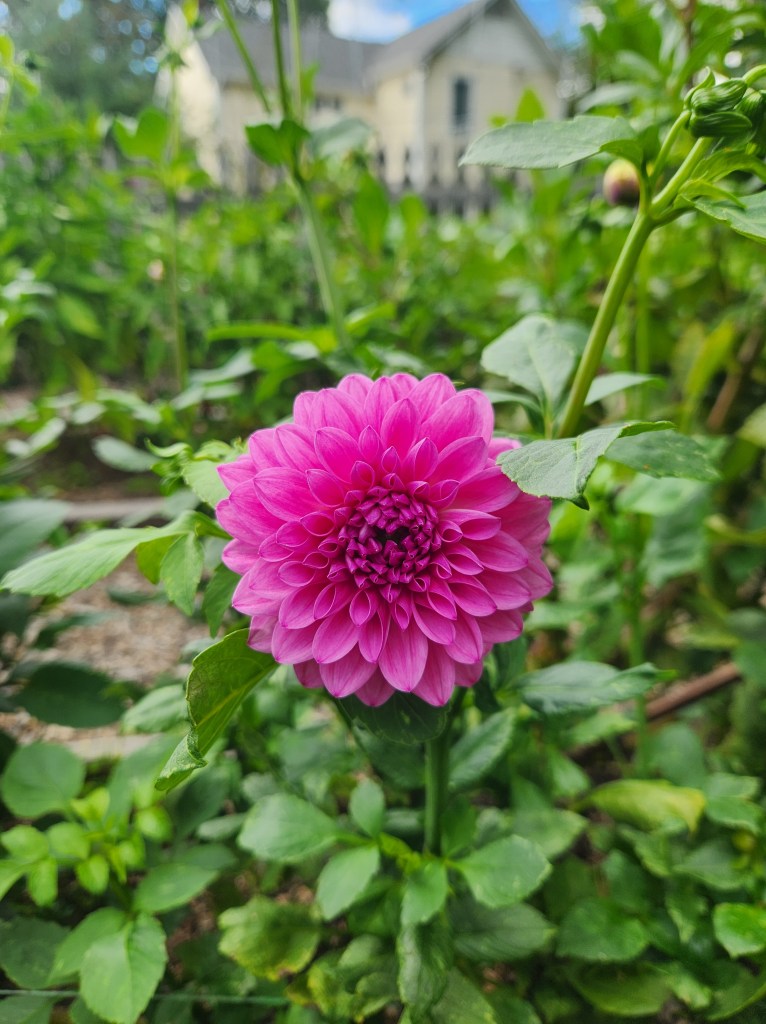
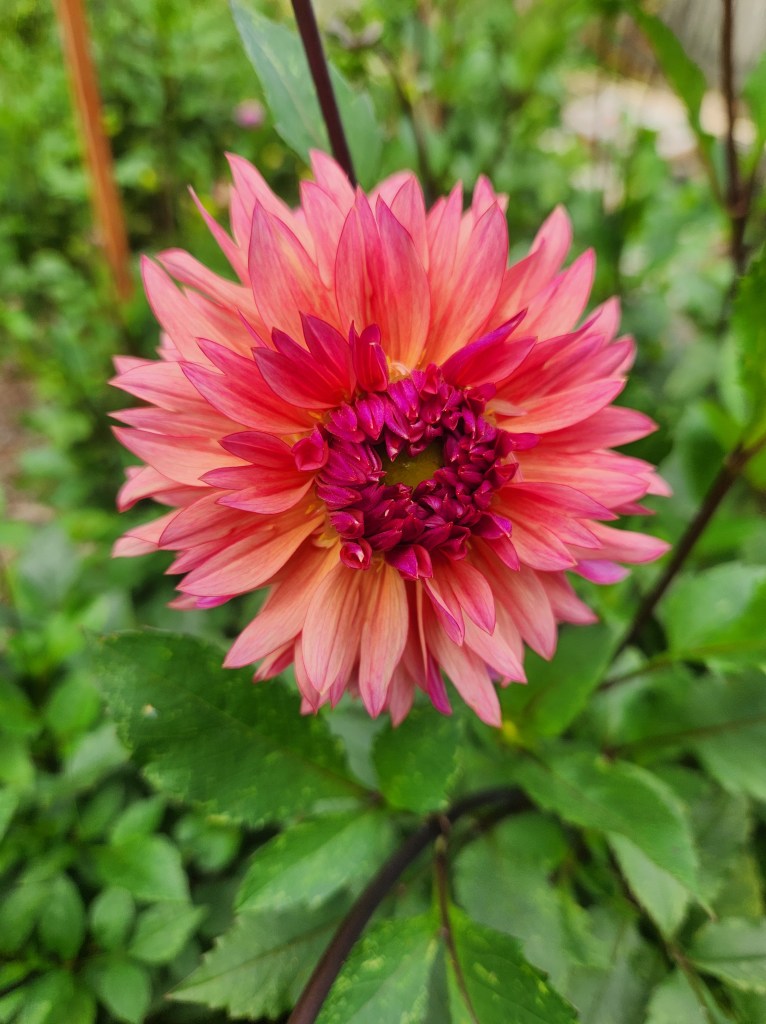
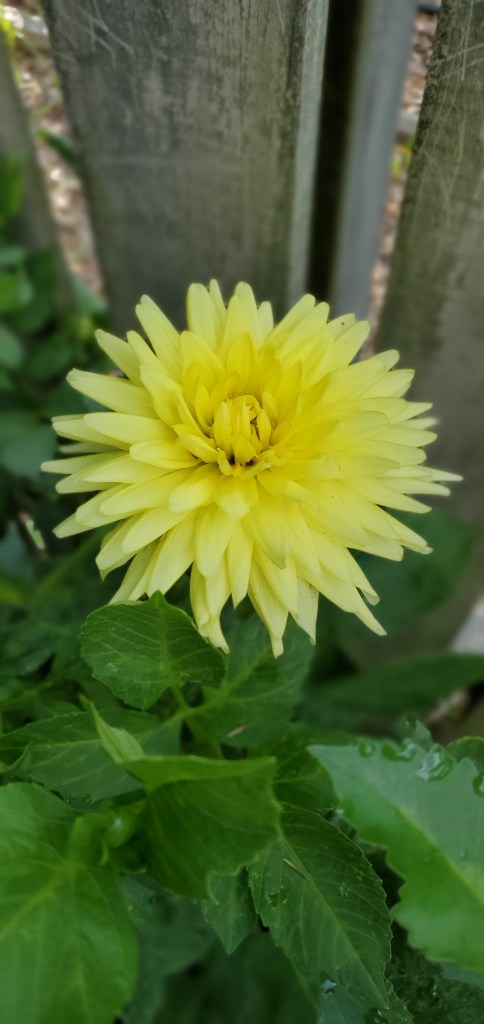
Well, after my posts about starting and planting dahlias, you were probably like, “And….. did you ever grow any?!?” I have to say after a long awaited arrival (largely due to my lack of any care or watering whatsoever) they have arrived!!!
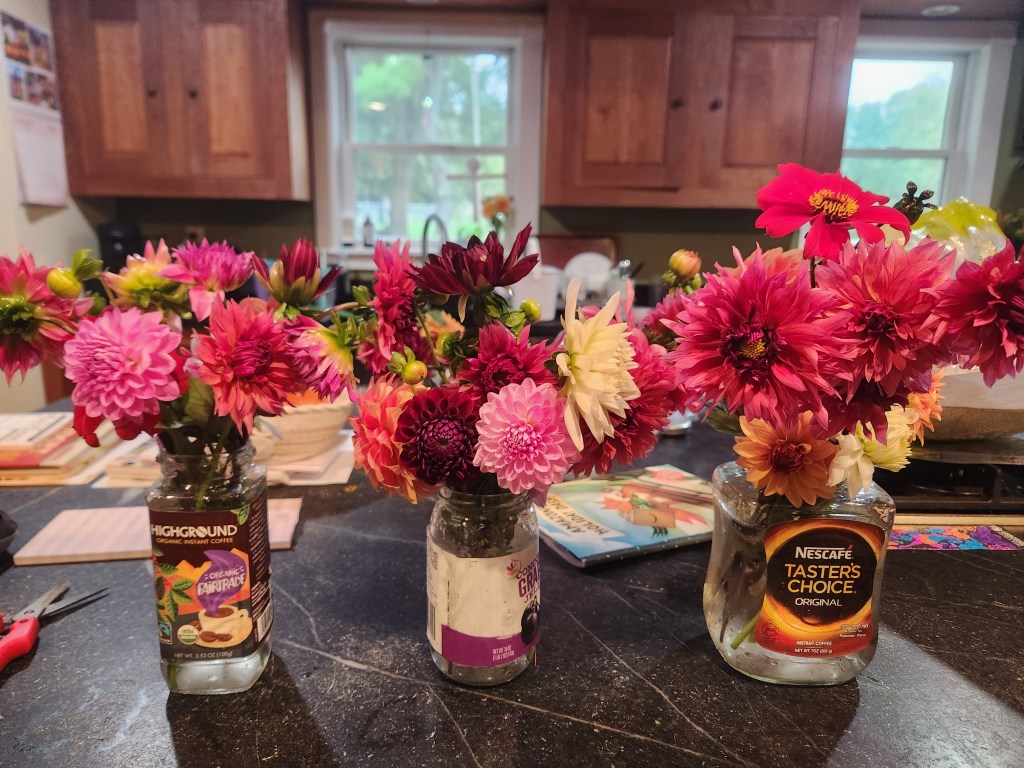
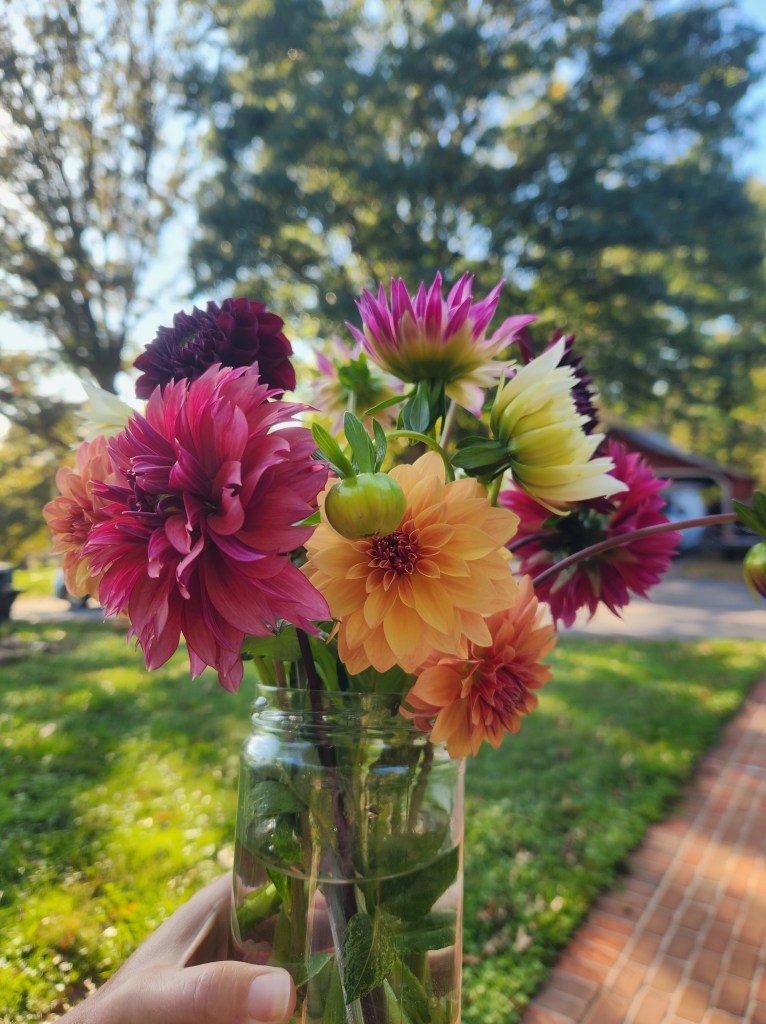
I have been harvesting 20-25 stems three times a week for the last three weeks and they do not disappoint. I’ve been delivering little bouquets to my neighbors and it brings so much joy.
Now, of course, I see a lot of room for improvement in stem length. BUT, I’m not worrying about that. I just like going out to the garden every day to check on them. I’m happy I got any.
This summer was quite a bummer for me in the garden (and life!) so I’ll take these stems of happiness and beauty.
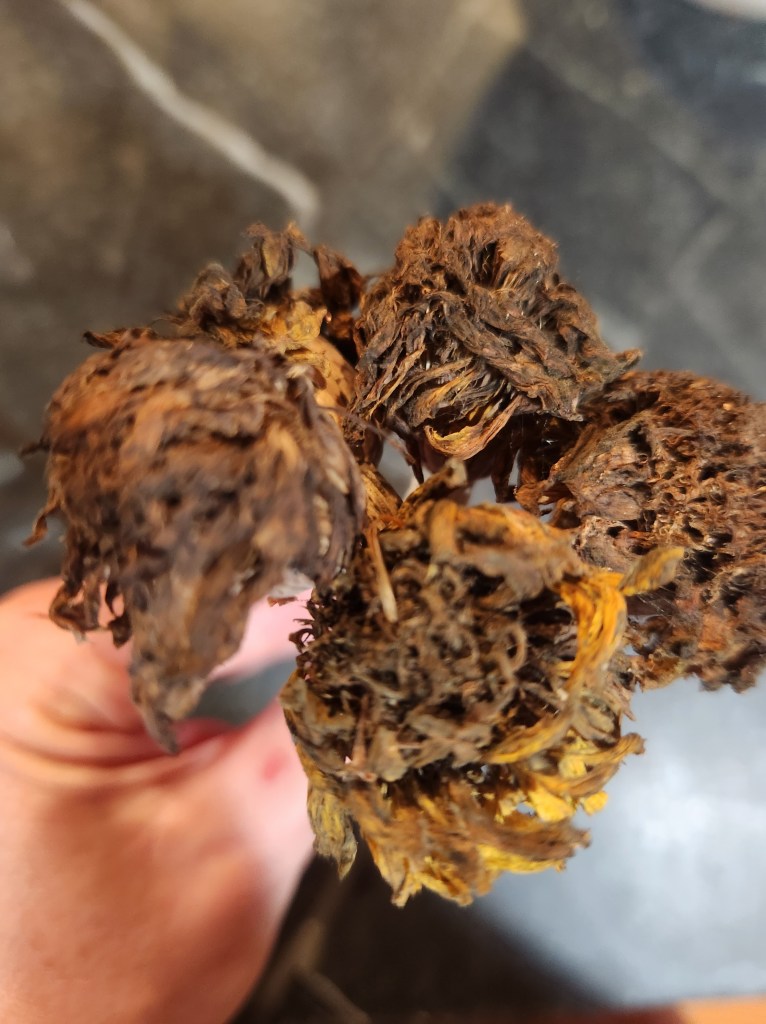
Continuing with the seed saving discussion we started last week, there are a few more no fail varieties you should definitely try. Honestly, the only thing that you can mess up is not letting them dry enough. Be sure to leave them on the plant to dry for about two weeks or cut a stem and leave it in a warm place where it’s protected from any rain for about a week.
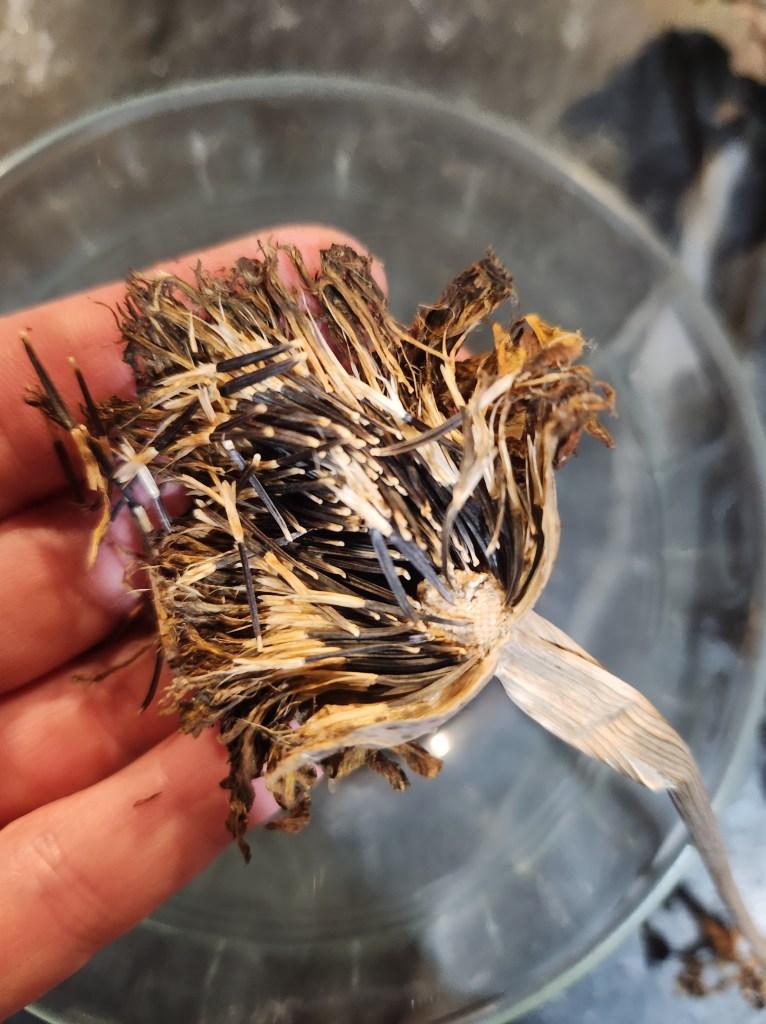
Marigolds: I will never stop being impressed and in awe of how many seeds come from a single dry marigold bloom.
four dried marigold bloomsmarigold bloom with seeds exposedmarigold bloom with dried seeds Dried marigold seedsCollected marigold Seeds
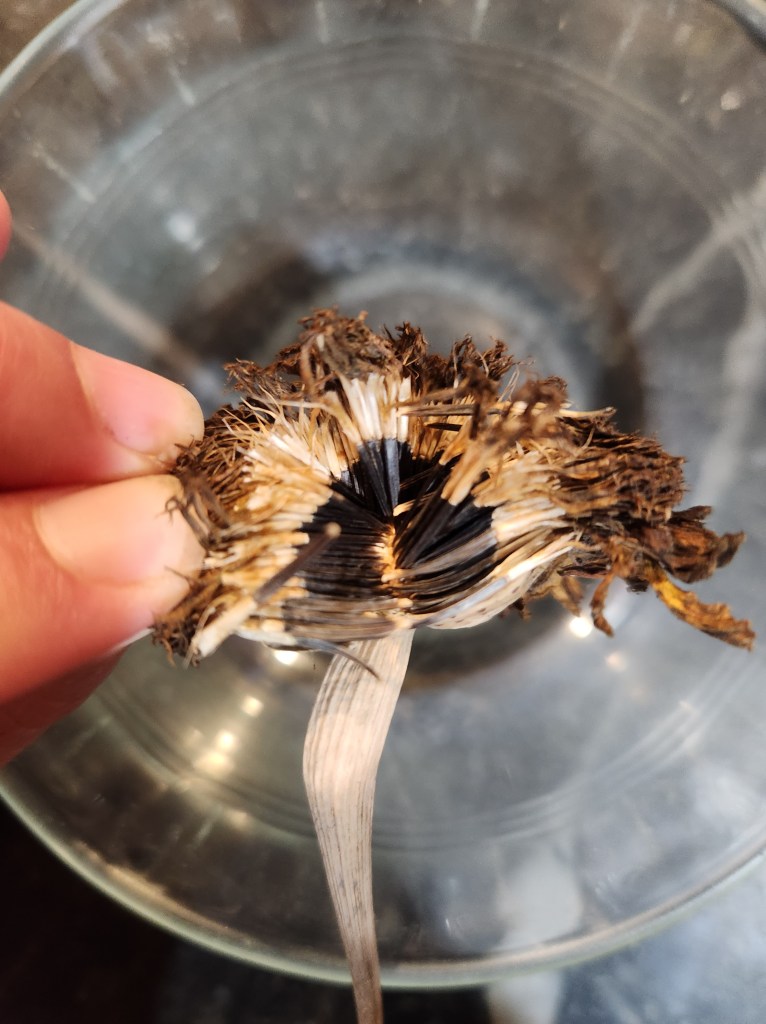
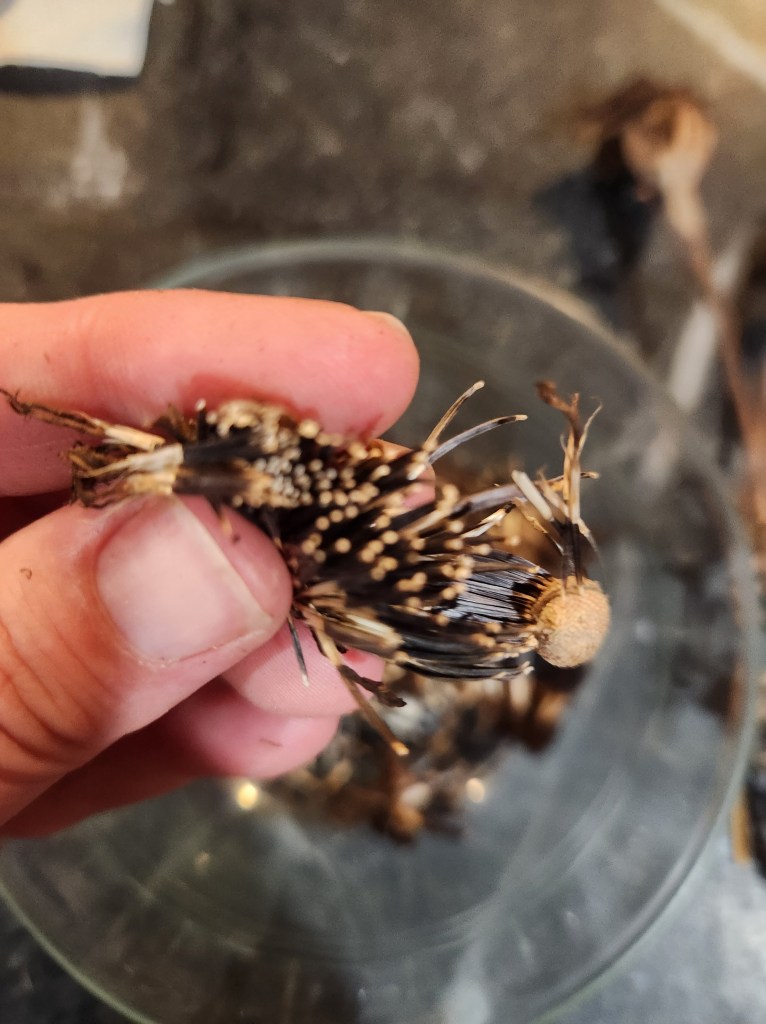
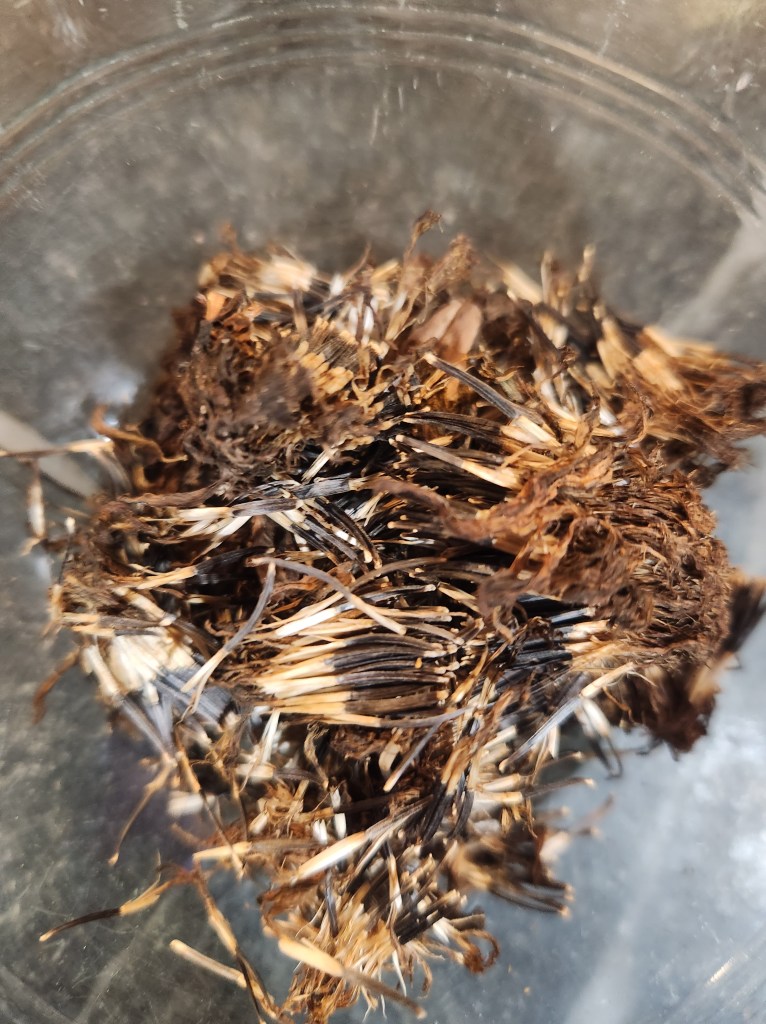
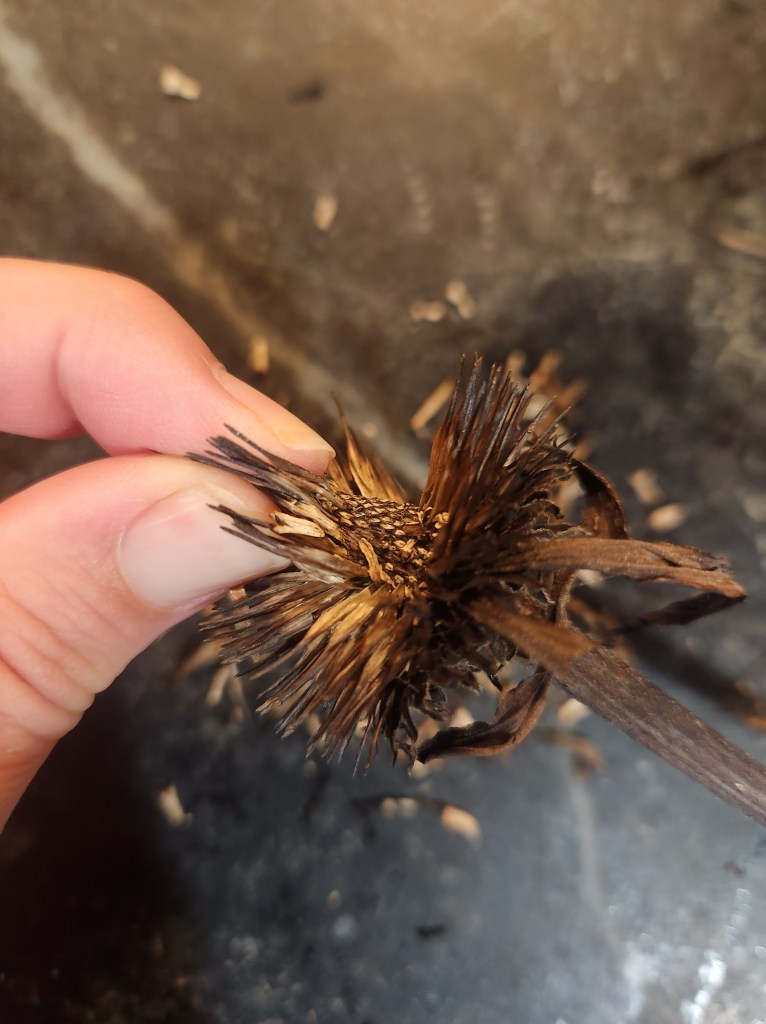
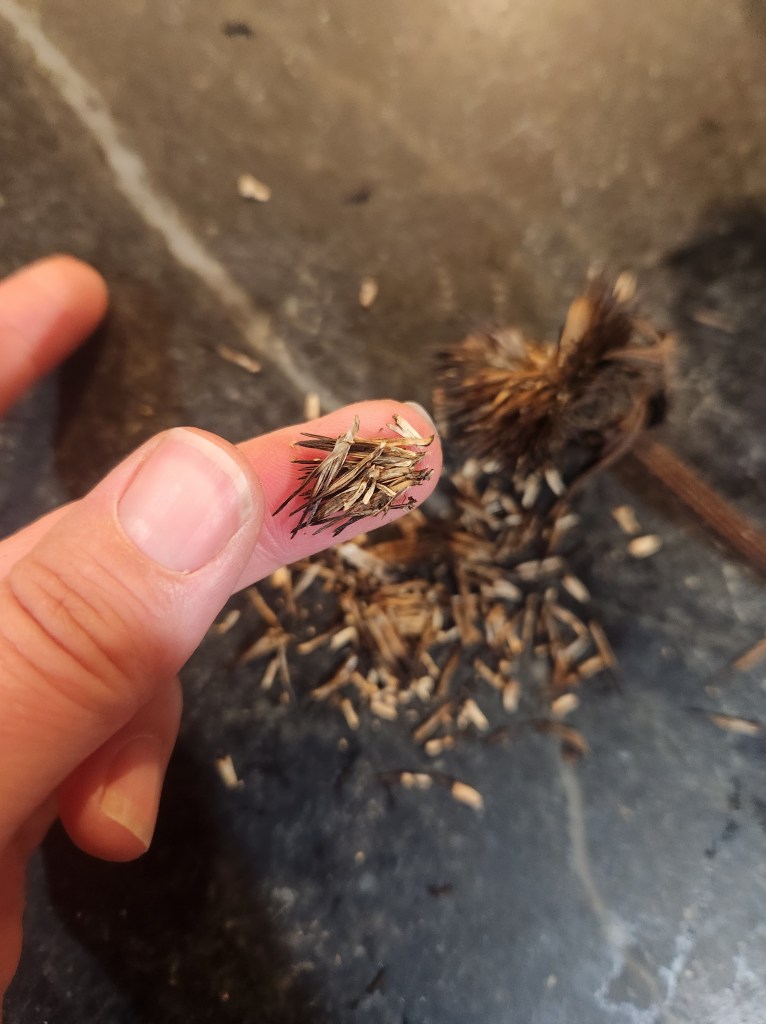
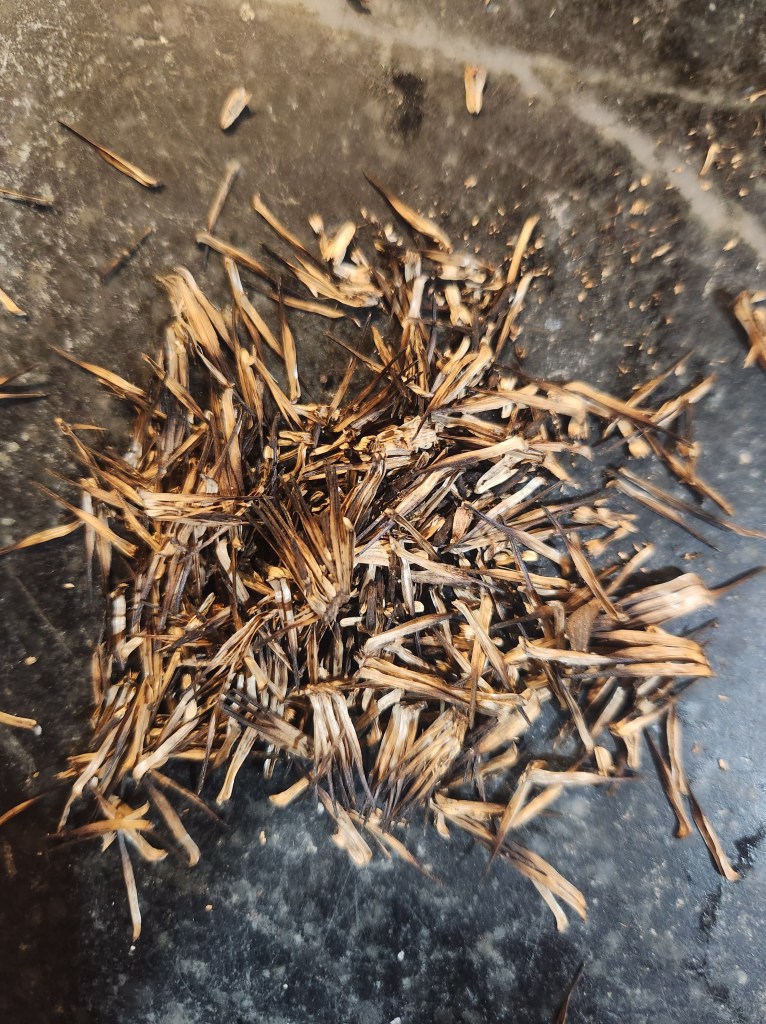
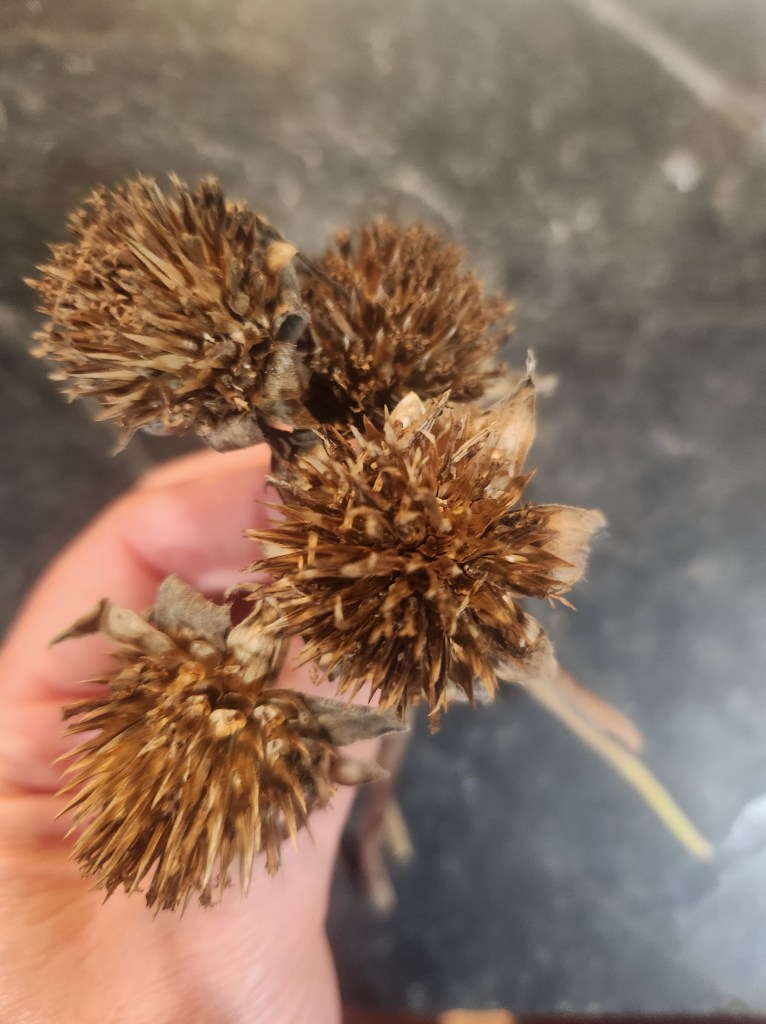
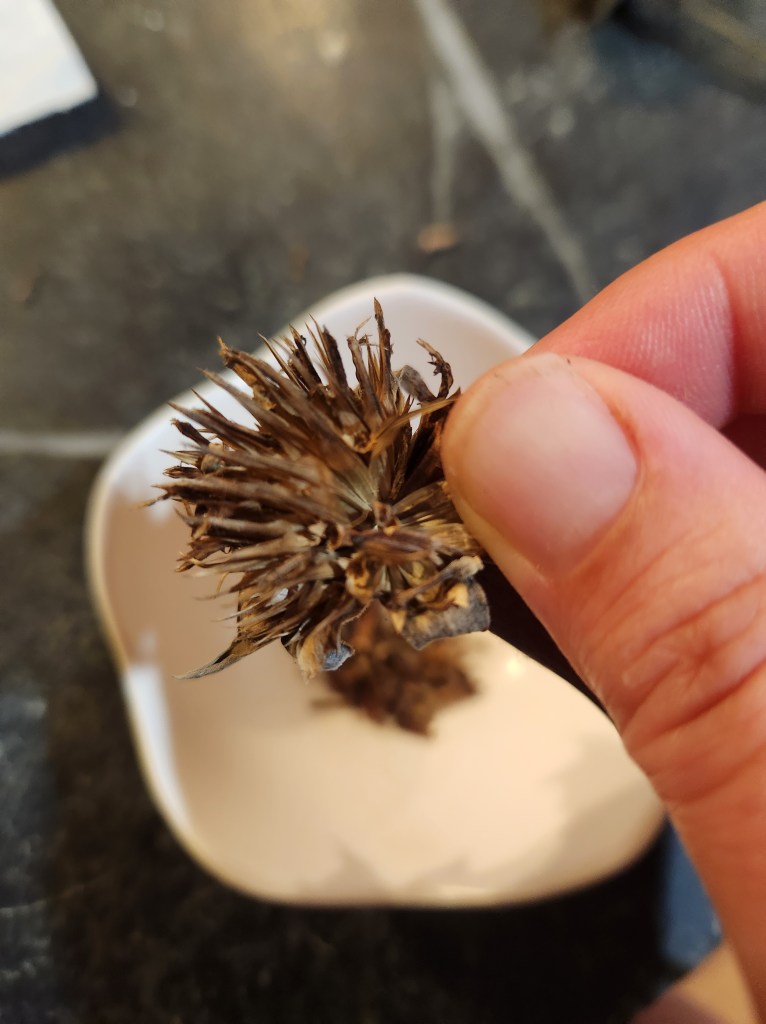
Echinacea: If you aren’t saving coneflower yet, now is the time to start. It’s a super hardy perennial that expands every year. Plant once and be amazed.
Mexican Sunflower: So similar in shape and qualities to coneflower, and hummingbirds absolutely love it.
Dried Mexican sunflower headsMexican sunflower head with seeds being gently loosenedMexican sunflower head with seeds gently loosenedMexican sunflower seedsCollected Mexican sunflower seeds
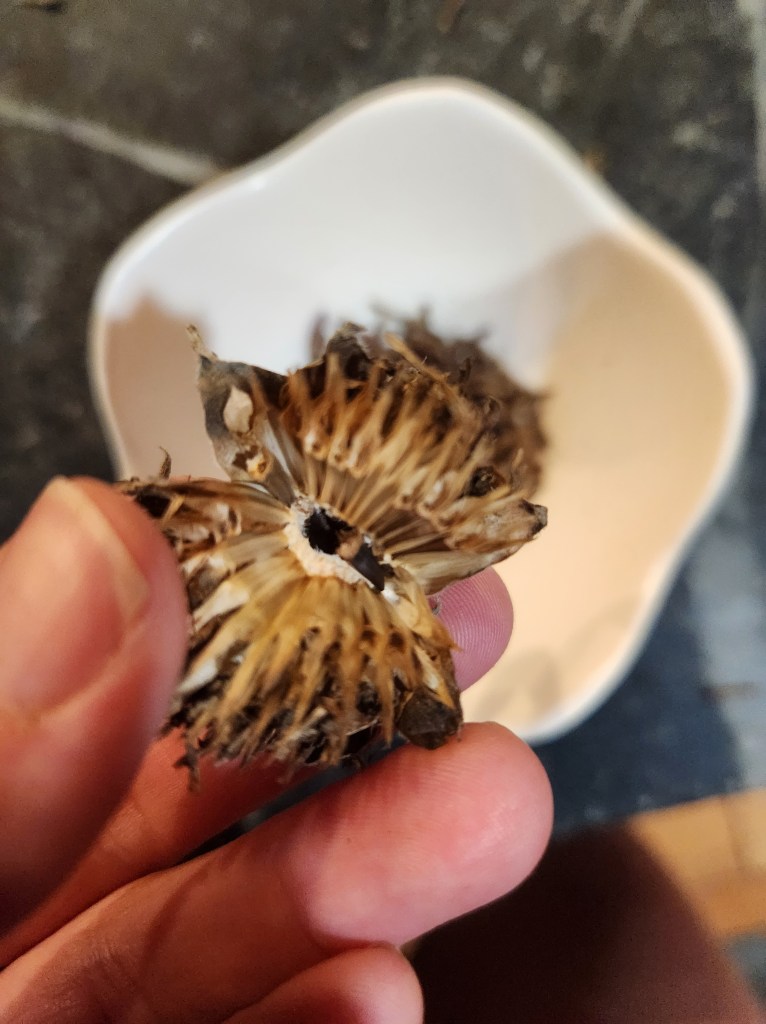
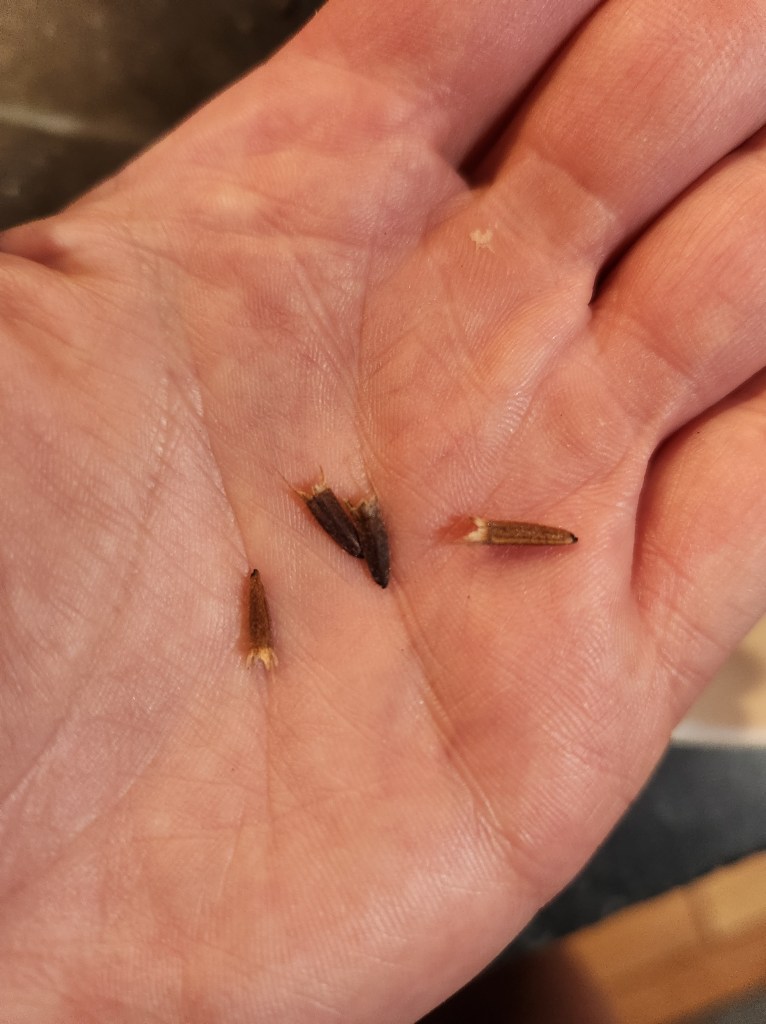
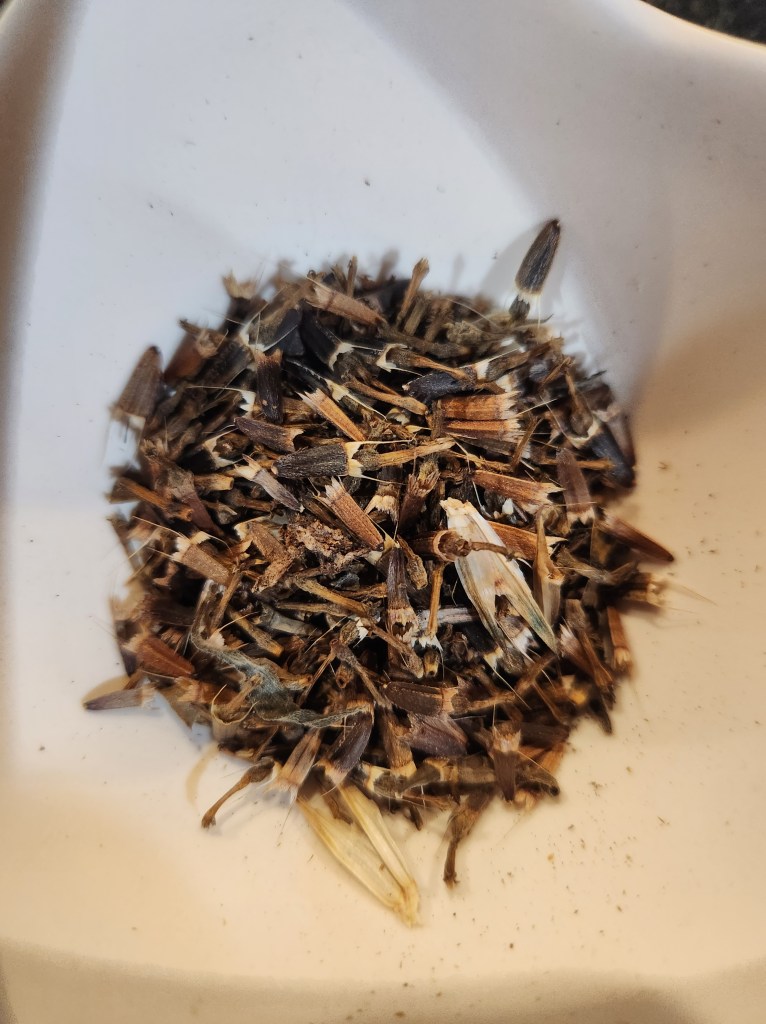
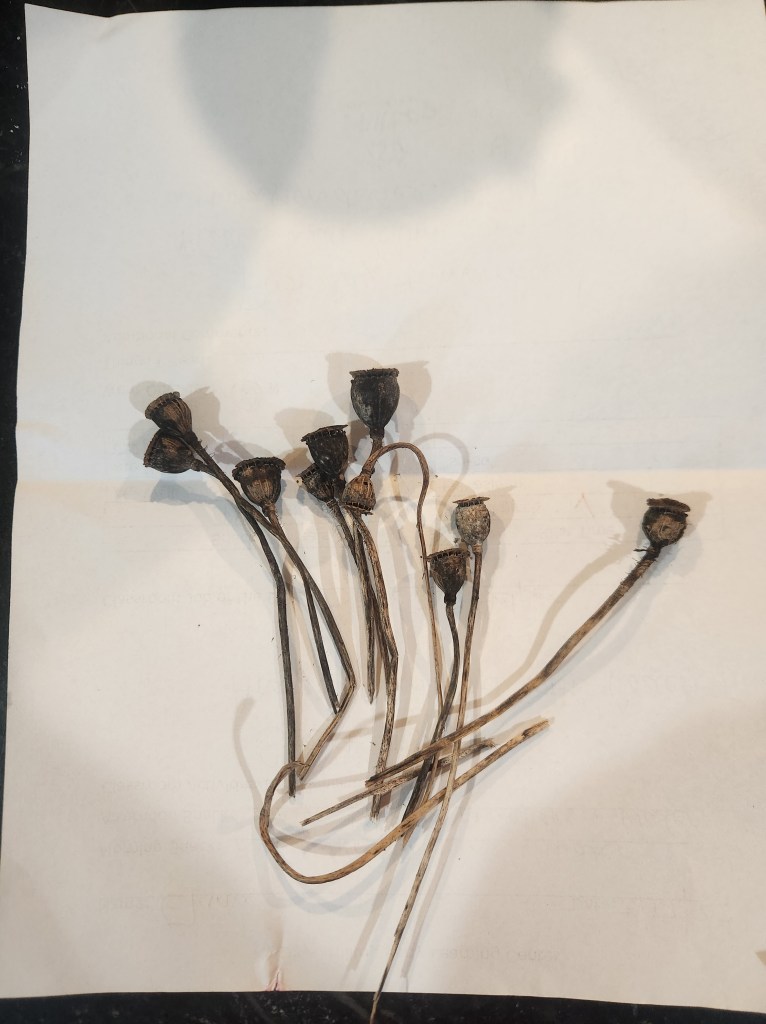
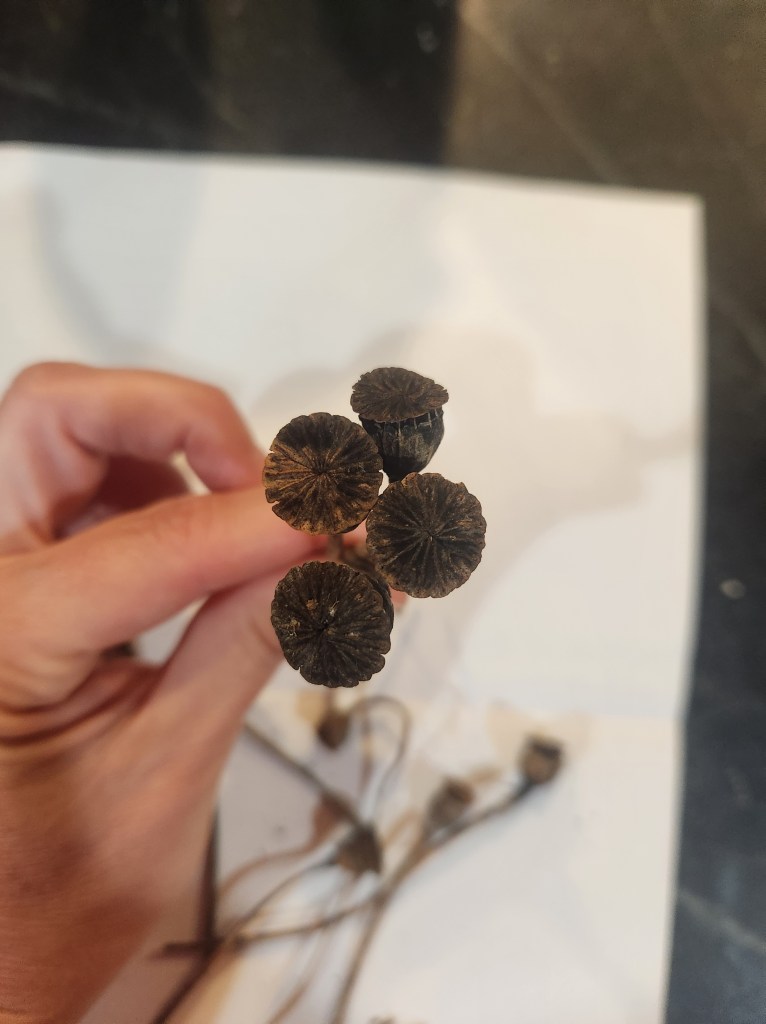
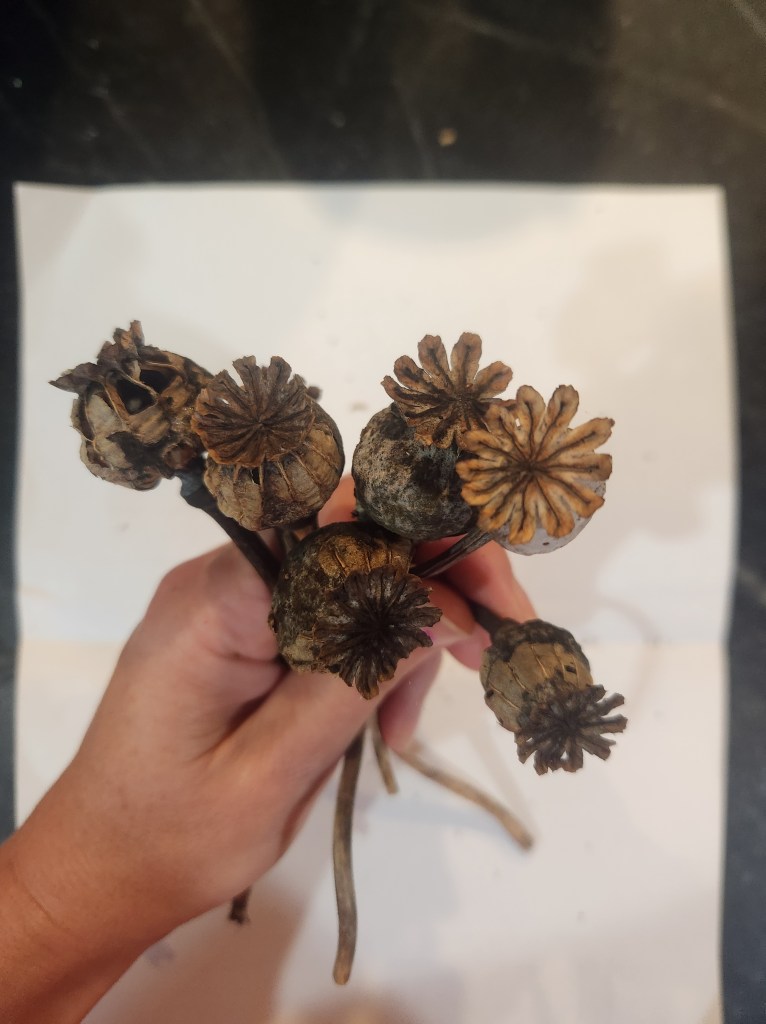
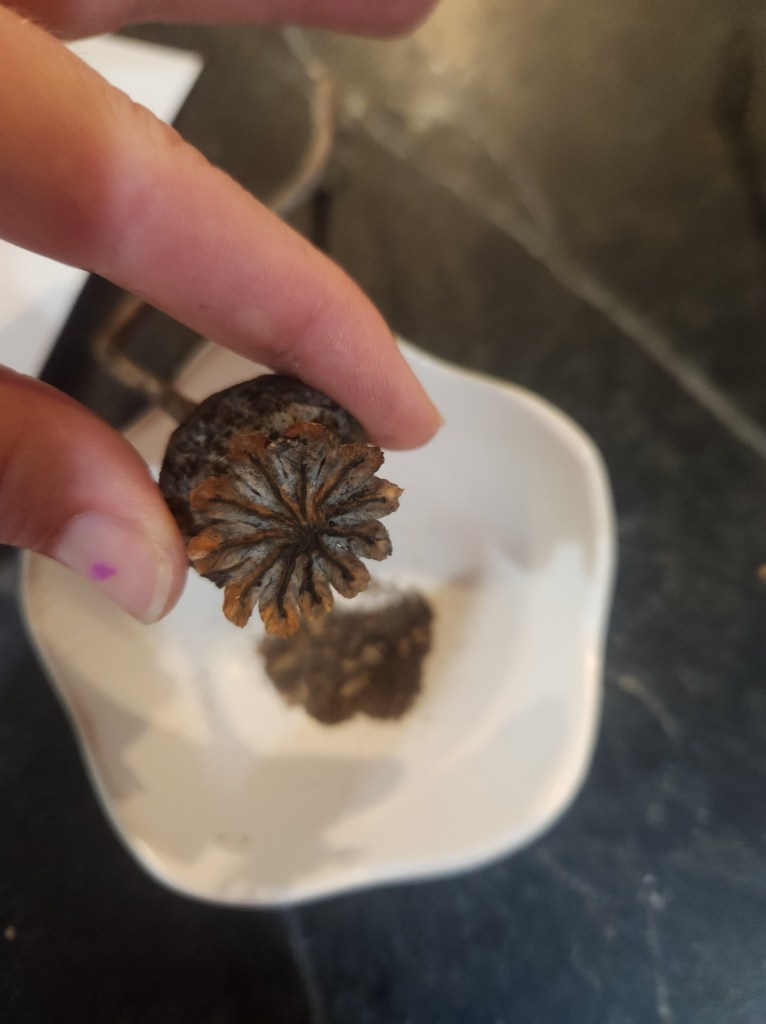
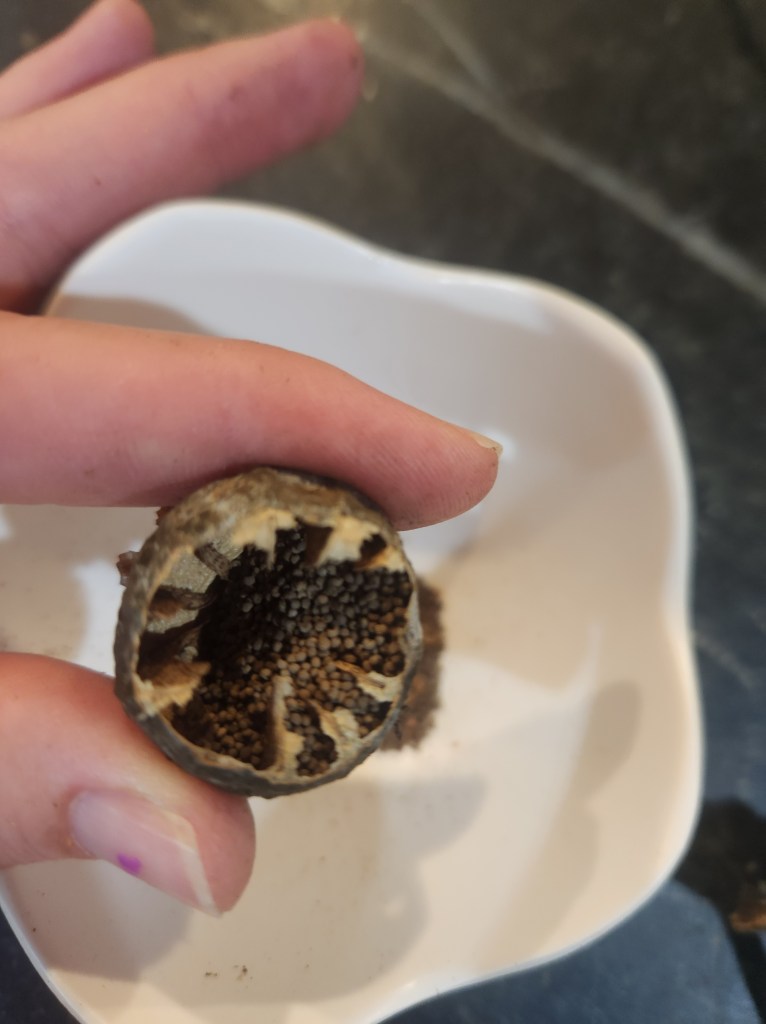
This is the first year I grew poppies in the Spring. I’ve always loved poppies and how delicately beautiful they are. I did absolutely zero maintenance, as seems to be the case with all of my efforts in the garden this year, and they were a raging success. I literally sprinkled two-year-old seeds on the ground in early April and walked away. The varieties were: falling in love, amazing grey, giant lilac pompom, jelly beans, purple peony, and Flemish antique.
One thing I’m trying to get better at each year is lowering my baseline costs. There’s probably a real financial term for this but basically, if I spent $35 on veggie seeds and $25 on flower seeds last year, I want to spend less this year. Or I somehow need to generate income to cover the cost, e.g. sell some veggies and/or flowers.
This year my goal was to be cost neutral in the garden. I had bought 5 flower buckets ($16), 100 count of kraft paper cut flower sleeves ($29), and 100 count of Chrysal water conditioner ($16). My plan had been to sell fifteen $10 bouquets to generate $150. That seemed very realistic. Well, it didn’t happen, but there’s always next year. When I stopped watering the garden after July 4, I couldn’t really hope for too much.
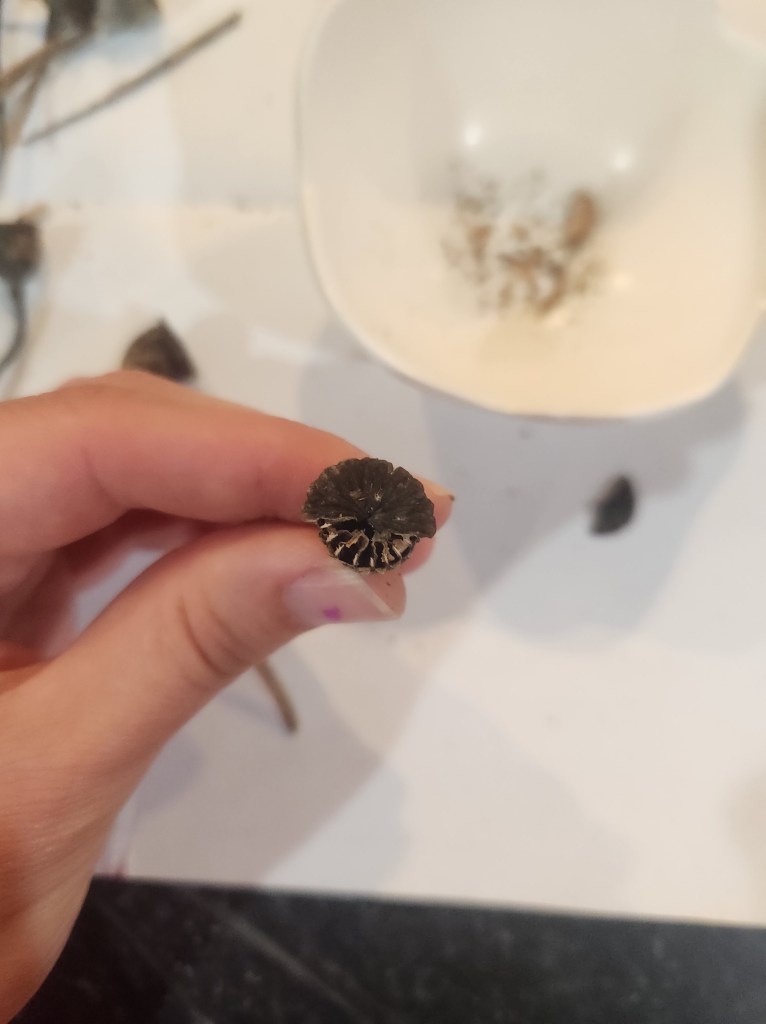
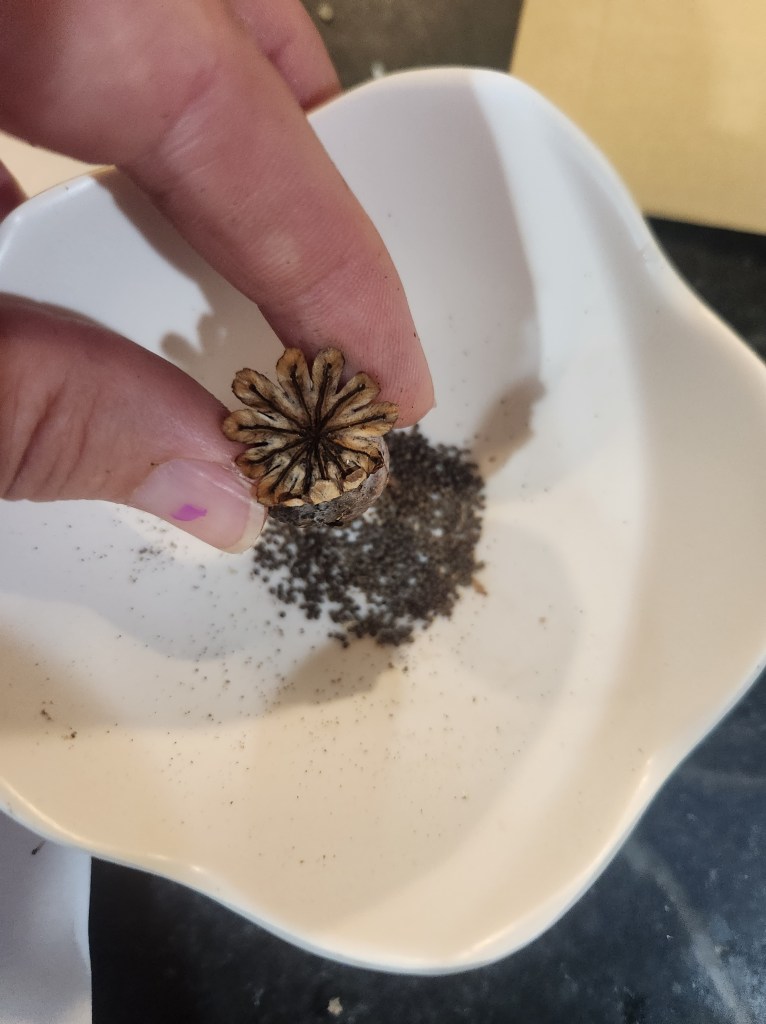
In preparation for next year, I’ll be ready with some amazing poppy seeds. Here’s how you can save flower seeds for the next season.
Planting my dahlia tubers was an exciting moment. I delayed it about a week longer simply because I wanted to do some more reading and be sure I wasn’t going to make any preventable mistakes.
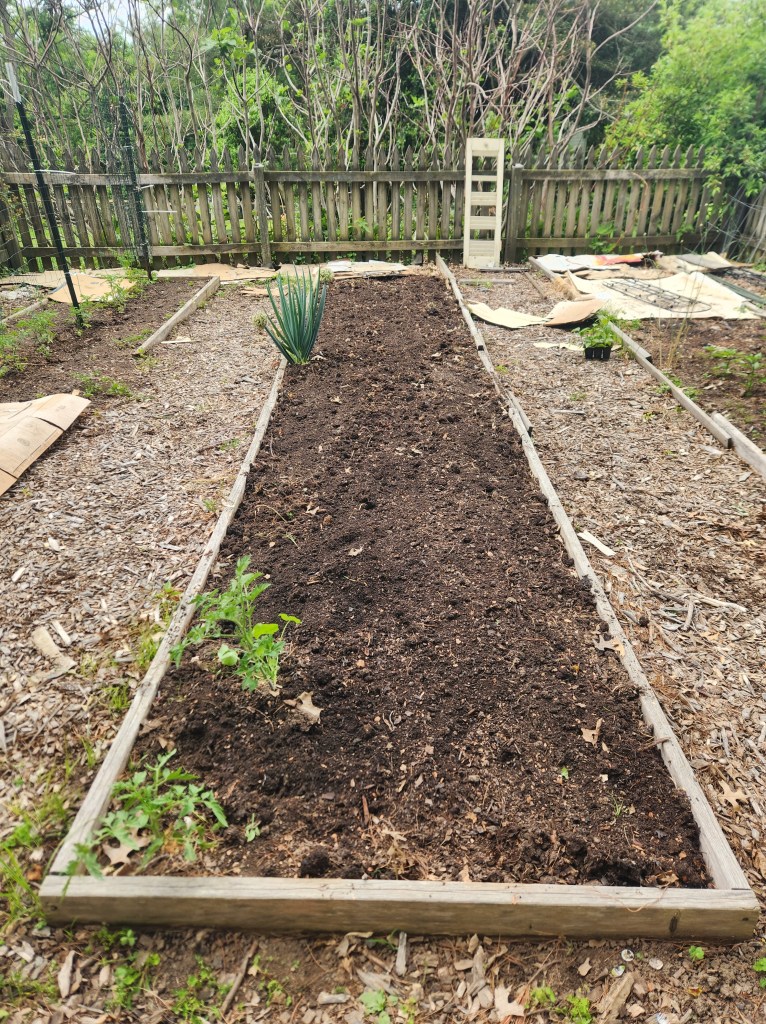
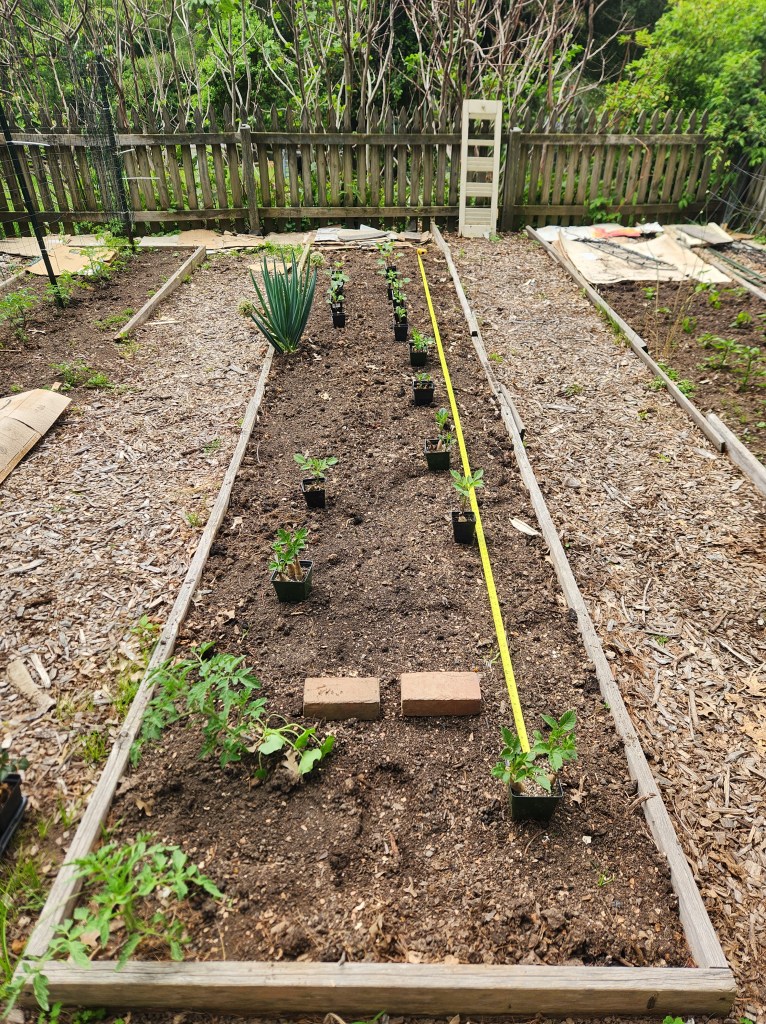
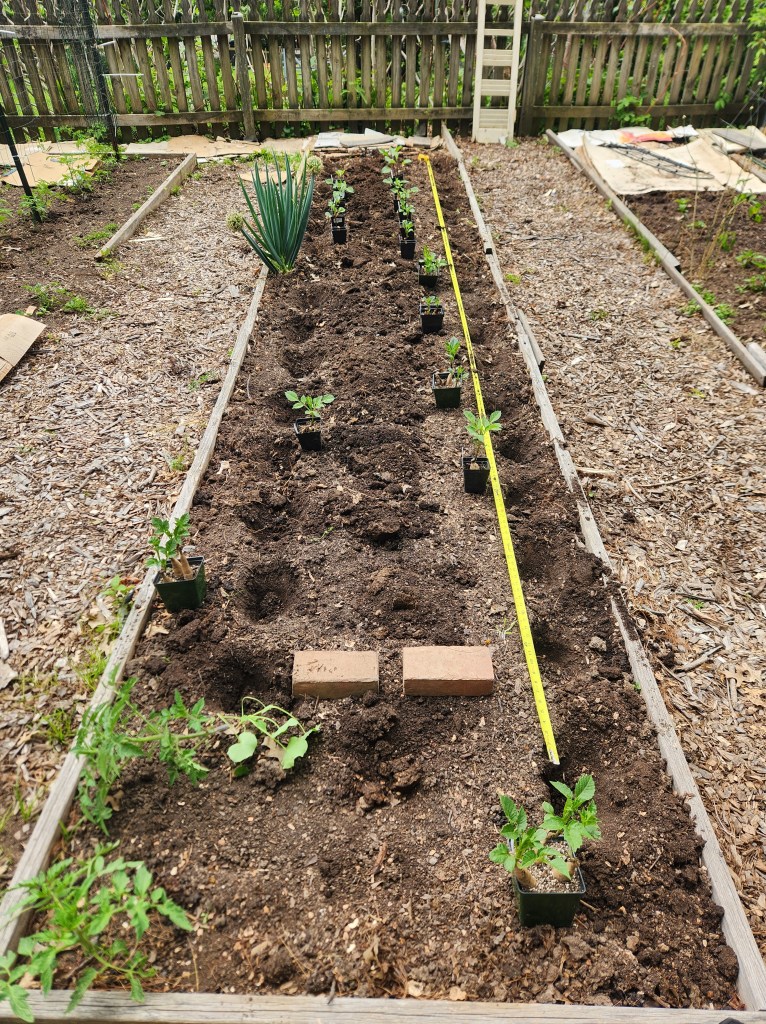
The two biggest considerations with planting are spacing and depth. Spacing matters for all plants so that they aren’t competing for sun, moisture, and nutrients if planted too close together or the flip side that they are so far apart you didn’t maximize your space. Spacing is also important in terms of being able to install the right supports and staking to keep the plants upright. Dahlias should be 12” apart with 18” between rows. Because I planted them too close together last year, I literally laid out my tape measure and got to work.
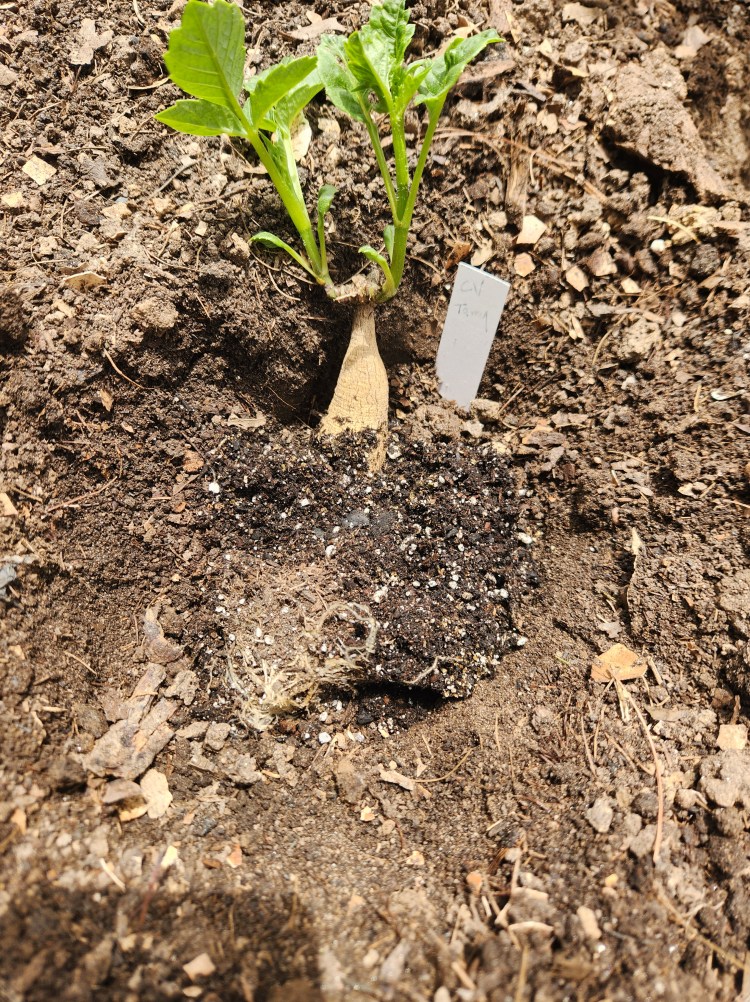
For depth, they should be planted 4-6” down. I would say this varies based on the size of the tuber, where the eye is, how long the neck is, and whether it’s already sprouted. I lay mine flat or at about a 45° angle in the hole so they can sort of rest in a cradle. The main idea is just for them to NOT be vertical and for the eye to be facing upward because that is the direction it will grow.
I dug my 34 holes in a zig zag pattern so that each plant isn’t directly across from another. Because I had labeled my tubers to the best of my ability (thought still managed to have four I could not identify), I attempted to plant them in an ombre fade from white to deep scarlet (listed below) but we’ll see if that actually pans out. That was the suggestion of my lovely Master Gardener friend.
CV Tamy (6)
Coral (2)
Colorado Classic (3)
Sonic Bloom (3)
Ivanetti (3)
HH Black (4)
Deep Red (3)
Wildcard??? (4)
Bishops Children (5)
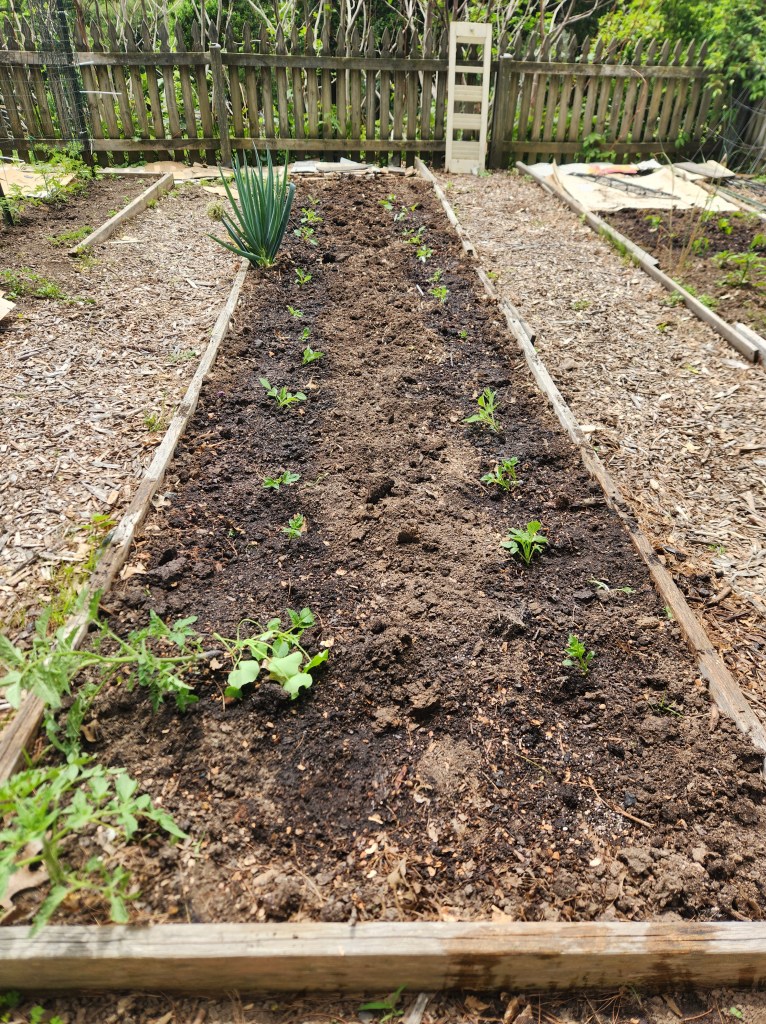
Once I got them all in the ground, I watered them in well. Like any plant, the first few days are really important for strong watering so the plant isn’t stressed and consistent watering thereafter. Next, I’ll be installing my drip irrigation in all three beds.
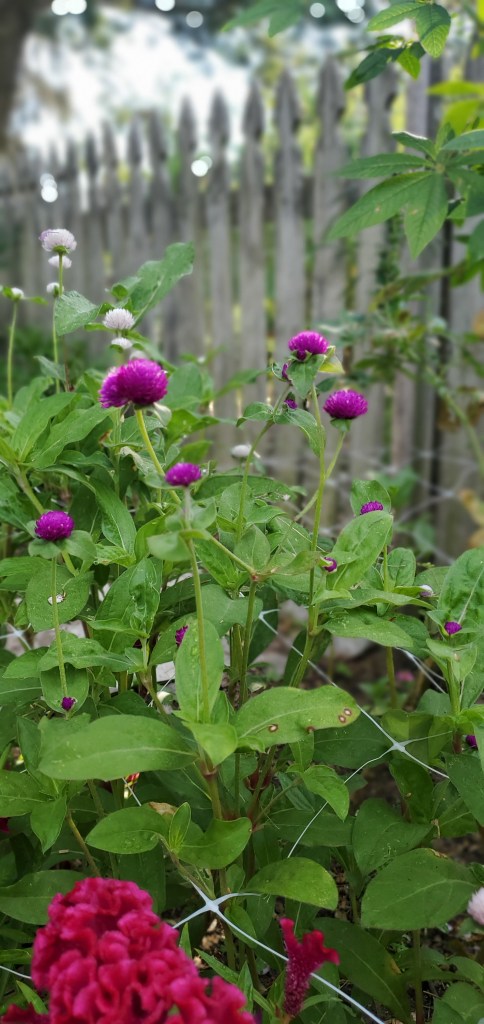
Remember how I added a cutting garden last year? I experimented with a wild flower direct sow section (AKA hands off), a perennial section, and then two designated 3×10 foot bed of intentionally planted, started indoors, known for growing easily cut flowers – largely zinnias, celosia, snapdragons, sunflowers, and dahlias. I had gomphrena and yarrow for fillers too.
I think I spent about $40 on dahlia tubers. Everything else was started from seed that I spent about $30 on. My goal was to sell ten bouquets for $15 each and make all my money back as well as cover the costs for my seeds this year. That didn’t happen. Hence why most businesses go under in the first 3-5 years. This year, having not met my goal last year, I’m committed to an even bigger goal. I’m going to sell $250 worth of flowers this summer June-August. Ha – I hope you are reading the irony here. If at first you don’t succeed, make it even harder 😊
I’d like to think I’m a bit more experienced and have solved for some of the challenges that slowed me down last year.
I’ve got soil blocking down (post coming soon!). Way more starts in way less space!
I’ve got a good handle on a two-week succession planting schedule.
I’ve got a plan for drip irrigation. Key word – PLAN.
I’ve realized the error of my ways in loving how pretty the flowers are and not wanting to cut them. They are getting harvested two days a week.
I’ve got buckets for storing flowers in cool water the moment I cut them, and I’ve got flower feed packets.
While I don’t want to play favorites with flowers – I LOVE THEM ALL – I am very excited about my dahlias this year. I knew they were a good investment because they multiply on their own. I borrowed Discovering Dahliasfrom the library over the winter and was fascinated with all the different types. I fell in love with the pom pom, water lily, and cactus styles. So I bought a six dahlia sampler kit from Hudson Valley Seed Company {perfect time to buy as they are on sale}. And then I bought four more from Connel’s Dahlias.
Last year, I really knew nothing other than watching some short videos on the Floret website. I pretty much only got them started correctly. I didn’t space them or support them adequately, and I certainly didn’t harvest them frequently enough. When there was beautiful blossom, I was so enamored by it I couldn’t cut it. Oh Dear! This year will be different.
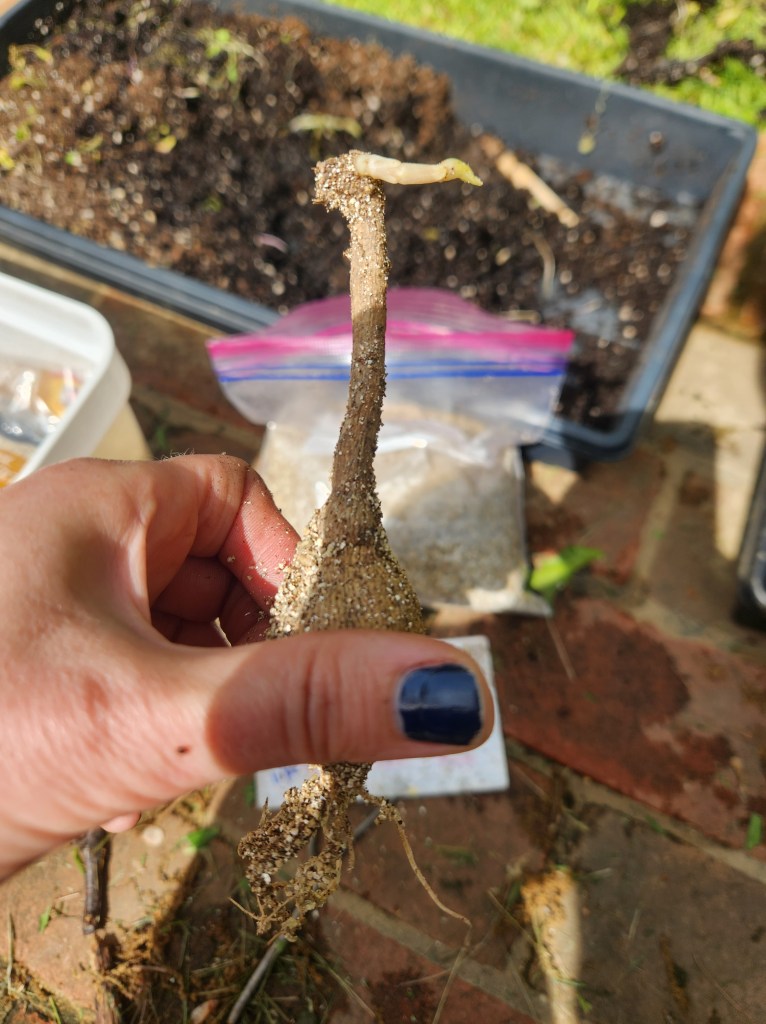
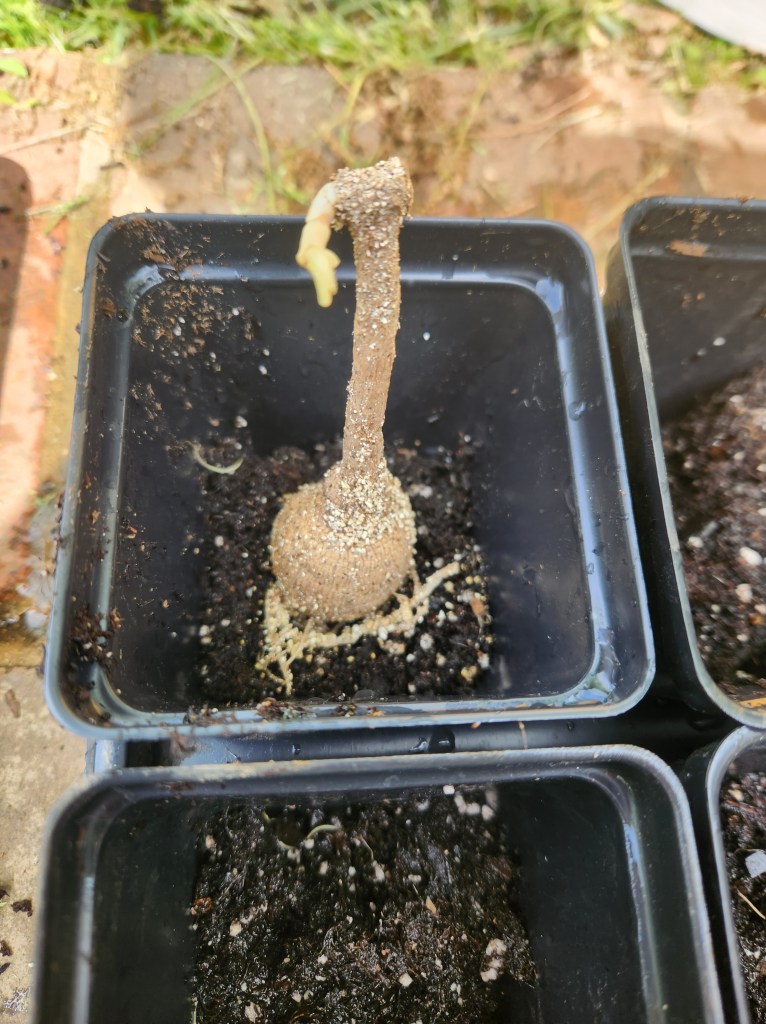
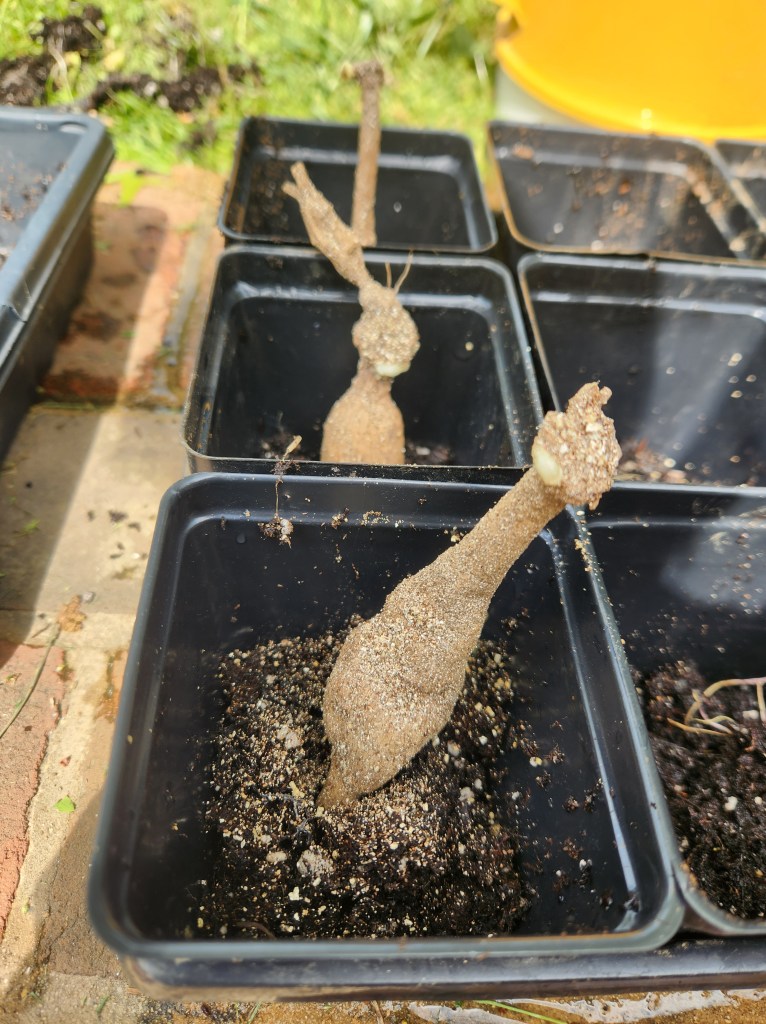
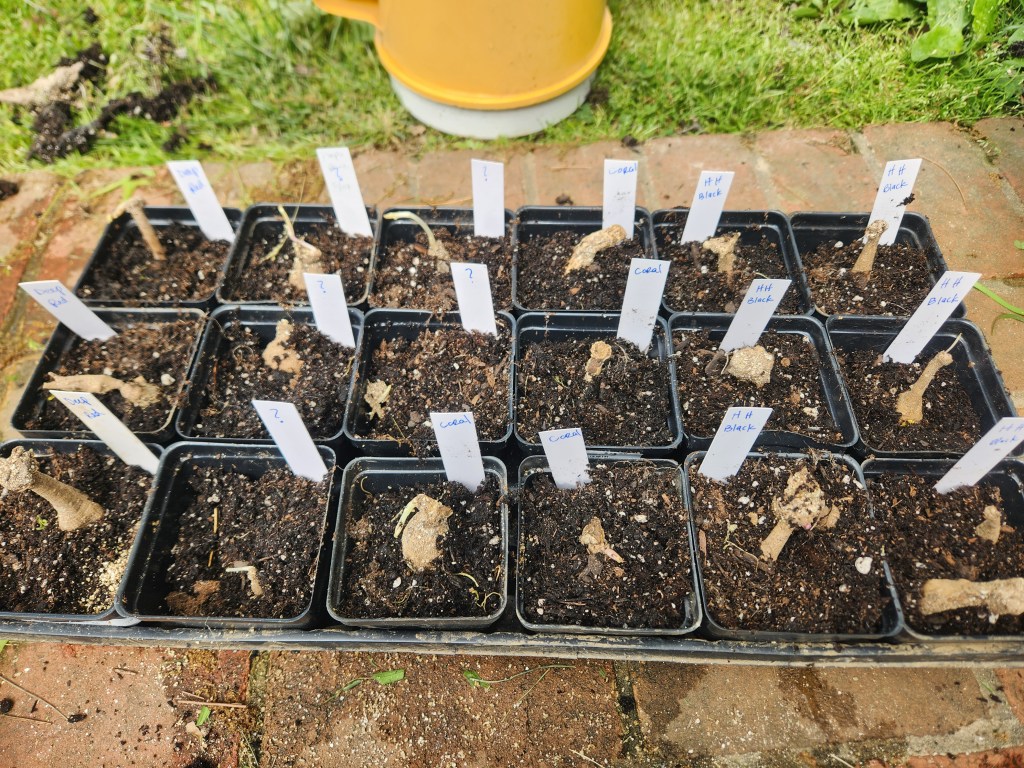
So I’m off to a strong start with more than 30 tubers. That’s what the ten I bought last year turned into. Yippee! The first stage is to get your tubers pre-sprouted as follows:
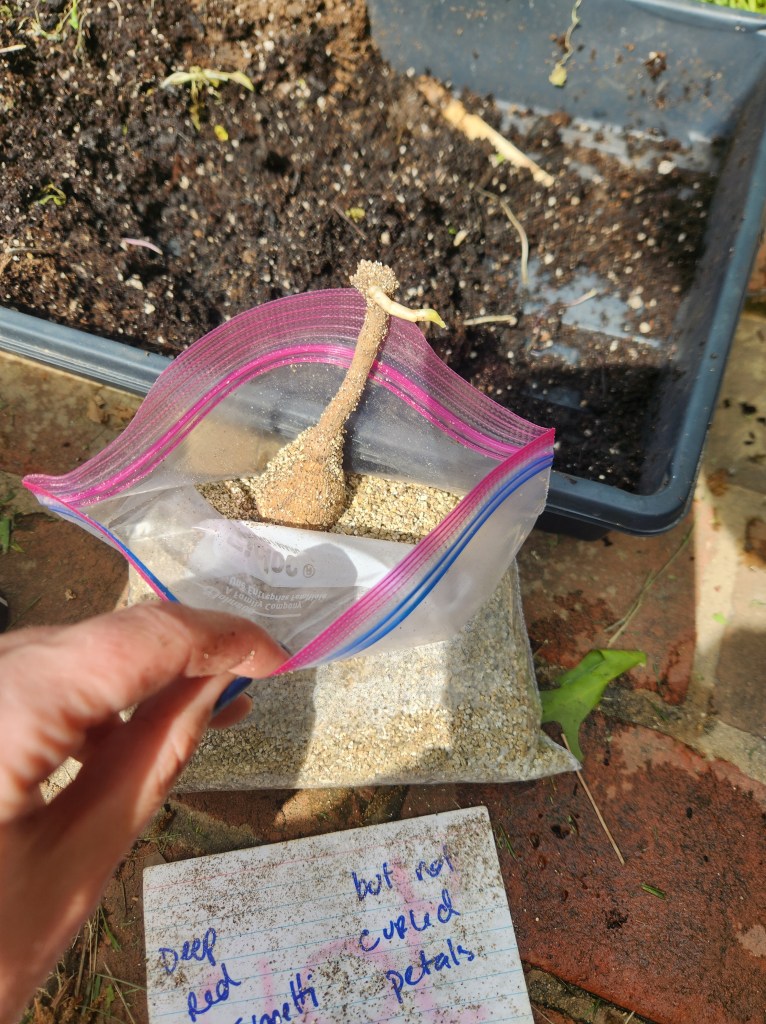
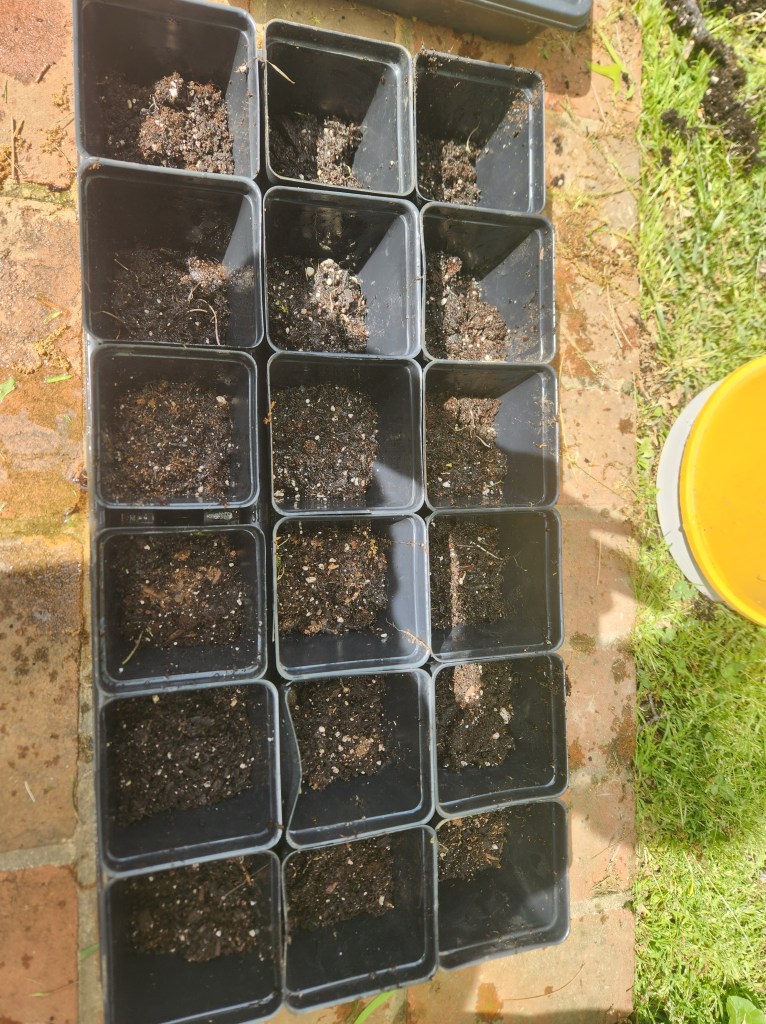
Fill a container with growing medium. I do a mix of 1/3 potting soil, 1/3 peat moss, and 1/3 vermiculite.
Nestle your tuber in so the neck and eye are exposed.
Label them as you go.
Keep them in a warm sunny place and keep the soil moist. Not wet, not dry, just moist. I have left mine outside from day one because I didn’t have room on my growing shelves.
Watch and wait…
Stay tuned, a post will be coming very soon on planting the tubers, setting up drip irrigation, and staking them correctly.
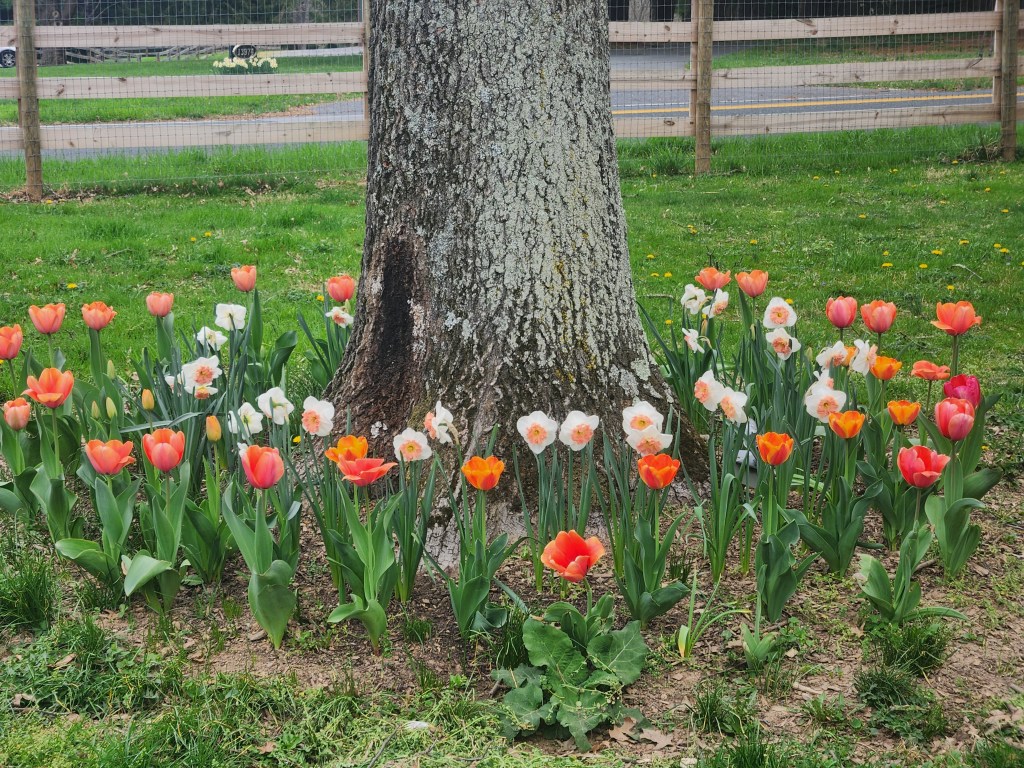
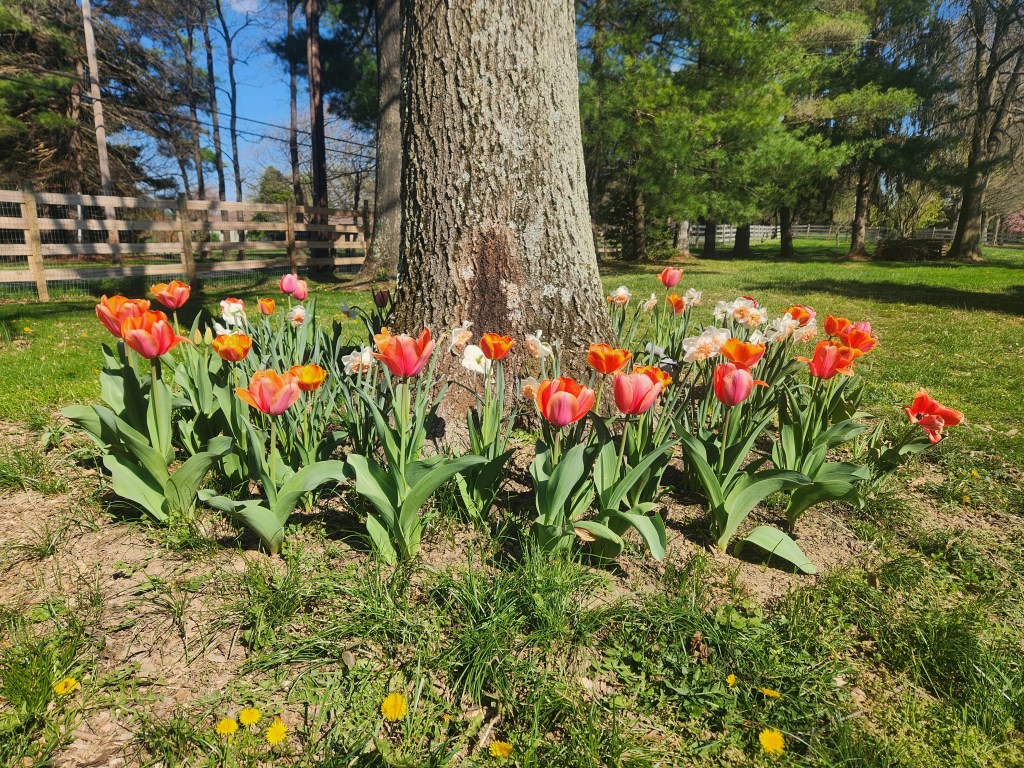
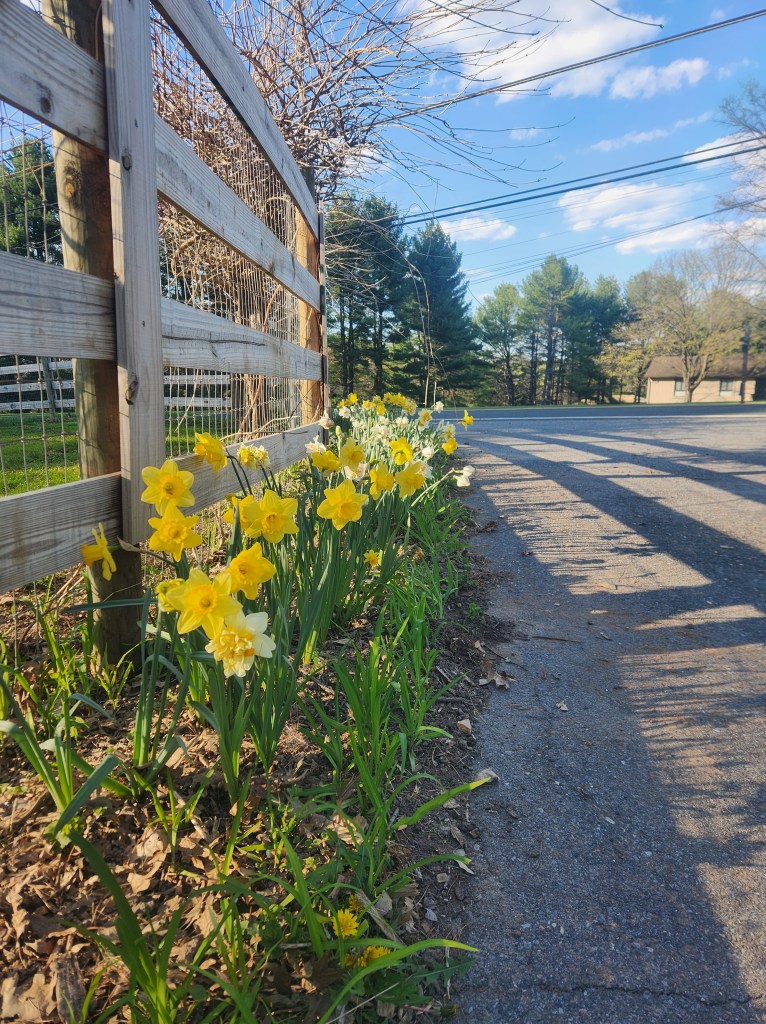
I believe I’ve said before that as I’ve grown older, Spring has become my favorite season. My daughter’s name means Spring and I love it. Obviously, I picked it 😉 As a child, I loved summer – playing in the pool, being out of school. Now I see the beauty and value in all the seasons. But there is something about the transition with everything coming to life, filling in the blank spaces of dormancy, and regaining color that renews and restores my spirit. Having just lost my Mom to cancer, that is more true now than ever.
In Spring we have Easter, Passover, and Ramadan all falling within a few weeks of each other. It’s clear that regardless of your unique religious beliefs, the major religious traditions all share this emphasis on rebirth and renewal. Hence why we have Spring cleaning. After many months indoors, it’s time to freshen things up, let the breeze blow, and feel the sunshine on your cheeks.
I hope you can get out and watch in wonder the new life unfolding all around. It’s inspiring and magnificent.
Where did summer go, folks? Seriously, when were kids summer felt like it lasted forever. You almost wanted school to start so you had something to do. And how come kids get 12 weeks of vacation each year but adults only get like 2 or 3?!? I’m pretty sure adult-ing is way harder than kidd-ing.
But, I’ll take the simple pleasures whenever they come and however I can get them. That’s where flowers come into my life. This summer I started experimenting with growing some cut flowers. Mainly snapdragons, zinnias, dahlias, celosia, yarrow, marigolds, and cosmos. I’ve had some fails and some wins. As much as I was hoping for big amazing blooms, I’m actually okay with the smaller production that has transpired. I’ve learned a lot about spacing, watering, and fertilizing. And of course, the adage of ‘less is more’ has been very applicable.
I started with probably 15 different types of flowers (sweet peas, bells of Ireland, china aster, scabiosa, Mexican sunflowers) and I already know that next year I’m scaling back: snapdragons, zinnias, sunflowers, and celosia. That’s it. Maybe some bupleurum 😊
I tend to take on too much at once, create a super complex schedule, and then about 6-8 weeks in I’m tired and falling behind. I always want things to turn out perfectly on the first try. And that’s just not realistic. I’m saying all this because if you are in the same boat, I’m hoping you can cut yourself some slack. Life doesn’t usually go smoothly. The frustration and mishaps are part of the process and how we learn (saying this as much for myself as anybody else who needs to hear it). In general, as I try to take on more of a homesteading lifestyle while working full-time and raising two little kids, I just feel like I’m coming up short more of the time than not. And that takes the fun out of it. I want to enjoy the successes and learn from the misses. And smell the flowers along the way.
We all have our own reasons for gardening. Self-sufficiency. Passing on skills from elders. Connection to nature. Regardless of motivation, I would say it’s always important to zoom out. See the bigger picture unfolding in front of you. A facet of gardening I never expected to appreciate as much as I do is bird life. I am certain that all my plants and flowers attract more bird life than if I didn’t garden.
I see them every morning and in the afternoon flying in and out of my garden, stopping at the feeder, and chasing each other from tree to tree. The most frequent are goldfinches, nuthatches, titmice, juncos, sparrows, cardinals, orioles, bluebirds, red-billed woodpeckers, and of course robins.
But a bird whose magnificence is truly breathtaking and I don’t think I ever saw in real life before last summer is the hummingbird. It will take your breath away every time.
We bought a hummingbird feeder like this for our front porch. I wasn’t sure if it was too close to our activity for the birds to feel comfortable frequenting it. But within a few days, Sha-ZAM! The sound of hummingbird wings fluttering is unmistakable. Like a mini-helicopter going by you.
If you’d like to see more hummingbirds in your yard, here are few ways to attract them.






 farmcharmblog.com