MIM: Deodorant

It’s getting hot in here, so take of all your clothes.  I am getting’ so hot, I’m wanna take my clothes off.  Thank you, Nelly, for those unforgettably classic lyrics.

Summer is officially here and depending on where you live things might be feeling pretty steamy. And I don’t know about you, but I’m a sweater. Not a warm, fuzzy, give-my-body-a-hug article of clothing. I sweat. I sweat a lot. And the smell of body odor is never pleasant or subtle. I’ve spent a lot of time in foreign countries that don’t do anti-perspirant the way Americans do so I am well acquainted with body aromas.

And I’ve heard other people talk about this so don’t think I’m a weirdo, but my sweat has totally changed over the last year with the COVID-19 pandemic. Maybe stress, maybe anxiety. Who knows the cause but being smelly is really not my jam. (But don’t ask Cactus.  On a near daily basis, he asks me if I’ve showered, sometimes right after I get out of the shower, and then proceeds to tell me that I can’t call running through water taking a shower.)

About two years ago I started making my own deodorant. It largely spurred from me wanting to pay more attention to the ingredients I put in and on my body. I wanted to make things really simple. I found this 5-ingredient recipe that is beyond easy and takes about three minutes to make.  I do two batches at a time and it lasts me an entire year, sitting in my bathroom cabinet with no issues.

Homemade Deodorant Recipe

Ingredients:

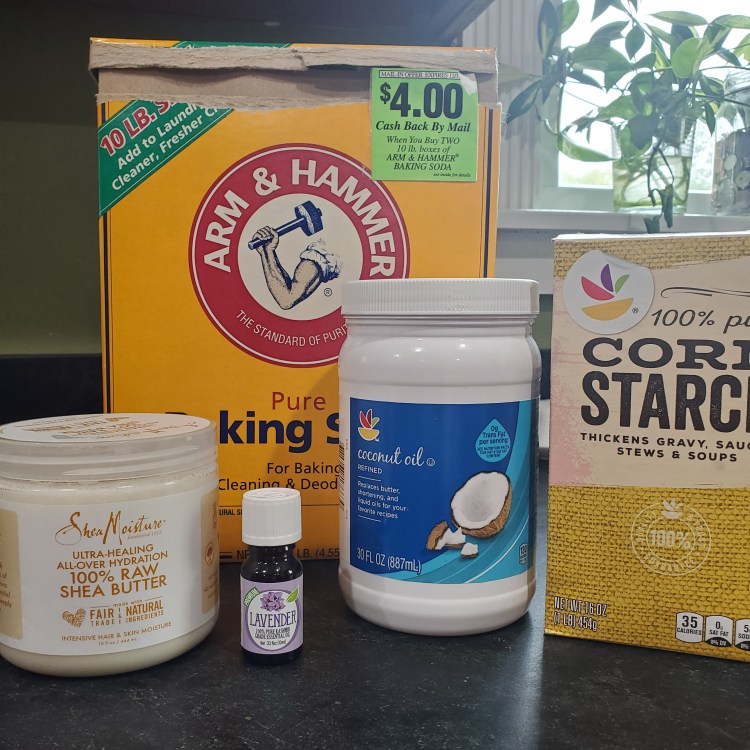
  • 2 T shea butter
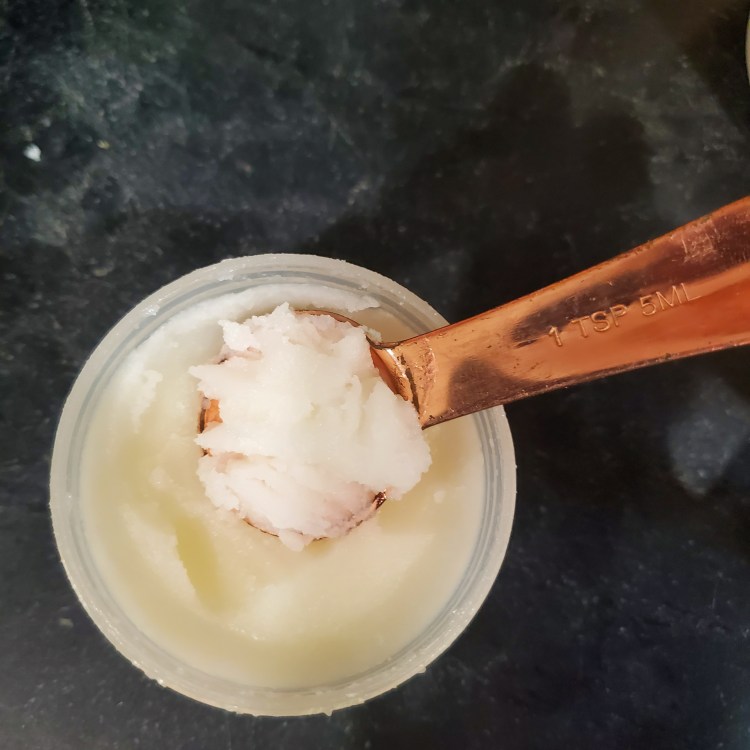
  • 1 tsp coconut oil
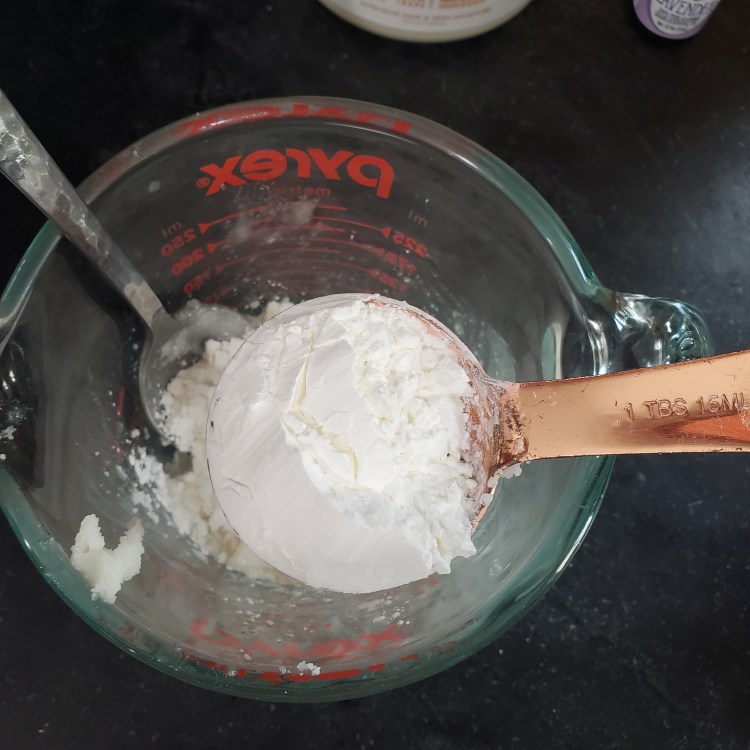
  • 3 T of arrowroot powder or corn starch. I use corn starch simply because that’s always in my kitchen. I do want to get some arrowroot powder and make a comparison batch.
  • 2 tsp baking soda
  • 10-15 drops of your preferred essential oil

Steps:

  1. Mix the shea butter and coconut oil together. I put these first two ingredients in a dish in the microwave for 15 seconds so they are slightly softened and easy to stir.
  2. Add the powder or starch, whichever you are using, and the baking soda and stir until smooth.
  3. Add the essential oil of your choice.
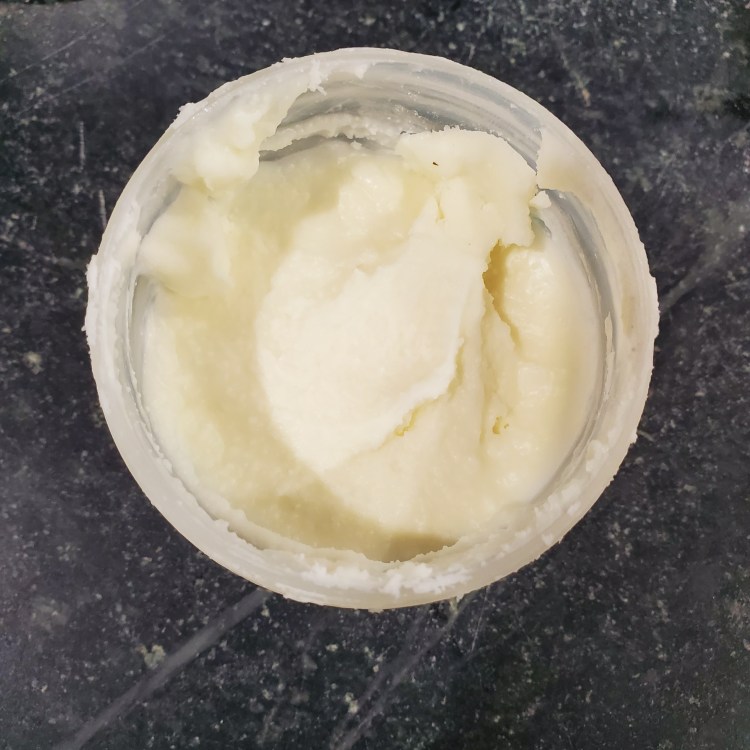
  4. Pour into a small pyrex dish, old eye cream pot, or a 4 oz mason jar (whatever you have handy, as long as its relatively shallow because you’ll need to dip your fingers in it) and then put it in the refrigerator for about an hour for it to set.
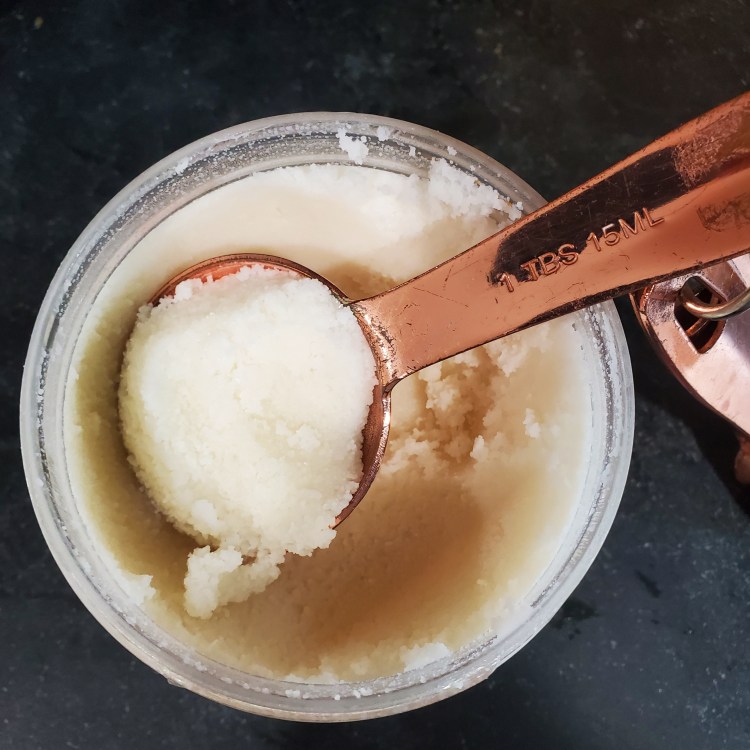
This makes 3.5 ounces, a whole ounce more than your standard stick of deodorant. Voila – happy armpits!

And if you want a chuckle, have you seen this ad for Lume body deodorant?  Oh man I couldn’t stop laughing. I was like “Is this for real?!?”
How to Score Free Plants

You are not going to believe this, but scoring free plants is totally a thing. A neighbor told me she gets bulbs and other plants when stores are changing over between seasons. I just sort of smiled and nodded like, “Yeah, I’m not sure that’s true but thanks for telling me.” I didn’t really put much weight or thought into the idea. But lo and behold I am a believer.

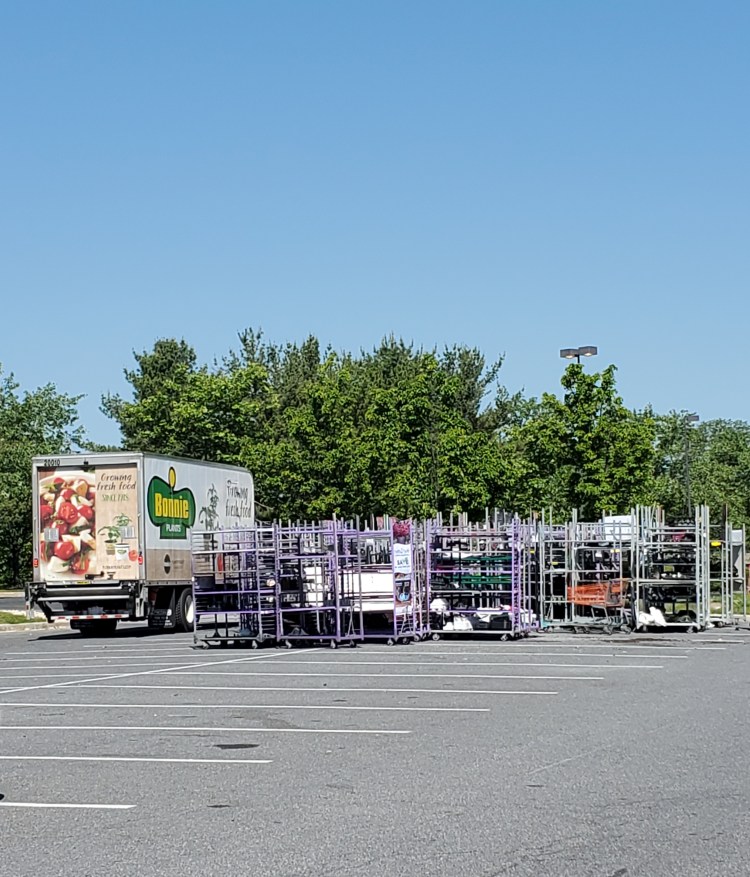
I was driving by the local Ome-hay Epot-day (don’t want to implicate anyone here) and happened to see all these rolling shelf carts at the end of the parking lot. They were not organized and at first glance appeared to be empty. But my little eagle eye said to go give this situation a closer look. Before I say more, there are two things I would say you need to know about me.

  1. I’m a rule follower. I like order and I like predictability. However, if there isn’t a sign explicitly saying not to do something, then it’s up to me to use my brain and decide what is reasonable and sensible. There was no sign saying “Don’t take these plants.”
  2. I love recycling! If I can save something from the trash and find a new use for it, nothing makes me happier. It’s a two-fer. Someone else enjoyed this item and now I get to enjoy it as well.  And in this situation, nobody else even got to love on these plants yet. They were just wishing and hoping to have the chance to live their best lives. It was my duty to save them 😊

On that note, let’s talk about going through trash for a second. I’m not going to jump in a dumpster necessarily, but if I see perfectly usable things in the trash that I can salvage, you bet I’m gonna do it. Look, we live in a very disposable society, with short attention spans, and marketing and advertising constantly telling us we need something else to be happy. I don’t buy it! (see what I did there?) That’s why I did the whole year of enough. Stuff doesn’t make us happy. Relationships and feeling connected to family and friends, doing meaningful work, and helping others makes us happy. If someone is concerned about the appearances of resuscitating an item from the trash, look no further than the proverb one man’s trash is another man’s treasure.

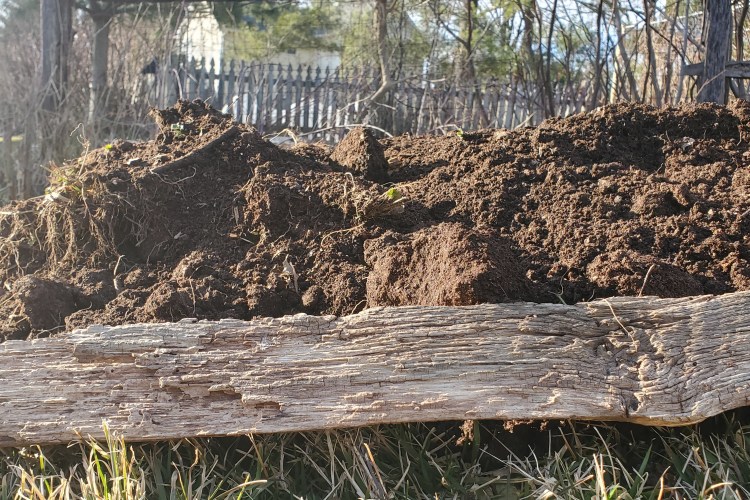
Metal shelving carts in parking lot

So I walked on over to the rolling shelf carts and there were hundreds of plants jammed on top of each other. Yes they were dried up and on their last leg but let me tell you their time was not up. I spent about 10 minutes sorting through and grabbed no less than 30 plants – some flowers, six peppers, maybe eight tomatoes, a few mints, a couple cilantros, two basils and sages. There was even some okra and cucumbers! I pretty much won the lottery.

close up of metal shelving carts in parking lot

Food wasted is something that I’ve been learning more and more about and this was a light bulb moment for me. All these plants represent food and self-sufficiency. Maybe we all don’t have a huge yard to grow food but we could all have 2-5 plants on our windowsills, door steps or balconies. And then we have some ownership over what we eat, which leads to taking better care of our health, and then we are unstoppable.

Besides hanging out by the trash, here are some other ways to score free plants:

  1. Pay attention to the change of seasons (April, July, October) and when certain items are going to be pulled from the shelves.
  2. Ask the staff at your local hardware store if there are plants they are going to toss.
  3. Volunteer at a local farm or greenhouse – there will be plants that don’t sell.
  4. Trade with a neighbor. Take note of which neighbors have gardens and offer your extra seedlings in exchange for some of theirs.

Vertical Gardening – Strawberries and Tomatoes

In addition to starting another garden row, I wanted to experiment with growing more crops vertically this year. I bought a GreenStalk planter and decided to use it for my strawberries. Two years ago the bunnies had quite the buffet at my expense so I thought growing them in this planter might offer more protection. And strawberry plants are perennials in the sense that they send runners out that will create new plants which means more harvest and less work *hopefully*. Though the first year is not meant to be a huge production but moreso about the plants getting established. I bought half June-bearing and the other half everbearing plants. My thinking on this was the everbearing will give us berries all summer long and the June-bearing will provide a good harvest all at once that I can use for jam and jelly. And this is a fun little set up for kids to be involved with because they can walk by and grab a berry.

Vertical gardening for strawberries with a greenstalk planter

The end of May is also when I wanted to get all my tomato plants in the ground. I had quite a lot of anxiety about this because I grew all my plants from seed this year so getting them in the ground was pretty close to giving birth with regard to the anticipation and nerves. I’ve been hardening them off gradually the last two weeks, taking them outside for 2 hours in the morning, then 3, then 4, then 5 and working my way up to 8 hours total.

Coincidentally, where I planned to plant the tomatoes was the same space I had planted all my cauliflower and broccoli in. But these brassicas have been maturing so slowly that I’ve been delaying and delaying getting the tomatoes in the ground. Over the last week I just decided I would harvest the heads of cauliflower and forget the rest. I had been told by a few people that doing brassicas in the spring was quite challenging (due to the shortened growing time as the weather typically goes from cool to hot with little transition) and better to try in the fall. But I had to see for myself and they were right 😉

My plan was to create a better supported and more vertical setup for the tomatoes this year. (FYI – the A-frame you see in lots of posts did not work for me last year.) At the farm where I volunteer, they used a setup I really liked and had the supplies for, essentially T-posts and fencing.

Set your tomatoes up for success – here’s what I did:

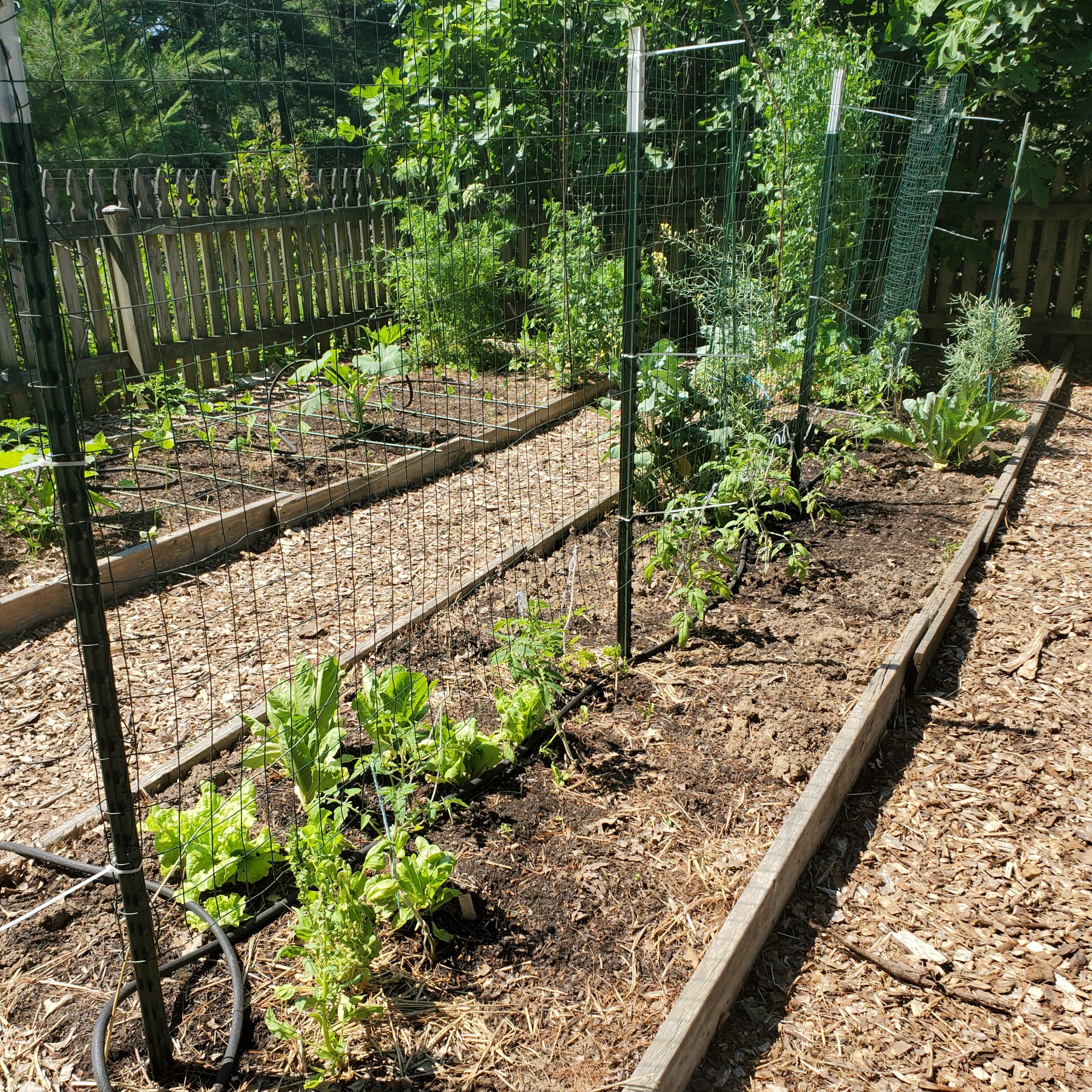
I spaced my T-posts 5 feet apart and secured the fencing with 3 zip ties to each post.

I dug approximately 12-inch-deep holes in an offset pattern along the fencing, making a zig zag pattern.  On one side of the fence they are 24 inches apart, but the nearest plant is 12 inches away on the opposite side of the fence. (I am hoping this doesn’t come back to haunt me.)

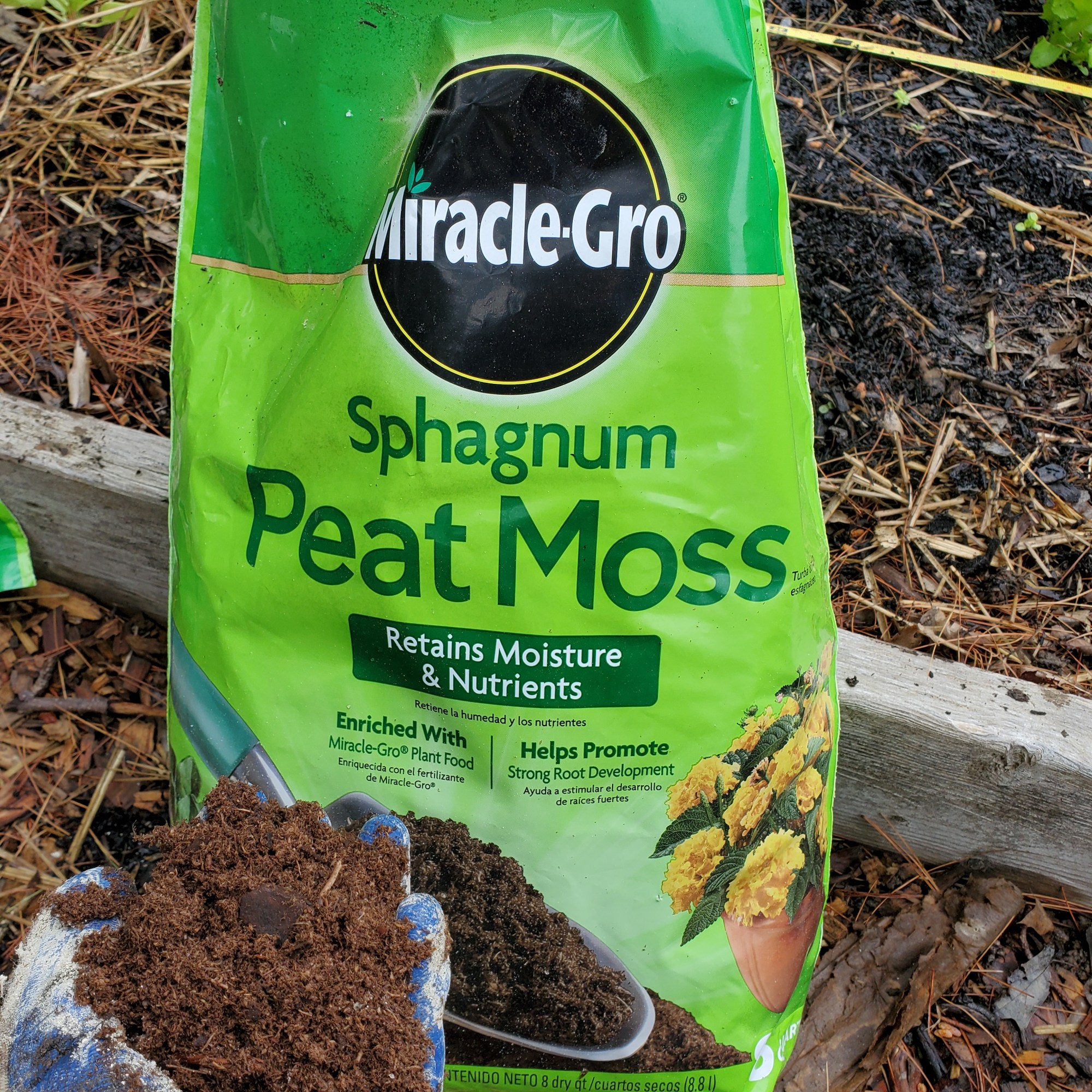
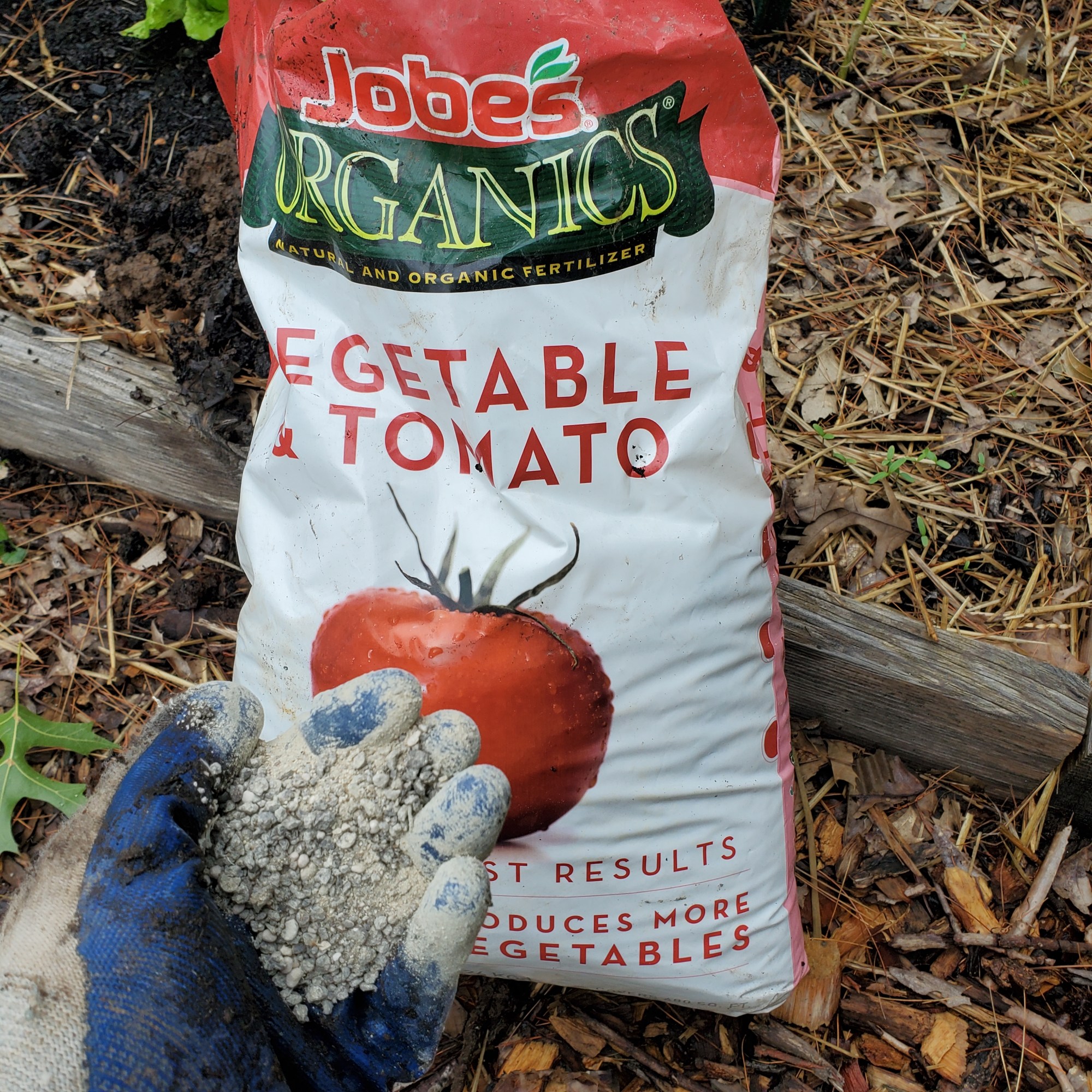
I put a handful of peat moss, and about 2 tablespoons each of fertilizer and crushed egg shells in every hole, mixed it up with compost and soil and then placed my seedlings in. Tomatoes need to be pretty deep down to help establish strong root systems and the peat moss should help with that as well. I think coco coir is a more environmentally friendly option but I couldn’t find any at the local hardware store. The egg shells provide calcium and along with the peat moss help to make the dense, clay soil we have here a little more light and aerated.

Not all of them are tall enough to reach the fence just yet, but for those that are I am clipping them with these handy tomato clips.

All in all, it took me about 2 hours with the help of Cactus installing the T-posts, to plant my 15 tomato plants. These are my babies and I am so excited to see how they grow.

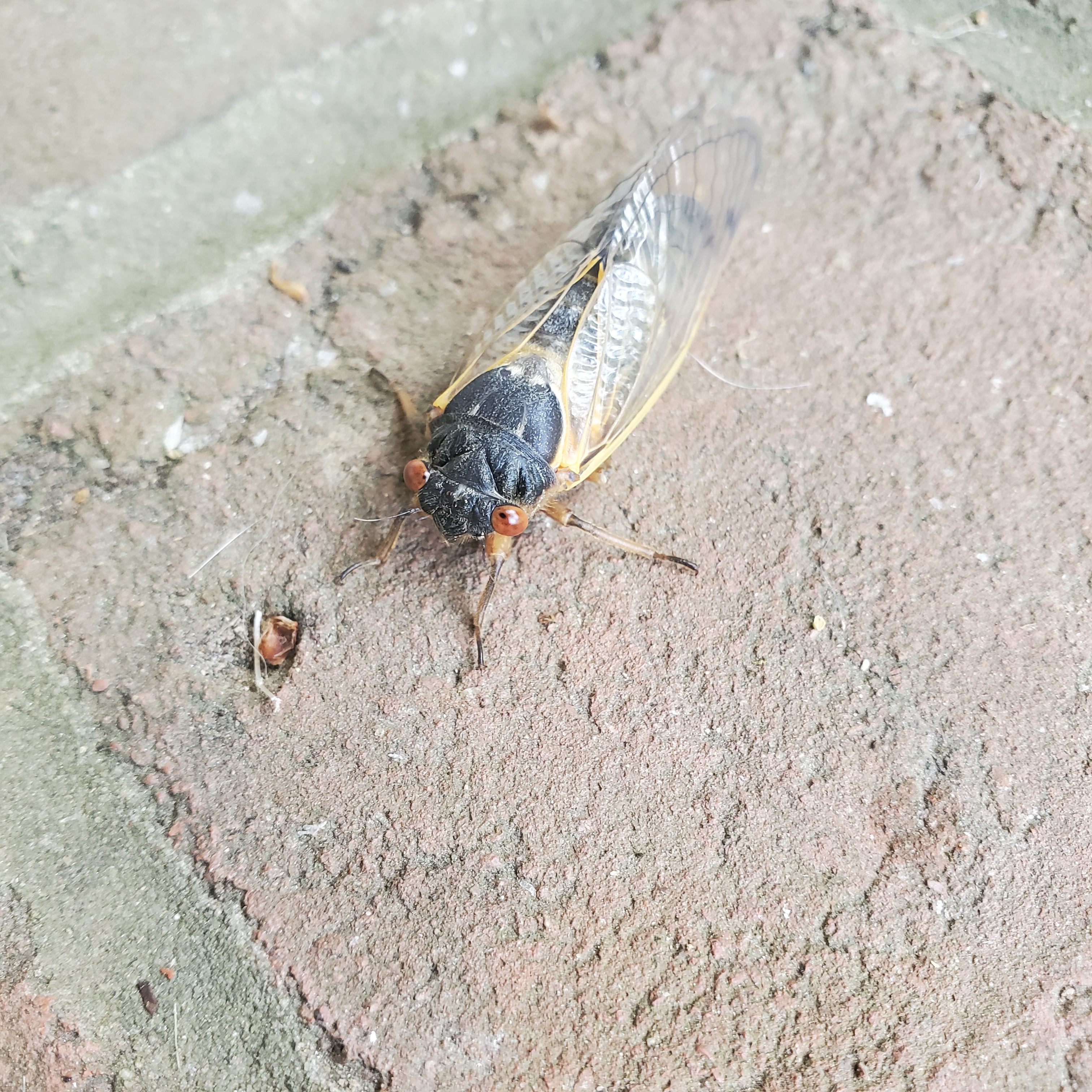
The cicadas are coming

Aside from all the other things 2021 will likely be remembered for, I didn’t want the cicadas to be forgotten. I know we’re only a mere four months in and so much more is bound happen, but cicadas are not to be upstaged. As I thought about this post, I wasn’t even sure how much of a ‘thing’ cicadas are nationally or globally. Well, turns out there a site called Cicada Mania to answer all the burning questions you never knew you had. If you don’t want to go crazy, here are just a couple fun facts that I found interesting.

  1. There are more than 190 different kinds of cicadas in North America, and more than 3,000 around the world.
  2. The different cicada species have any of three different life cycles – annual, periodical, or protoperiodical. The ones we are excited about right now are Brood X (Great Eastern Brood), emerging every 17 years after being underground
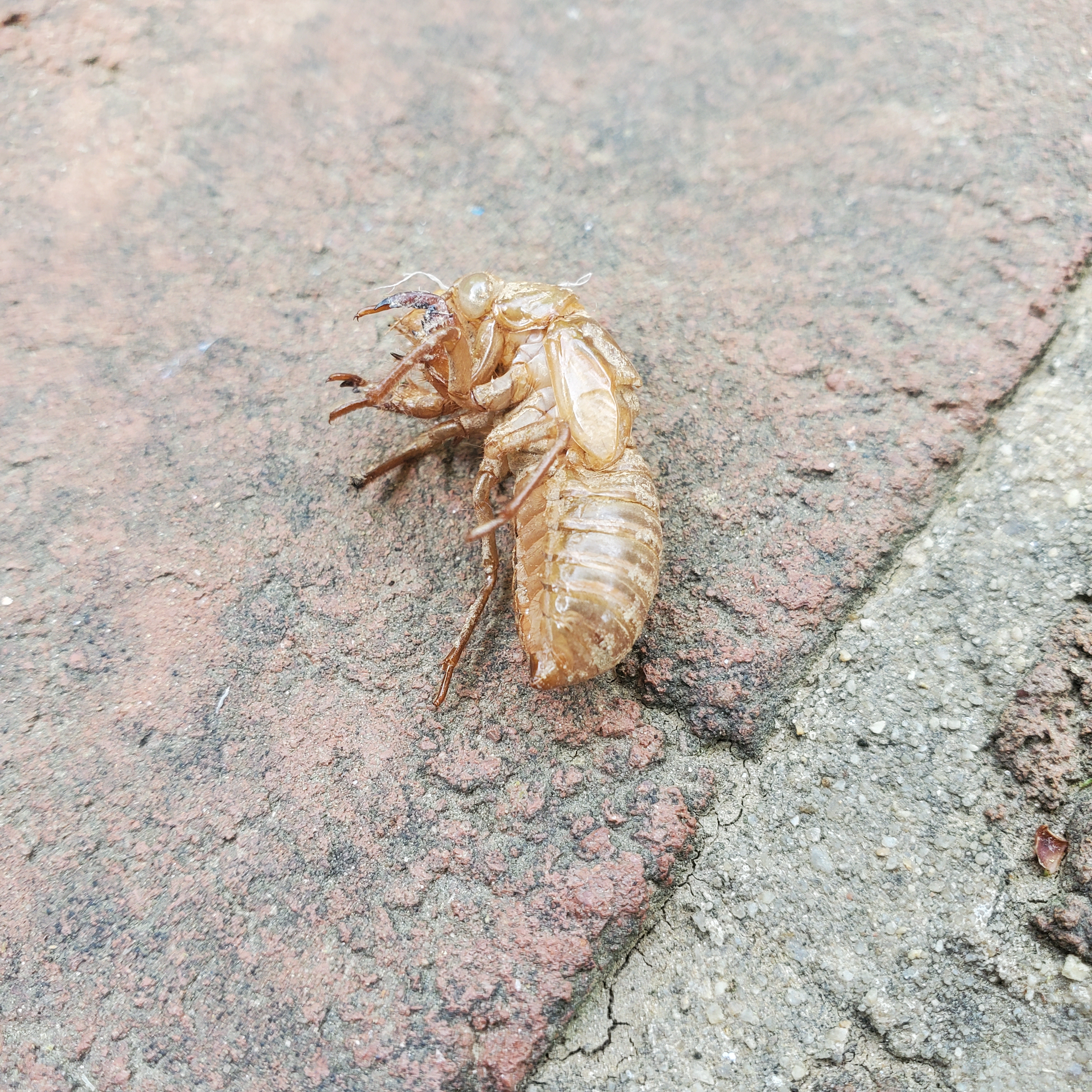
  3. When they emerge, they shed their exoskeletons and then get to work looking for a mate. The females will then lay eggs and the whole cycle repeats itself with them growing underground. Pretty fascinating.
  4. There’s A LOT of them. Like Billions. It feels like one of the plagues. I lived in Maryland in 2004 and this was the first exposure I ever had to them so I’m curious to see if we get carpeted with cicadas again.  I’m not exaggerating when I say there was a layer of them on my car, the ground, everywhere!
  5. They are LOUD. Different species have been recorded at more than 100 decibels. To give a reference point, a jackhammer, tractor and garbage truck are also 100 decibels loud.

Something I didn’t have in 2004 that I have now is chickens. Yup, I could and probably should rent my chickens out to my neighbors to clean up the cicadas.  They LOVE them!  Did someone say cicada omelet???

Do you have cicadas where you live? Ever dipped them in chocolate?  I’m sure they are a great source of protein.

Chicks, Man!

That title would only make sense to you if you watched Talk Soup on E! back in the 90s with Joel McHale. There was a segment that he would start with “Let’s talk about Chicks, Man.” Oh how I love Joel McHale.  Did you watch his Tiger King interview last spring?  Alright, I’ll stop.

Back in December, while home for about 10 days between Christmas and the New Year, I was getting excited about the spring and ways I was going to expand my garden and homesteading efforts. I just described a new garden row in this last post. My other goal was to identify five foods I no longer want to buy from a store and will instead grow and make myself. On that list are jelly, green beans, diced tomatoes, tomato paste, and eggs.  The first four are garden focused and I’ll keep you posted on those efforts this summer. Eggs are the other item I don’t ever want to buy again.

So I set off on a journey to create my “dream flock” with all the breeds I find beautiful and interesting. Up til now I’ve been pretty basic with white leghorns and brown bovans (we won’t talk about my Wyandottes that dropped dead). And I haven’t had the best success with choosing hens and have ended up with nearly 50% roosters when I get chicks at Tractor Supply. I did a little research on the different hatcheries and decided to go with Murray McMurray because 1) I could choose females and 2) I could buy the exact quantity I wanted without having to meet a minimum.

I decided to order 15 birds, to add to the 8 I already have so that I would get approximately two dozen eggs a day. My thinking here is to hopefully start selling eggs and cover my costs. This would get me roughly 14 dozen eggs/week, of which I will hopefully sell 12. If I charge anywhere from $4.50 to $5/dozen that will cover what I’m spending on feed and scratch. I do have some more calculations to firm this up since I’m not sure how much they will all eat once full grown.

Here’s what I ordered:

  • 3 golden wyandottes – gorgeous, just gorgeous
  • 3 buff orpingtons – they remind me of golden retrievers and are supposed to be very friendly
  • 4 barred rocks – I’ve always loved these – just the quintessential chicken
  • 3 speckled sussex – I love there feather patterns
  • 2 dominiques – I can’t quite figure out how these are different from Barred Rocks, so will see if I can tell.

They threw in a “free surprise chick” and 17 chicks ended up arriving in total so you do the math 😊 I will say McMurray Hatchery was great to buy from. I got an email reminder about a month out and then some text message reminders as well. All chicks came alive and chipper. I immediately gave them some water with Hydro Hen 3-in-1 mixed in and they are all doing well.

With all of the chicks in my bathtub, I am a bit nervous I bit off more than I can chew but nothing ventured, nothing gained right?

What about you? What do-it-yourself business have you tried and how did it work out? What do you wish you had known?

Like Peppers and TOMATOES (or peas and carrots ;)

It’s finally here!  The time we’ve all been waiting for (I feel like Anna in Frozen). The time to start your peppers and tomatoes. Not exactly sure why there is so much excitement around tomatoes and peppers (I’m personally more of a green bean and squash kind of girl) but I’m guessing because we are all so ready to be outside in our gardens and this is a tell-tale sign that we are getting closer to Spring.  Yipppeeee!

I’m not going to walk you through how to start seedlings – there are a gajillion videos you can watch that detail every step (here’s a good one from The Rusted Garden).  What I am going to share are a few of the tips and tricks I wish I had known my first two years.

Supplies:

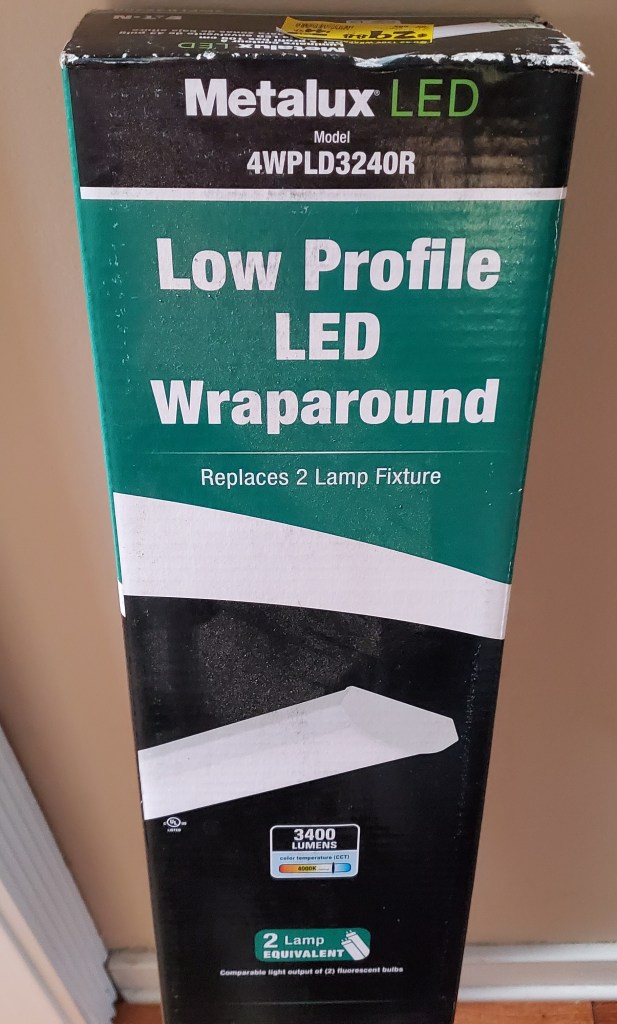
  • Grow lights – 3000-5000 Lumens and you want them to be ‘daylight’ (These should cost you no more than $20-40 and will last many, many years. You can see the sale sticker on mine from home depot.)
  • Growing medium –
  • Cells or containers – recycle something if you can, e.g. clamshells, egg trays, plastic cups.
  • Water
  • Fertilizer – I’m using Agro Thrive this year
  • Labels – popsicle sticks, toothpicks with a post it, paint stirrers

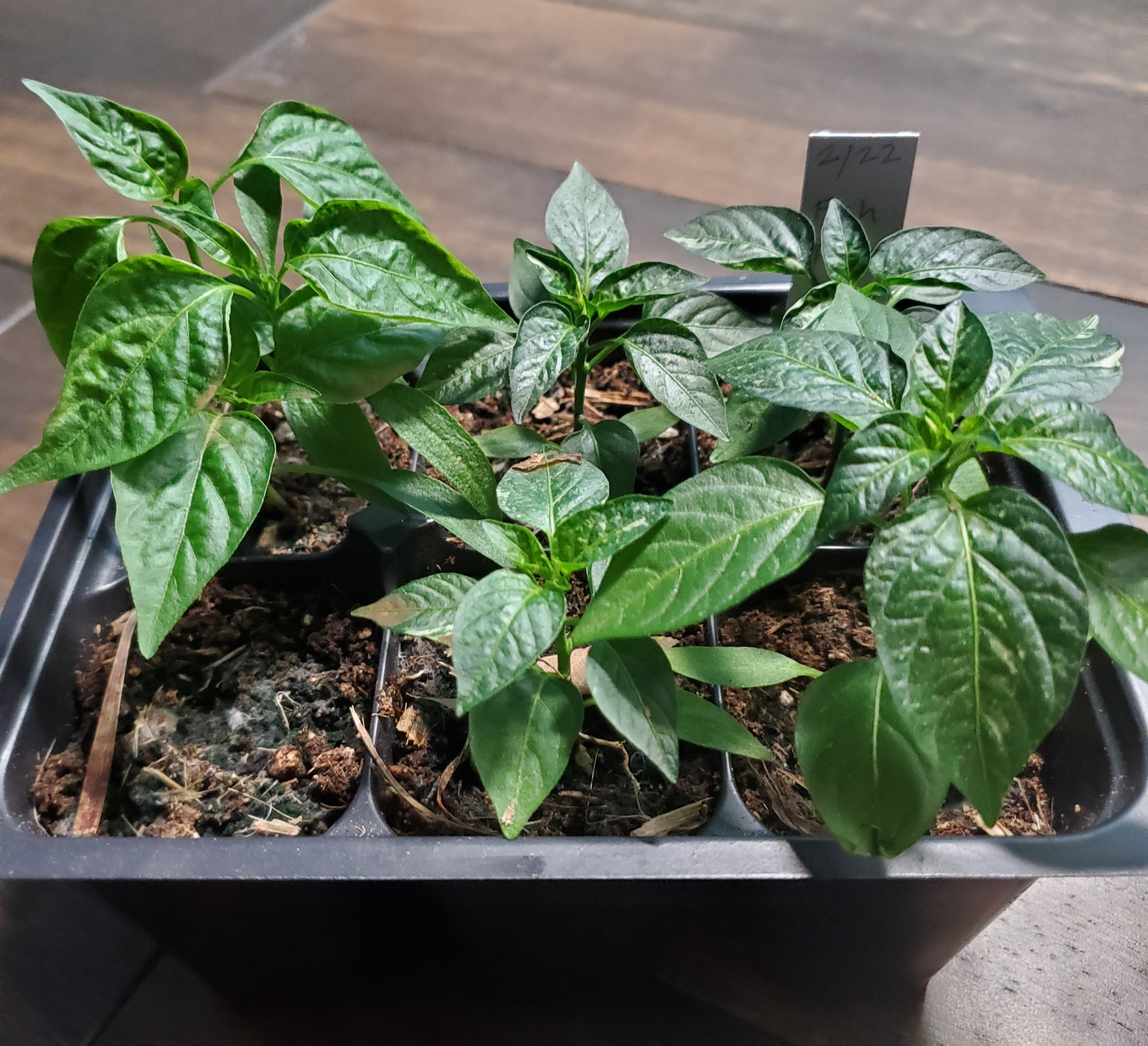
Timing: Don’t be like me and start everything in February (depending on your growing zone) and then lose steam by early April so that you end up having to buy starts at your local nursery. Slow and steady wins this race. And by staggering your start you give yourself time to work out any kinks in your setup – like lighting, watering, feeding, etc.

  • Hot peppers need to be started 10-12 weeks before your last frost date.
  • Sweet peppers need to be started 8-10 weeks before your last frost date.
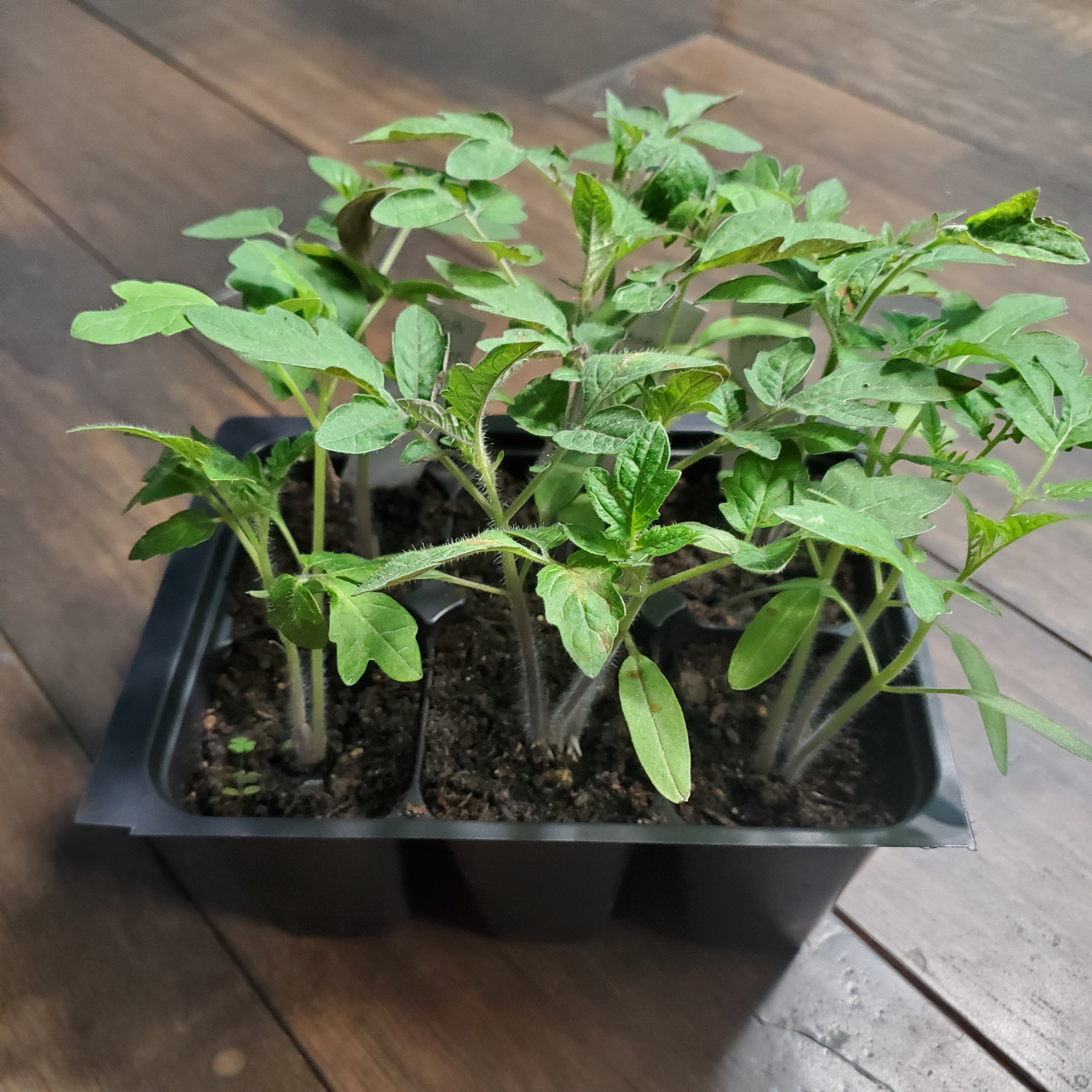
  • Tomatoes can be started 6-8 weeks before your last frost date.

Start:

  • Get a growing mix that is a mix of peat moss, perlite and vermiculite. This means there is no organic material in it and you must use a fertilizer within a few weeks. (I did not do this in the past and after about 4-5 weeks I never understood why mine became leggy and withered. Shocker!)
  • Moisten and pack the mix into your containers or cells.
  • Put 2-3 seeds in each cell or container.
  • Label what you planted with the date.
  • Leave the containers in a warm spot for Days 1-3.
LED shop lights, 3400 lumens

Germinate:

  • Days 4-7: give them 24 hours of light
  • Days 8-14 (week 2): give them 16 hours of daylight.  Most if not all should have sprouted by the end of the second week.

Maintain:

  • Week 3 and beyond: give them 12 hours of daylight.
  • Water weekly when you notice the growing medium has become a very light brown and is dry to the touch.
  • Feed weekly at a very diluted ratio, as close to 1:1:1 (N-P-K) as you can get.
  • Watering and feeding are not the same, but you may do them simultaneously.  Do NOT overwater and have constantly soaking wet soil.  You are going to get mold. Water from the bottom so the roots can soak up. Similarly do not overfeed thinking you’ll get super human plants. Too much of a good thing is not good 😊
  • Have a fan in the room to create some air flow to avoid the above mentioned mold issue and to help your starts get stronger.

That’s all folks.  It’s not rocket science but you do need a few essentials to get started and then Va-Va-Voila!  Vegetables in your backyard.

The Berry Jungle gets a face lift

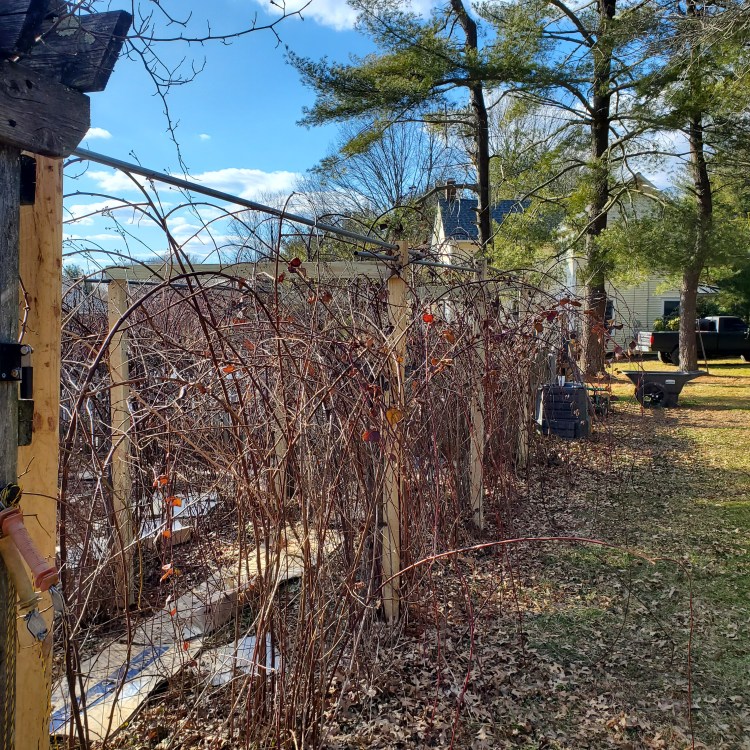
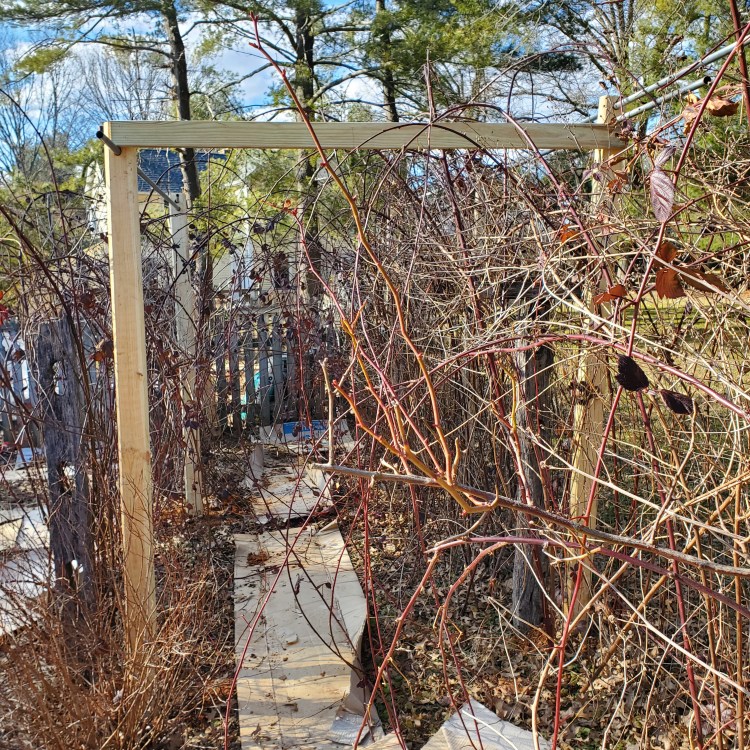
Looking through the berry tunnel at the 3 bridges that connect both sides

You’ve heard me talk before about our berry tunnel, berry bramble, berry jungle, etc.  It was getting quite overgrown which meant two things in my mind – A) I haven’t pruned as I should have and B) we need better supporting structures.

I was picturing some beautiful trellis, archway that you might see in a movie scene where there is some unrealistically romantic moonlit kiss so I sent this idea to Cactus via my mental powers and he came up with exactly what I wanted…  Oh wait, who am I kidding?  That’s not true at all.  I showed Cactus a few pictures and he said, “No, I have an idea. Here’s what we’ll do.”

Supplies purchased (approximately $70 in value)

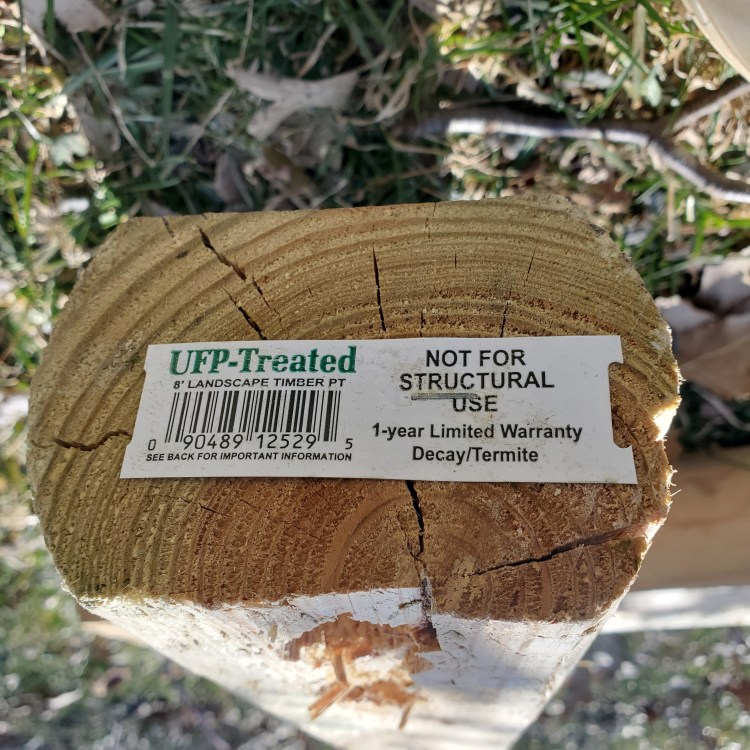
  • Eight 4x4x8 posts (purchased an extra just in case)
  • Four 2x4s (purchased an extra just in case)

Supplies being reused:

  • 5 pieces of galvanized tubing

So here’s what we did (nothing fancy, but I quite like it):

  1. We measured the current set up.  Assessed that we needed to improve both sides of the tunnel – one side is about 30 feet long, the other about 20 feet long.  This was actually super important and a step we usually skip.  How do you know how much of anything you need without measuring?  Sidenote: I’d like mention the value of staring at a project site and walking around a bit.  I’m being 100% serious. It’s really valuable to just walk around your garden/yard/etc. to daydream and let inspiration flow.
  2. From this two-minute assessment, we determined the spacing between the current posts was too far and they weren’t tall enough. That little bit of planning guided our marching orders.
  3. We decided to increase the number of supports by adding one post on each side, and to also make them taller and have the horizontal support between each post much more sturdily attached.  To explain a bit more clearly, the 30-foot distance originally had just 3 posts so we increased that to 4 posts, each just about 7.5 feet apart. Similarly, the 20-foot distance originally had just 2 posts so we increased that to 3 posts. 
  4. We laid the posts on the ground and spaced them out evenly across the 30-foot side. This helped us determine where we would need to dig the holes and that 3 of the 4 would easily align with where the posts would go on the shorter length of the berry tunnel.
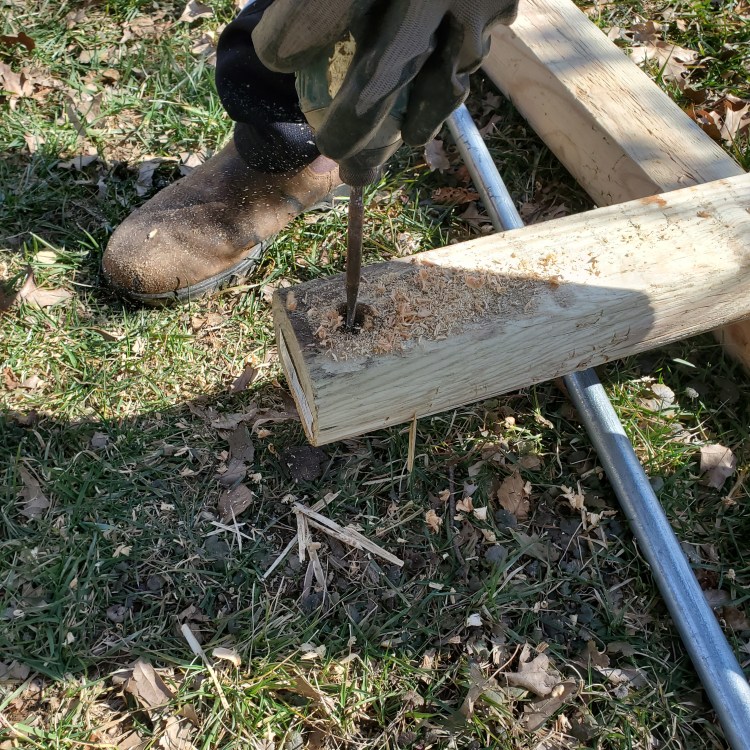
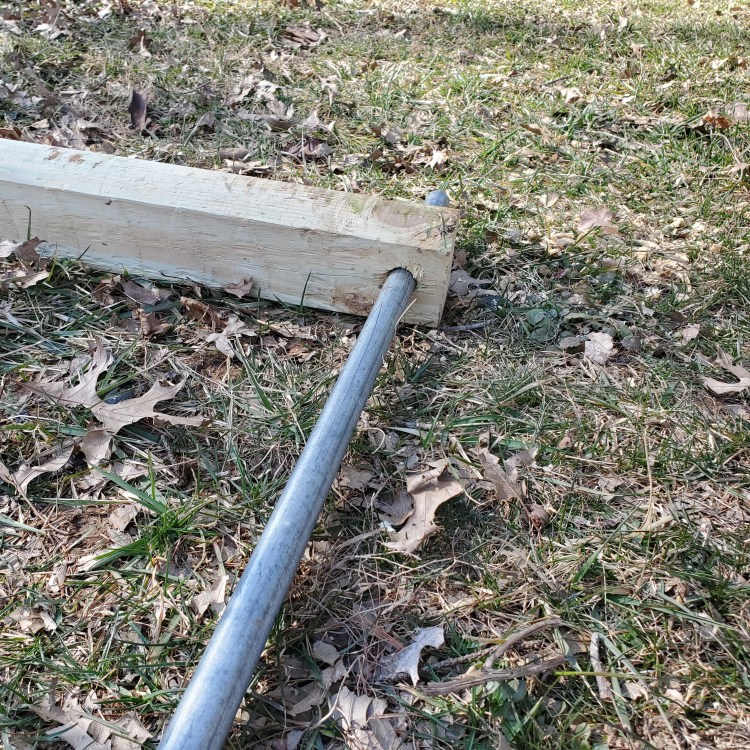
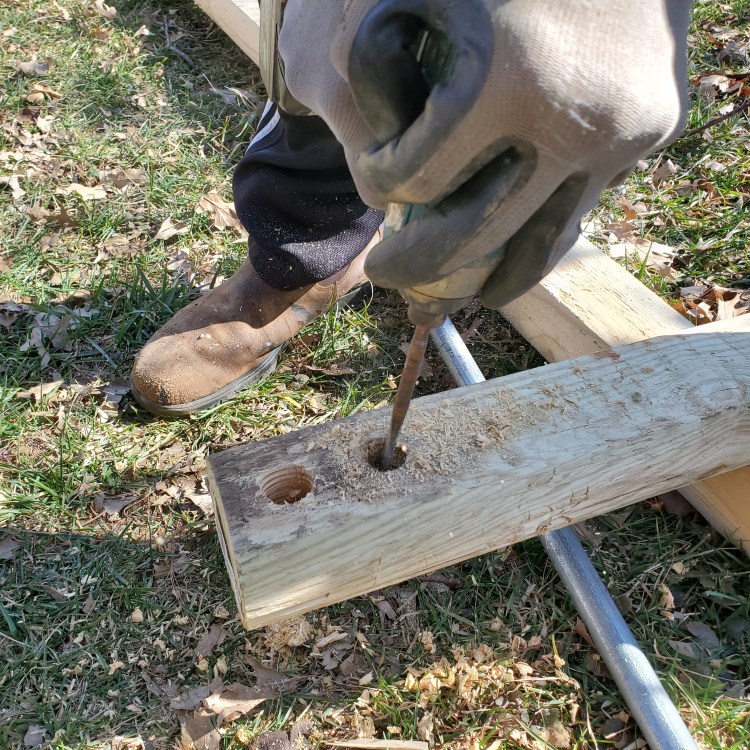
  5. Cactus then used a 1-inch wood bit to drill two holes in the top of each post.  These holes are where we inserted the galvanized tubing. The tubing serves as the top ‘shelf’ for the berry vines to go up and over as they grow.
  6. While the posts were laying on the ground, Cactus did the drilling and inserted the tubing so that it was one long structure that just had to be stood up and put in place.  But before we stood up the posts, we had to dig the holes.
  7. We have an auger for another fence project currently underway so we used that to dig the seven holes. I’m usually a fan of doing everything by hand but it made sense to use this so that we could complete the project that afternoon (instead of having to come back to it the following day). 
  8. Once the holes were dug, we lifted up two posts at a time and placed them in the holes just dug. Then we just had to insert one final piece of the galvanized tubing.
  9. The final step was bridging the 30-foot side of the tunnel to the 20-foot side of the tunnel to make my romantic berry trellis. Honestly, no idea where I’m going with this romantic notion.  That at is not my life at all. So we used 2x4s to connect both of the sides.  Since each side is not the same length, we had just ensured that three of the four posts were lined up to each other and connected at those three points.  The 4th post on the 30-foot side is not attached to anything, but it’s right next to our trailing rose archway so I’m sure it won’t be lonely.

This took us about a little over an hour to do (excluding the trip to Home Depot that Cactus did on his own) and it all went super smoothly. Now, the more dedicated work will be spent re-directing all the berry vines up and over the trellis to make my beautiful archway. And then the jelly, jam and pie fillings!!

MIM: Apple Pie Filling

As you’ll notice, one of my goals for 2021 is to make more things myself (#MIM – make it myself) and coincidentally that also supports one of my other personal efforts to reduce food waste. One of my first attempts was using veggie scraps and chicken bones to make my first ever chicken broth. In all transparency, it wasn’t super tasty but I made a second batch last week with lots more bones and it came out so much better.

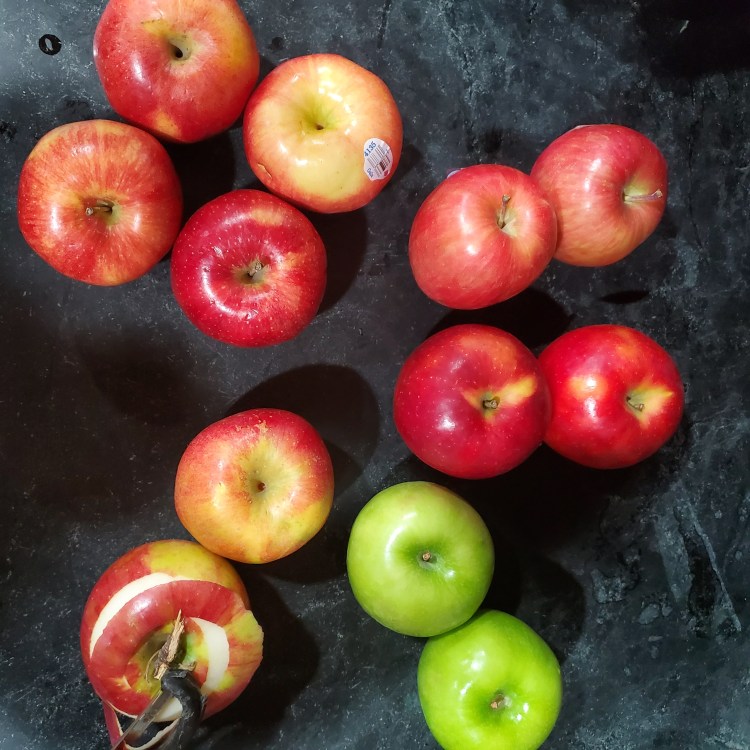
Back during the Christmas holiday, my *hopefully* future sister-in-law brought this over-the-top fruit and cheese basket from Bishop’s Orchard. There were so many simultaneously impressive and entertaining aspects of this gift.

1-It weighed at least 30 pounds and she carried it on the train from Connecticut on Christmas Day.

2-There were at least 20 apples in this beast (should have taken a picture).

3-It had cheeses, jams, jellies, and multiple sweet breads inside as well. I’ve never seen a fruit basket with so many different foods. I think if you’re going to get stranded on a desert island with one food “item,” this basket would be the way to go.

After a few days when it became apparent we were not going to be able to eat these apples fast enough, one of my daughters asked “Do you have any work for me to do?” I thought about it for a second and replied, ‘Yes, yes I do.’ (And yes, this child is that sweet and helpful all the time. I’m not quite sure who her parents are…)

So I followed this apple pie filling recipe from awesome homesteader Melissa K. Norris.  I used XX apples, it took me about 90 minutes from start to finish, and I ended up with a three quarts of apple pie filling. Not being someone who eats pie very often, this will probably suffice the entire year. I’m thinking I’ll use one for an apple pie, one for an apple cobbler, and one for some mini apple pie bites like these.

Here’s what I did:

  1. Washed, peeled and quartered 12 apples. My awesome helper did the slicing with the food processor. I was sure to include a few granny smiths because they have more acidity which is important for water bath canning.  The lemon also helps ensure you achieve the right acidity.
  2. In two batches, I dropped them in boiling water to protect them from turning brown. To save time and water, I used the boiling water in the same pot I would later use for the water bath canning.
  3. Made the ClearJel® mixture in the pot, brought it to boil, took it off the heat and folded in the apples. (These first three steps took about 40 minutes.  I mention this because we all think we don’t have time to do these “home spun” activities which just isn’t true.)
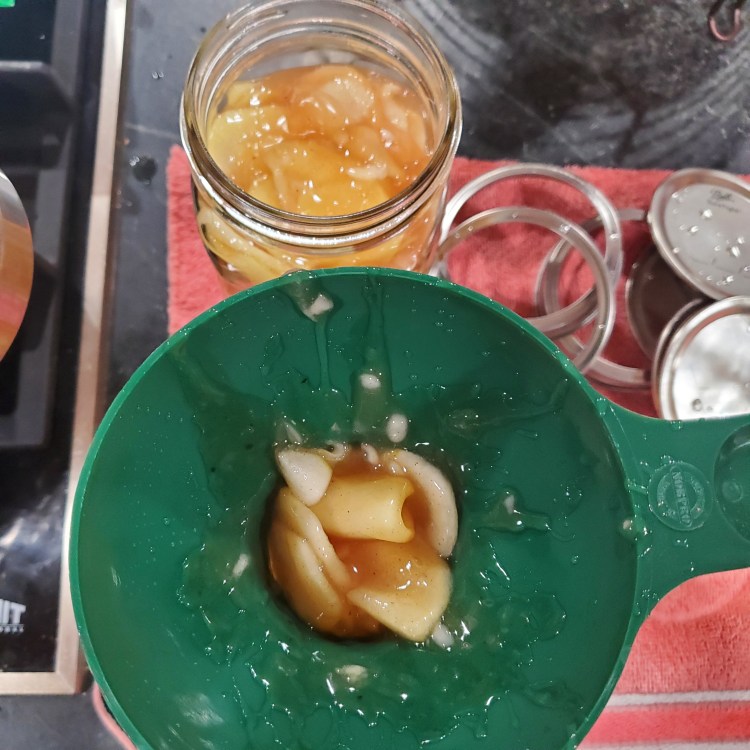
  4. I washed my jars and lids with warm soapy water, dried them with a paper towel, and used my canning funnel to fill the quart jars. I also did the air bubble release by running a small spatula around the inside. I ended up only filling three quarts instead of four and I chalk that up to varying apple sizes.
  5. Fastened the lids to “finger tight.” This is important to just be tight, not “all your might” tight.
  6. Placed them in the water bath, ensured the water covered beyond the top of the jars, and boiled for 25 mins. (Steps 4-6 took me about 40 mins as well, but the 25 minutes of boiling I was playing tag.)
  7. I let them sit another five minutes in the water bath, then carefully removed with my jar lifter and let sit on the counter until the next morning.

In other MIM adventures, I knitted this fun little octopus for my 6-year old.  She named him Seven which tickled me.  Yes, I followed the pattern and he does in fact have eight legs so the name is quite hilarious.