Plant-based progress and year of enough #4

If you recall, I set out this year to work on two “self-improvement” projects.  Not resolutions per se, but changes to my lifestyle and mindset that I thought would be valuable.  For the first six months, I’d say I was doing pretty well.  These last few months – July, August, and September – I’ll be honest, haven’t been as strong on both fronts.

In addition to all of the other uncertainties the external environment has presented, I’ve had some significant changes in my personal life. I know we are all dealing with a lot and I don’t think my load is any heavier or more difficult than another, but it’s my load so I’ve got to figure out how to carry it. That’s where the “year of enough” is more apropos than I could have ever anticipated. It’s a shift in mindset that runs counter to most of what has been drilled into me my entire life.  Achieve X, then feel happy/fulfilled/good.  But in reality, I need to start from a place of contentment and fulfillment in order to achieve the things that are meaningful.  It’s sort of a blend of mantra’s from Deepak Chopra (I am whole, I am loved, I am enough, I am worthy) and Neil Pasricha’s Happiness Equation.

And while I thought I was making good progress the first half of the year, nothing like a pressure cooker to test the strength and “stickiness” of my new habits. I hope I’m not the only one like this, but it seems like when one thing goes off track, and then another, and another, all the “good” habits I had like journaling and meditation and eating well and exercise go out the window and I’m a frazzled mess mumbling in a corner. What was the point of those healthy habits if they run out the door as soon as times get tough?  Well, I’m probably being a little harder on myself than I need to be because I usually only let myself wallow a day or two before I get back on the horse and that’s not too bad. So what is my point? We are all handling more than we probably want to right now. And some of it has to get done well and the rest can just get done. I’m giving myself the space to not get it all done perfectly and to let go of some things entirely. My expectations of myself and others are really high and that’s just asking to always be unsatisfied with the outcome.

Ironically, plant-based eating should have been easier than ever during the last few months with a great summer harvest and I just didn’t have the time or energy to focus on it. Lentils, salads, veggie burgers, and pasta are staples in my weekly lunches, but dinners are where I need to improve so that my whole family benefits from more colorful eating and I’ve really wanted comfort foods (read: fatty and salty foods). But soup season is upon us and throwing in tons of leafy greens, sweet potatoes, squash, carrots, and tomatoes is so easy.  Yay for soup! One pot meals are my FAV-O-RITE!!! 
Waves crashing on the beach with blue skies

‘Tis the Season for Seed Saving

As my summer garden is winding down – I’ve only got tomatoes and peppers left – there’s a little time to catch my breath from the chaos of summer (and virtual school – HALP!!!) and preserve some of the seeds I am hoping to use next year.  This is my first attempt at seed saving so I am by no means an expert opinion but I figured it was worth trying.

In theory, it should be simple for most fruits and vegetables.  Essentially, just let the plant “go to seed.”  It’s not exactly that simple but sort of.  Some things like butternut squash or peppers are super straightforward – I set the seeds aside after I’ve cut the vegetable, let them dry out completely for a few days, and then store. 

So what does it mean for a plant to “go to seed”?  As far as I understand, the plant needs to have gone through germination and sprouted, then it becomes a seedling, then it grows for a bit to get to the budding phase when flowers will appear.  These flowers turn into fruit due to the handiwork of pollinators like birds, bees and butterflies (truly amazing and seemingly impossible when I think about it).  Then, once the fruit/vegetable/leaf has been left long enough to become overripe, it can be picked for seed. 

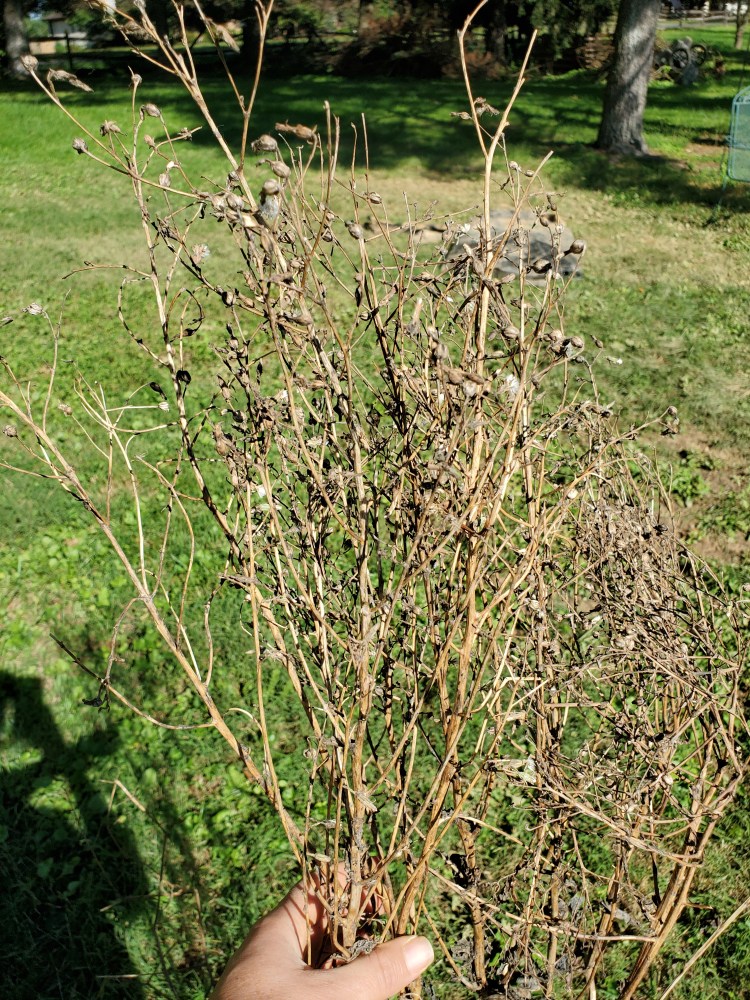
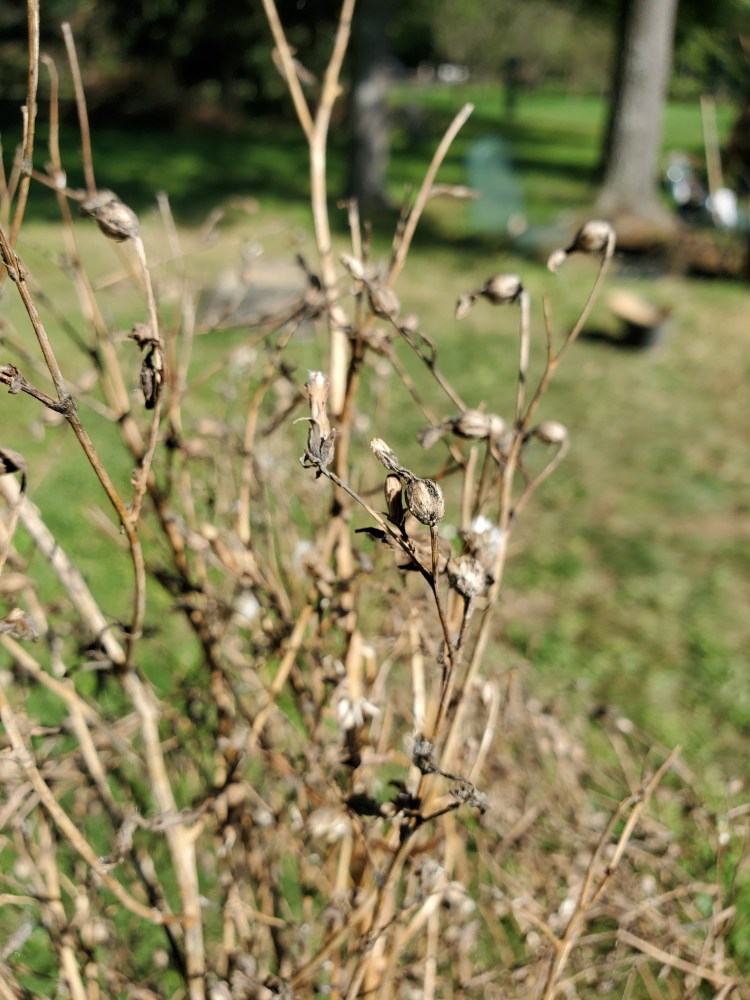
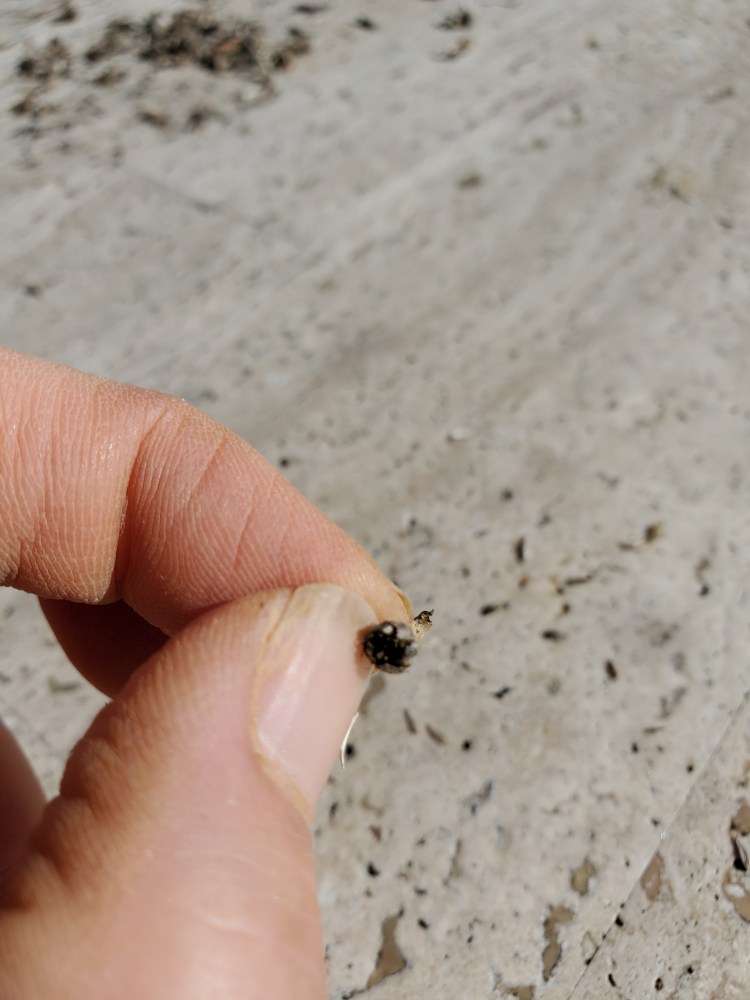
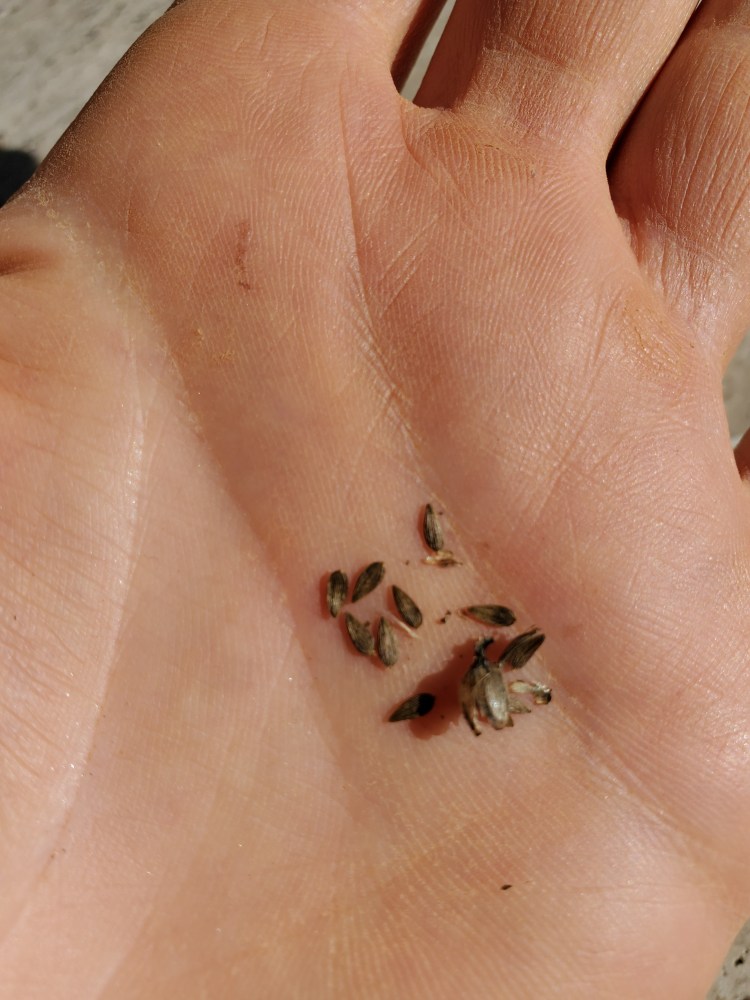
In this first attempt, I went for green beans and lettuce. Legumes in general are one of the easiest to seed save because you can just let the pod become dry and brown. Lettuce is fairly easy too because I just left it to bolt and flower, and then the little seed pods formed (pictured below).

Seed Saving Tips:

  • Plant extra plants to begin with (maybe 2 or 3 depending on how much seed you want to save) so you have what you need at the end of the season for saving.
  • Pick the best plants to seed save.  This is a bit tricky because if it’s the best plant, you’ll likely want to eat the fruit, which you can’t do if you are letting it overripen.
  • Understand that it takes time to separate the seeds.  For this first attempt, it took me about 30-45 minutes for each.  That’s not too long, but it’s also not a 30-second task.
  • Make sure seeds are fully dry.  Can’t stress this enough.  Do not rush to store any seeds before they are fully dry because they will grow mold and be unusable the next year and all your hard work will be for naught. 
  • One of the most critical pieces of seed saving is how you store them.  Always in paper, never in plastic, and in a cool, dry place.  You don’t want moisture encouraging any mold to grow.

Of course there will always be a little suspense until the next year when you are able to plant the seeds you saved. But start small and see how it goes.  Gardening is trial and error all the way and this is part of it.

Fig-Tastic!

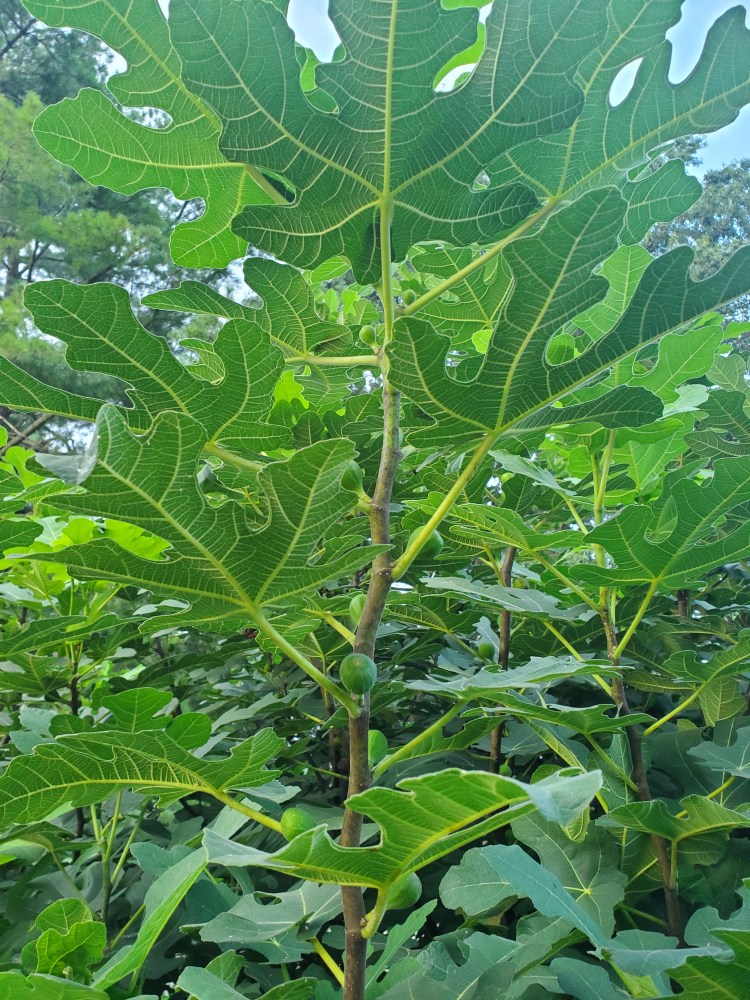
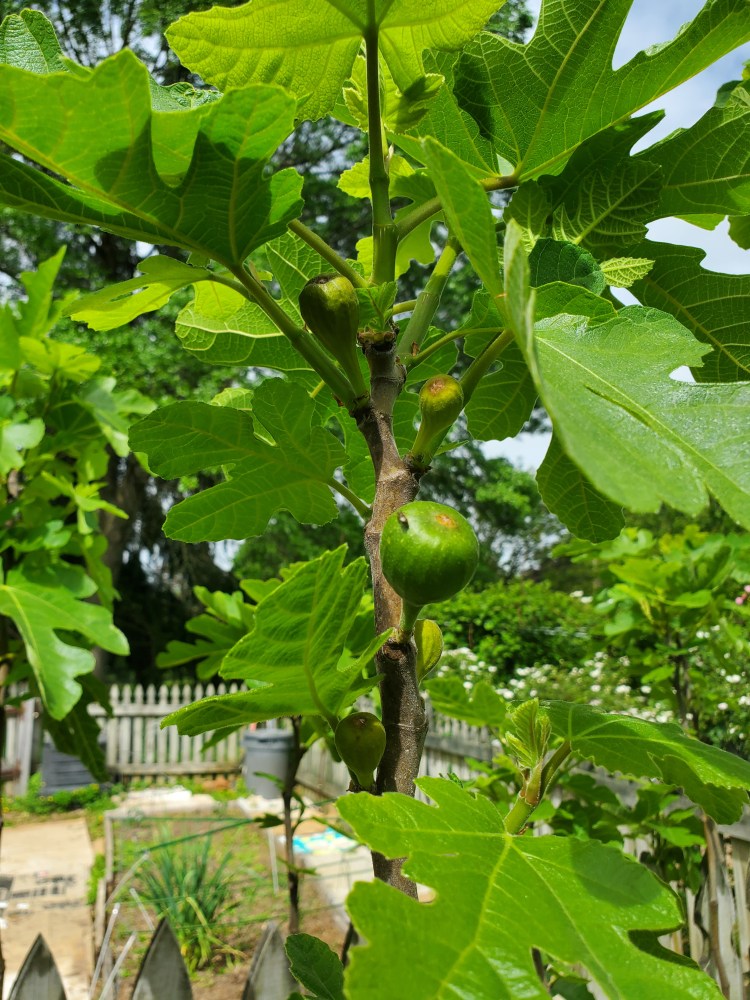
We have figs! This feels like such a momentous accomplishment. Last year, we had absolutely zero figs. We were bummed and not sure what we did wrong. I had read that fig trees can be a tad temperamental, some years great harvests and others not so much. The two main factors I researched that we had control over and thus attempted to solve for were the following.

  1. Figs like warm climates. In the mid-Atlantic we can have some pretty cold winters with lots of snow and ice. This past winter, however, was very moderate, and I’m guessing this worked in our favor. We also did our part to insulate the roots with lots of mulch, grass clippings and leaves last November. I also read that you can bend the branches down to the ground and then cover them with a tarp to keep them protected during the winter but we did not do that.
  2. Clear out the dead wood. We did not properly prune the dead branches the first winter we lived here and I think that contributed to lack of growth last summer. We also have some pretty invasive weeds that completely choked our raspberries this summer so they needed to be hacked back quite significantly around the base of the fig trees.

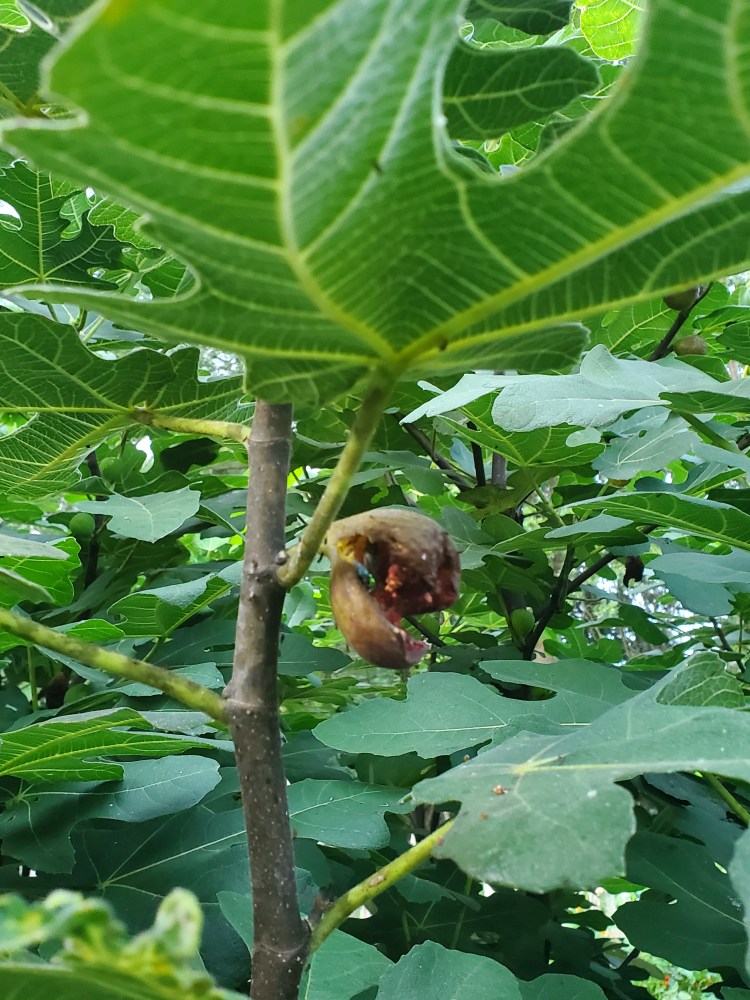
One thing I’m curious about is the number of bursting figs that are on the branches. This is interesting to me because I had so many ‘bursting’ tomatoes this summer and was wondering if it’s also due to an excess of moisture.

A split open fig being munched on by bugs

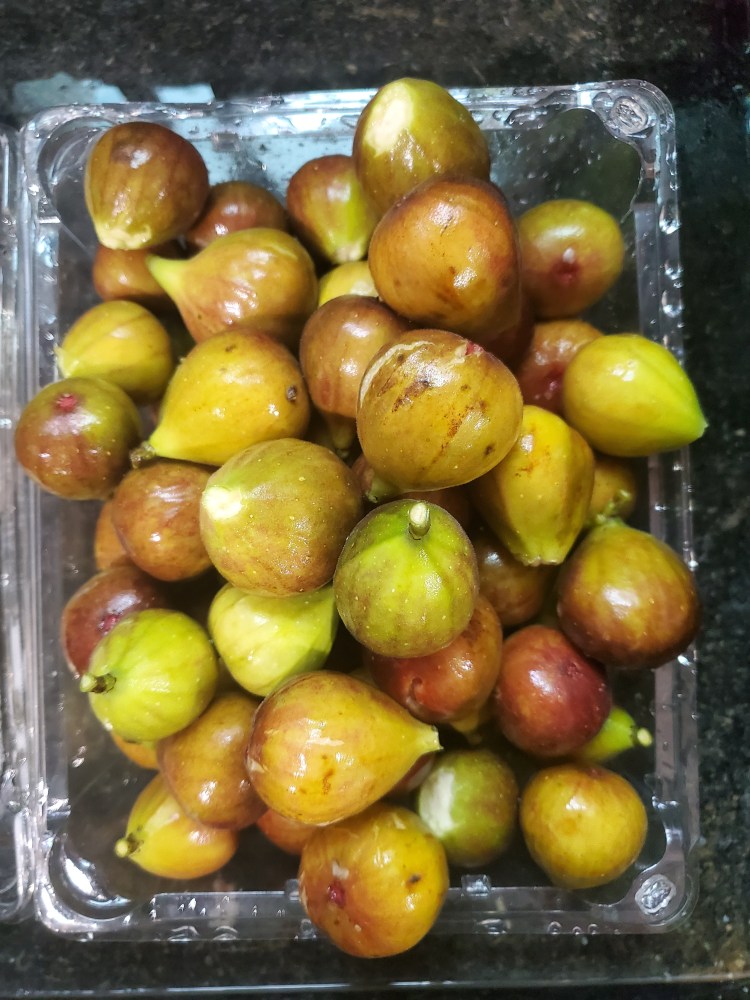
In any case, the figs are absolutely delicious and we have more than we can eat.  I was thinking about making a fig jam but just haven’t had the time. Isn’t that always the case…

Pallet Projects

I love Pinterest. Who doesn’t? Something that caught my eye a while back and has stuck with me is the utility of pallets. Oh my word, there is nothing you can’t do, build or use a pallet for. Was that a double negative? From the simple vertical herb planter, to lawn furniture, to a wine rack, to yard art. The possibilities are endless. Wow, I feel like I’m on the home shopping channel doing an infomercial. And if you call in the next 15 minutes, we’ll throw in an extra pallet…

Over the last month with driving my Mumsy to her treatments on a near daily basis, I had noticed that a house near us had a pretty sizable pile of pallets in the front yard. And, like a good neighbor, I thought let me help them help me. On a drive home one afternoon I pulled into their driveway and was jotting a note to leave in their mailbox. I highly recommend this method (Disclaimer: I do not recommend this method. It’s a total crap shoot for more reasons than I can list. Use your judgement and don’t ever assume people aren’t crazy. For example, there is another ‘neighbor’ with signs in their front yard that say “No Trespassing” and each sign includes the image of a semi-automatic weapon. They had a bunch of cardboard put out on recycling day that I could have used for my garden. I did NOT leave a note in their mailbox.) Anyhoo, major tangent, but I looked like a weirdo the entire time and took long enough writing the note that the female head of household came out to the driveway to ask if I needed help. Why yes, yes I do need help. I explained I had seen her pallets and if they were just planning on hauling them to the dump, I would happily take them off her hands. She said sure, we exchanged phone numbers, and agreed I would reach out later that day when I had access to a truck.

I have about seven projects that immediately come to mind for these pallets and I’ve pretty much decided pallets are the answer to everything. I’ve advised Cactus that if he ever sees pallets, he must get them.

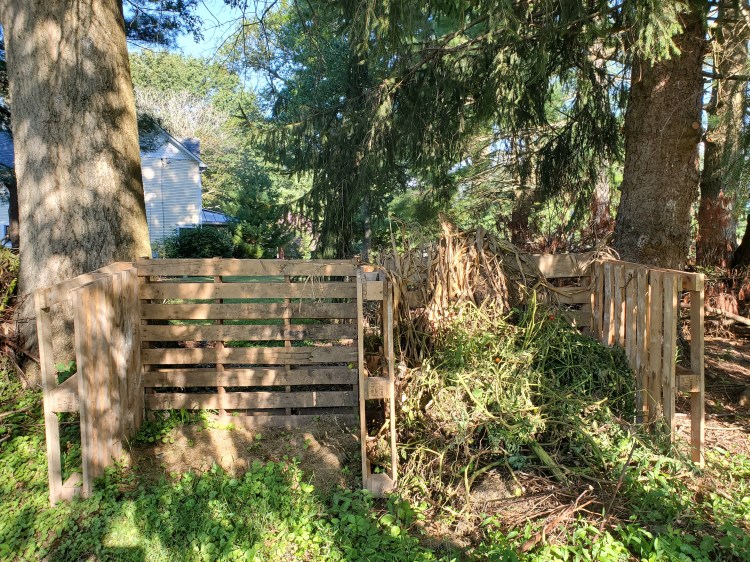
First, I wanted compost piles closer to my garden. Five pallets, boom. Done.

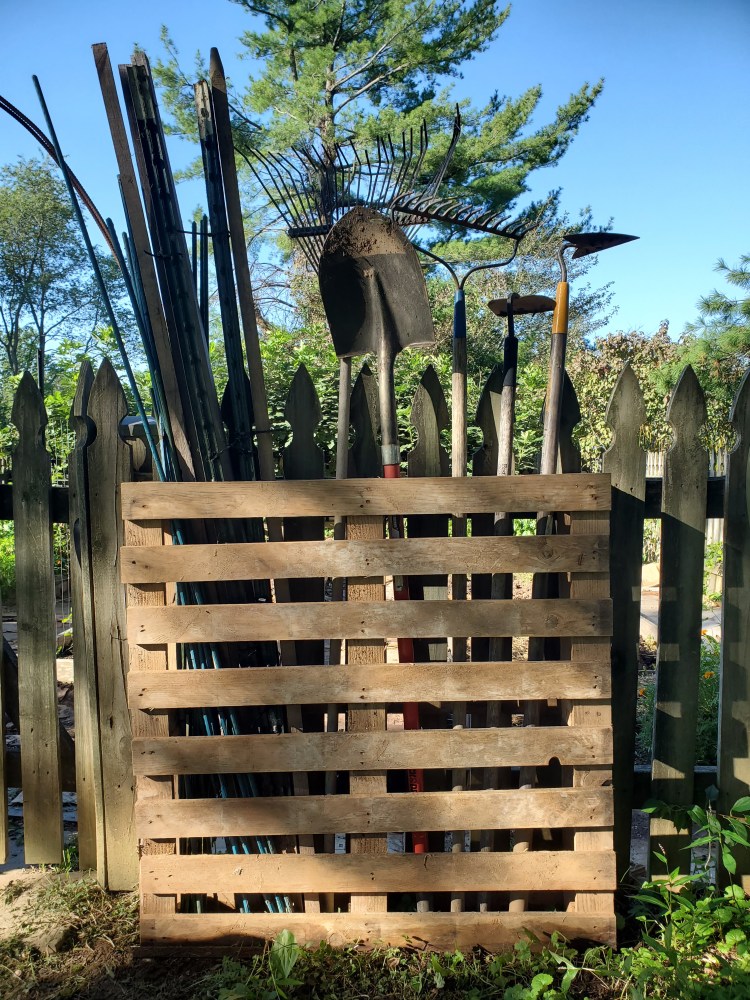
Second, I wanted my garden tools organized. One pallet, kapow. Done.

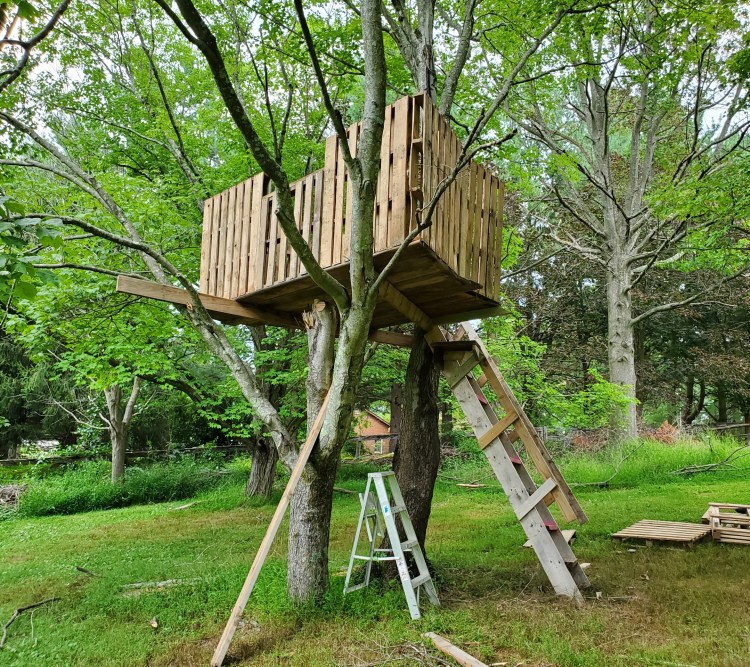
Third, Cactus had started a treehouse for the girls last summer. He pretty much only built the ladder and floor. My geniusness said “What if you use pallets for the walls?” Sha-zam. Done.

I’ll keep you posted on future projects.

The Fall Garden

Okey dokey artichokey. It’s been 93+ degrees for what feels like the last three weeks straight so you know what I’m thinking about… FALL! This happened to me last year. It’s August, it’s hot as heck, I’m tired of sweating from every crevice of my body so I start daydreaming about cool, crisp mornings and the leaves changing color. I’m basically the inverse of Olaf. I’m more of a Spring and Fall person now and could do without the blazing summer heat that makes it so I don’t want to be outside between the hours of 10am-7pm. Oh, and then there’s the mosquitoes. But please stop me. 

Planting cool weather crops in the heat of summer is a bit tricky. Seeds won’t germinate as easily in the warm soil. I know this because I put beet seeds in about two weeks ago in the shadiest spot of my garden and nothing happened. So I’ve been holding out for a few days where the temps will be slightly lower and next week looks like my chance. Honestly, I’m not sure if there is much urgency to plant at the beginning of August since the crops on my list should all be pretty frost hardy and can make it to early November. I’ll give it a whirl and may resort to starting them indoors just as an experiment.

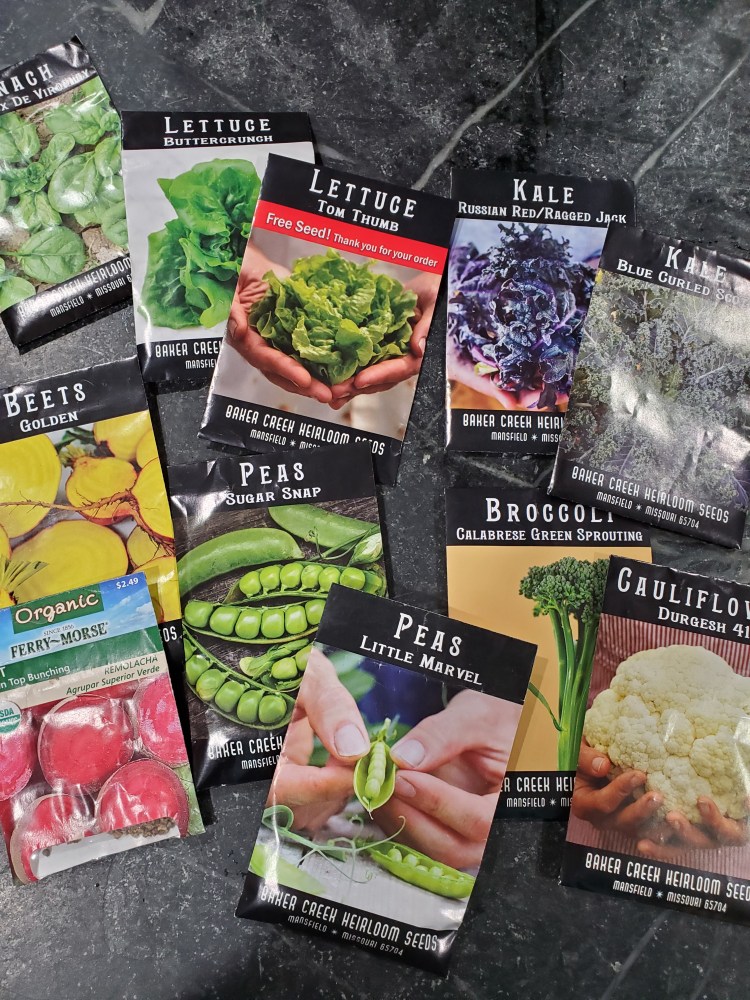
Here’s what I’m planting from seed (and I’m zone 7 for what it’s worth). For fun, I’m also grabbing some Brussels sprout seedlings from a local nursery just to see if they grow.

  • Beets
  • Kale
  • Peas
  • Sugar snap peas
  • Broccoli
  • Cauliflower
  • Lettuces
11 seed packets for fall crops

In other news, we harvested our first two meat chickens. Yeah, could have gone without that life experience. I’ll be pondering this for a bit before we decide to raise more next year. These guys were given to us and we did not know they were meat chickens so turned out to be more of a “gift” than we realized. Definitely makes my plant-based eating hit closer to home. I’m sure we’d all eat a lot less meat if we raised and butchered it ourselves.

Summer Harvest

Life has been pushing me. I’m literally looking up at the sky saying, What next?!? Aside from getting punched in the stomach and throat with life-altering news last month, the chicken drama has continued (let me repeat: NEVER buy chickens on craigslist), and the stand-alone freezer in our mud room stopped working, in addition to the freezer of our fridge not cooling properly. Is it wrong that I’m having fantasies of walking away from an explosion in slow motion (a la every action movie ever) with some dirt on my face, my biceps bulging, wearing ripped jeans? I seriously want to light a match to my life right now (not literally of course).

To cope I’ve been doing the time-tested approach of denial distraction. Staying as busy as I can in this sweltering heat. Out in the garden most mornings – weeding, pruning, watering and picking.  I’ve said this before but the major positive of staying at home is more time in the garden (and, errr, with my family of course ;).

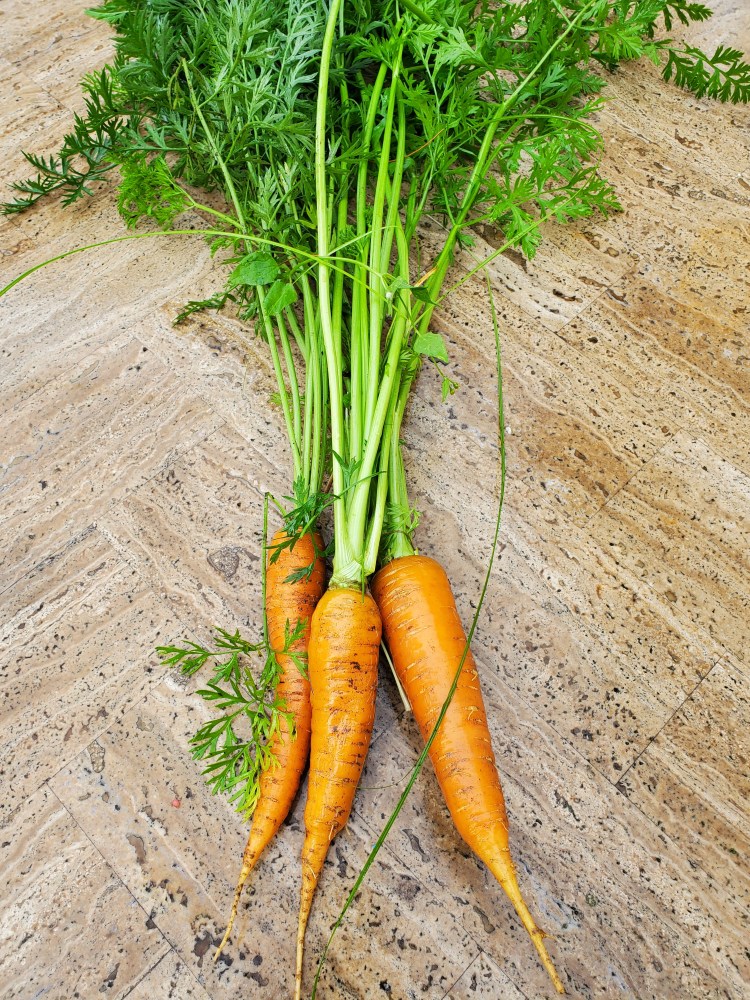
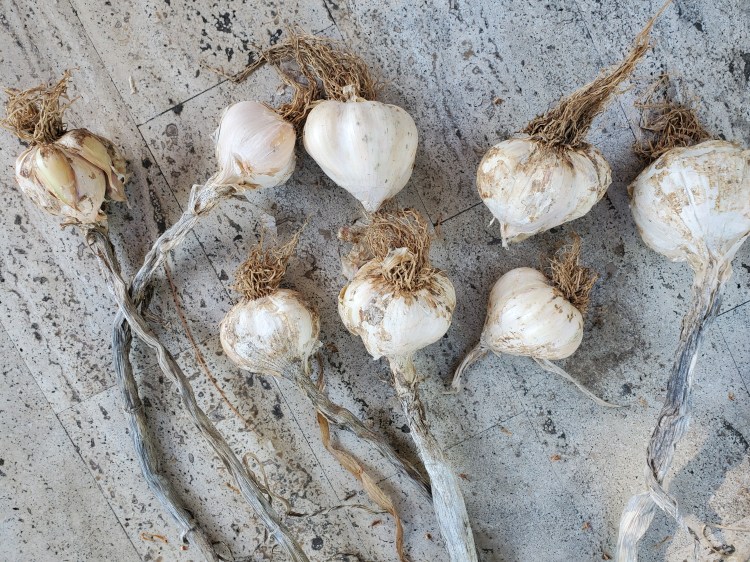
Here’s what my summer harvest is showing: carrots are cranking, green and wax beans are all over the place (must trellis these differently), two ginormous zucchinis and nothing more from that plant which feels like I did something wrong, the garlic I never knew I planted all fell over so I knew it was time to pull them and I got about 8 decent bulbs. And the blackberries just won’t stop. Japanese beetles ravaged my green beans last year and this year they are all over the berries.

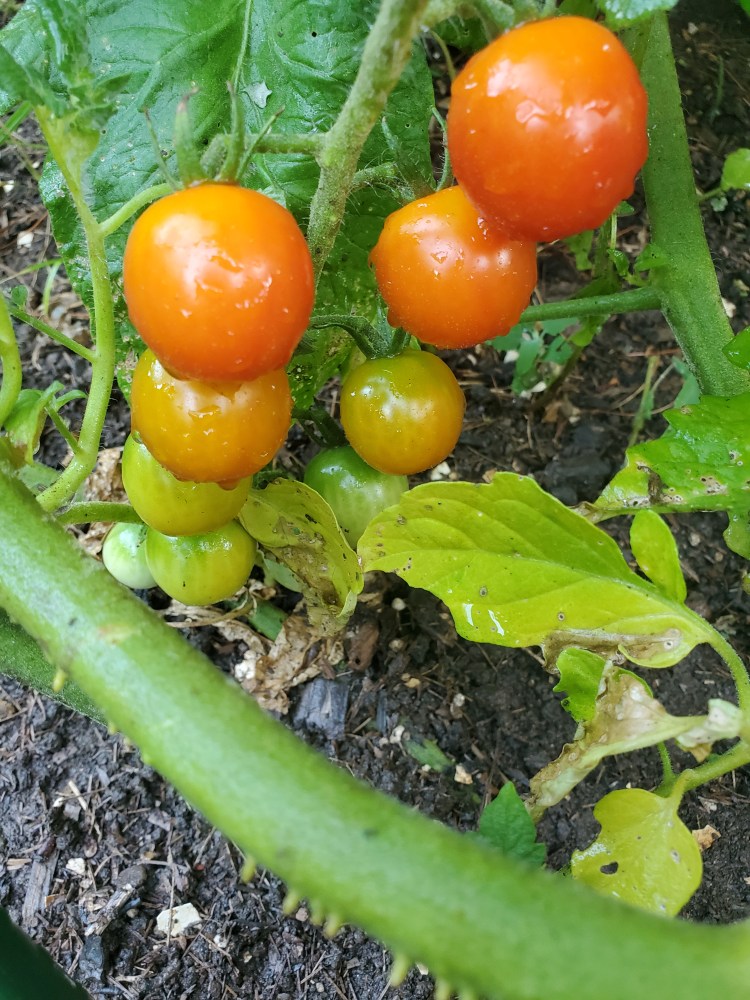
Lettuce is pretty much down for now (I’ll wait until it cools off to plant more) and all my tomatoes are on the way, just starting to eat a few cherry ones (seems late). My corn is looking good, my butternut squash plant has at least 10 growing, but my cucumbers are not really producing. I also have three surprise pumpkins that are clearly an accident (must have come from the compost).

I’ve made some attempts at preserving as well. Let me tell you, the first run of the pressure cooker was such an ordeal. It’s not complicated or even difficult, I think I just psyched myself about all the ways I could mess up.  Eventually, two and a half hours later, I had 6 pints of green beans. Wahoo – small wins! I’ll do a post soon on “the more you know.” My main question is will any of this stuff taste good? I could do like 40 pints that aren’t tasty and then what? Trial and error I guess 

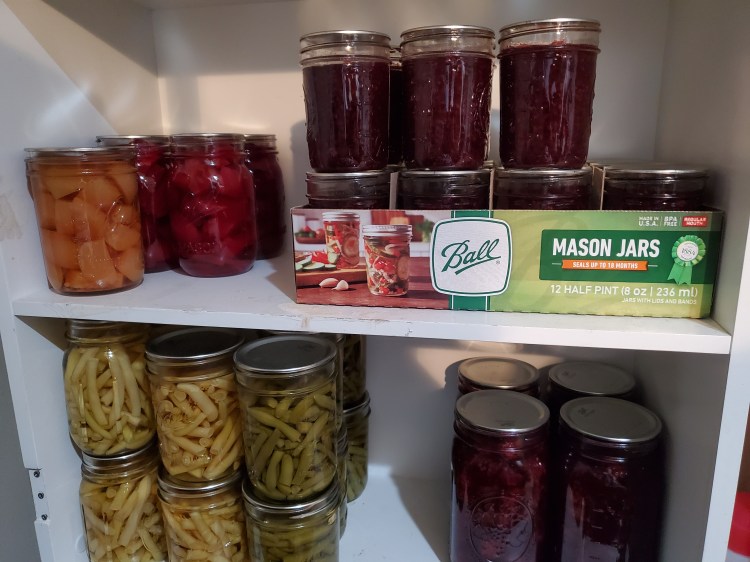
Canned:
-green beans – 9 pints
-pickled beets – 5 pints
-blackberry jam – 16 half pints
-blackberry pie filling – 4 quart

pints, half pints and quarts of beets, beans and blackberries

I also froze two gallon bags of blackberries.

Well, I’ll be keeping going and I’m sure you will too. Things will get better and it reminds me of the scene from one of my favorite films from teenage-hood Good Will Hunting. Robin Williams and Matt Damon (call me!) are talking during one of their sessions and Robin says “You’ll have bad times, which wake you up to the good stuff you weren’t paying attention to.” I guess it was my time to get woke.

Year of Enough #3

I don’t think I could have predicted what 2020 was going to consist of when it started, but the “year of enough” has certainly become more and more appropriate with each development. In the past 2 weeks I’ve been given information that has changed the rest of my life. I want to go back. I don’t want it to be true. I feel an emptiness in my whole body. A heaviness in my soul. I feel like I can’t take a deep breath.

It makes me wonder why there is so much heartache throughout life. What are we supposed to learn? I guess empathy. Probably to always handle one another gently because we don’t truly know what the other person is dealing with.

I know there is beauty and happiness but now I see it can all change in an instant. It’s all those clichés to live like you were dying and stop and smell the roses and not take anything for granted. I believe this will help me put a lot of things into perspective.

I’d rather set something aside and not get it done if it means I get to spend more quality time with the people I love. Very few things are as urgent as I make them out to be in my mind.

I’m learning that I can take care of someone in a warm, loving and tender way. I struggle with being so efficiency focused that I am guilty of brushing off human connection for productivity.

I’ve realized I don’t have to do it all and can lean on those around me. People want to help and lighten my load. I will let them because I know I would do the same.

I believe these experiences happen so that when I encounter someone else going through a rough patch, which will inevitably happen, I will know how to offer the help that I so badly need.

And I’m seeing that I need to take care of myself throughout this process. To be strong for anyone, I need to stay strong myself.

I don’t know how much time I have on this planet and I don’t want to spend it worrying about how much I need to get done tomorrow. This is the moment I have and I don’t want to waste it. 

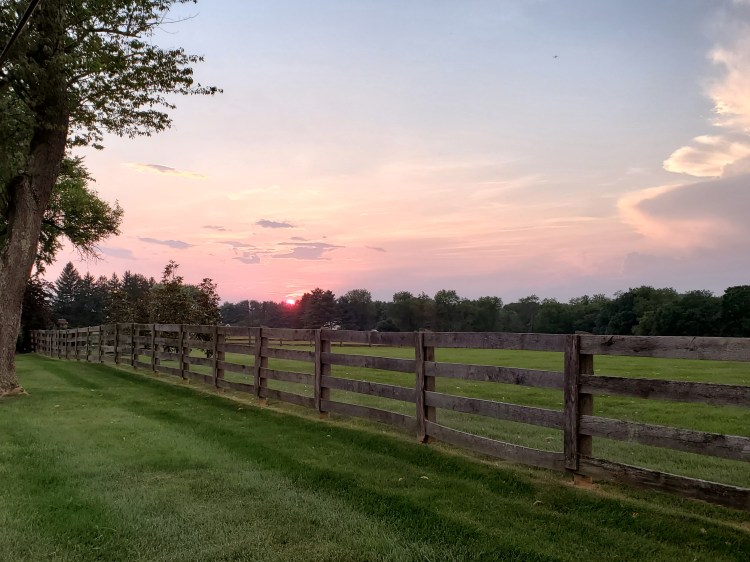
Summer evening sunset with fence and field

P.S. I have not forgotten about plant-based eating but I will say the last 3-4 weeks have been less focused. Maybe I’ve been distracted and busy but I plan to get back on track. Eating healthy is one way I take care of myself and my family.

Protect your Flock – Be Sneakier than the Fox

I have to say, the past two weeks have been exhausting. Between COVID and all the protests, I am feeling drained, overwhelmed, angry, sad, frustrated, disillusioned, and altogether raw. It’s a lot. We’re all going through a lot. I have to remind myself to breathe. The more I let my mind wander, the more it drifts into a place that feels unsolvable and paralyzing. And nobody’s got time to be living in a world without hope.

So I hopped on over to my chicken coop last Friday afternoon to spend some time in my happy place. As I’m approaching the fenced in run I only see two chickens.

That immediately set off the alarm in my head.

I quickly scanned to the coop door, which was locked, and then my eyes darted back to the door that opens to the run, also locked. Where are my chickens?

I paused for a second waiting for the other five to pop out of the coop. I wait another second as my mind starts replaying the day before.

When was the last time I let them out to free range? Wednesday. Who else came out to the coop? I don’t know.

I walked to the coop door and unlocked it. There is nothing and no one inside.

I walk to the corner of the chicken yard and see white feathers.

All the pieces click into place… and then they don’t.

For the last two weeks, Cactus has told me he’s seen a fox in the backyard. I thought he must have been staking out our chickens and have been extra careful with them. Only letting them free range for an hour, in the middle of the day, and setting an alarm on my phone. But clearly I messed up and my mistake cost five chickens their lives. I’m so upset and bewildered. So I started doing a lot of research to better understand my enemy.

  1. Late spring and early summer is prime fox time.  They’ve had their cubs and need to find food. And with reduced activity due to COVID-19, wildlife is out a lot more brazenly. Be extra vigilant.
  2. Secure your perimeter. This will mean many things depending on how your coop and run are set up. Being sure that your fence goes at least 2 feet deep into the ground is essential. It should also be as high as you can make it, preferably 5 feet minimum.
  3. Have a dog that is all or part shepherd.  These breeds will have a visible presence on your land and serve as a deterrent to predators who think they have an easy target.
  4. Create a system so that you can’t forget when your flock is out of the coop.  Set an alarm, do things in the same order, have some sort of signal so that everyone you live with knows the chickens are out. Everyone should be accountable for their safety, but whoever lets them out should be the person to confirm they are safely back in the coop.
  5. Don’t tempt fate. Stay outside and nearby while your chickens are out of the coop if possible. There is a reason for all the adjectives that relate to foxes – sneaky as a fox, sly as a fox, cunning as a fox.  I still can’t figure out how 5 of the chickens were out of the coop and 2 were safely in.  I never separate the flock – they are either all in or all out for free ranging.
  6. Be sure you have your closest neighbor’s phone number and they have yours. Let them know to call you if they notice anything unusual related to your flock or coop.
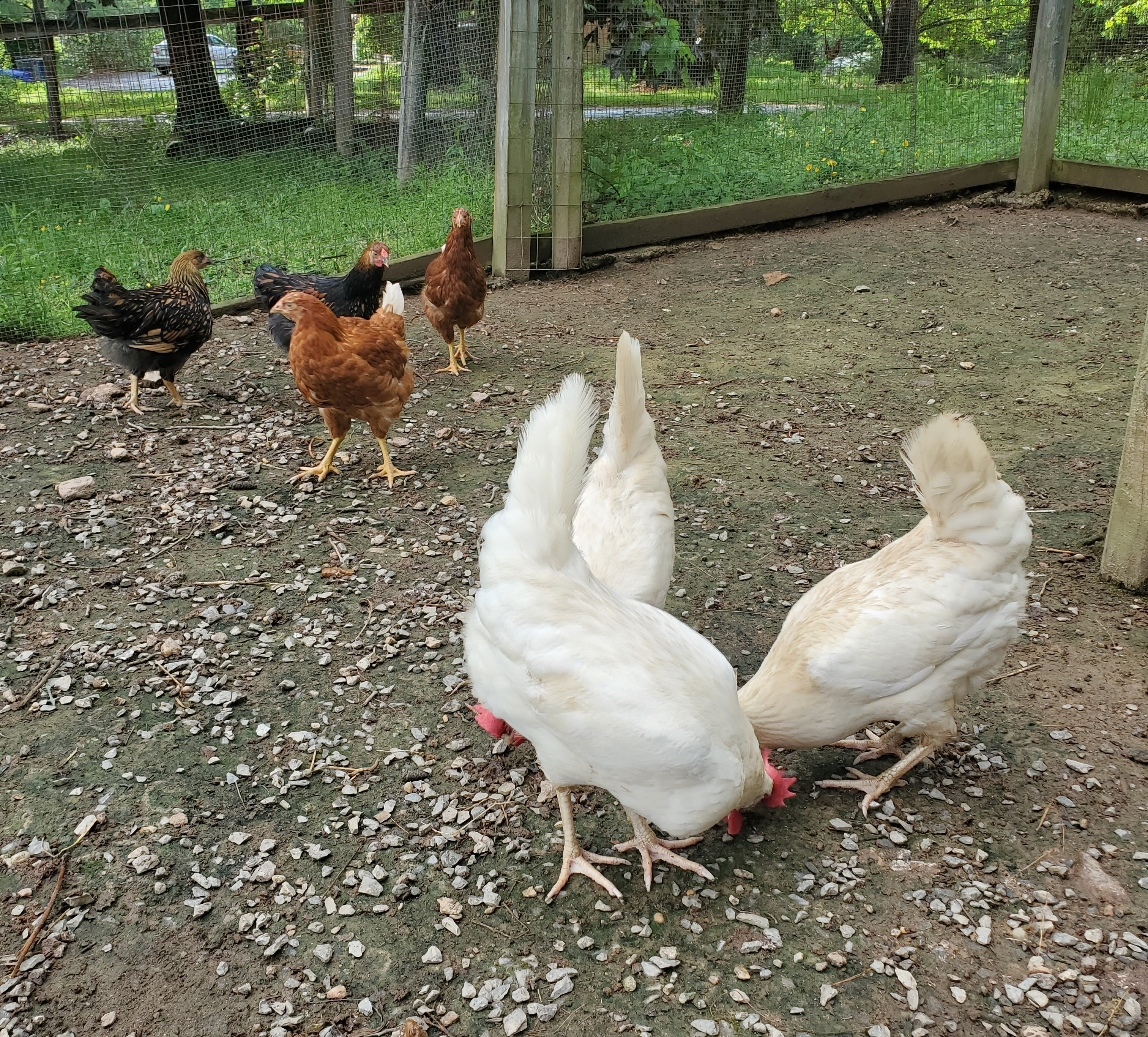
Three white chickens standing in front of two brown and two black chickens
My three white leghorns, two Isa Browns, and two Gold Leaf Wyandottes. Only one Isa Brown and one Wyandotte remain.

I hope this never happens to you and I am going to do whatever I can to ensure it doesn’t happen again.

5 things to know before you get a goat

Last weekend we went to see some baby goats at Buckhorn Run Farm. The owners, Barb and Jack, were so delightfully generous with their time and explanations. Talk about a whole new vocabulary to learn.  Gee whiz, I could barely keep up. But that’s the case with nearly all new hobbies, right?

Baby Goat on a cinder block at Buckhorn Run Farm

When we bought this property 18 months ago, nearly every person we knew said “get goats!” and Cactus and I had no idea why that was a recurring theme. I know goat yoga has gotten lots of hype and there are hilarious videos of goats screaming on youtube, but it was funny to me that goats were this quintessential symbol of farm life. Umm, chickens anyone?

However, over the last year and half, mowing the back yard was something Cactus decided he would love some assistance with, which resurrected the goat conversation. To help us think this through, here are some questions you may want to answer to help guide this decision of whether or not to get goats.

1. What’s your main reason for wanting goats?  Will they be a family pet, do you want to breed them for income? Will they be a source of milk and cheese? Will they be a source of meat? Are you gonna rent them out for goat yoga parties or to clear areas with invasive species?  Think this through.  They live 12-14 years and they are only cute and little in the beginning. The answer to these questions would very much impact the breed you choose. We did very preliminary research on Nigerian Dwarfs, Nubians, and Boers. Turns out, goats are ‘browsers’ not ‘grazers’ meaning they are not going to mow the lawn. They’ll climb on things to eat branches or tall grass but sheep would be the better bet for our mowing needs.

2. Can you afford their feed and routine care needs?  The cost of their food and care doesn’t seem to be too substantial, certainly less than a horse, but only you know your financial arrangements. Of course, depending on how many you have, this could be quite a range. Considerations on feed costs include hay, alfalfa (for females you are milking), a mineral supplement, and grain as a treat. This article from Thrifty Homesteader was very helpful. Don’t forget bedding as well.

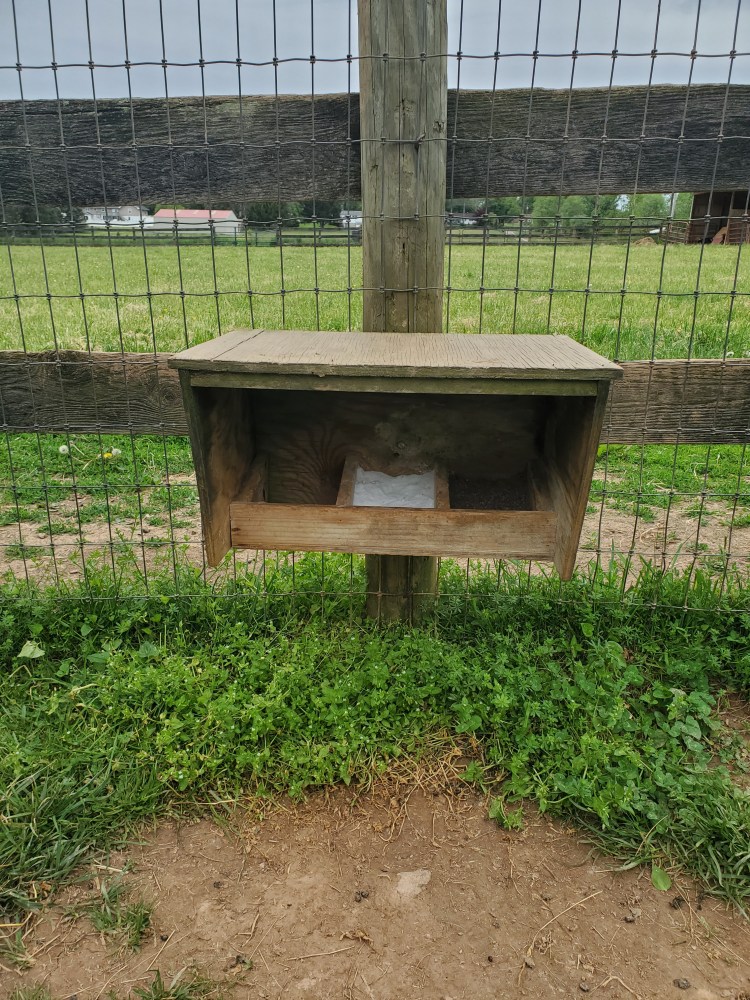
Mineral station - a wood box with three sections - about 4 feet off the ground
Mineral station at Buckhorn Run Farm

3. How much time are you able to dedicate to caring for them? Again, your answer to this question would be different than mine.  If you are milking twice a day, that’s definitely something to think about in relation to all the other things on your schedule.

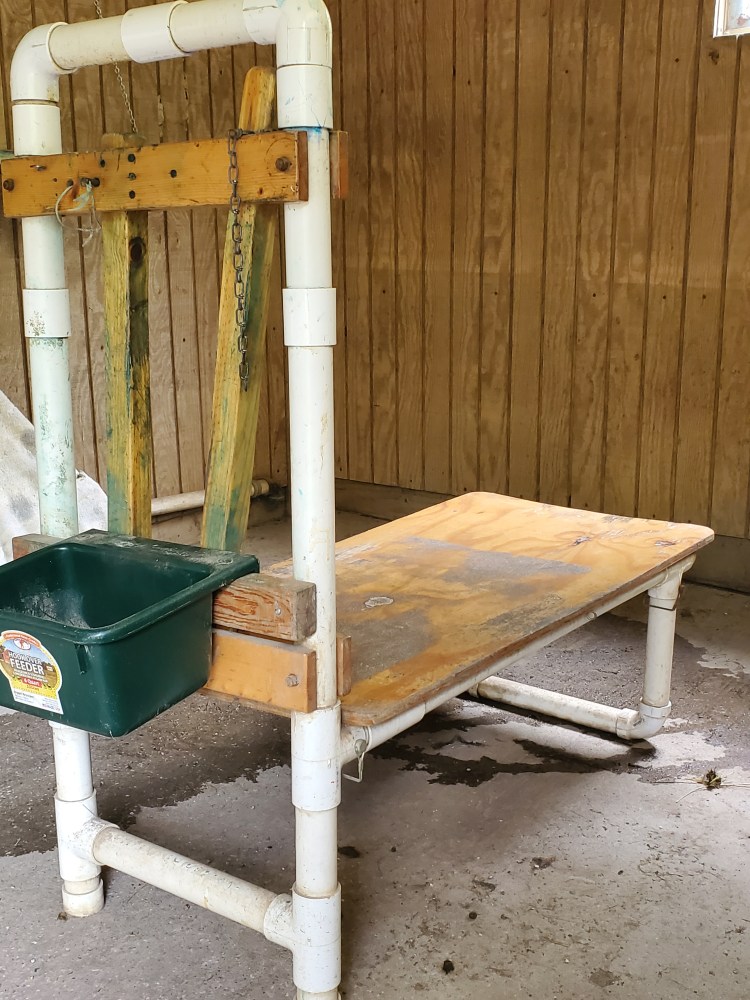
PVC and wood milking station for goats at Buckhorn Run Farm
Milking station at Buckhorn Run Farm

4. Do you have the space for them – both to sleep and exercise? In addition to where ever they sleep, I learned goats hate the rain so you need a sheltered place for them during the day.  And they need space to romp about, browse, and ‘kid around.’  A conservative estimate is at least 20-30 square feet for daily living and less for sleeping.

5. Can you keep them entertained, contained and safe?  As cute as the babies are, these guys can get into mischief and need to be well contained. Cactus has a huge fence project on the horizon but not in the immediate future. They need stuff to climb on for fun.  I’ve seen some elaborate play areas and some simple tree stumps or goat rocks. And when considering the space requirements above, definitely consider how you will keep them safe from predators (mainly coyotes and dogs).

Hope this was helpful. It was valuable for us because it’s easy to be swept away by the cuteness of any baby animal initially and it’s always best to make the responsible decision that works long-term.

Getting the Garden in the Ground

It feels like a lot has happened in the last two weeks. COVID-19 appears to be slightly loosening its grip on our daily lives and that’s hopeful. I know that isn’t the case everywhere and I’m certainly not supporting any premature relaxing of restrictions – the digital signage on the highway where I live still says “safer at home.” I personally think this virus will play a starring role on the global stage for at least another year. But I’ve been trying to focus on the things within my control and what I can influence to stay healthy. Ups and downs though, like everything. Rarely is anything in my life a linear and even paced arrow toward a target.

I got all my plants in the ground between May 14 and May 19. This gave a very generous three-week window after the last average frost date of April 21. I have read that giving a little extra time can be the difference between success and a lot of disappointment. With the weather here in the mid-Atlantic so wet and much cooler than normal I was in no rush.  I think it was the right call.

Here’s what I got done –

  • Peppers – my seedlings were not as strong as I would have hoped but I just had to plant them and see if they hang on.  If not, I’ll have to buy a few starts from the nursery.
  • Tomatoes – my seedlings never really advanced beyond the spindly, thin stage. After the second set of leaves came in, that was sort of it.  In hindsight, I don’t think I had enough nutrition in my growing medium. I opted to go by six heirloom plants from the nursery. I’m disappointed about this but it was a good learning for next year.
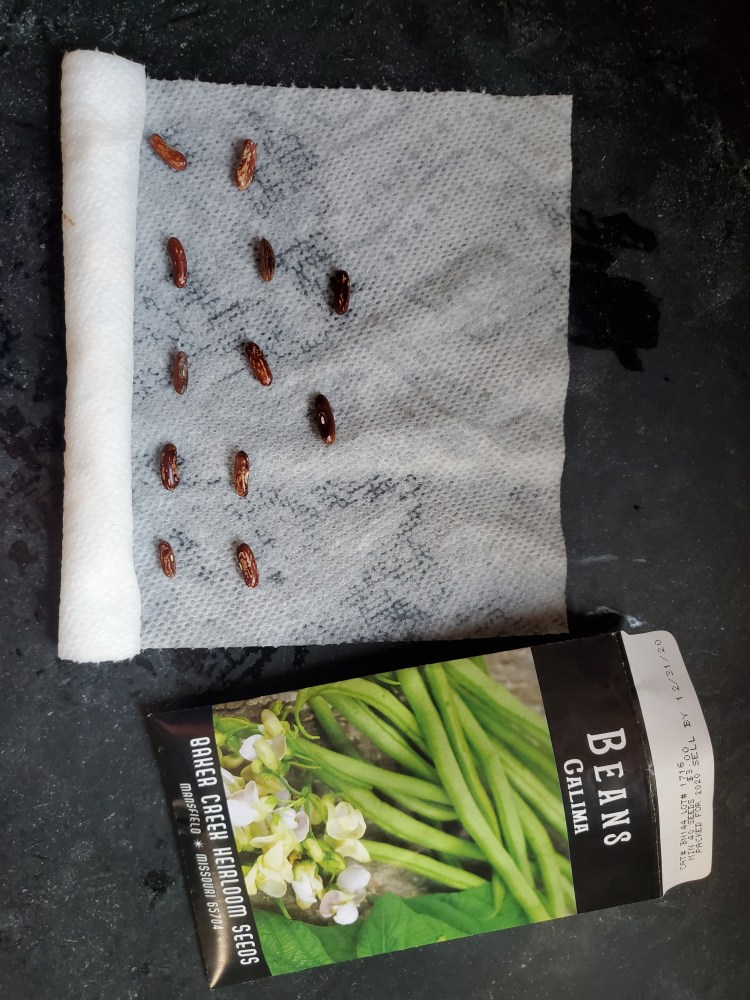
  • Beans – I’ve got three varieties of bush beans and one pole bean.  I learned last year to sprout them first, which only means wrapping them in a moist cloth (you can use a wash cloth, paper towel, cut up t-shirt, etc.) and leave them in a produce bag on the windowsill for a 2-3 days. Then gently remove them and plant them right away.
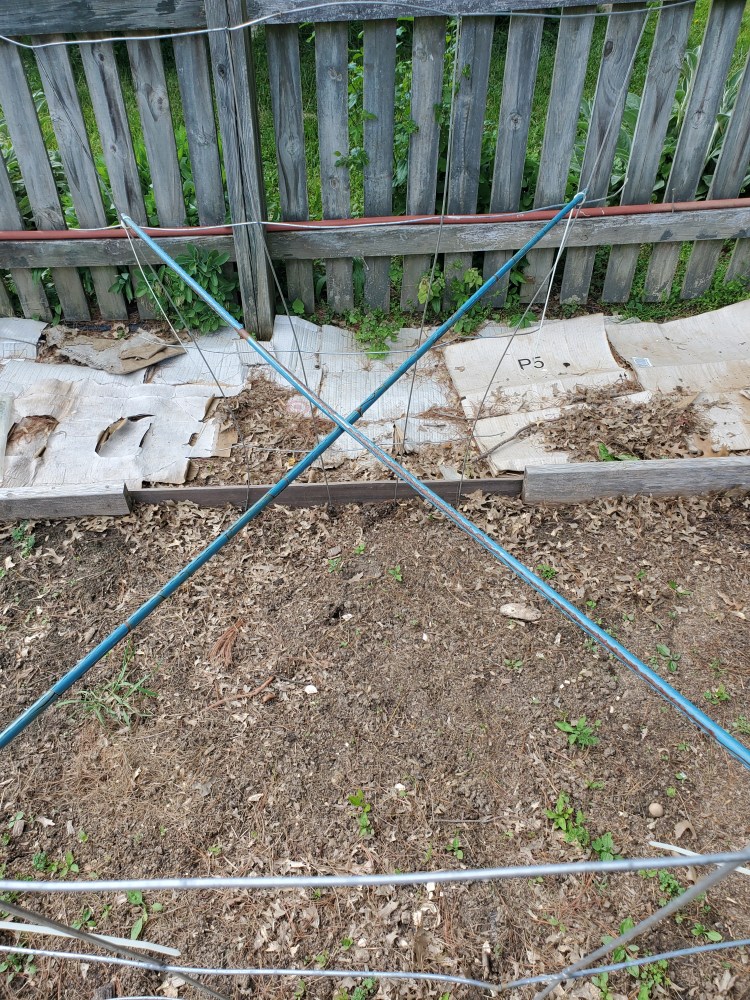
  • Cucumbers and Peas – built a trellis with old tomato cages by cutting the wire to essentially break the cage, bent them flat, and then zip tied a few old garden stakes across (see below).

You may recall the sadness and tragedy I experienced last year when deer ate all my luscious blueberries in one weekend.  Well, fool me once but not fool me twice. To ensure this doesn’t happen again, Cactus and I spent about four hours installing an electric fence around the berry patch. This is an area about 20×30 feet and we already had the poly wire and enough step in posts so hoped it would be a relatively easy project.  Cactus bought a solar powered fence charger from TSC and we figured it out pretty quickly watching this series of videos from McGregor Electric. The thing we had the most trouble with was determining what was grounding out the charge. I also wanted to expand our blueberry bounty so bought two additional bushes – Blue Gold and Duke. 

There’s a separate garden bed in the berry patch that I didn’t use last year, largely because it was free reign for the deer.  Since we got the fence installed, I decided to try corn, butternut squash and watermelon.

The black raspberry bushes are blooming beautifully and look way more full than last year. And fingers crossed that we’ll actually enjoy some figs this year. We put lots of leaves around the roots to keep them insulated during the winter and it was a very mild winter so it seems promising.

Close up of small fig growing on bush

How to Make a Trellis with Two Tomato Cages: