
Compost: The Triple Win
A few days ago it was 60 and sunny. I was wearing just a t-shirt outside doing yardwork. An that’s not really a thing here in the mid-Atlantic in winter.
If you’ve been experiencing unseasonably warm weather like us, that’s a great time to turn or dig out your compost pile.
There are so many different styles of compost bins across quite a few price points. I tend to prefer simple and have had really great results with a just a pile enclosed by mesh like this. Our local department of environmental services gives these away for free if you request one. And this composter was on our property when we moved here 4.5 years ago and it’s been pretty great. I don’t know how long it was used before us but I will say it’s showing signs of wear and UV damage.
There’s no wrong choice when it comes to compost bins, but you should consider what is best for your living space. Will it be on a deck or balcony very close to your home? Or do you have a yard with more space? These factors determine what size makes sense as well as how secure you’ll want it to be. I’ve never had a smell issue with mine, but that and attracting rodents is most peoples number one concern.
If you are new to composting, it’s really not hard and will be LIFE CHANGING. When I started composting in my 20s, it cut my trash in half. I used to live in a townhome with no yard and couldn’t plant anything so I never benefited from the compost in terms of being able to use it. But I like to think the Earth benefitted by not sending all those food scraps into a landfill.
The main rule to follow with composting is no animal products – nothing fatty or greasy. Everything else is either a ‘brown’ or a ‘green.’
- Browns are things that are carbon rich. I think of them as being the dry stuff from my yard, like leaves and grass clippings. You can also use cardboard and paper bags.
- Greens are things that are nitrogen rich. This is pretty much everything from your kitchen – produce scraps, coffee grounds, and tea bags. I consider this the wet stuff.
Many people believe there needs to be very precise ratios of browns to greens. I’ve never been that particular and I’ve always had great compost results. To keep it simple, think of it as a 70/30 or 60/40 split. You just want to keep adding browns to absorb the wet and stink of greens.
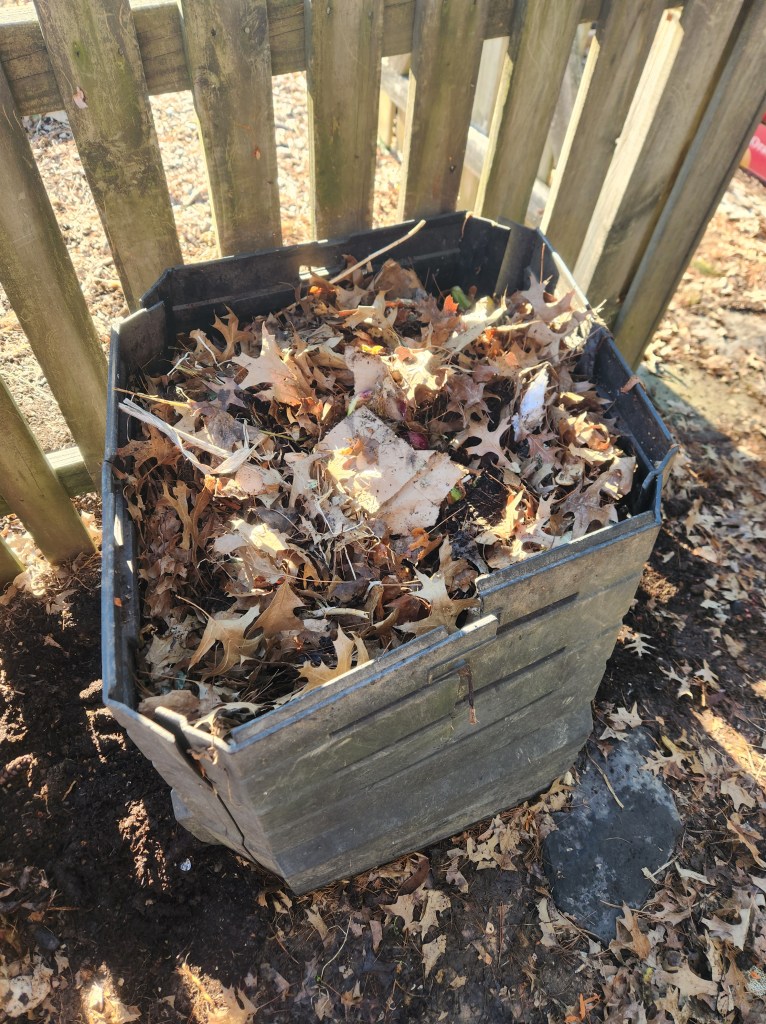
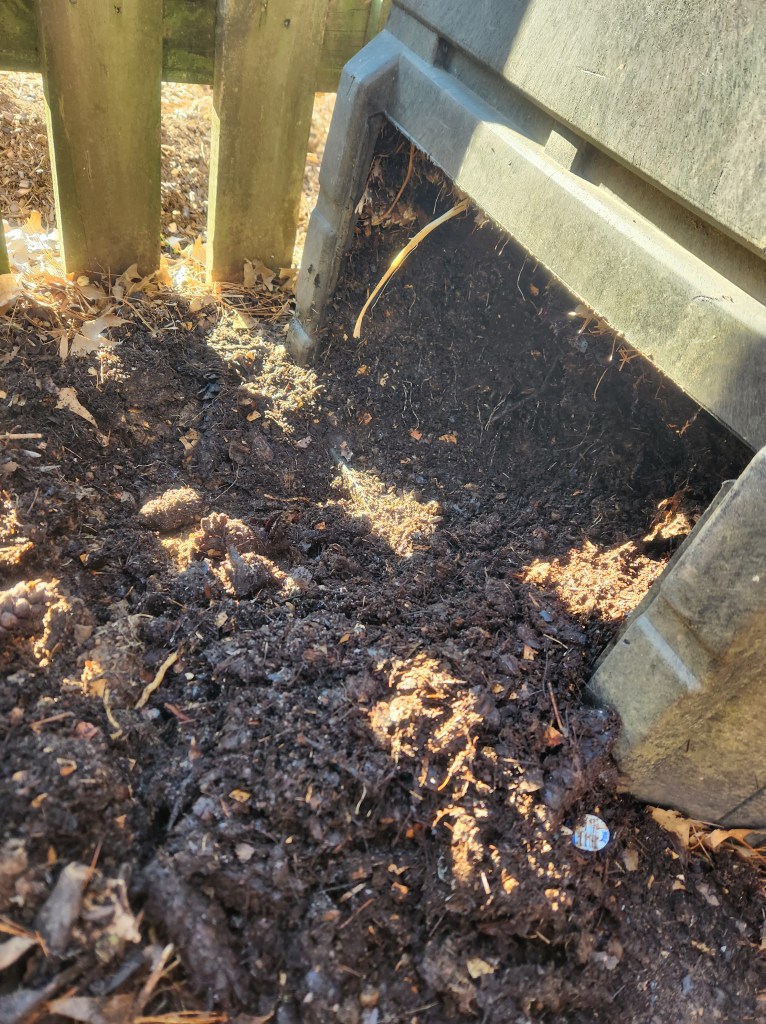
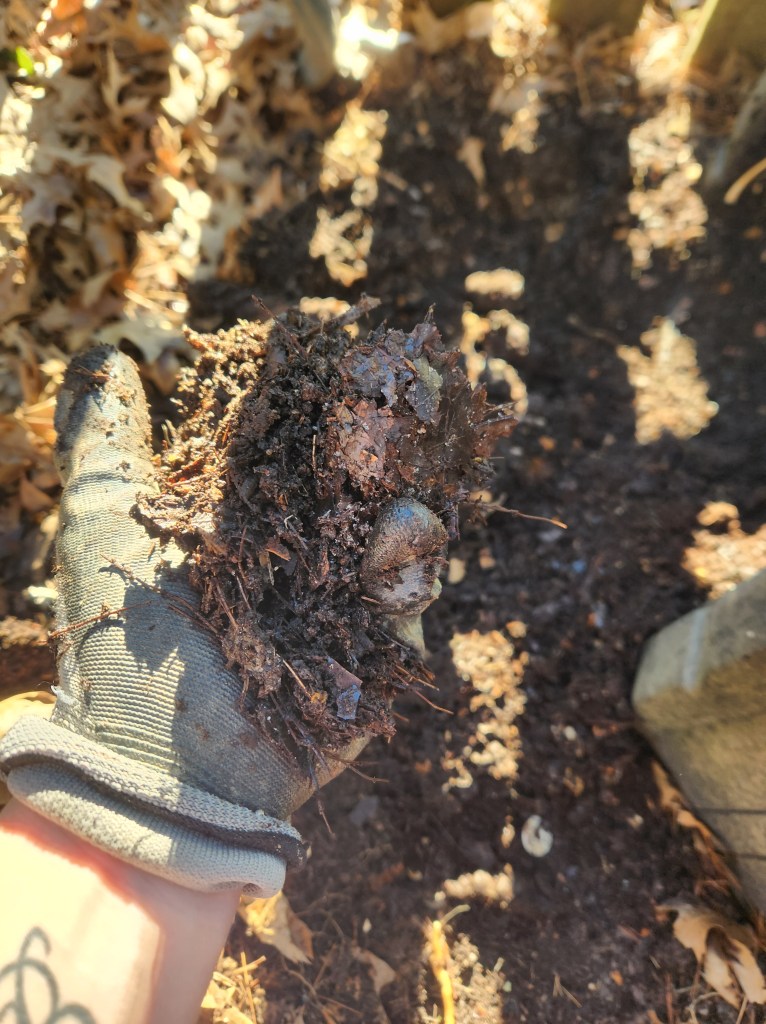
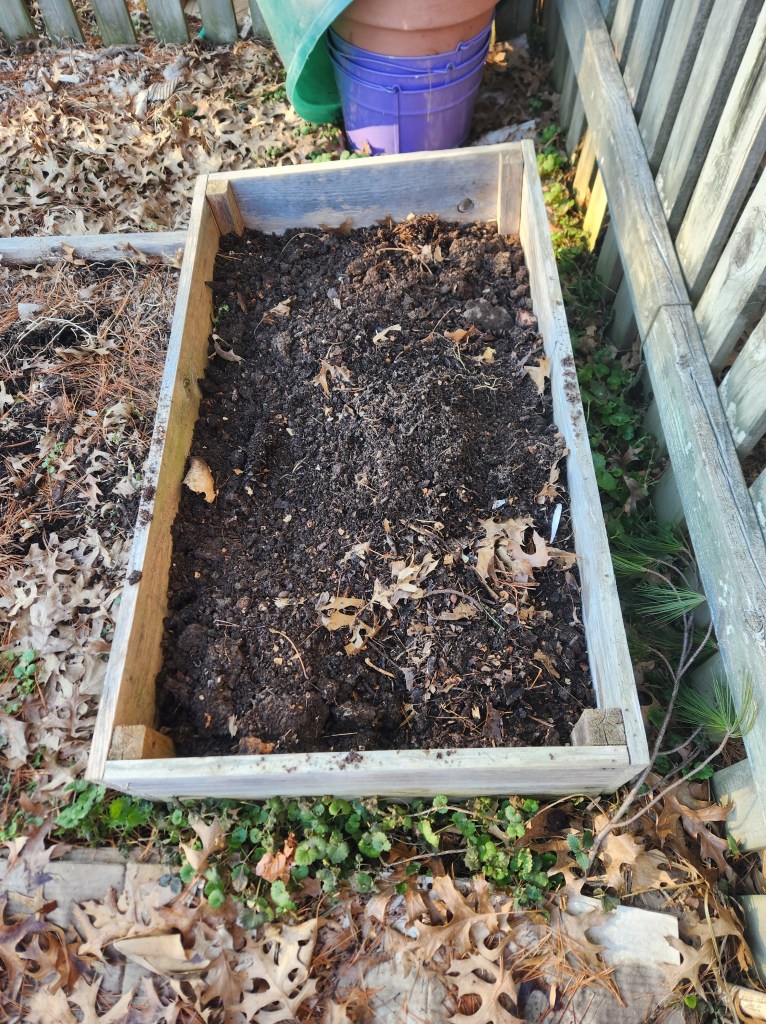
I have a countertop bin that I keep under the sink that’s about ½ a gallon and I fill it up approximately 3-4 times a week. Every time I take it out to the compost pile, I cover the fresh green addition with a layer of leaves I keep in a pile nearby. Then, as the bin gets full, I simply dig out the fresh, beautiful compost from the bottom and voila! My garden beds get replenished with black gold. It’s a triple win: less trash, free compost, healthy garden beds.
 farmcharmblog.com