Compost: The Triple Win

A few days ago it was 60 and sunny. I was wearing just a t-shirt outside doing yardwork. An that’s not really a thing here in the mid-Atlantic in winter.

If you’ve been experiencing unseasonably warm weather like us, that’s a great time to turn or dig out your compost pile.

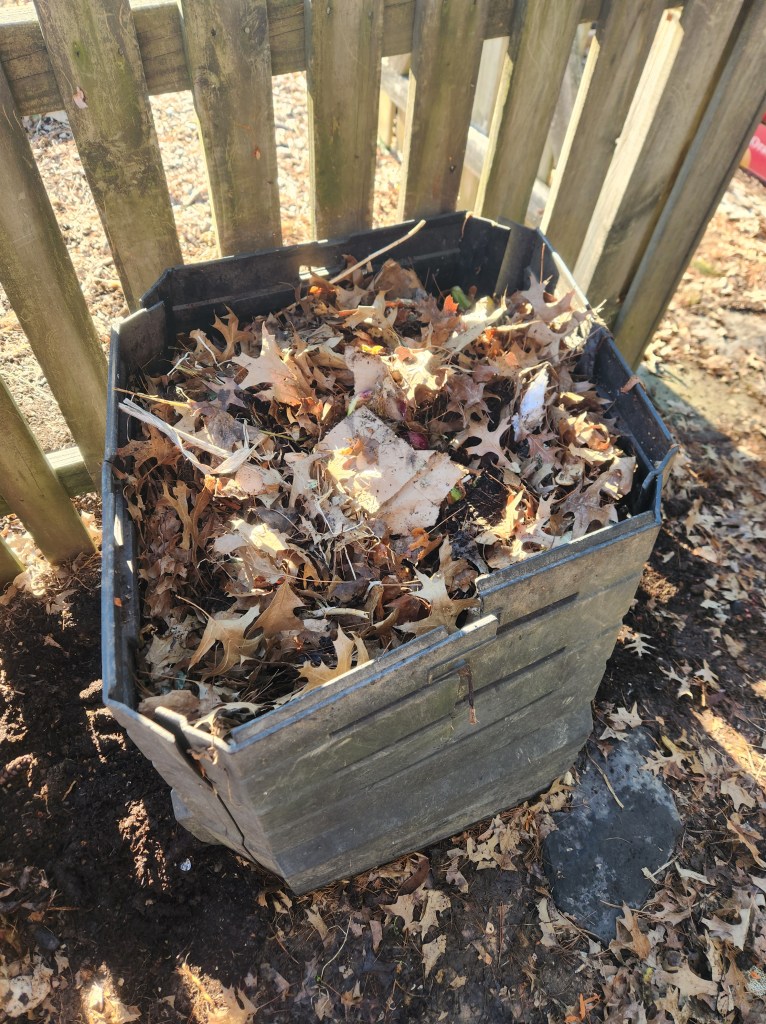
There are so many different styles of compost bins across quite a few price points. I tend to prefer simple and have had really great results with a just a pile enclosed by mesh like this. Our local department of environmental services gives these away for free if you request one. And this composter was on our property when we moved here 4.5 years ago and it’s been pretty great.  I don’t know how long it was used before us but I will say it’s showing signs of wear and UV damage.

There’s no wrong choice when it comes to compost bins, but you should consider what is best for your living space.  Will it be on a deck or balcony very close to your home?  Or do you have a yard with more space? These factors determine what size makes sense as well as how secure you’ll want it to be. I’ve never had a smell issue with mine, but that and attracting rodents is most peoples number one concern.

If you are new to composting, it’s really not hard and will be LIFE CHANGING.  When I started composting in my 20s, it cut my trash in half. I used to live in a townhome with no yard and couldn’t plant anything so I never benefited from the compost in terms of being able to use it.  But I like to think the Earth benefitted by not sending all those food scraps into a landfill.

The main rule to follow with composting is no animal products – nothing fatty or greasy. Everything else is either a ‘brown’ or a ‘green.’

  • Browns are things that are carbon rich. I think of them as being the dry stuff from my yard, like leaves and grass clippings.  You can also use cardboard and paper bags. 
  • Greens are things that are nitrogen rich. This is pretty much everything from your kitchen – produce scraps, coffee grounds, and tea bags. I consider this the wet stuff.

Many people believe there needs to be very precise ratios of browns to greens. I’ve never been that particular and I’ve always had great compost results. To keep it simple, think of it as a 70/30 or 60/40 split. You just want to keep adding browns to absorb the wet and stink of greens.
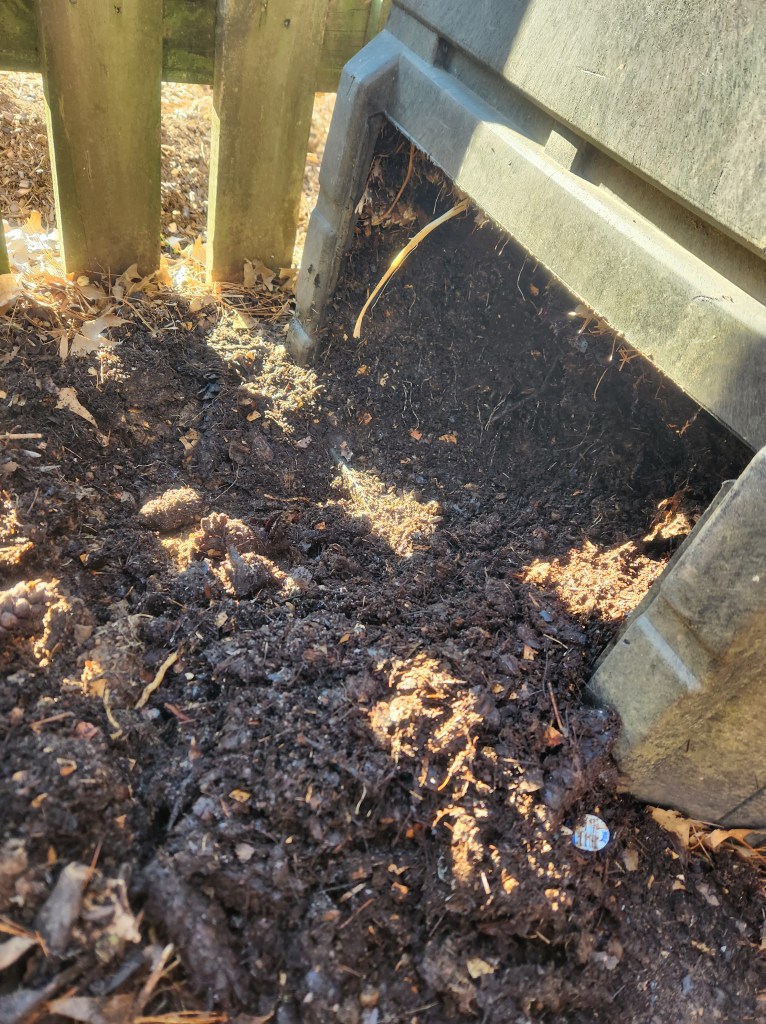
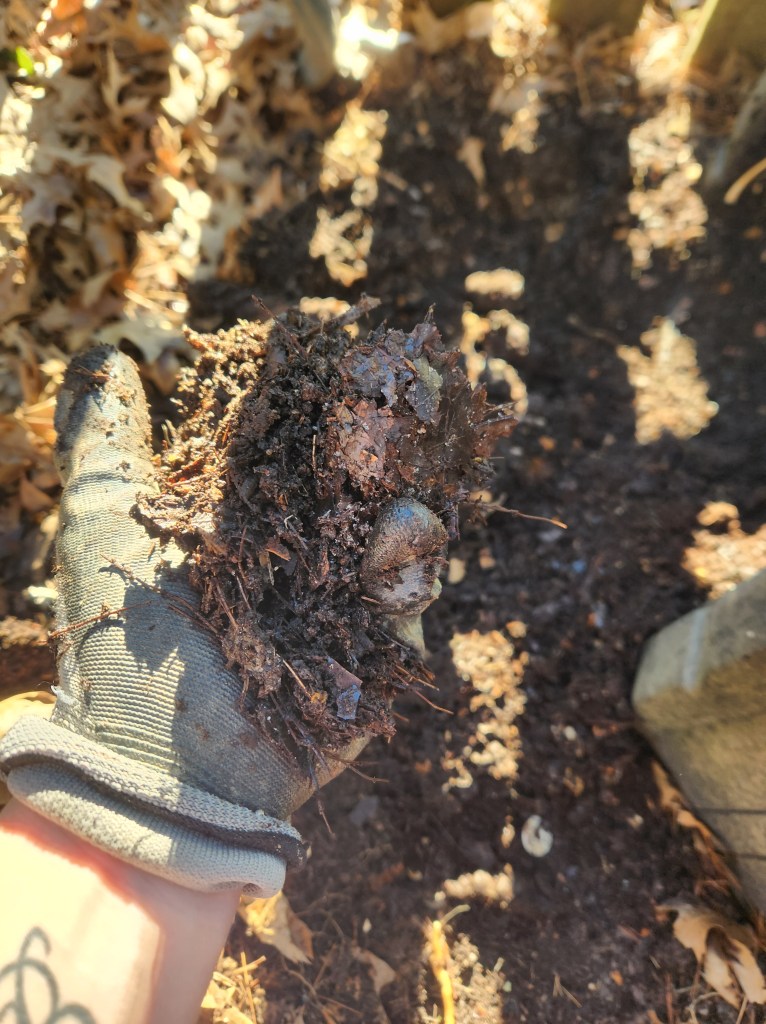
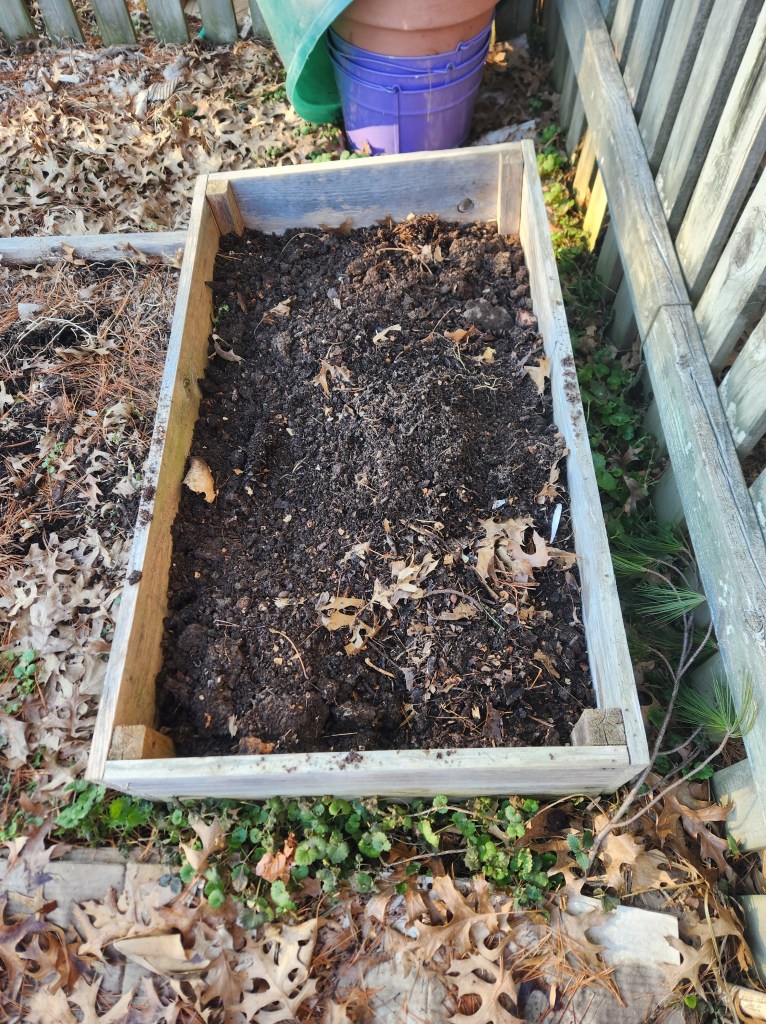
I have a countertop bin that I keep under the sink that’s about ½ a gallon and I fill it up approximately 3-4 times a week. Every time I take it out to the compost pile, I cover the fresh green addition with a layer of leaves I keep in a pile nearby. Then, as the bin gets full, I simply dig out the fresh, beautiful compost from the bottom and voila! My garden beds get replenished with black gold. It’s a triple win: less trash, free compost, healthy garden beds.
How to Score Free Plants

You are not going to believe this, but scoring free plants is totally a thing. A neighbor told me she gets bulbs and other plants when stores are changing over between seasons. I just sort of smiled and nodded like, “Yeah, I’m not sure that’s true but thanks for telling me.” I didn’t really put much weight or thought into the idea. But lo and behold I am a believer.

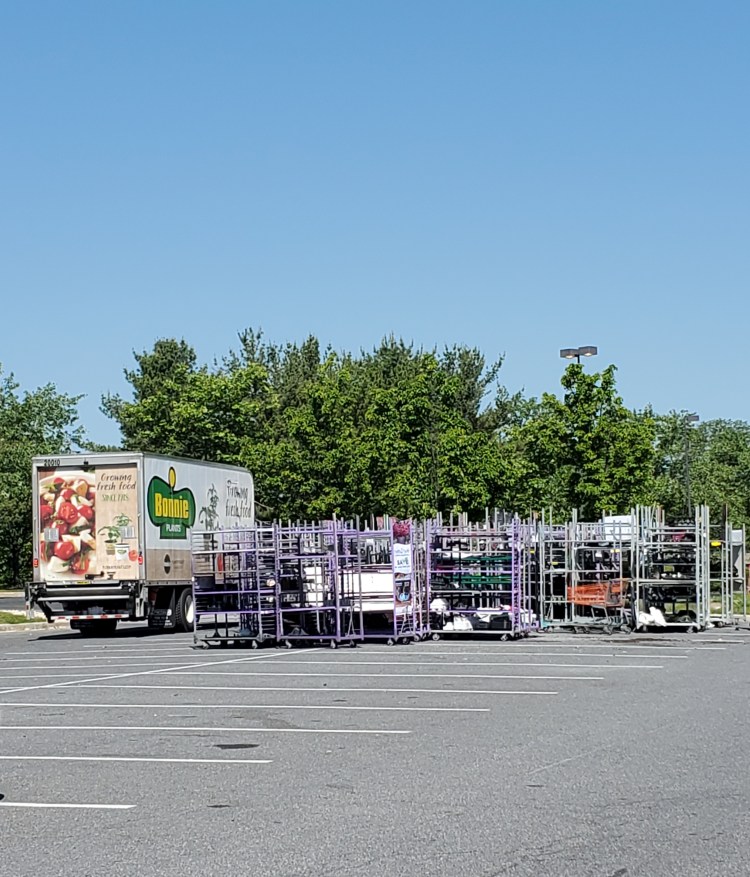
I was driving by the local Ome-hay Epot-day (don’t want to implicate anyone here) and happened to see all these rolling shelf carts at the end of the parking lot. They were not organized and at first glance appeared to be empty. But my little eagle eye said to go give this situation a closer look. Before I say more, there are two things I would say you need to know about me.

  1. I’m a rule follower. I like order and I like predictability. However, if there isn’t a sign explicitly saying not to do something, then it’s up to me to use my brain and decide what is reasonable and sensible. There was no sign saying “Don’t take these plants.”
  2. I love recycling! If I can save something from the trash and find a new use for it, nothing makes me happier. It’s a two-fer. Someone else enjoyed this item and now I get to enjoy it as well.  And in this situation, nobody else even got to love on these plants yet. They were just wishing and hoping to have the chance to live their best lives. It was my duty to save them 😊

On that note, let’s talk about going through trash for a second. I’m not going to jump in a dumpster necessarily, but if I see perfectly usable things in the trash that I can salvage, you bet I’m gonna do it. Look, we live in a very disposable society, with short attention spans, and marketing and advertising constantly telling us we need something else to be happy. I don’t buy it! (see what I did there?) That’s why I did the whole year of enough. Stuff doesn’t make us happy. Relationships and feeling connected to family and friends, doing meaningful work, and helping others makes us happy. If someone is concerned about the appearances of resuscitating an item from the trash, look no further than the proverb one man’s trash is another man’s treasure.

Metal shelving carts in parking lot

So I walked on over to the rolling shelf carts and there were hundreds of plants jammed on top of each other. Yes they were dried up and on their last leg but let me tell you their time was not up. I spent about 10 minutes sorting through and grabbed no less than 30 plants – some flowers, six peppers, maybe eight tomatoes, a few mints, a couple cilantros, two basils and sages. There was even some okra and cucumbers! I pretty much won the lottery.

close up of metal shelving carts in parking lot

Food wasted is something that I’ve been learning more and more about and this was a light bulb moment for me. All these plants represent food and self-sufficiency. Maybe we all don’t have a huge yard to grow food but we could all have 2-5 plants on our windowsills, door steps or balconies. And then we have some ownership over what we eat, which leads to taking better care of our health, and then we are unstoppable.

Besides hanging out by the trash, here are some other ways to score free plants:

  1. Pay attention to the change of seasons (April, July, October) and when certain items are going to be pulled from the shelves.
  2. Ask the staff at your local hardware store if there are plants they are going to toss.
  3. Volunteer at a local farm or greenhouse – there will be plants that don’t sell.
  4. Trade with a neighbor. Take note of which neighbors have gardens and offer your extra seedlings in exchange for some of theirs.