Give Cover Crops a Chance

I’ve never planted cover crops successfully. The last two years I’ve thrown down rye seeds at some point in the fall and just hoped for the best.  Well, as they say, hope is not a plan so that approach didn’t really get too far.

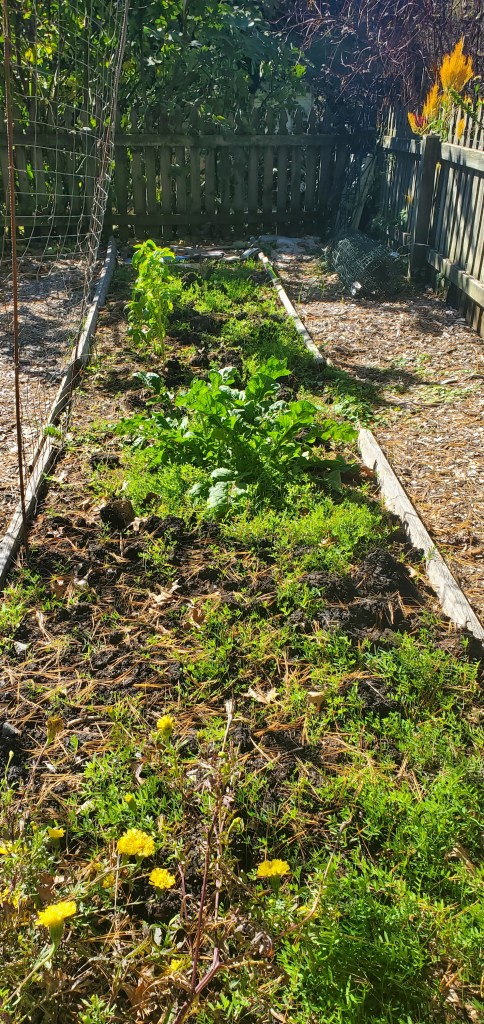
This year I bought two different ½ pound bags to spread across my three garden beds that are about 3’ x 20’ each. I bought oats and field peas mix and hairy vetch from Hudson Valley Seed Co. I have three other  smaller beds that are further from my water source and I had sprinkled seeds on these beds back in August but didn’t pay attention to watering them so guess what happened?  Nothing. Absolutely nothing.
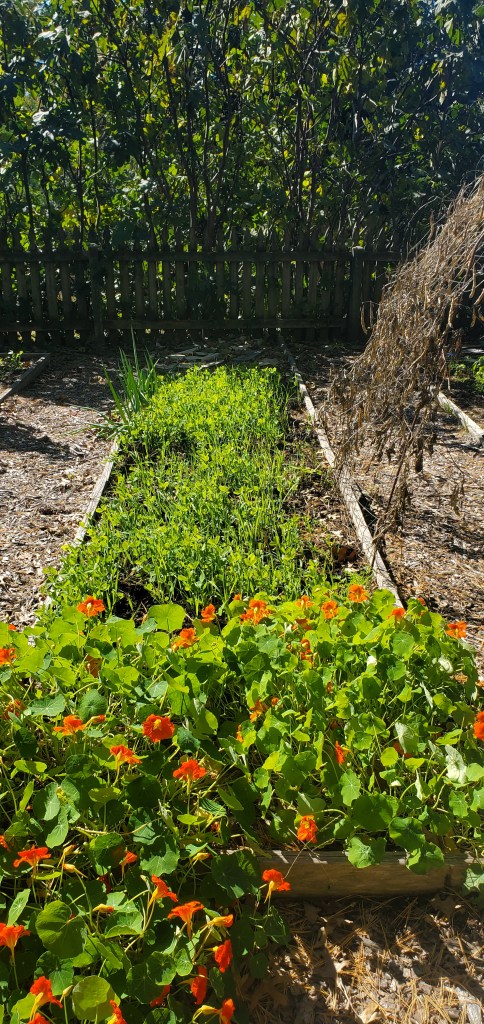
So what’s the deal with cover crops anyway?  What are they good for and why should you plant them? I’ve been hearing about cover crops for the last five years or so but I didn’t really think of the concept pertaining to my small-scale garden. But I was wrong. There are many benefits and advantages to be gained from planting cover crops in nearly any size space.  

Here are some of the points that sold me:

  1. Improve soil health – cover crops support all types of soil organisms that make a beautiful web of interdependence. Cover crops feed bacteria and fungi in the soil and worms and other insects eat the fungi and bacteria.
  2. Prevent erosion – cover crops help stabilize soil to better absorb intense rain and cover crop root channels help soil hold water in drier environments. 
  3. Fix nutrients – cover crops hold on to nutrients such as nitrogen that can be released the next season to help the next year’s crops.
  4. Capture carbon – Cover crops remove carbon dioxide from the atmosphere and build it into the soil.

So no matter what size garden you are working with, give cover crops a chance. It’s truly a privilege to be a steward of a piece of the Earth, so help it be as healthy as possible.

A Garden Calendar that Gives Room to Breathe

As another growing season approaches, I wanted to step back and think about the rhythm and timing of my plantings. For me, having a plan is essential so that I don’t get overwhelmed. But I don’t really want to live my gardening life according to a highly complex excel spreadsheet with tons of equations.

This year, I am not going to expand my vegetable garden and want to keep it pretty similar to what I did last year with a few tweaks. However, I am planning to really give a big push to flower growing thus I want the vegetables to be relatively simple.

I don’t know about you, but the whole “start this 8-10 weeks before your last frost” feels a little too abstract.  I’d rather work with the natural demarcations in the calendar year that signal, “Oh, it’s Spring solstice, time to… [insert task here].”  In the three short years I’ve been gardening, I’ve already grown to love these little tricks because Lord knows my memory is not superb.

Here are the broad strokes and signals that work for me in the Mid-Atlantic and maybe they’ll be helpful to you.

Valentine’s Day (or a weekend thereabout) is when I start peppers indoors.  Think spicy romance!

St Patty’s Day is the time to start tomatoes seedlings. 

Depending on when Easter falls, that’s usually the time to get my spring garden planted with the cold hardy crops – beets, carrots, kale, lettuces, onions and peas.

Then there’s Memorial Day to seed the summer garden and transplant the tomatoes and peppers that I started indoors.

4th of July is a good time to start your fall seedlings indoors, like broccoli, cauliflower and brussels sprouts.

Labor Day, in addition to being the end of my energy and enthusiasm, is when I start letting my beds rest a bit. Just some lettuces, radishes, beets and transplanting the brassicas I started indoors.

Halloween is usually the turning point from enjoyable Fall weather with sunny days to colder, gray days with rain and wind.  Halloween is my signal to go buy some manure from the horse rescue that’s nearby to amend my garden and start putting everything to rest.

Thanksgiving to Christmas is the time to be thumbing through seed catalogues and singing “my favorite things” as I pick out seeds for next year’s garden.

Seeds and Trees

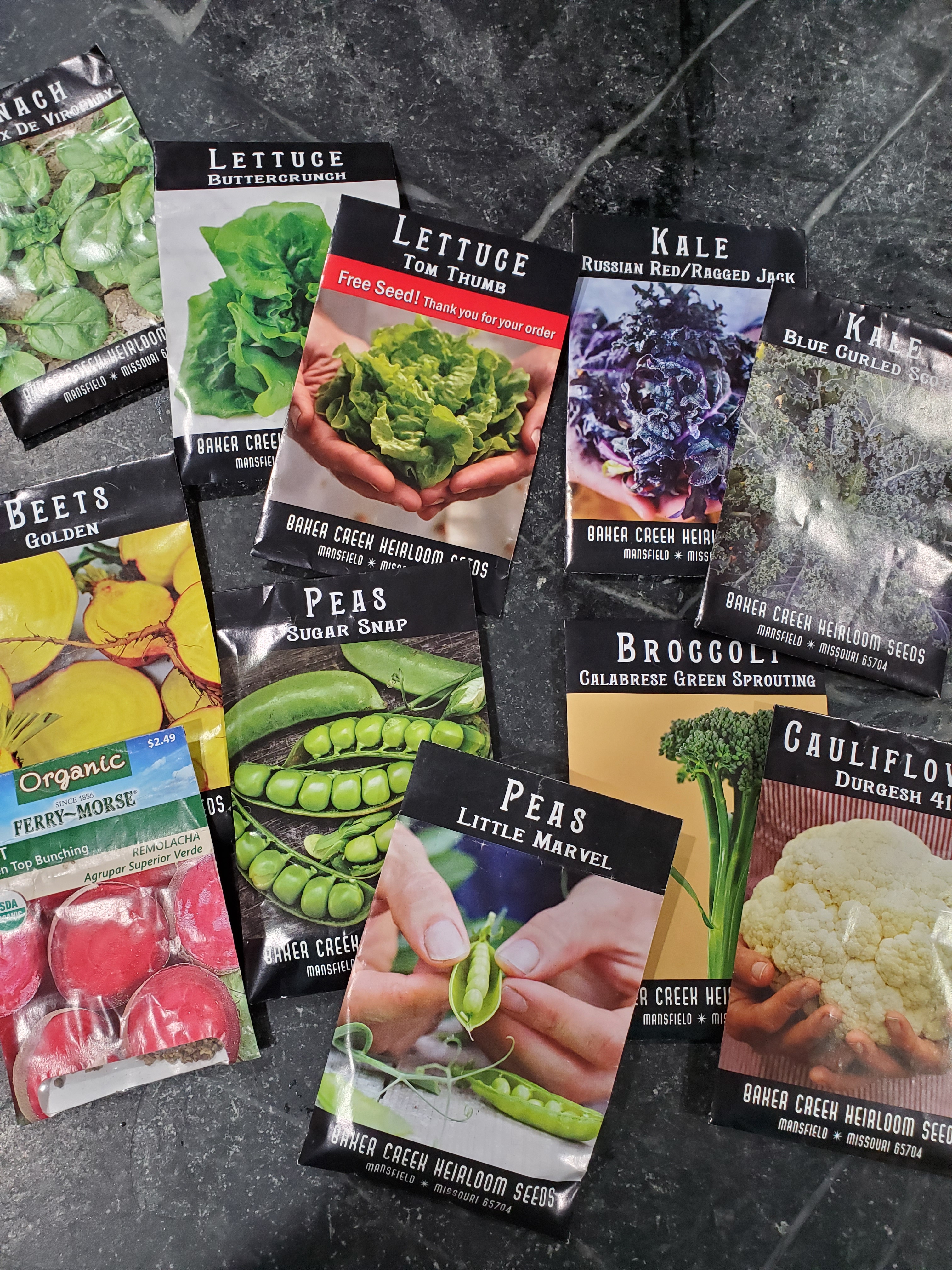
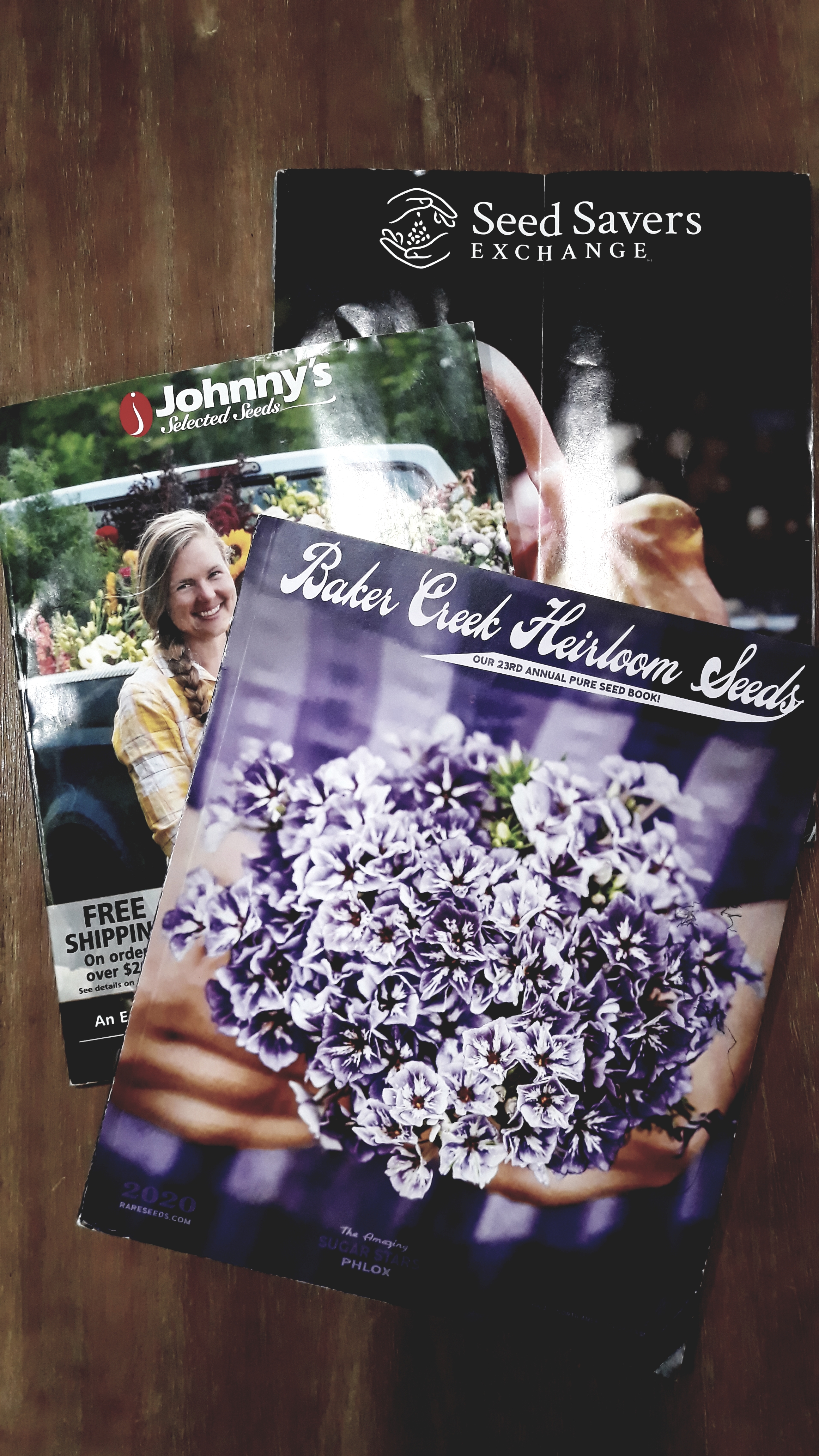
If you’re anything like me, you’ve received about a handful of seed catalogues or at least a dozen emails reminding and prompting you to buy your seeds. This typically starts back in late November or early December and for most of us the warm weather is still too far off to seem real so it’s easy to just page through them and dream.  But don’t make the mistake of waiting too long to decide what you are going to plant, and thus the seeds you need to buy, so that you have a good selection to pick from.  I’m already getting “back ordered” and “out of stock” notices for some of my top picks.

I can’t and wouldn’t tell you what to buy or not buy – that’s a very personal choice. I did write a post about this two years ago that gives some questions to consider as you put your plans together. Your plans don’t have to be set in stone yet. They can be rough lists on a notecard (warm weather vs. cool weather crops) or drawings scribbled on a scrap paper of your garden space. You are just going for a general idea of what you want to plant and where. [Mom comment: that’s where doing your “lessons learned” and notetaking throughout the season really comes in handy because you have already identified what worked and didn’t and what you want to do differently this season.]

If you’re new to gardening (I’d say anyone who has been gardening 1-3 years is in this category), this all probably feels very overwhelming. I assure you, by years 4 and 5 it gets better. You’ll have a template, you’ll know what you like growing, what’s worth the effort and what isn’t, and the crops you are determined to figure out no matter how many times you’ve failed (Cucumbers – I’m talking to you!)

Once you’ve hit the “not so new to this” phase, I would encourage you to ponder two additional options: 1) flowers and 2) fruit trees.

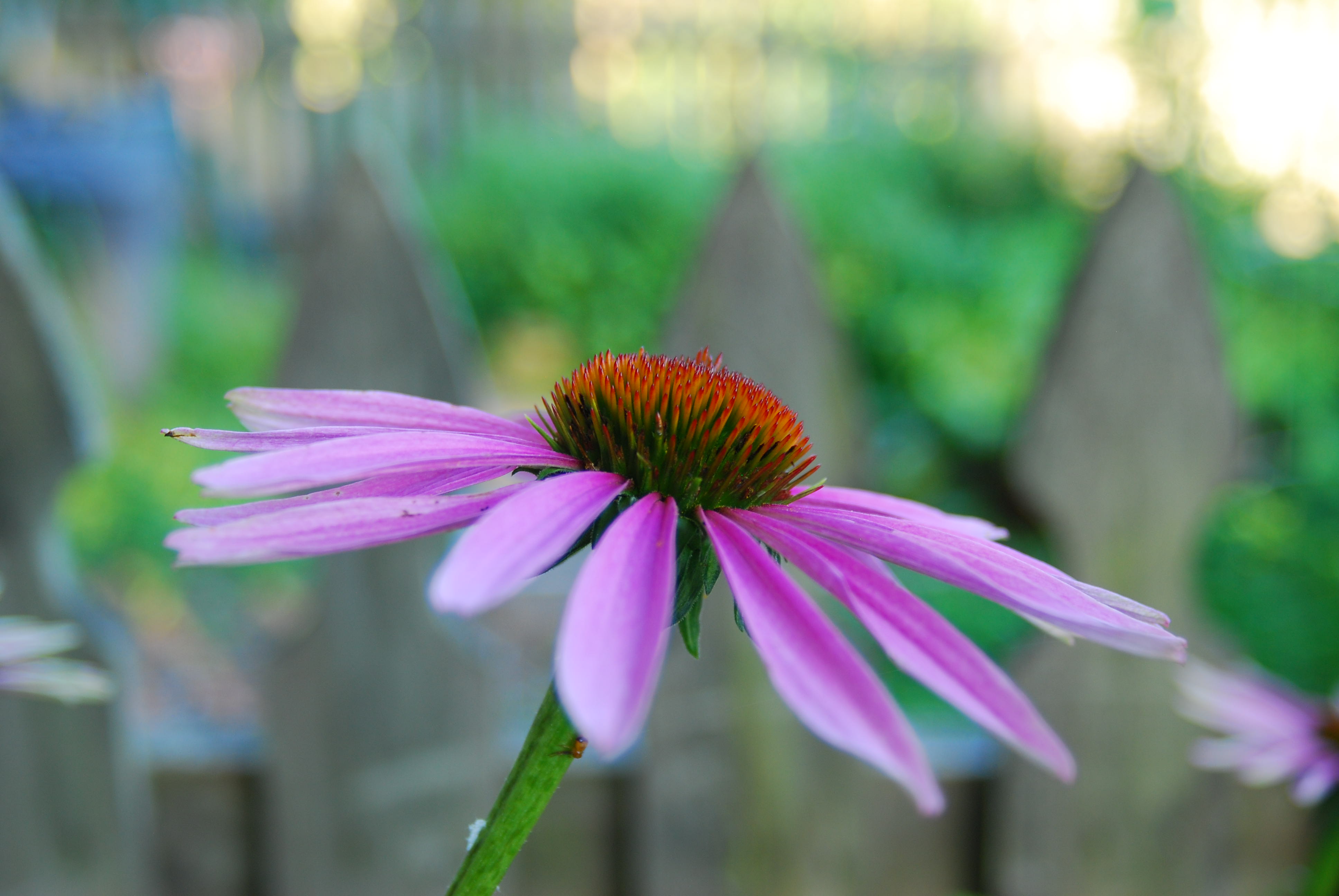
Flowers, whether you think they’re beautiful or not, bring all the happy pollinators that will support your garden and bring it to a whole new level of abundance. I happen to think flowers are completely perfect. Their symmetry, colors, and textures take my breath away. And if there is anything I wish we would all appreciate a little more, it’s the magnificence of nature. Flowers and sunsets illustrate that for me time and again. You don’t have to go all out either. Pick some perennials – black eyed susans, coneflowers, cosmos, or alliums – and plant them in and around your garden space. For fun and color, maybe throw in some zinnias, sunflowers, and marigolds.

Beyond your garden, I’d encourage you to look around your space.  Do you have 10-15 square feet in your yard or a shared plot in your neighborhood? If yes, great! Plant a self-pollinating apple, cherry or pear tree. If no, what about a patio, front porch, or balcony? Then you could plant a dwarf option in a container like a Meyer lemon. I’ve chosen a few trees from Stark Brothers this year in the hopes that we’ll have a sweet little orchard going in the next 4-5 years.

2021 Garden Successes and Lessons

How’s everyone doing? Another year for the record books, right? In my life and my job, much of this year has felt like two steps forward and one step back. Progress overall but not smooth or linear. I will say that it’s hard to know if you’re making progress though without taking notes or keeping track. Every gardening book, article and podcast will tell you to take abundant notes. And yes, in principle, that is true and in a perfect world we would have a little notepad in our gardening belts. I’m also a believer in looking for trends or highlights without having to write down every detail. But do whatever works for you – your preferences, your priorities, your abilities. Either way, if you’re learning, you’re still living 😊

Without further ado, here are my 2021 gardening successes and lessons to save you, my dear friends, any extra work I can.

Seed Starting with Grow Lights

Rocked it!Gonna rethink it
All my tomatoes and peppers did excellent. I started a total of 30 tomatoes (five different kinds) and 24 peppers (6 different kinds) and they all grew into hardy seedlings that transplanted well.My tomato plants in 6-count seed cells did get quite tangled and jumbled. I will plant them in the separate 3” round cups next year.
My onion starts were incredibly strong and had really high germination.My broccoli and cauliflower starts all inexplicably dried up and died over the course of 5 days.  I was so sad.
All my herbs – basil, parsley, oregano – turned into fantastic plants that lasted until October.Nothing, nada, nyet happened with my lavender seeds. So disappointing but I’ve heard this is a tough plant.

Direct Sowing

Rocked it!Gonna rethink it
Spring: arugula, carrots, kale, peas, and spinach all did great.My beets had a really low success rate. I think I didn’t water them enough but we had a wet Spring so I am just confused and disappointed.   My garlic (that I had planted in Nov 2020) was a total fail. I did not start with large cloves though. I started with the baby seeds from a large bulb. I also believe I didn’t water these adequately.
Summer: okra and winter squashNo success at all with my cucumbers, cantaloupe, rhubarb, and watermelon.
Fall: arugula, kale, and radish are still cranking.This is my second year in a row of nothing to show for brussels sprouts and broccoli. I will try starting them indoors in mid-July next year and if that doesn’t work (along with a row cover) I may be ready to toss in the towel on these two crops. They just don’t grow. I tried collards also and those failed simply because I had them in a big planter near my porch that the deer could get to.  Lesson learned!
Okra blossom… Nothing prettier.
Five petal light yellow with maroon center okra blossom

Care and Maintenance

Rocked it!Gonna rethink it
My soaker hoses worked great for the beans, peppers, and tomatoes.As plentiful as my onion starts were in the beginning, they amounted to about 6 onions in the end. I definitely didn’t water them enough.
I barely had to weed anything this entire year. I put down enough mulch that everything stayed really tidy. That was amazing.I gave the squash bugs a good fight, but in the end they took out my two zucchini and two pumpkin plants. Pretty frustratring

Garden Planning and Design

Rocked it!Gonna rethink it
My tomato wall and pea fence were really successful and well supported.  Doing this again for sure!I’m going to do long vertical lines of beans next year and try for a few more pole beans so that I’m not squatting as much to do all the picking. I had the best harvest from my golden, jade and calima beans.
Look at that tomato fence!!!
Thirty feet of fencing with tomato plants growing vertically

Takeaways

  • Watering helps. Ha! Writing this summary has helped me see that the majority of plants that didn’t do well were located in beds that required me to water by hand and I didn’t do that consistently or enough.
  • Less is more. Instead of trying five different crops in a bed, next year I’m going to focus on 2-3 instead and really pay attention.

What were your biggest successes this year? What will you do differently? Cheers to all your hard work and effort. It’s worth it.