It’s that time in the season where your fall garden is likely winding down depending on where you are. I really enjoy the clean up phase. It helps me take note of the areas and crops that went well, and those that need more attention or a different approach next year.
As I’m putting stuff away like stakes, cages, and netting, I’m noting if the spacing was adequate, how many plants I want to fit next year, which ones should be near different partners. That’s the beauty of gardening, it’s constant learning and attention. I love that my brain clears in the garden with the effort of the physical work.
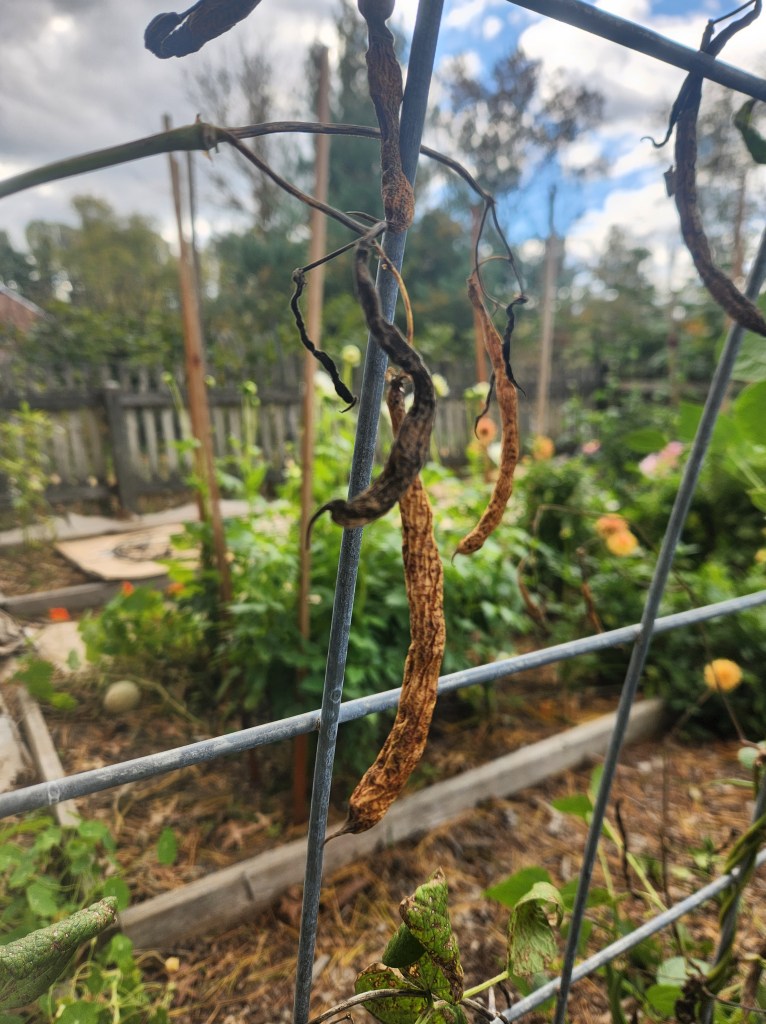
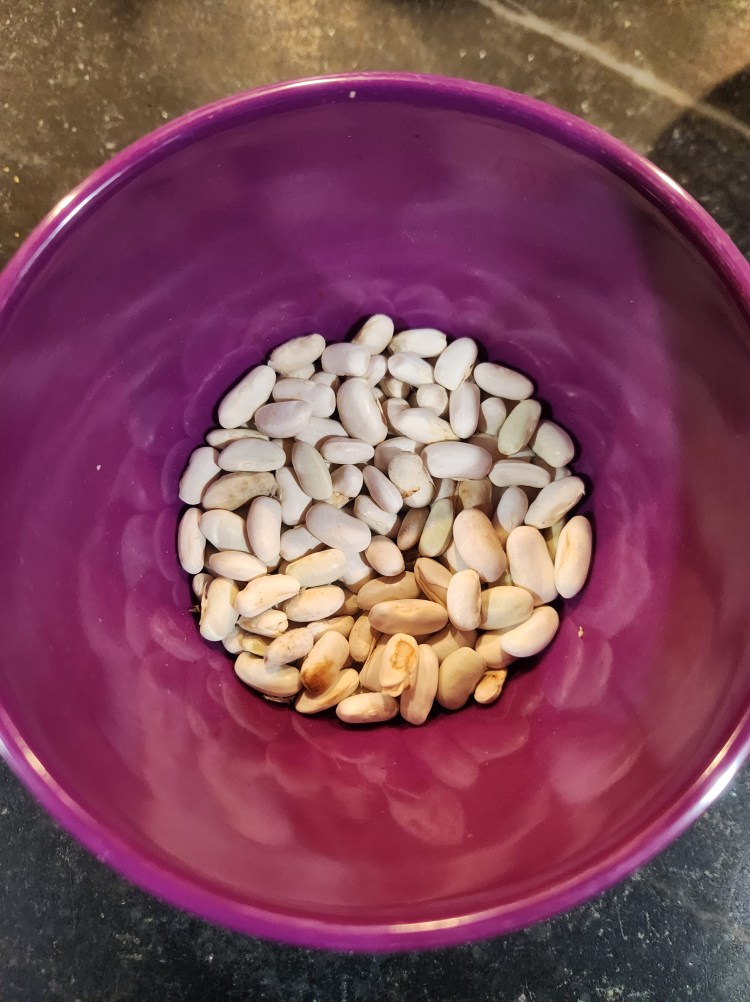
As I was trying to take down my cattle panel that I used as a trellis for my pole beans, I needed to unweave the plants that I had left to dry for seed saving. Green beans have to be the easiest plant to seed save. Literally two steps: 1) leave them to dry, and 2) crack them open.
And the best part is you never have to buy these seeds again. Yippee!
Tale as old as time, true as it can be… Just kidding, making a very dorky play on Beauty and the Beast with my post. My green beans have been doing very well. A number of people had told me to plant green beans as they were basically fool proof. I love disclaimers like that because I can pretty much guarantee it won’t be that straightforward for me.
I had read that it was helpful to sprout the seeds in a moist towel for 2-3 days before directly sowing them in the ground. That worked really well. I just used an old wash cloth, dampened it slightly, rolled about 12 seeds up, and left it on the kitchen counter in a produce bag from the grocery store so that it stayed warm and moist. I checked it each day to make sure it was still damp and then three days later every seed had a sprout shooting out. Then I planted all the seeds outside.
I will say I did not follow the instructions on the packet regarding spacing. I think I was just so happy that all seeds had sprouted and I wanted to use every last one. I had only designated half of one of my garden beds to beans so this was about a 4×4 foot square that I planted 12 bean plants in. Learning #1: follow the instructions on plant spacing. I have learned it doesn’t do me any good to have a big jumble of plants that I won’t be able to tend. The spacing recommendations are to allow each plant to grow and thrive. Sounds obvious, but so is a STOP sign and we don’t all follow those.
Speaking of jumble, Learning #2: doing a trellis or some other support structure for bean plants (and other vining or wandering plants) is necessary. I really liked this video from Melissa Norris on building a teepee trellis and used this concept for my green beans. However, I don’t think I built my two teepees tall enough. My teepees were only about 4 feet tall so as the plants grew to the top, they just wound back down and became a big interwoven mix up. Having too many plants probably also contributed to this scenario. I think what I will try next year is to plant one plant at the base of each leg of my teepee, not more than 6-8 plants, and make the teepee at least 5 feet tall. I will also allot an entire garden bed to the beans and maybe just plant a few marigolds in the corners because….
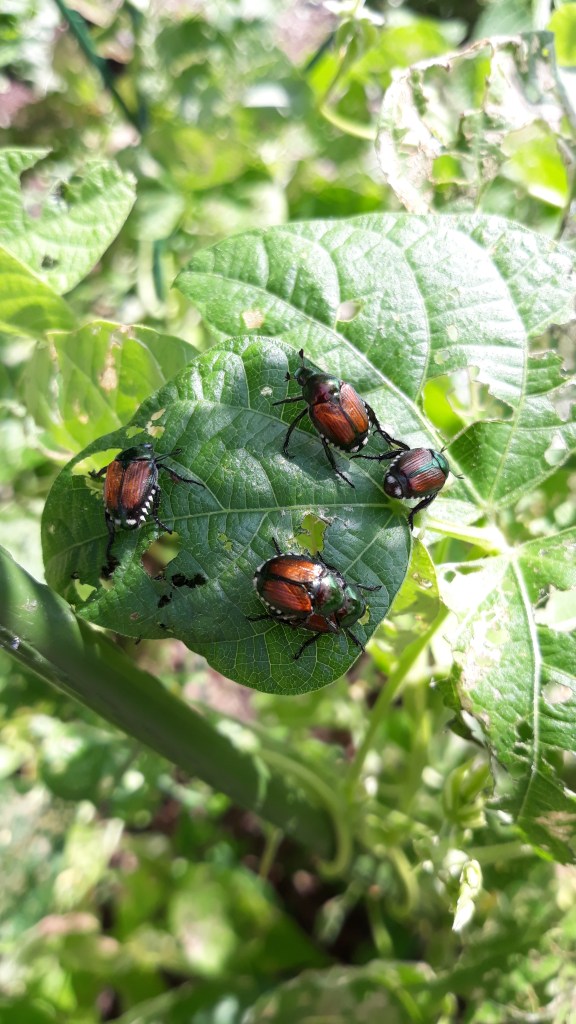
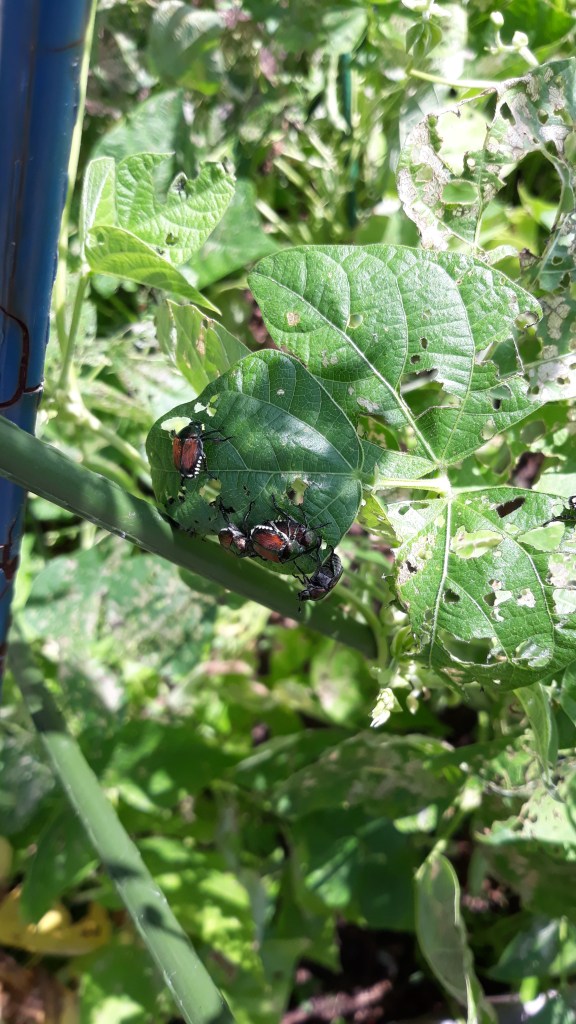
Learning #3: Japanese beetles are no joke. For about 2-3 weeks I was going out to my bean plants every few days and picking at least a 2 pounds of green beans. I was noticing that the leaves were getting eaten but being the novice that I am, I wasn’t sure how much of that was par for the course. I know there are going to be bugs and I’m pretty sure I don’t want to use any chemicals on the fruits and veggies that I grow, so I understand there will be some food sharing. But dang! These beetles are greedy and destructive. One afternoon, I finally said wait a minute and while I was picking the beans I paid better attention to any bugs I could see. And guess who was all up in my face, not even trying to be slick about their thievery? These guys! So I quickly googled and learned these are Japanese beetles, they are quite a nuisance, and there are a couple remedies to fight back. The approach I chose was to knock them off the plants into a bucket of water, kind of like this guy from the Maine Co-op Extension. That isn’t a long-term solution so I may look into some sort of spray or insecticidal soap next year but for now it’s all learning.
That’s one of the main reasons I am trying to write as much of this stuff down. I have no gardening experience whatsoever and it will take many years for me to get the hang of this stuff. And if I try to rely on memory – FOR-GET-IT!!!




 farmcharmblog.com