Even for someone like me who intentionally avoids the news and social media, I’ve heard about microgreens as one of the latest super foods.I as at the local farmers’ market last fall when I saw a stand selling just small, essentially Ziploc sandwich-sized, bags of microgreens for upwards of $7 each. Yowza!
Up to that moment, I’d had exactly two experiences with this genre of green fluff lettuce confetti:
As a kid, my mom always included alfalfa sprouts on taco night. Call her ahead of the curve and ahead of her time, this was the 80s in Missouri. My dad was in the military and assigned to Ft. Leonard Wood and people lovingly called it “Ft. Lost in the Woods.” Knowing that, I have no idea how my mom decided sprouts were the thing to take taco night to the next level. I loved filling my hard, yellow tach shell to the brim with the white, hair-like sprouts with little green bulbs on the tips.
A few years back, I was into making ‘bowls’ for my work lunches. You know the trend of Buddha bowls or green bowls where it’s some grain like quinoa or brown rice, topped with sauteed veggies like kale, sweet potato, and mushrooms, and drizzled with some sort of goddess sauce. A co-worker of mine suggested adding sprouts to it so I started sprouting my own mung beans.
So when I saw this outrageously priced (IMHO) bag of microgreens, I thought “I can grow these for way less.” And I did (#MIM). Very easily. In case you’re wondering, yes, I bought them. Then immediately thought “why did I buy these?!?”
How to Grow Microgreens
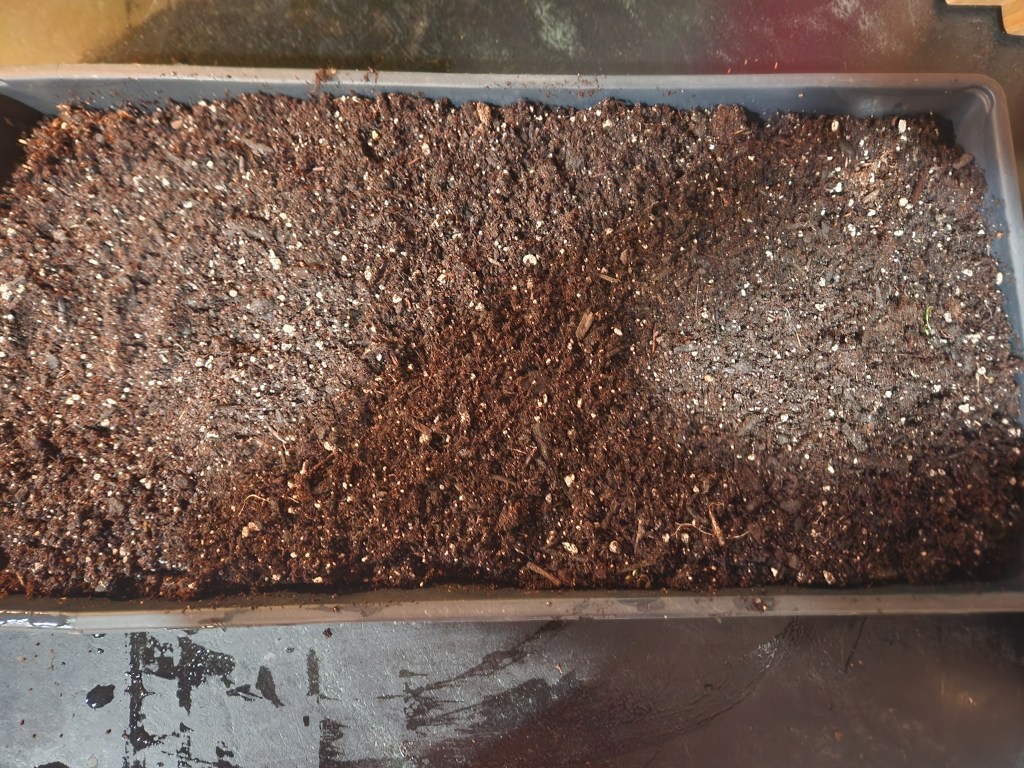
Fill a tray with potting soil. Doesn’t need to be deep, like 1-2 inches. The size of the tray depends on how much you want to grow.
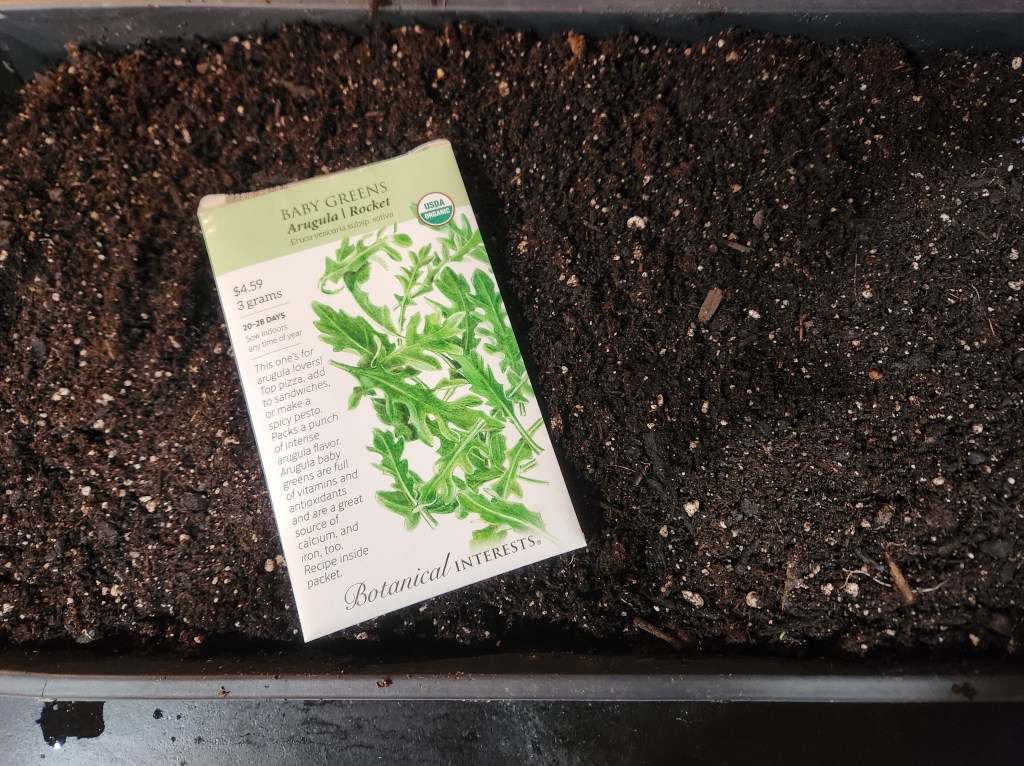
Sprinkle the entire surface with seeds. I grew arugula for this first stint.
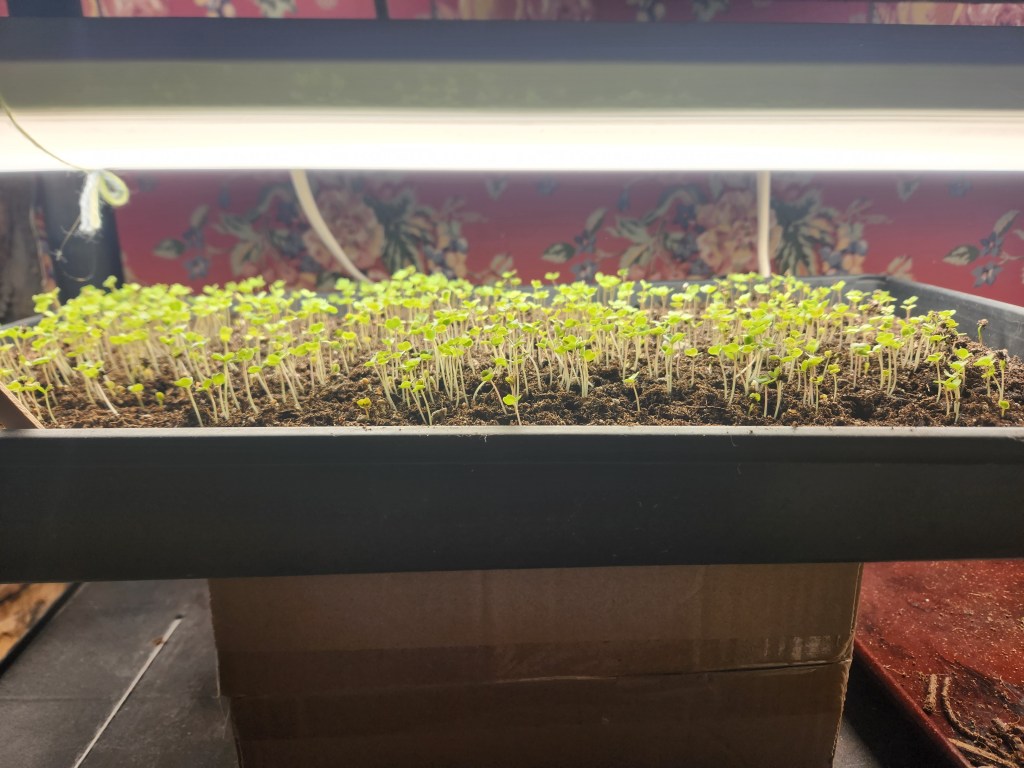
Wait three days, then let the tray sit under grow lights. To save you some struggle, since my first attempt was an utter failure, the grow lights are essential. I put my tray in the sunniest, warmest room in my house and they just got too leggy and pathetic looking.
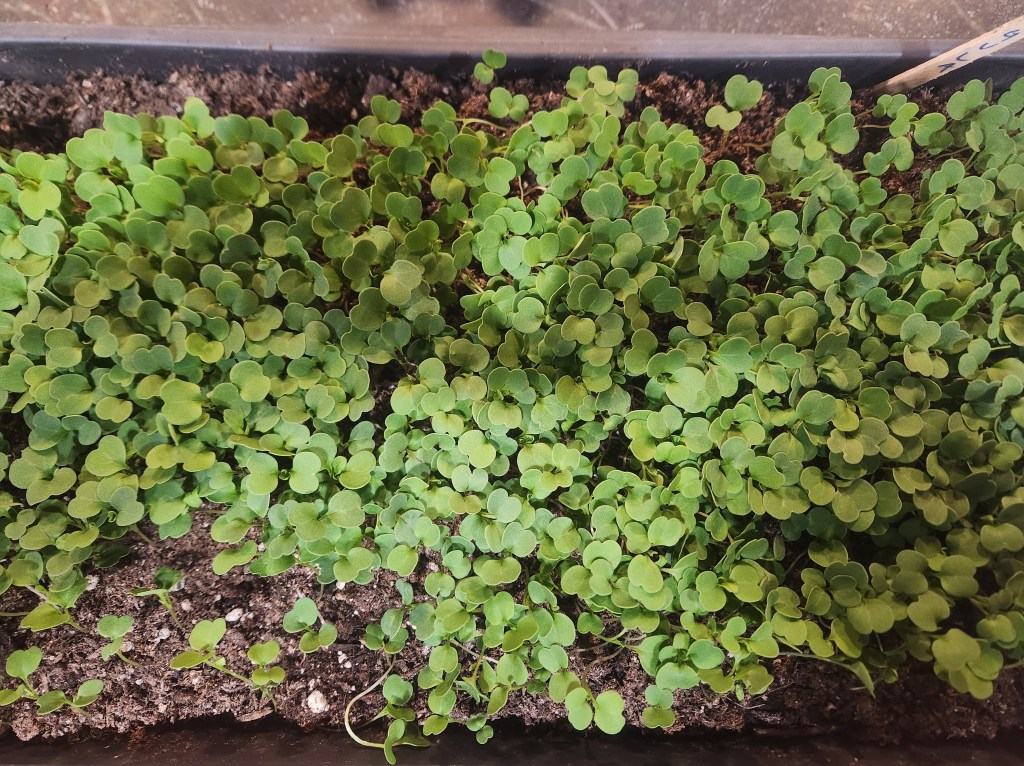
Within 10-14 days, you will have microgreens to fulfill all your heart’s desires.
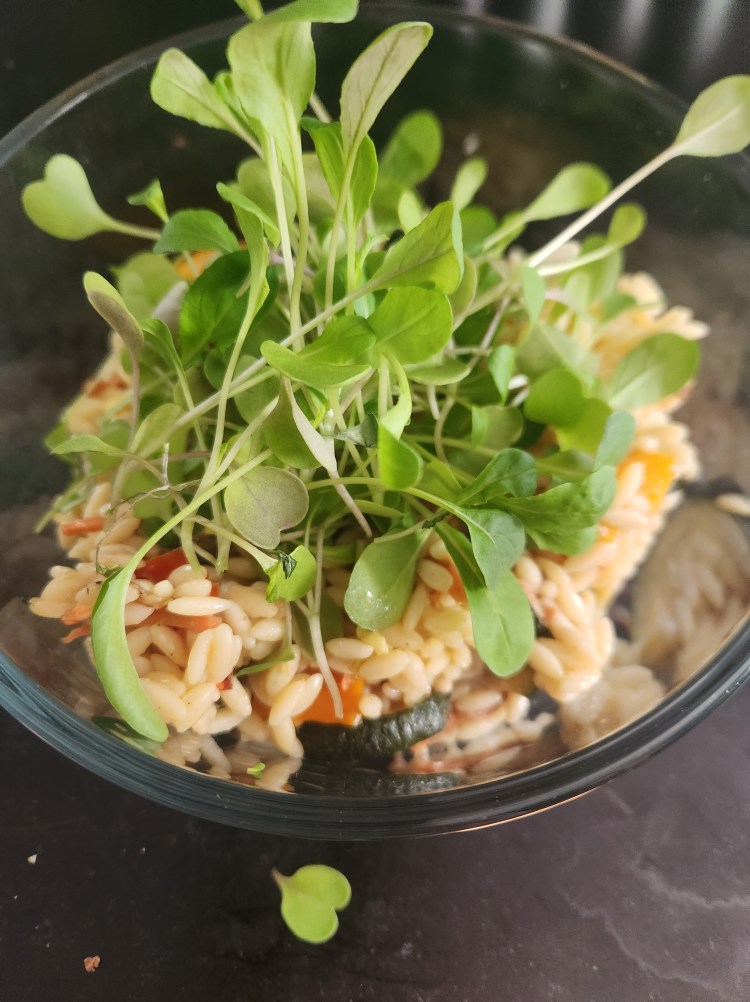
It was seriously that simple. Minimal effort and zero fuss. I’ve put the greens on grilled cheese sandwiches (any panini or regular sandwich would be delicious, I’m sure – just not PBJ), mixed in with regular lettuce salads, and used as a topper for an orzo or other pasta salad, and on pizza. My good friend had delivered this orzo salad with grilled veggies and the arugula greens were a super yummy addition.
It’s nearly seed starting time! Can you feel the excitement in the air? Oh Joy 😊 It’s so fun to be thinking about and planning this year’s garden. Each year it gets a little easier as some things become more habitual and I figure out little tricks to challenges I encountered before.
Something I wanted to do this year as a little test was make my own seed starting mix (#makeitmyself, #MIM). Last year I used the Miracle Gro® seed starting potting mix and it turned out really well. And that might lead one to say “Well, if it ain’t broke, don’t fix it.” But, I’m not entirely sure what is in the mix and I like to know what I’m growing my vegetables in.
Before I go further, there is one important point about seed starting to remember. You can’t just go outside and shovel a bunch of dirt into a bucket and bring that in your house. I know, this didn’t make much sense to me either when I learned it. Afterall, when I direct sow, I’m not creating a bunch of little holes of different ingredients before I sow the seed. But typical soil is going to be too dense, likely have a bunch of weed seeds, of course pests, and possibly disease. That’s just a much harder start than your little baby seedlings need.
Instead, it’s important to use a seed starting mix that is light and well aerated to allow you to control the moisture levels and drainage, sterile meaning there is no fungus, mold or viruses, and ensures strong root development for proper nutrient absorption.
Ingredients to Use:
You may find lists of 7-10 ingredients that go into seed starting mix. From the numerous articles I’ve read, there are really only three items common to all recipes so that’s what I’ve chosen to use. It’s the “no frills” version and it works just fine.
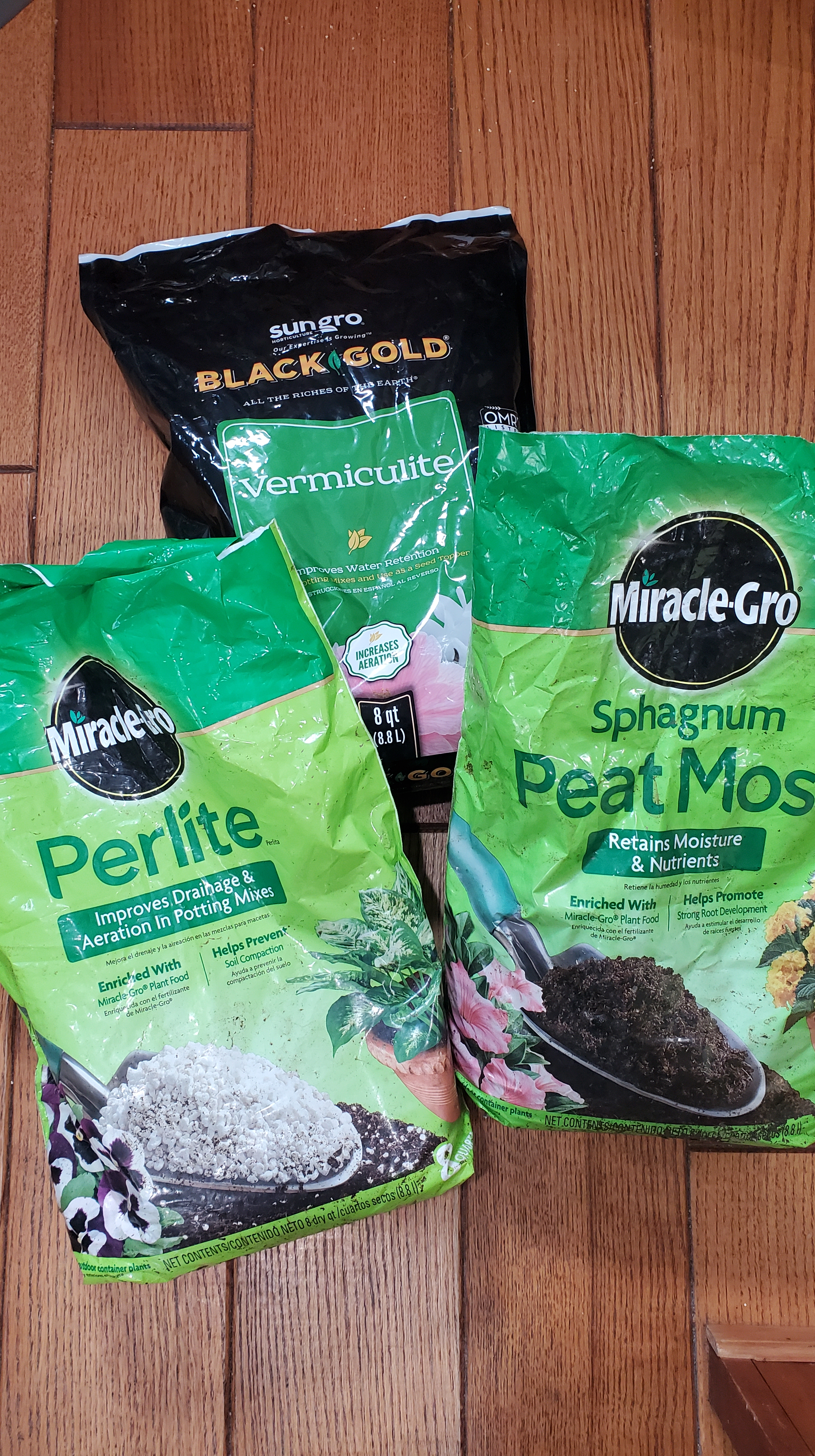
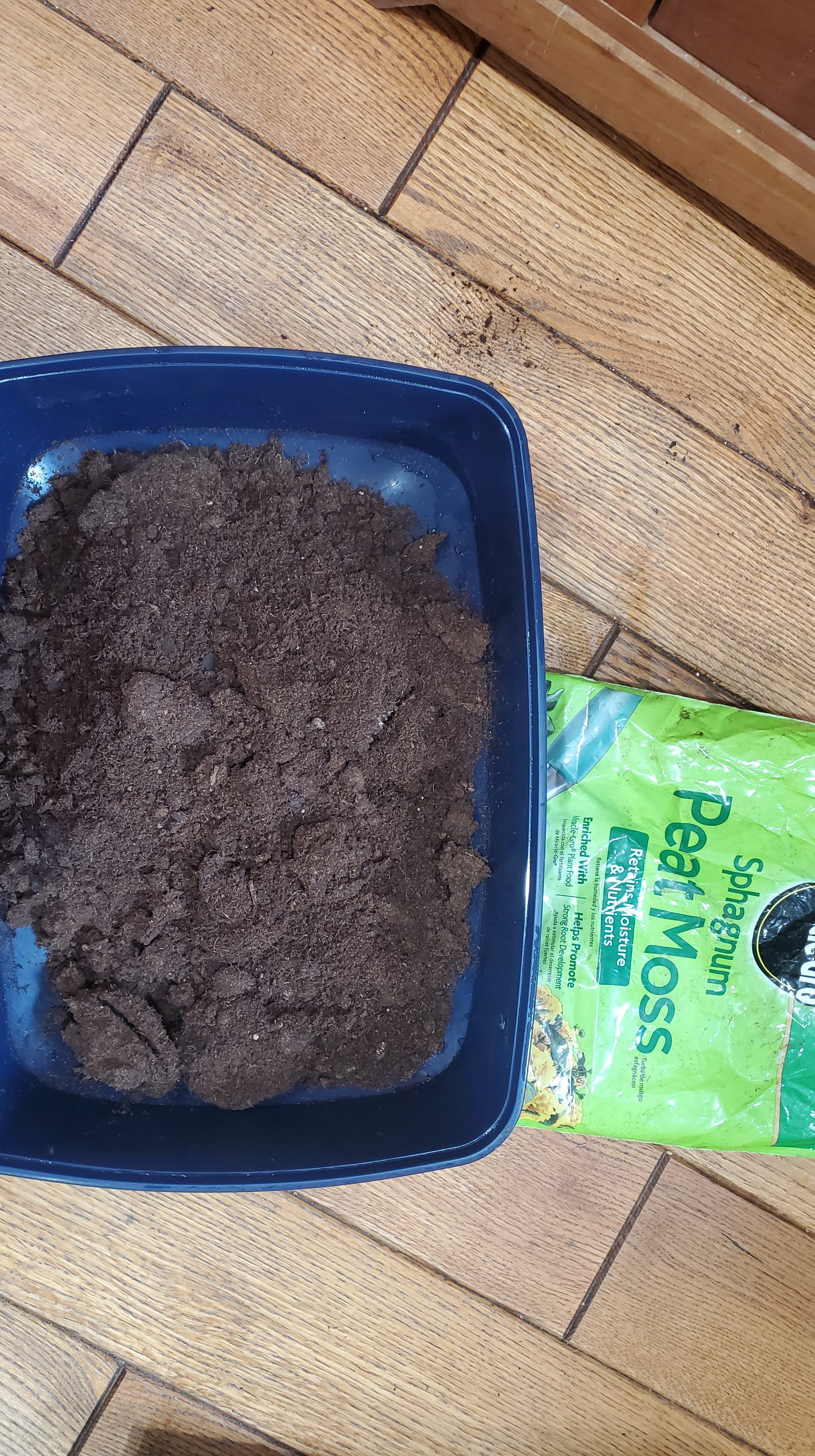
Peat Moss OR Coco Coir – peat moss comes from peat bogs whereas cooc coir made from the husks of coconuts and is a much more sustainable alternative to peat moss. From a price standpoint, they are pretty comparable so I don’t see any reason to not use it. I had leftover peat moss from last year and will only be buying coco coir going forward.
Perlite – a volcanic glass that helps your soil stay light, prevents compaction, and promotes moisture retention.
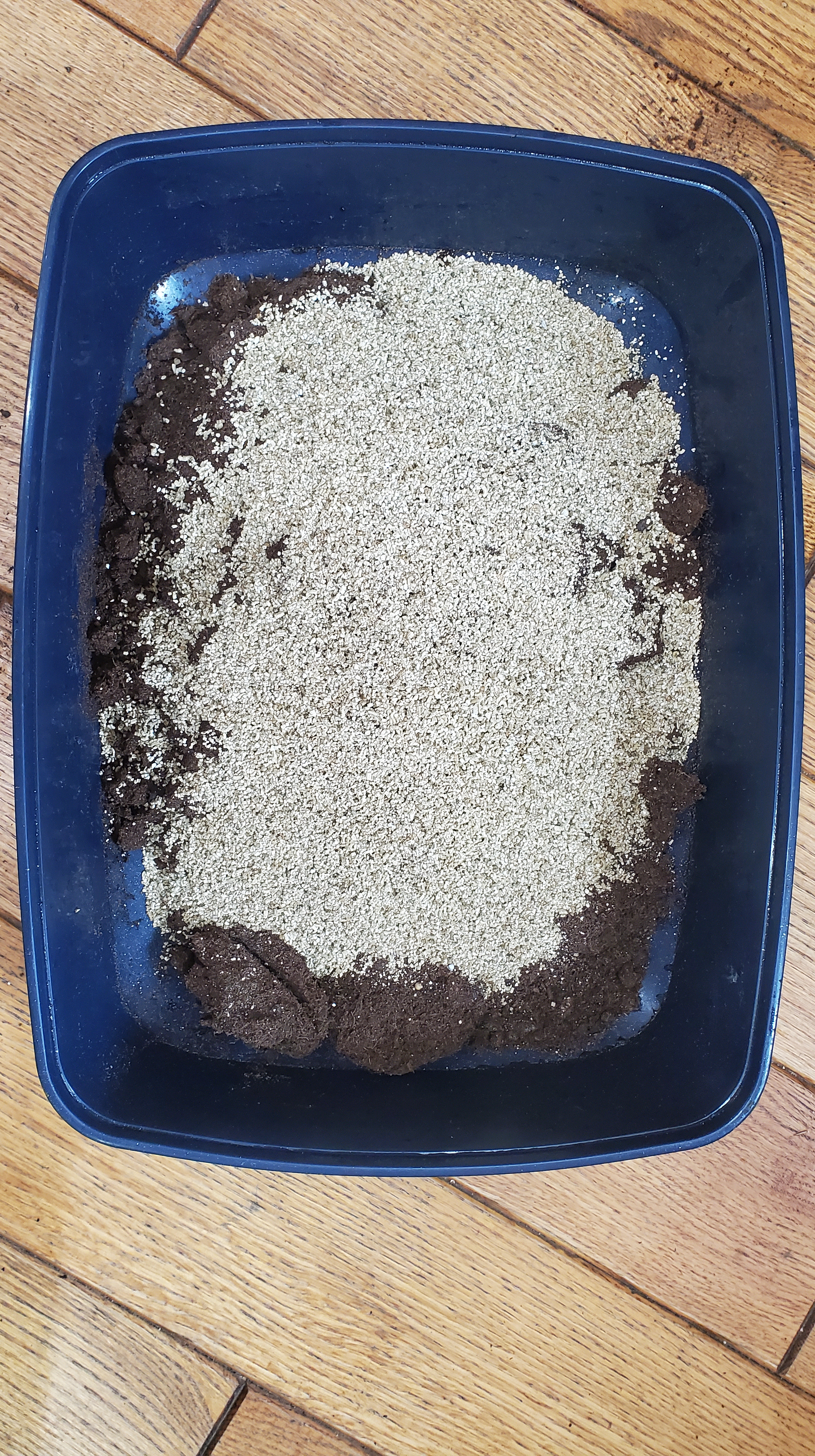
Vermiculite – a mineral that is highly absorbent, improves aeration and moisture levels, and will help your little seedling absorb nutrients.
Steps to Follow:
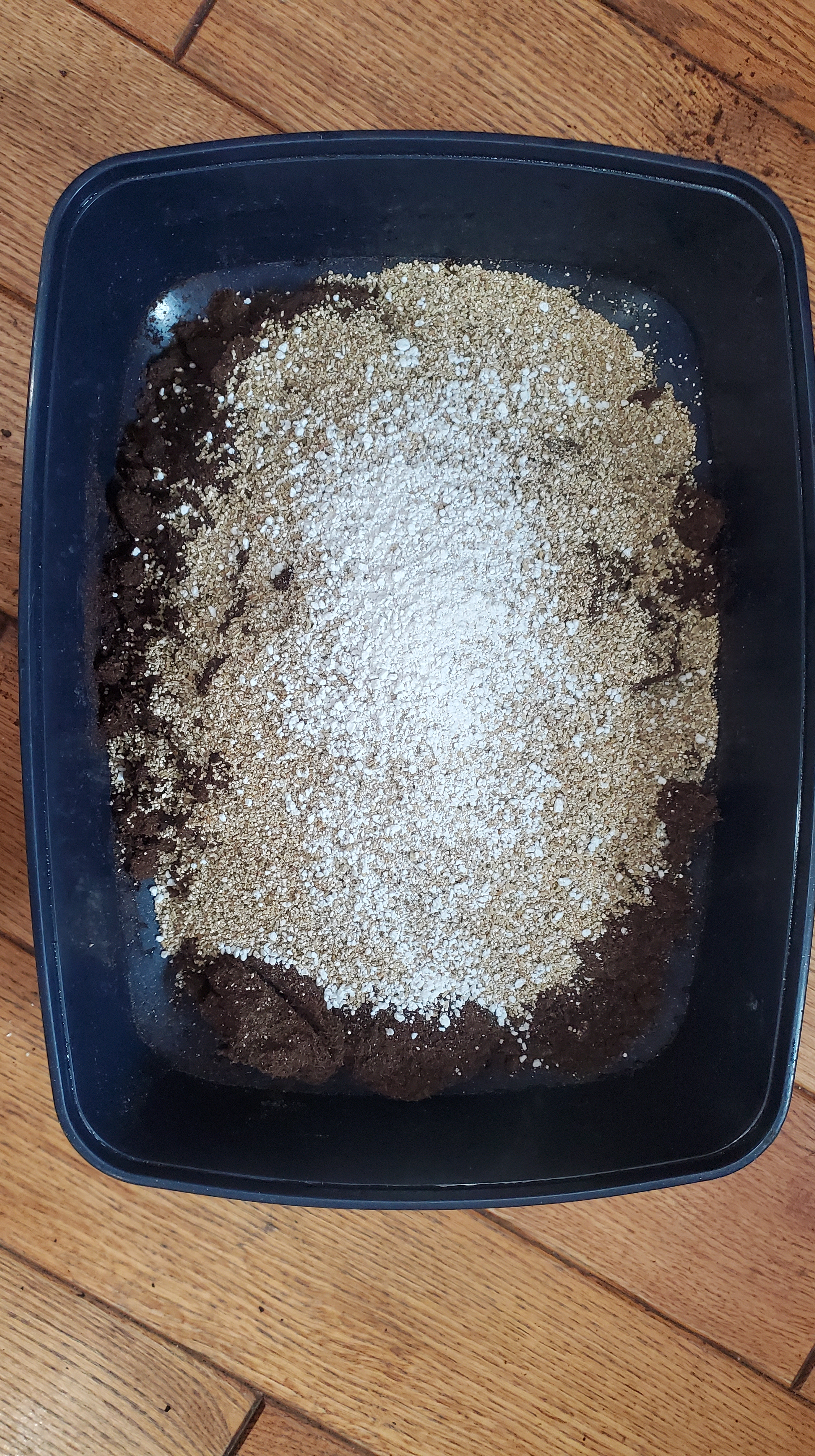
Your ratios are 6 parts coco coir to 2 parts perlite and vermiculite (6:2:2). As an example, if you took 1 coffee mug from your cabinet and filled it 6 times with coco coir, you would then fill it 2 times with perlite and 2 times with vermiculite.
Mix it up well with your hands in a bucket or plastic storage bin.
Then add enough boiling water to thoroughly wet the whole mix, and then let it cool to room temperature. Caution: it will be hot when you add the boiling water so wear garden or kitchen gloves.
Then just fill your seed trays or pots that you plan to use with the mix.
The big win from starting your own seeds and making your mix is you have complete control over everything that goes into the process and don’t have to rely on whatever your garden store offers.
This is sort of a MIM gone wrong post. It’s meant to serve as more of a warning than a “how to.” Essentially, ways to make sure you don’t do what I did. Let me set the scene.
Last February, when we were a mere 12 months into the pandemic, I made an octopus for my six year old. She is a fanatical animal lover who knows more animal facts than I could ever memorize. I saw the pattern on Ravelry and couldn’t resist how simple and cute it was. Picked up some yarn at the local yarn store on my once weekly foray out of the house, and then stayed up knitting about an hour each night for a week. Voila! You have Seven, the cuddly and fun Octopus.
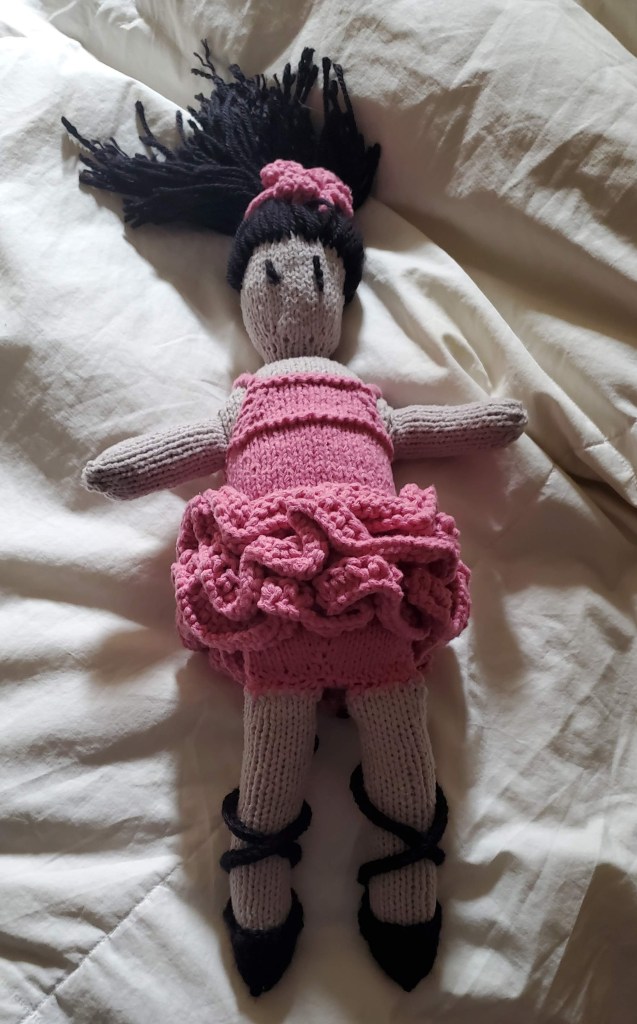
In March, my lovely and adoring three year old asked that I knit her something also. Being a mother who over analyzes my parenting and wants each child to feel valued and special, I said “Of course! What would you like?” And this is where the story turns tragically foreboding. She asked for a ballerina.
Feeling over confident based on my momentary success with Seven, I headed to the library to get a few beginner knitting books and find some doable options. I showed her pictures of a handful of ballerina dolls and we agreed on what looked like a reasonable choice. I took on the project with zeal, working from the bottom up. I made her two little legs, I made her torso, I attached arms, and then… nothing.
It was April. The weather was getting nice and daylight was getting longer. I wanted to be outside in my garden. I associate knitting as a cold weather activity so I had zero motivation to do it. Then it was May, and June, and July, and August. Every few weeks she would ask where her ballerina doll was and I would say I’m working on it <total lies>. This made me feel horrible as a mom and person. Why did I agree to something I couldn’t do? Will she think I don’t love her as much as her sister because I’m not finishing the doll? Will she use this in arguments when she’s a teenager to prove how unfair I’ve always been? Remember the over-analysis-itis I have? Serious condition.
Fast forward to October and her birthday looming the following month. I told myself this must be finished by that date. And, you’ll be pleased to know I did. But oh it was painful. Thankfully there were no physical injuries in the making of this doll, but if you count the social emotional damage to my four year old, the bill would be quite high.
And so friends, in an effort to save you from similar troubles, I am sharing a few suggestions to avoid the “make it myself” trauma we have both endured. And yes, I know I’m being overly dramatic here and this is all tongue in cheek, but there is a bigger lesson here.
For any homemade gift you are considering, please take the following advice to heart:
Read the instructions carefully. Whether this be a pattern, recipe, or manual, the devil is in the details. If you’re not an advanced practitioner of _______ (fill in the blank: knitting, baking, building, crafting, etc.), ask someone who is to review it for any obstacles you may not know to look for. This is where I must interject to say using an online pattern where people can write reviews would have saved me. But I used an old-fashioned hard copy paper book. Any weirdo can write a book. It takes true expertise to blog <wink, wink>.
Think through the usefulness of the item. Will it actually be functional or is it decorative? For either answer, does that make sense?
Consider the recipient of said item. How well do you know them? How much do you love them? Will they appreciate it? Not meant to be a judgement of the person but more so an assessment of appropriateness.
Account for the time. Do you have the time the project will require or will it become a source of stress and burden? Handmade gifts are truly unique and special. And they take considerably more time than clicking through Amazon or Target. As a compromise, give ol’ Etsy a gander or frequent a local small business instead.
Lastly, will it bring you joy? I know this sounds a little too Marie Kondo but it is honestly an important component if not The most important. For all the reasons above, this is no fanciful endeavor. Are you going to enjoy the act and effort of creating it? Or just the fleeting moment of handing the gift to someone?
I know I must sound like a horrible scrooge with these “make it myself” warnings. That’s not my goal. I guess my point is the gift of time is more precious than any material item. If I’m yelling at my kids on the weekend, telling them to leave me alone while I finish the sweet breads, chex mix, and cookies I’m making for the neighbors, I missed the point. But if I can make it an activity that brings our family together with an intention of generosity and community, then that was worth it. I truly love making and receiving homemade gifts. I think we need to do it more instead of just handing someone a gift card (no judgement – I LOVE ME A GIFT CARD). But you’ve got to find the format and avenue that works for you. It can’t be about comparison or competition. It’s got to be about belonging and caring.

 farmcharmblog.com