I have posted about starting peppers and tomatoes a few times over the last few years. It’s one of my favorite signs of spring after a long, dark, and cold winter. Like seeing the crocuses and daffodils pushing through the ground. You know brighter days are ahead.
Having successfully started my own plants for the last three years, I’ve learned a few tips and tricks and *seem* to have a pretty good system. I say that now… and next year will be an epic disaster I bet.
Seed Starting Tips and Tricks:
Wash your containers. Start with a clean slate. If anything was wonky last year with your plants, don’t let it carry over to this year.
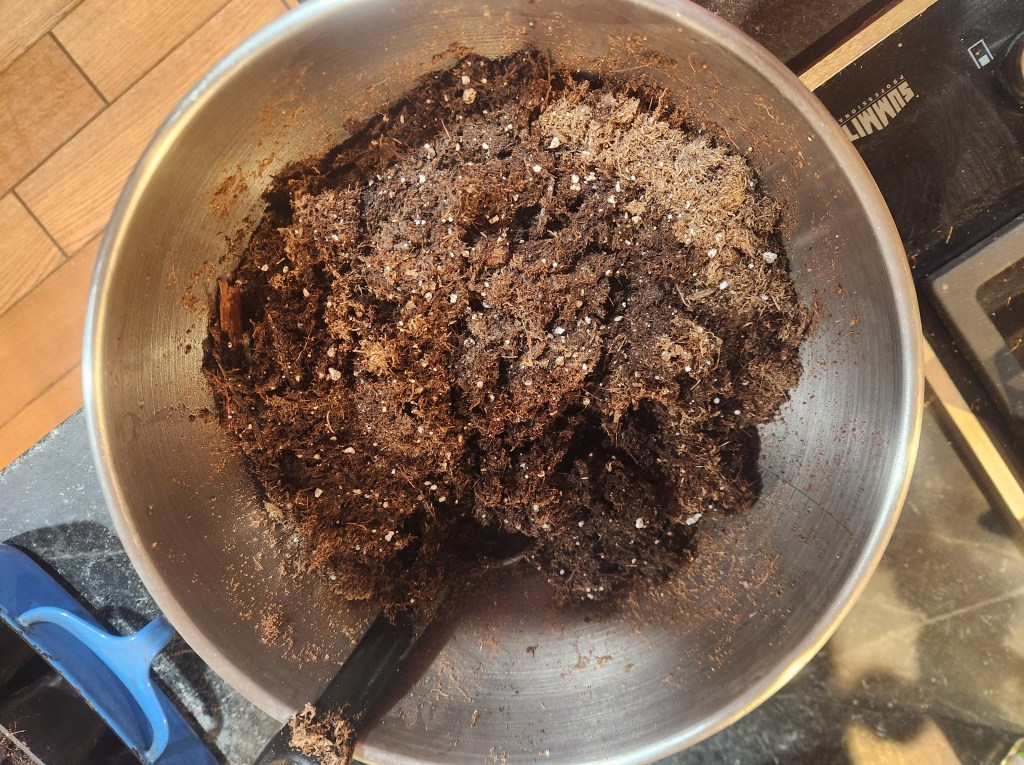
Saturate your seed starting mix with boiling water. This helps protect against those pesky little gnats.
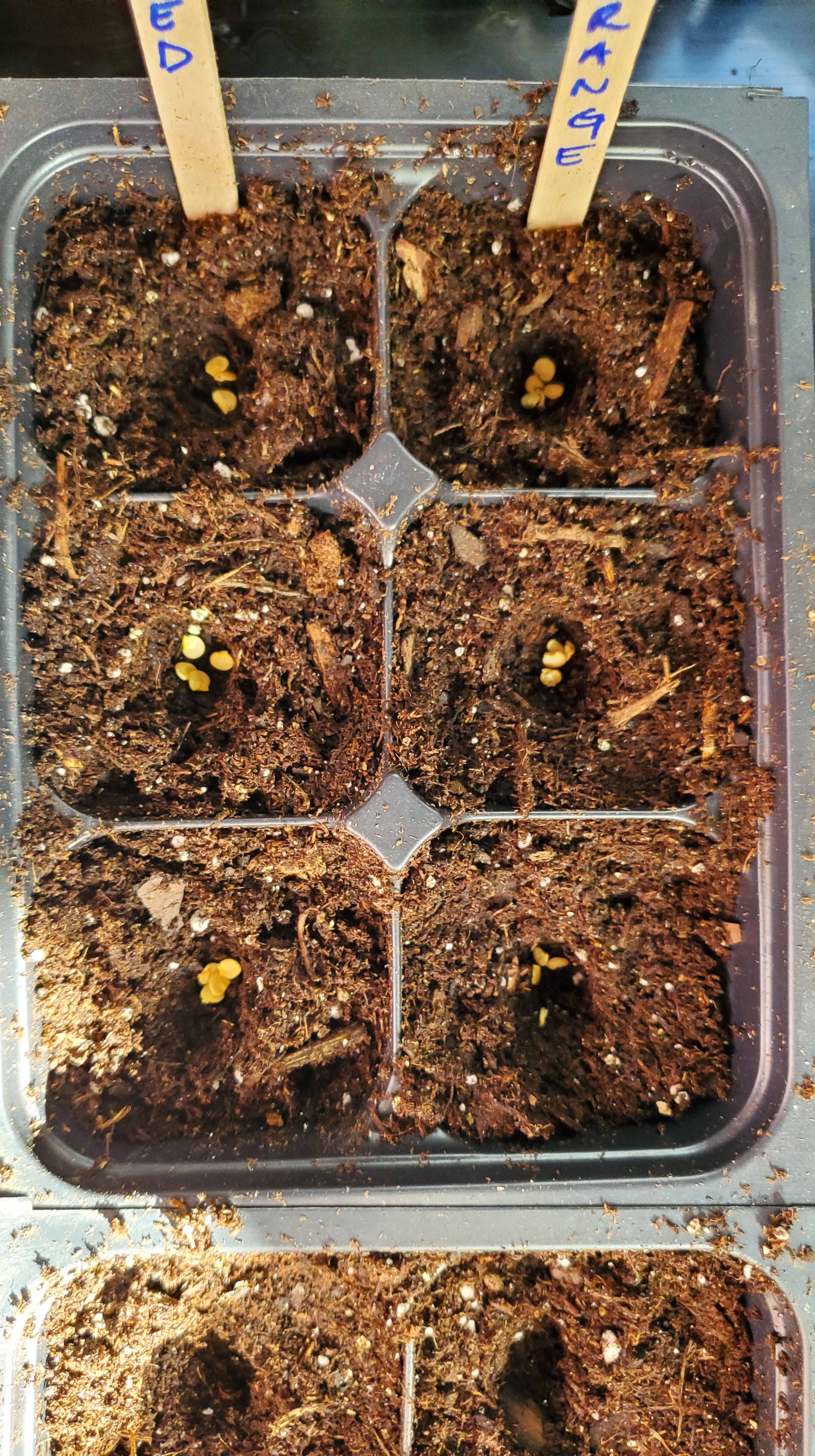
Start 3-4 seeds per cell if you are doing standard 6 packs. Don’t drop them all in one hole. Make a triangle or a diamond shape so you can get two or three strong plants per cell that aren’t on top of each other and can be more easily separated when it’s time to plant them outside.
Leave your starts alone for the first three days. Then give them 24 hours of light for four days (that’s Week 1). Give them 16 hours of light daily Week 2. And 12 hours of light daily for weeks 3 and 4.
Fertilize weakly every other week.
Now I’m going to write one massive disclaimer for all of this. What if you forget? What if your life is absolutely crazy and you don’t have time? What if you just don’t feel like starting and tending to pepper and tomato plants for three months in a part of your house that you’d rather designate for something else? What if you did start plants and all went to hell? TOTALLY FINE and UNDERSTANDABLE. Happens to ALL OF US. Go buy them instead. I’d just strongly encourage you to find high school doing a plant sale, a nature center doing a fundraiser, or the Mom and Pop nursery down the street and give them your money instead of a big box store.
I hope you appreciated the Spice Girls reference in this title. Who doesn’t miss a good 90s girl band? I recently had an opportunity to partake in some karaoke and not gonna lie, a Spice Girls song was on my list of contenders. Didn’t make the cut but it is a crowd pleaser. Alright, moving on…
I’ve posted so many times about starting peppers that I honestly don’t think I have anything novel to add. You can read here and here about the tips and process I follow. It’s also good to remember that spicy peppers are pretty much the official start of seed starting season for me in Zone 7. Then every 2-3 weeks or so there are another couple veggies to start. I made this simpler calendar to follow that may or may not be helpful. I just found all the charts that list “start 2-3 weeks before your last frost” were not that easy to actually apply on a weekly basis. I wanted to know in biweekly increments what I should start and not have to do a ton of math every time.
If I had to list my top 5 ‘Do’s’ for starting peppers, they would be:
Wash your supplies well in soapy water. You don’t want any remnants from last year’s plants.
Pick a good seed starting mix. I had tons of gnats last year with the Burpee mix that were quite annoying in my home office. As much as it pains me to use the Miracle Gro mix, I’m using it.
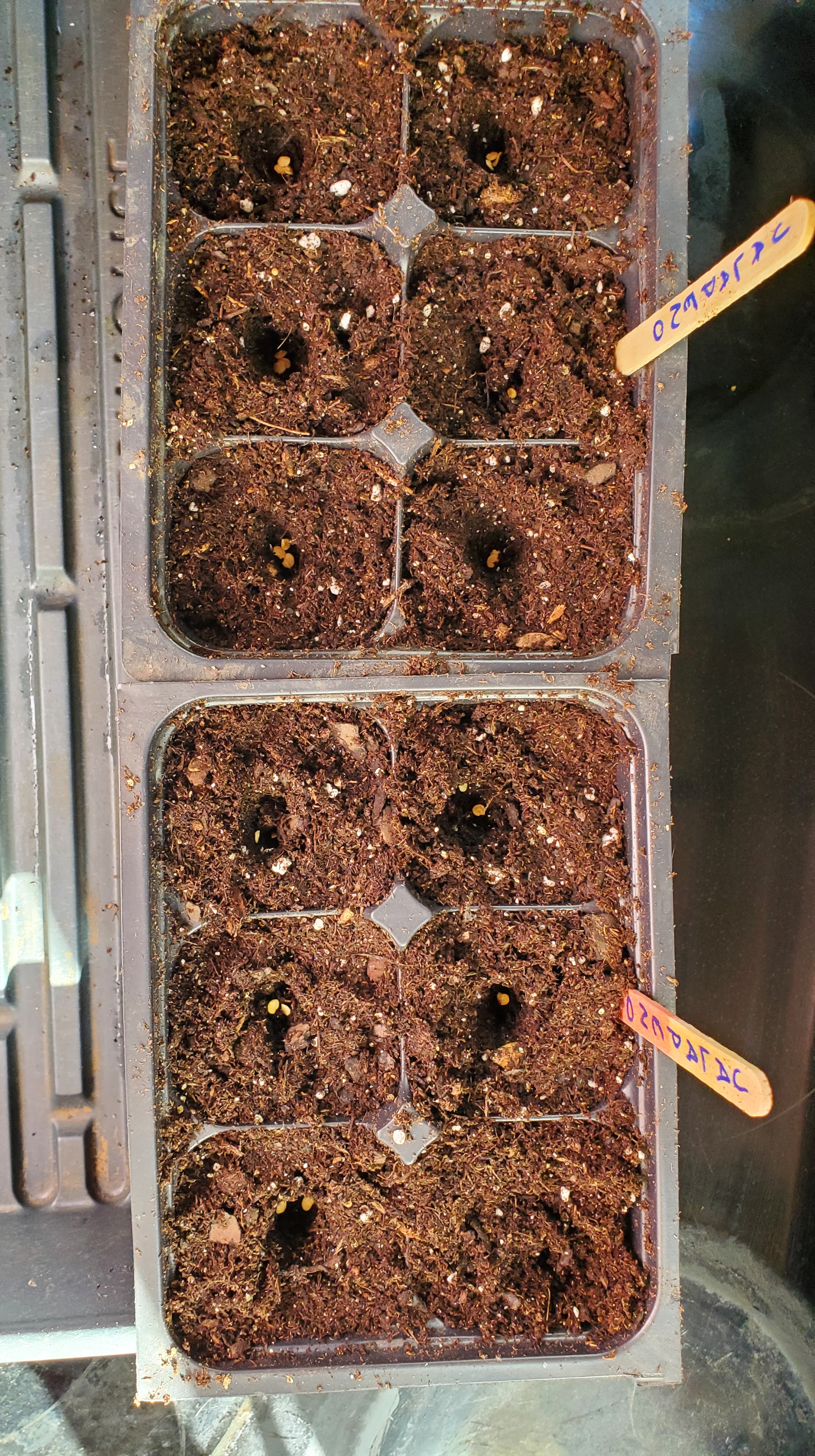
Plant 3-4 seeds per cell to be sure you achieve your desired germination rate. It’s disappointing to plant two six packs because you want 12 jalapeno pepper plants and only 8 germinate. You can always thin them later.
After the first 2 weeks, I use a ‘feed weakly weekly’ approach. To keep track, I only fertilize on Fridays (lots of memory tricks here).
Don’t overwater. Wait for the soilless mix to be light brown before bottom watering. Fill your tray about 1/4 full and let the plants soak up as much as they can for 20 minutes.
Now that you’ve made your own (#MIM) seed starting mix, it’s time to start some seeds. Yippee!
I’m in Zone 7 and last year I started my spicy peppers about 12 weeks before my LSF (last spring frost) and my sweet peppers just about 8 weeks before my LSF. It all went super well and I could do it exactly the same way again this year but as a gardener, there is always something to test. It took what felt like a really long time to actually get bell peppers that I could harvest, like late July timeframe.
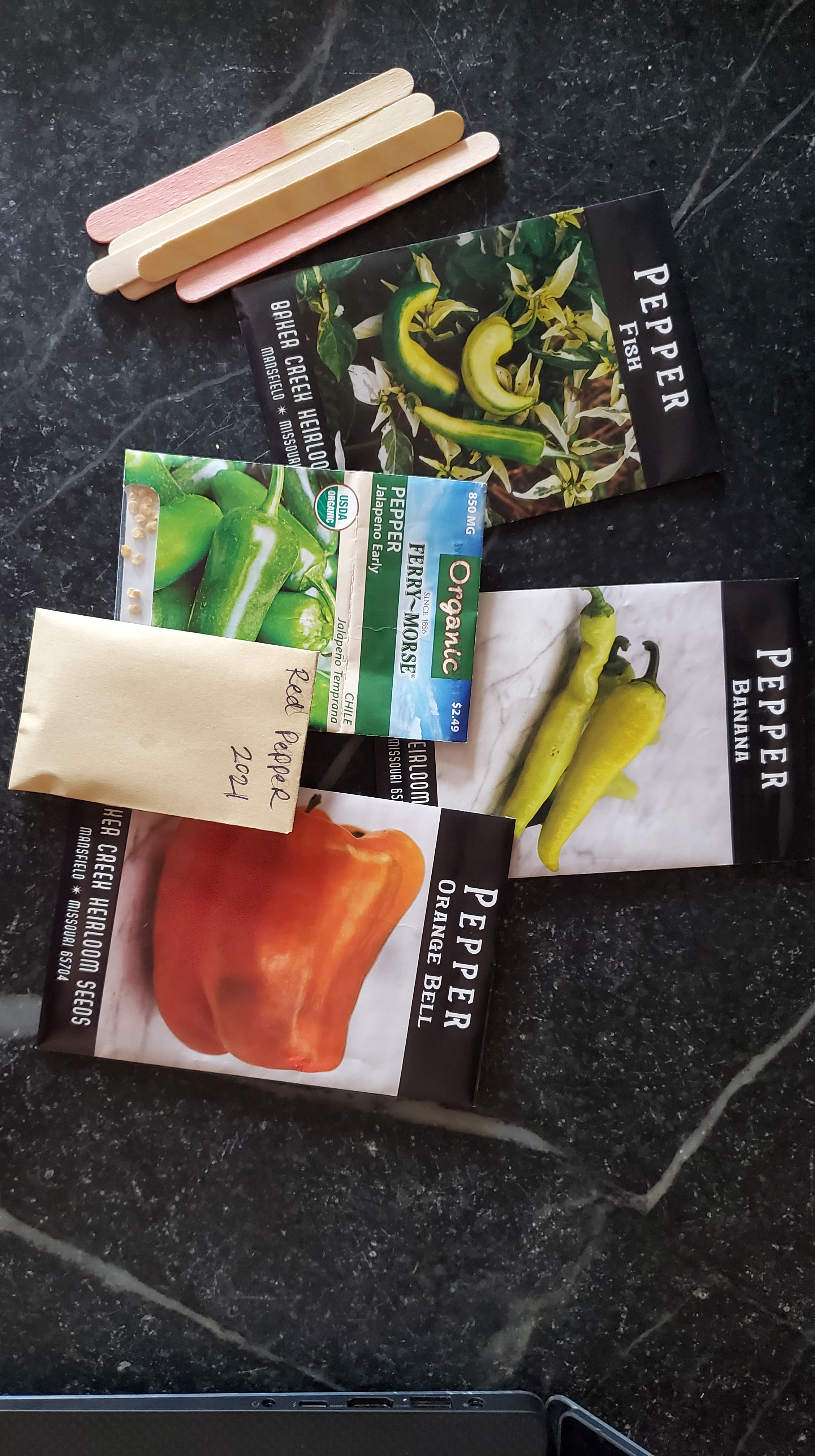
That being said, I’ve decided to start both my spicy and sweet peppers at the same time – about 10 weeks before my LSF. I’m doing the same varieties as last year: jalapeno, fish, banana and bell. Maybe I’ll score some others with a well-timed trip to Home Depot and find loads of free plants in the parking lot like I did last year. And if not, I’m good with what I’ve got.
Here’s the steps to get your seedlings started:
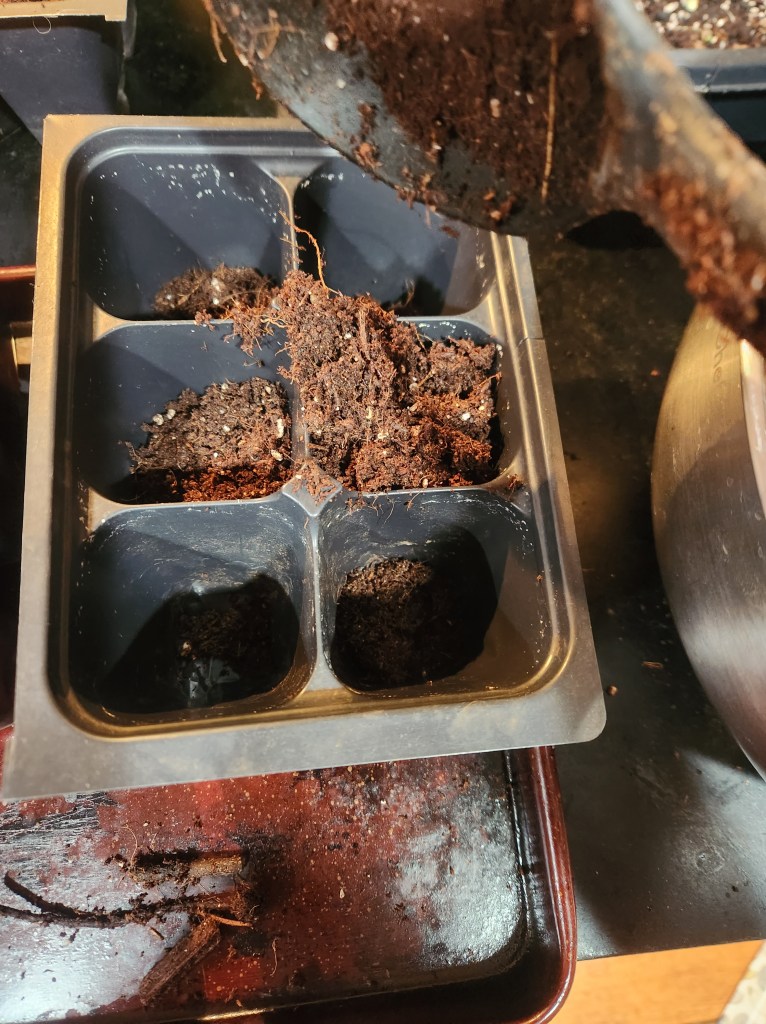
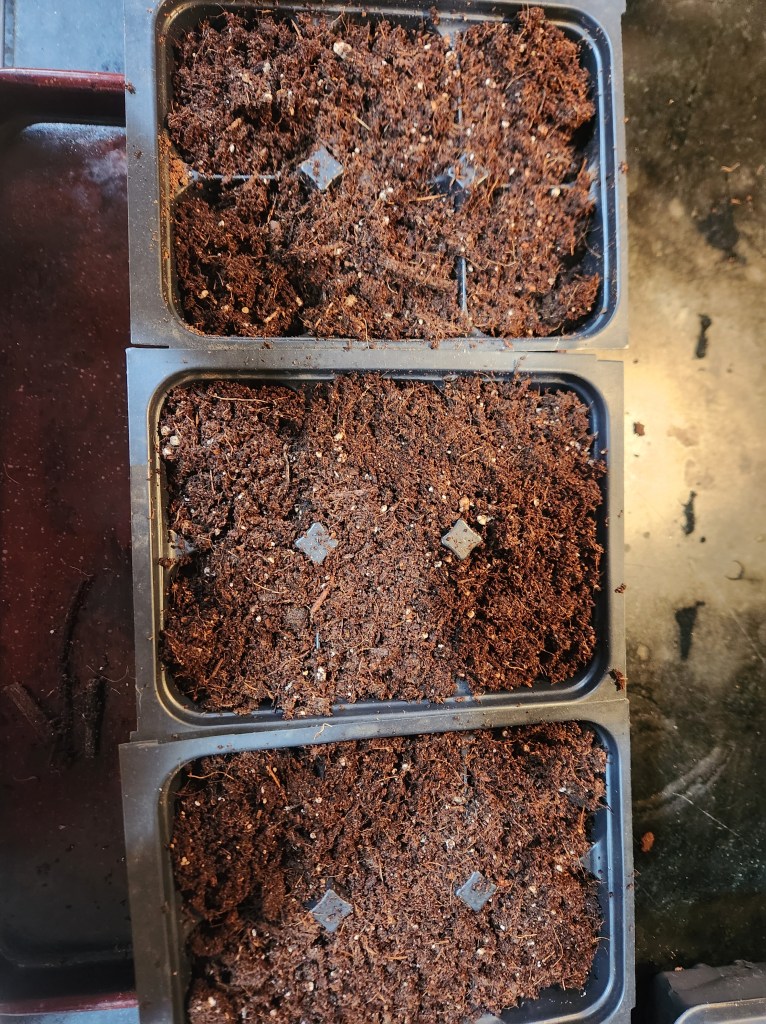
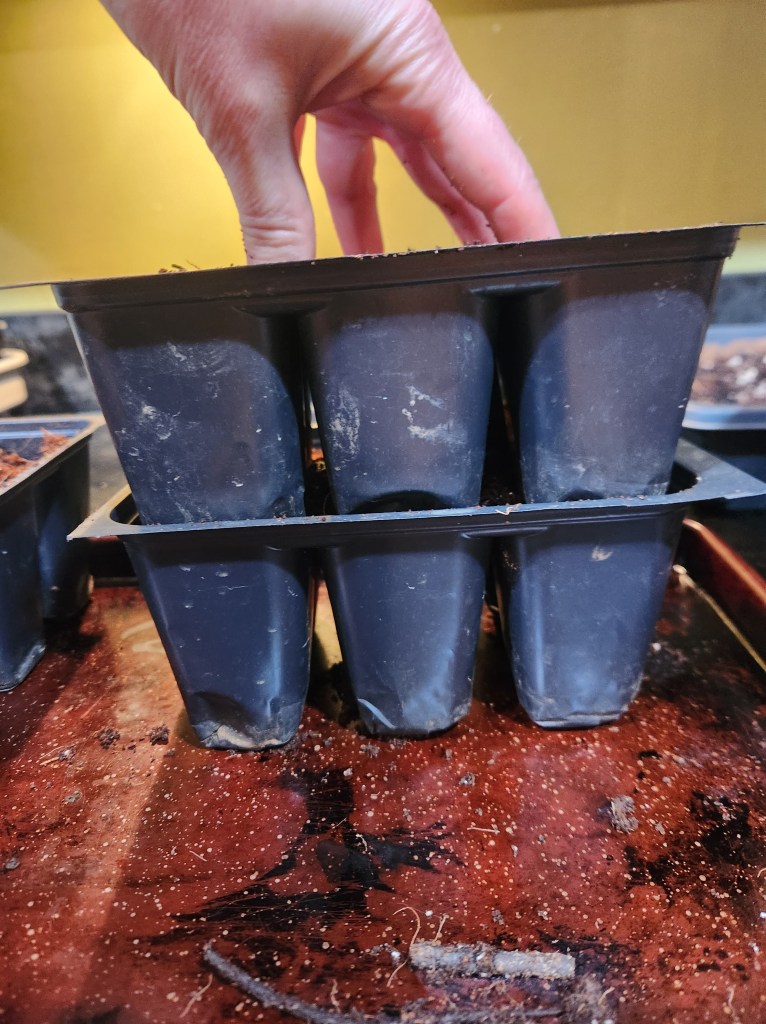
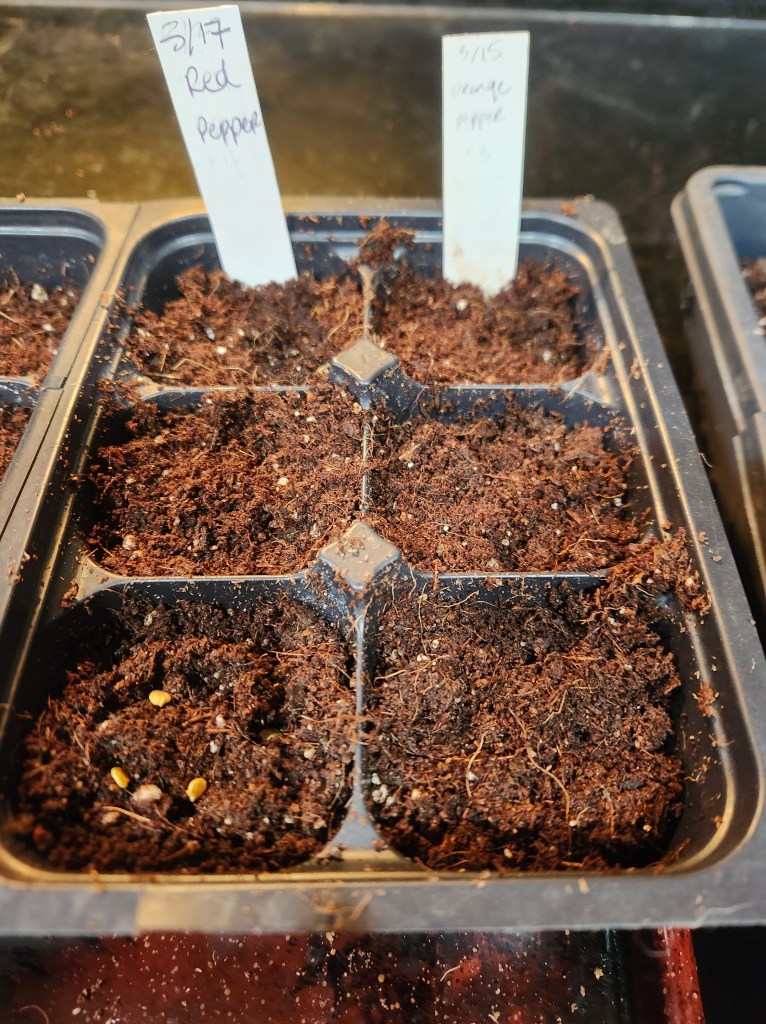
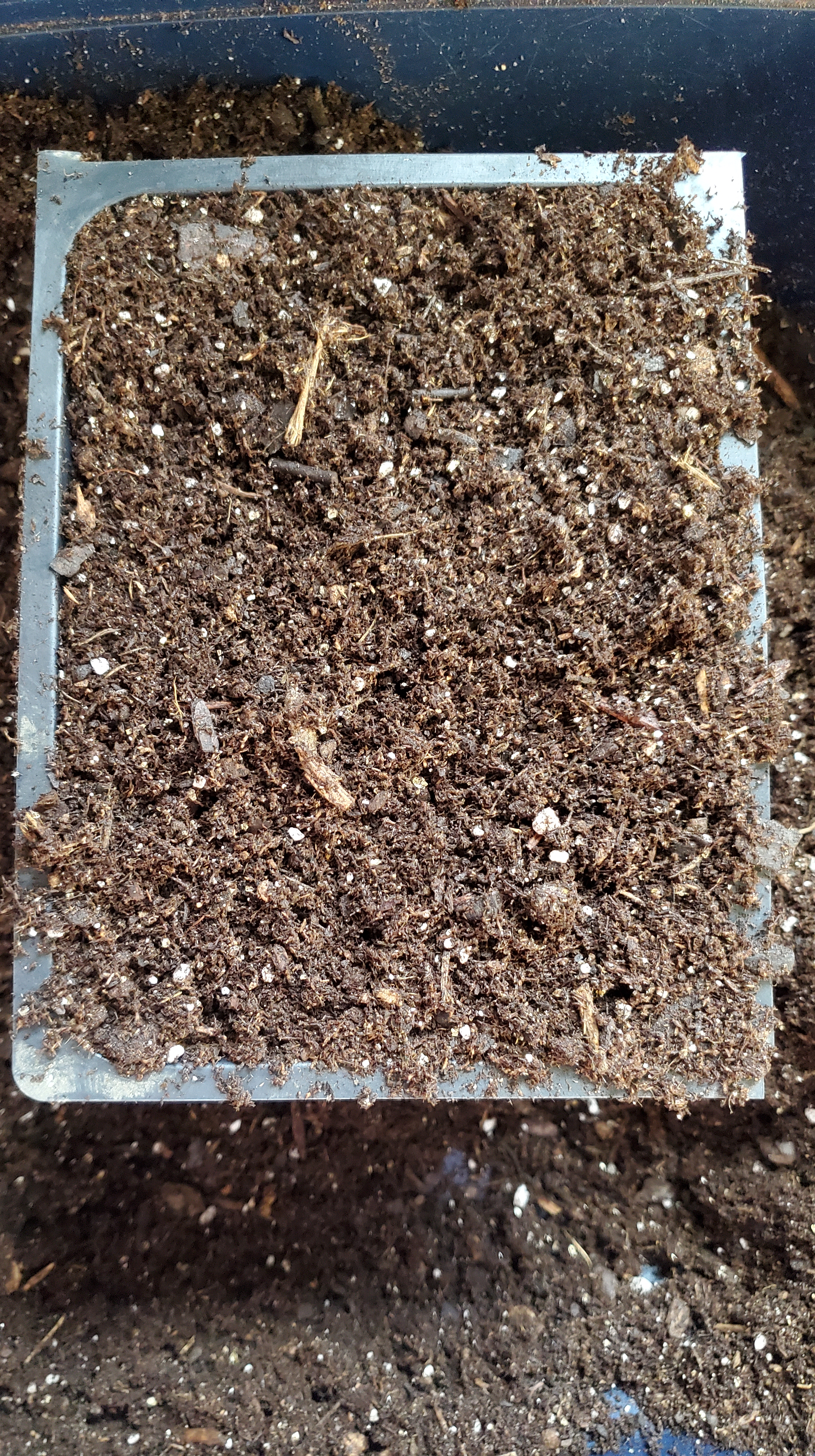
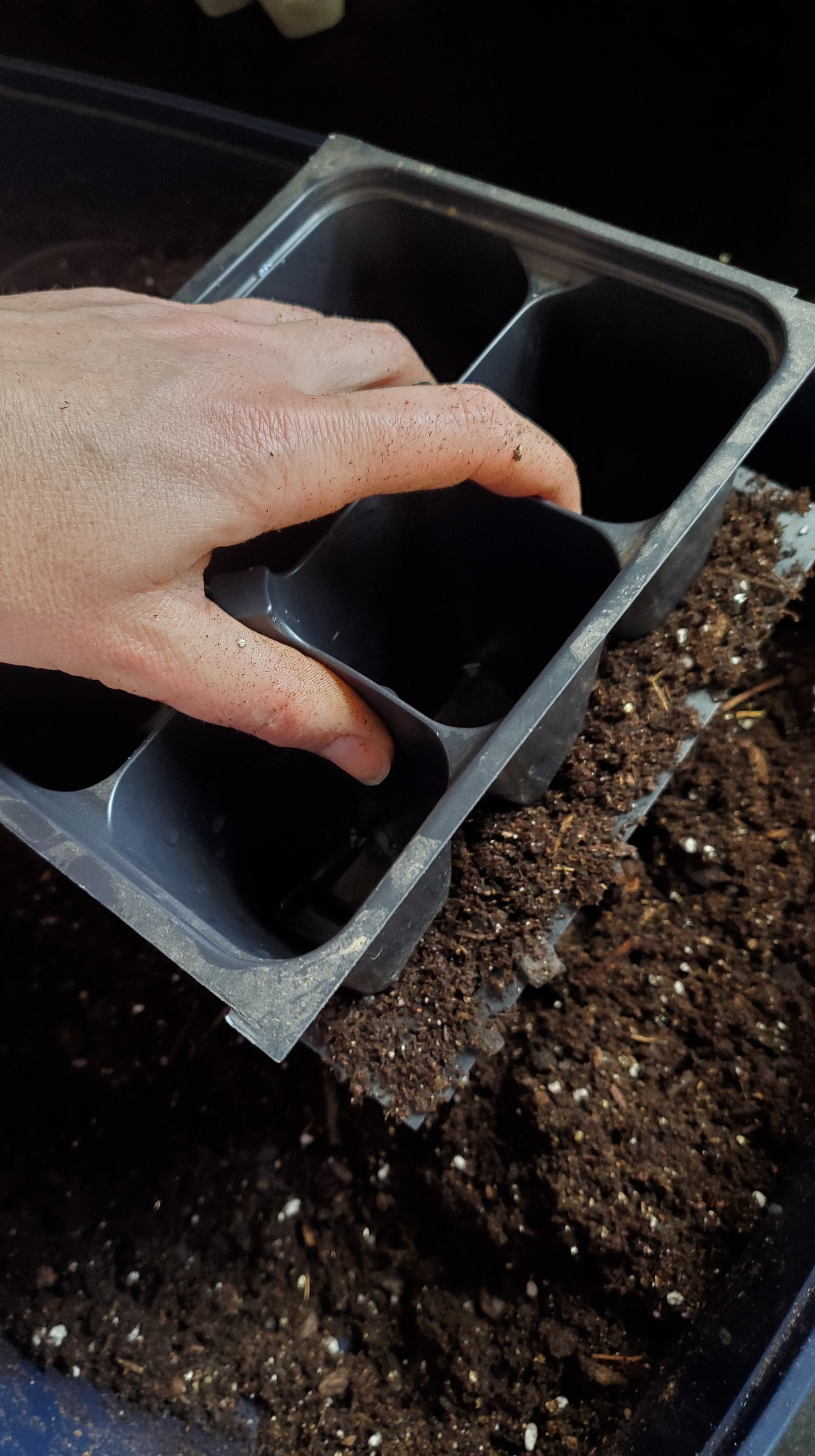
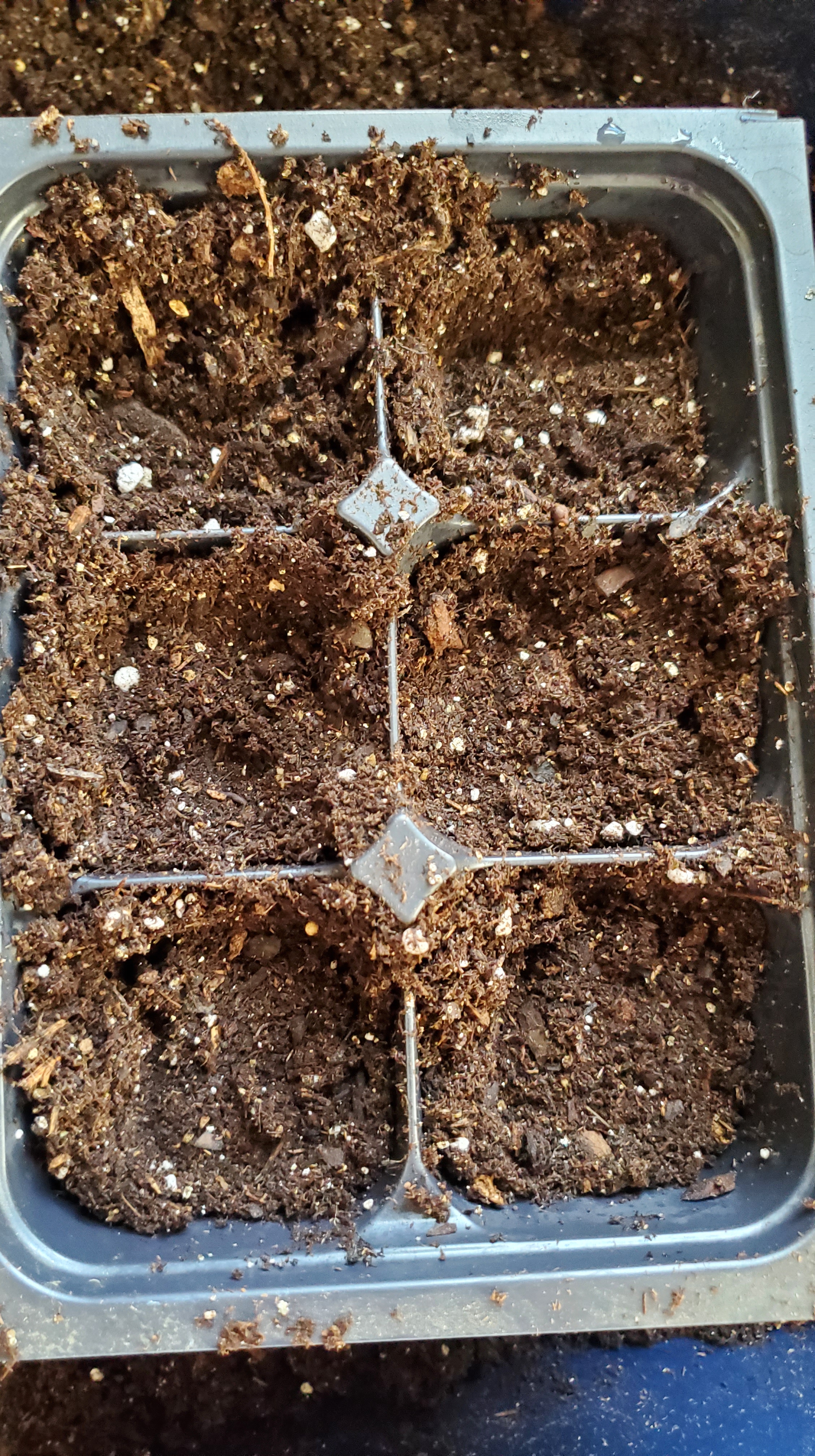
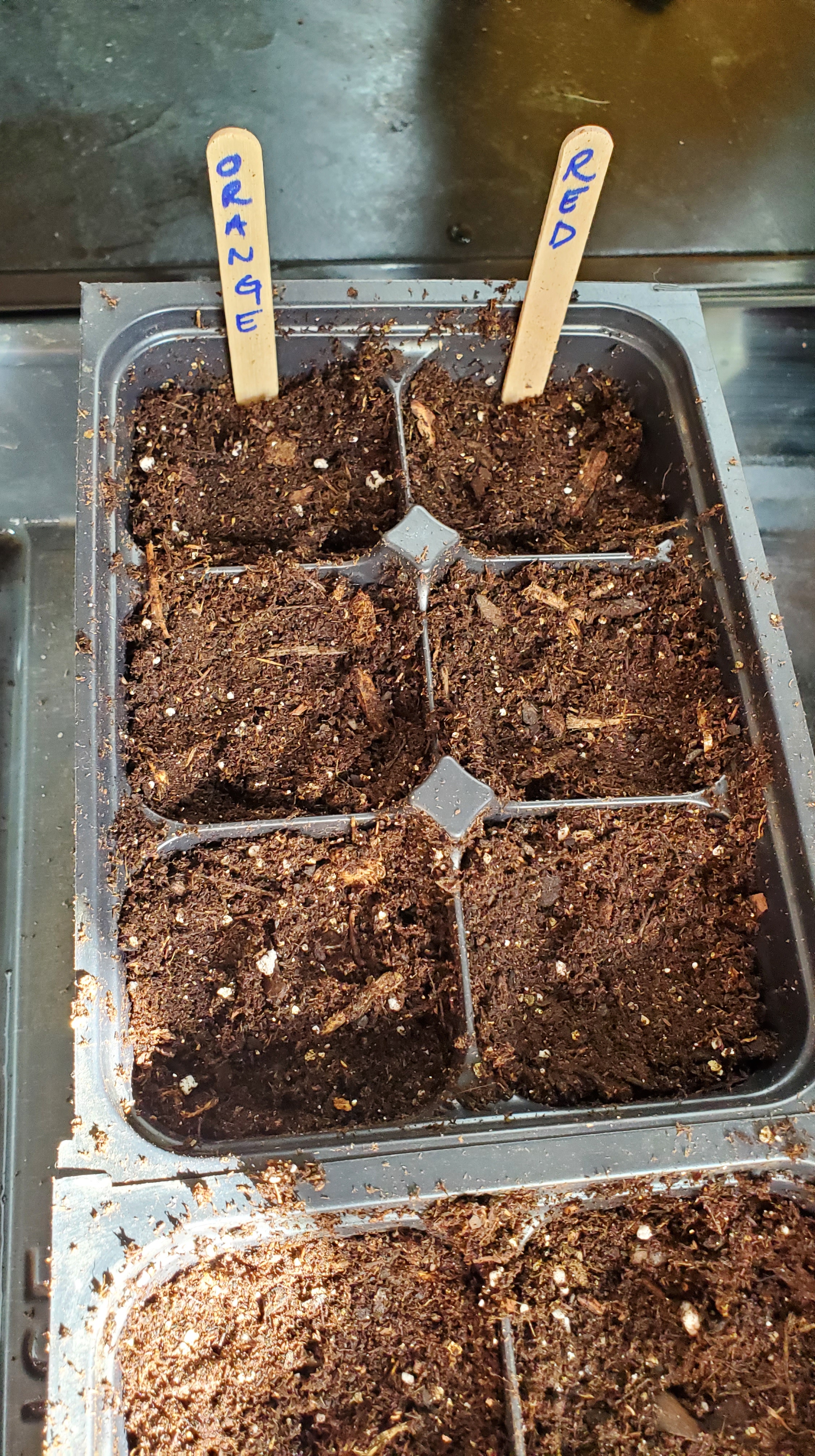
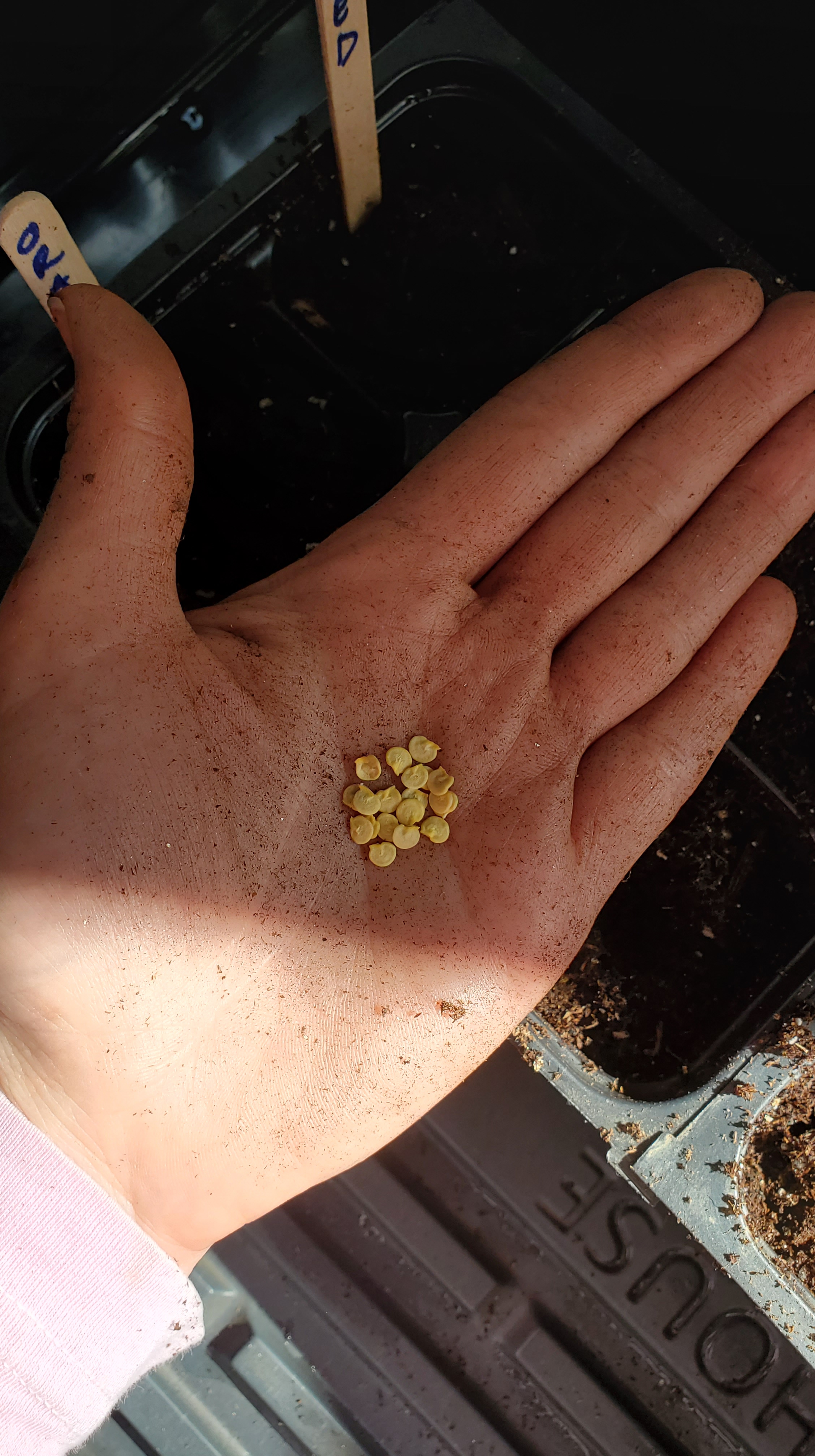
The pepper varieties I am planting in 2022.Fill your 6 cell tray to the top with seed starting mix.Using one 6 cell tray to pack another 6 cell trayThe packed tray. Now you can sprinkle a little more mix on top.Put your labels in first. I promise, you can thank me later. Once you get going and drop seeds into a bunch of trays, you will not remember what you planted where.Since pepper seeds are quite big, I put about 20 in my palm and then drop them two at a time in each cell. Some people prefer to just tap them out of the seed packet. Whatever you choose.I make little holes using my ring or pinky finger. Then just drop 2-3 seeds in each hole. You only need to plant them two times as deep as the size of the seed. Don’t make the seed work too hard to get to the surface.I make little holes using my ring or pinky finger. Then just drop 2-3 seeds in each hole. You only need to plant them two times as deep as the size of the seed. Don’t make the seed work too hard to get to the surface.
Once you are ready to start some seedlings, I recommend keeping a notebook nearby and creating 6 columns on the page like so:
Crop/Quantity
Start Date
Germination
Phase 1
Phase 2
Phase 3
Jalapeno – 12
2/15
??
2/18-2/21
2/22-3/7
3/8-
You’ll want track when you started your seeds, how many, when they germinated, and the different phases of lighting
Phase 1 is days 4-7: 24 hours of light
Phase 2 is days 8-21: 16 hours of light
Phase 3 is day 22 and beyond: 12 hours of light
A couple other tips:
Your seedlings need to be in a warm place. I’ve not invested in a heat mat so as long as your seeds are indoors and your house stays around 67 degrees or warmer, you should be good.
Place seedlings in a location you will frequent daily. You’ll want to regularly check the soil moisture, lighting, and sing to them (ha!). If you put them in a closet or guest bedroom or hallway you never use, congrats on having a ginormous house but that likely means you are going to forget about them. They are babies. They need your constant care and attention.
The soil needs to stay moist until the seeds germinate. Not soaking wet but certainly damp. Then water regularly when the soil has turned entirely light brown.
Have trays under your seed cells. It’s best to water from the bottom so it’s a lot easier to just fill about an inch of water in the bottom of a tray (use a 9×13 casserole dish or a cookie sheets with a rim if you didn’t buy a whole fancy seed starting set) and let the seedling soak it up for about 20 minutes.
Your lights need to always be about 2-3 inches above your plants. If the light is too close, you can dry out your plants and even burn them. If the light is too far, the plants will get leggy from stretching toward it.
Don’t stress. It may feel like a lot of work and babysitting this first or second go around but you’ll get the hang of it. I mess with my seedlings about 5-10 minutes a day. Well worth it for not having to buy them at the store. But if you do kill them, hey, you can always buy them at the store 😊


 farmcharmblog.com