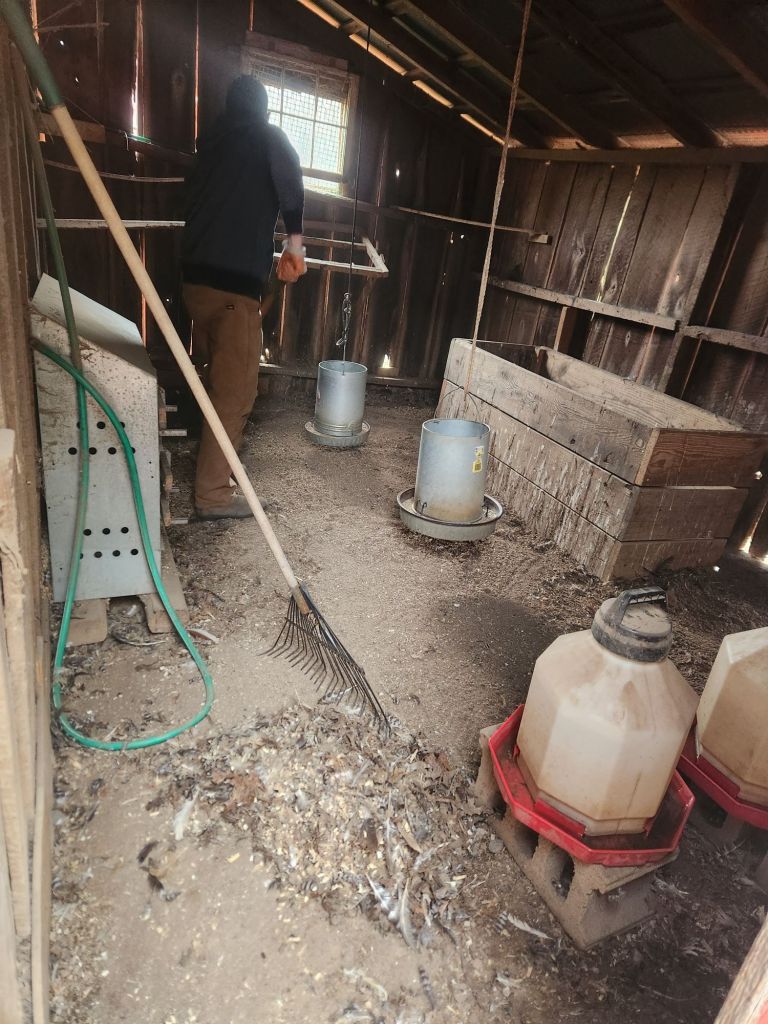
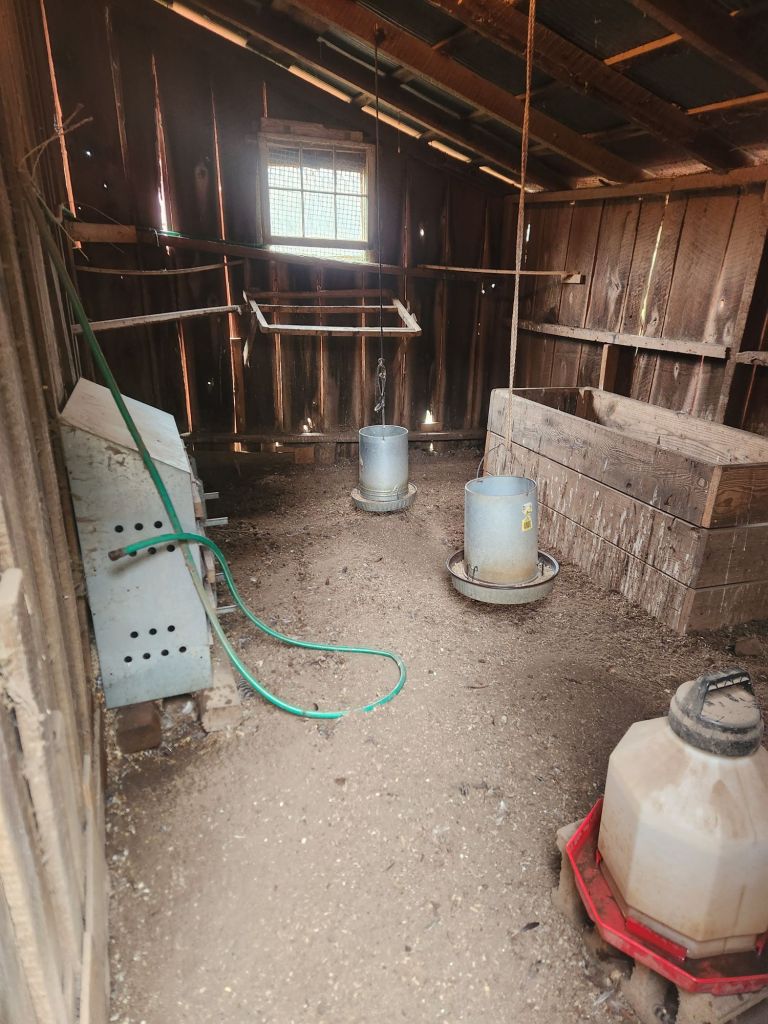
Cleaning out your chicken coop, while not the most glamorous way to spend a Saturday, is one of those tasks that brings so much satisfaction.
I aim to do this two times a year, usually Spring and Fall. Like most everything, I am running a tad behind schedule. How often you need to do it depends on how many chickens and how much space you have. I’ve read that if there’s a smell, it’s time to clean.
It’s one of those chores I build up in my mind and then when I actually do it, it takes like two hours and isn’t that bad. I will say this is a task for a COVID mask. The cobwebs, dust, debris, and whatever else you want to think is in a chicken coop are not things you want to inhale.
I follow these general steps for my coop cleaning:
Remove all waterers and feeders.
Empty wood shavings from nesting boxes onto the ground.
Rake and shovel out the top 3-5″ of ground cover. I haul it away in a wheelbarrow to a pile outside my garden to use as compost in my garden. Depending on how big your coop is, this could be 1-2 loads or many more.
I re-layer the ground with 3-5″ of fresh wood chips and fill the nesting boxes with fresh wood shavings.
I don’t know about you but my ladies are in low production mode. I’m hoping this helps them get more cozy for the winter.
As summer draws to a close and the days grow shorter, I find myself immediately thinking ahead to next year and starting to plan what I’ll do differently. However, I am also always trying to remind myself to stay present. Enjoy and appreciate where I am. Bask in the metaphorical sunshine of today because tomorrow may be rain. I find that a hard balance to strike. Being happy with where I am while also pursuing new possibilities and challenges. Anybody else struggle with this? I feel like most of the messages we receive are to not be satisfied with what we have, that happiness is just around the corner.
The changing seasons do help me appreciate the end of something and the possibility of what’s to come. The cyclical nature of life. That whatever it is, we’ll pass through it. And what may feel insurmountable today will equip us for the next challenge.
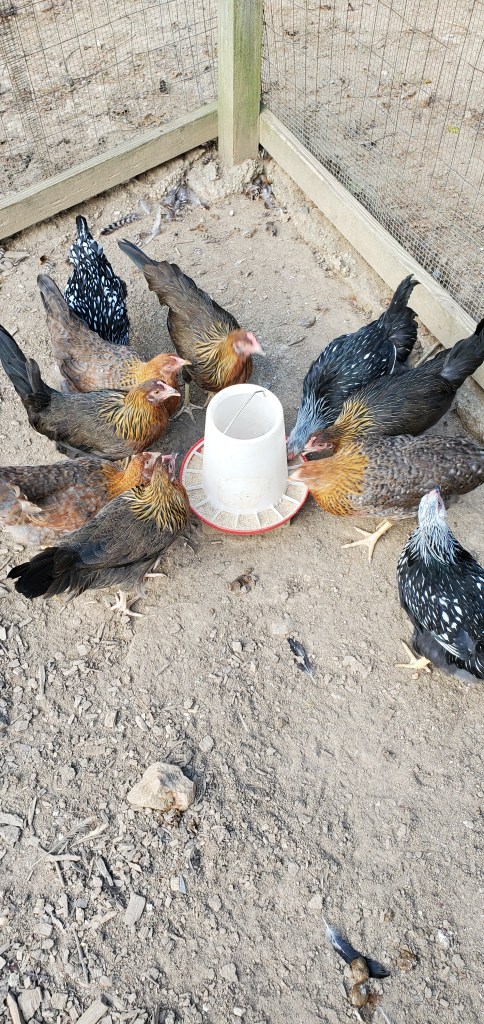
One of the recent changes Farm Charm had to go through was integrating our mature (19 birds) and juvenile (14 birds) chicken flocks. I’ve done this before pretty successfully and have usually waited until the juveniles were about 12 weeks old. This year I needed to do it closer to the 10-week mark because I was going out of town and the logistics I was performing each morning to separate the two flocks to ensure the babies had a couple of hours to eat their food while also making sure the hens could get to their nesting boxes was much too complicated to ask of our house sitter.
I joined the two flocks on a Saturday afternoon so I could watch them the rest of that day and all the next day while working in the yard. There were really no scuffles to speak of day one and the two flocks seemed to keep to themselves. The first night the babies did not know to go in the coop, which has happened before, so I shuffled them in at dusk. Sunday went smoothly as well throughout the day and once again I needed to scoot the babies in at sunset. By day three they were falling into a rhythm, eating separately each morning and then joining the whole group around midday. The rest of the week had no major issues and I didn’t see any noticeable signs of aggression or dominance by the mature hens. A peck here and there but nothing to make me concerned.
There was a tragedy the following Saturday, day eight, that I won’t go into the details of but the bottom line is one of the juveniles got pecked to death by a hen. This was a pretty traumatic experience for me and made me quite upset that I had somehow let my guard down or not done my due diligence for this to even be possible.
To save even one person and bird from this heartache, I have a few tips to keep in mind when joining flocks.
Have multiple feeders and waterers so there is no sense of competition. Check that all birds can fit around the feeders.
Be sure there are ample perches in the coop so that the respective flocks have their own space.
Don’t ever let one or two of the juveniles get separated from their flock.
If there is a smaller bird or runt, double and triple check that it stays with its flock during the day and at night.
If there is pecking by the mature hens, create a partition of some sort so the juveniles have a retreat or safe space.
Watch and observe regularly. I was out in the coop for about 30 minutes every day watching the ‘pecking order’ that was developing. The juveniles were being respectful of the hens and getting out of their way. And I didn’t see any hens being aggressive toward the juveniles other than a random peck when I threw out a few handfuls of scratch and a juvenile would bump into a hen.
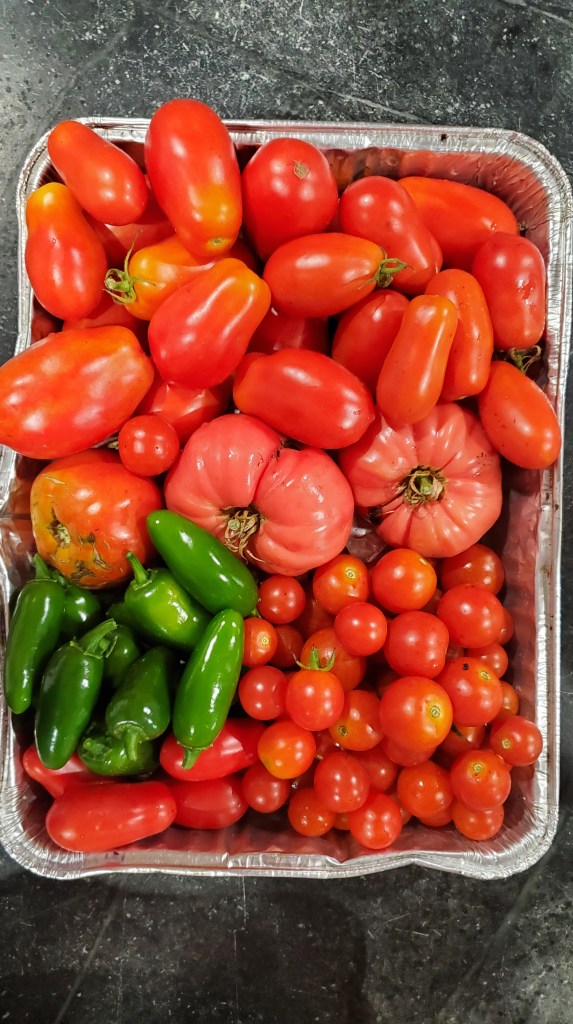
Best of luck to everyone integrating flocks. If you have any tips, please share. And this time of year, you are likely seeing your birds start to molt so it’s a great opportunity to throw any last summer produce like tomatoes and herbs to your flock for extra nutrition.
If you keep chickens, ducks, or turkeys on your homestead, I’m guessing you are paying close attention to all the reports and information circulating about HPAI – highly pathogenic avian influenza. This is the first time I’ve had chickens to worry about when an avian flu is widespread. It’s also strange to me that there have been a few odd sicknesses impacting birds over the last year. Something’s happening here… what it is ain’t exactly clear…
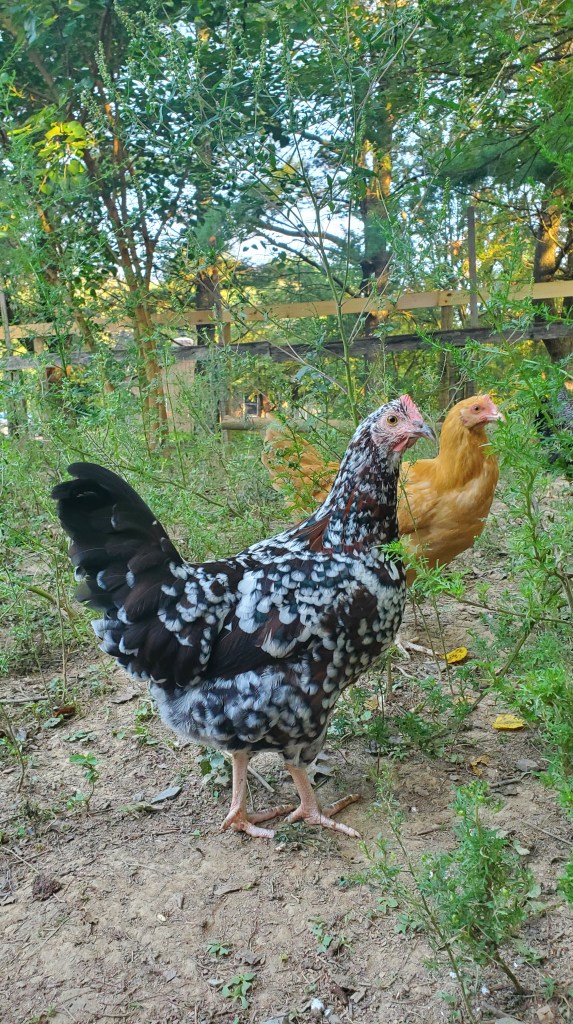
I’ve read a number of articles just to understand what precautions I could and should take to help protect my flock. To be completely honest, it’s quite confusing and I haven’t found anything to be that useful or clear with regard to prevention. I’m still not sure if there is anything I can do that will make a difference or if it’s just luck or bad luck of the draw as to whether your flock gets infected. Sadly, I did get an email from Murray McMurray Hatchery, who I had placed an order with in the winter for another 15 chicks, and they had a confirmed positive test for HPAI in one of their barns. Which means I won’t be getting the silver and golden Polish chicks I ordered, or the golden and blue laced Wyandottes. How sad for them. Truly tragic.
In the hopes of saving even one person from this heartache, here are the tips I’ve found. These seem like standard good hygiene practices to follow all the time.
Minimize the risk of contamination from outside your coop to inside your coop by doing the following:
Wash your shoes/boots before entering or wear shoe covers.
Use equipment and gear specific to your flock and nothing else.
Keep feeders and waterers in your coop so that wild birds aren’t using them.
Keep your feeders and waterers clean by washing them often.
Cover your pen or run so that droppings from wild birds can’t contaminate their space.
Wild waterfowl carry high levels of the HPAI virus. Keep ducks and geese away from your flock. If you raise ducks, keep them separate from your other flocks.
Only buy new birds from a trusted source, e.g. not craigslist.
Watch your flock closely for any signs of illness and report it to your veterinarian and local cooperative extension office immediately. Signs to look for include: lack of energy and appetite, lowered egg production, misshapen eggs, discolored comb and wattles, diarrhea or sudden death.
Has HPAI impacted your flock? What have you done to protect your birds? Please share any advice that will help all of us stay safe.
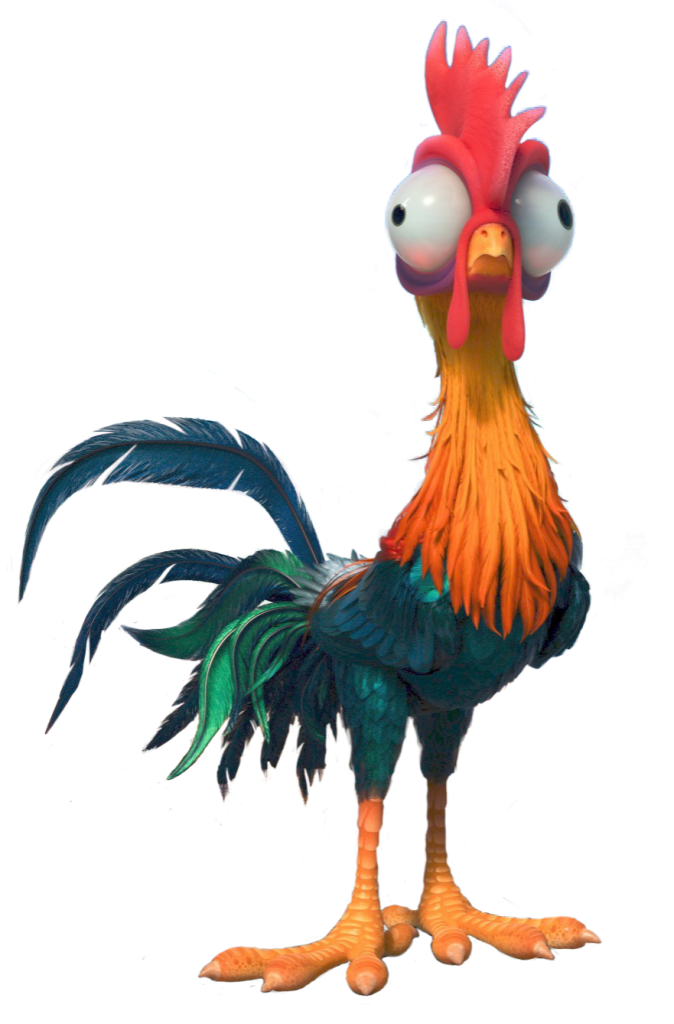
I walked out to my chicken coop the other day and was met with this sight – Hei Hei the chicken from Moana! My first thought was What the
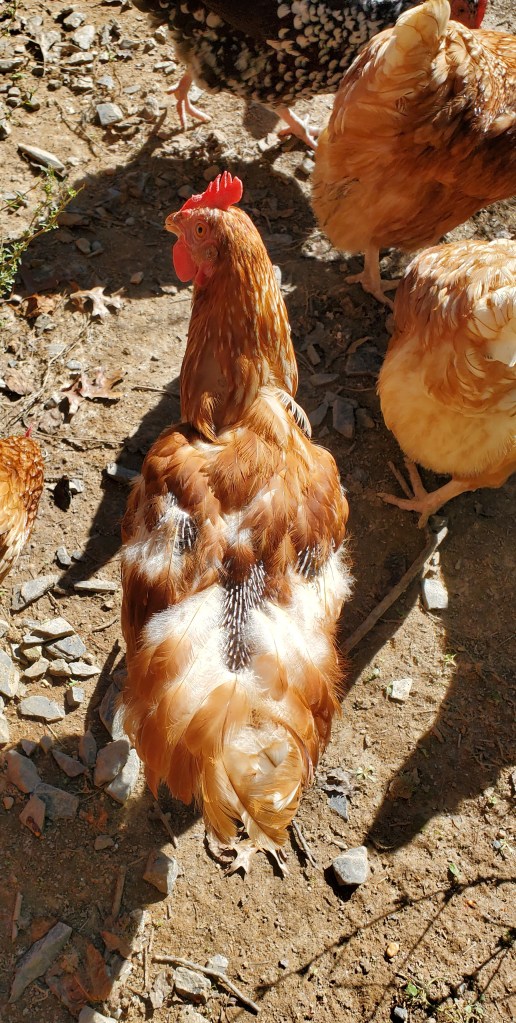
I walked out to my chicken coop the other day and was met with this sight – Hei Hei the chicken from Moana! My first thought was What the heck happened to you, little lady? and I started inspecting her for an injury. But she was walking and pecking around just fine, clucking just fine (pretty vocal actually), and eating and drinking.
The weather here is starting to slowly cool down so the conclusion I’ve come to is that she’s molting. I know this happens about once a year, but this feels a little odd to me. Why is it only happening to one chicken? Anybody else ever had this happen?
I know the usual reasons for losing feathers are stress, improper diet, lice and other parasites, annual molting, broodiness, and being pecked on by other chickens. My other thought is that she was my Broody Betty back in August who wouldn’t get out of the nesting box for like three weeks until I finally blocked the boxes. That was my first experience with a brooding hen and I should have acted sooner but I kept thinking “She’s gotta give up on this any day now.” What makes sense to me now is that from all the time she spent laying on those eggs (like 23 hours a day-serious dedication!), she most certainly experienced reduced nutrition and thus her feathers have taken the hit. I’m hopeful she bounces back quickly so am giving extra treats for a bit to boost the fat and protein intake for her and the rest of the flock.
Well, summer is rounding the corner into fall and I will be the first to say “Hallelujah!” It’s been a hot, tiring summer for me and I really can’t point to anything specific but I just have a lot less pep in my step most days. My garden has been motivating with lots of successes and lots of lessons learned for sure. I’m sure I’ll write a post about this sometime in October because it’s always valuable to look back and assess what was worth the effort and what wasn’t. It’s funny how things can go 80-90% right but that 10-20% that didn’t really nags at me. Gotta learn from it and move on. As they say “Can’t win ‘em all.”
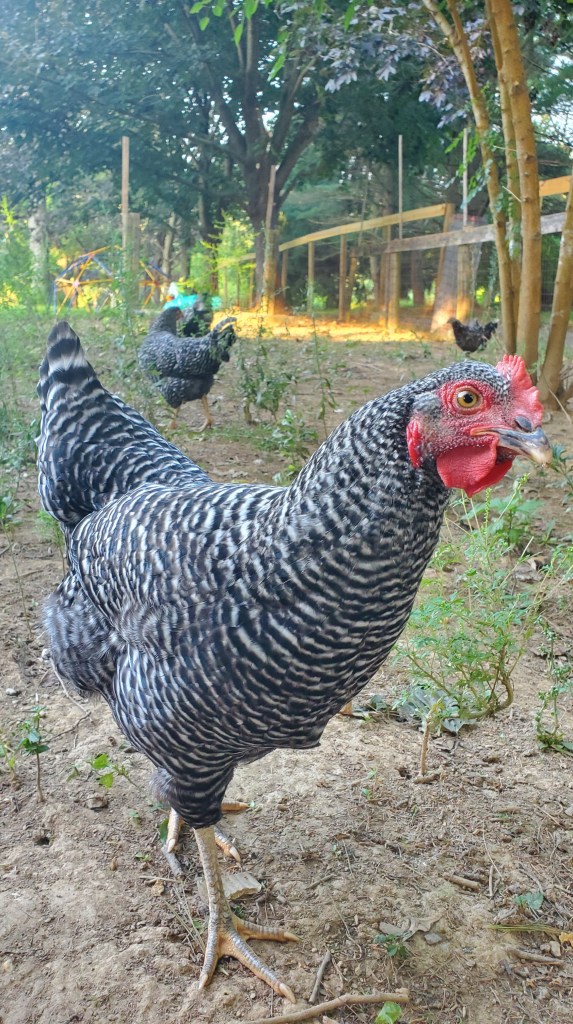
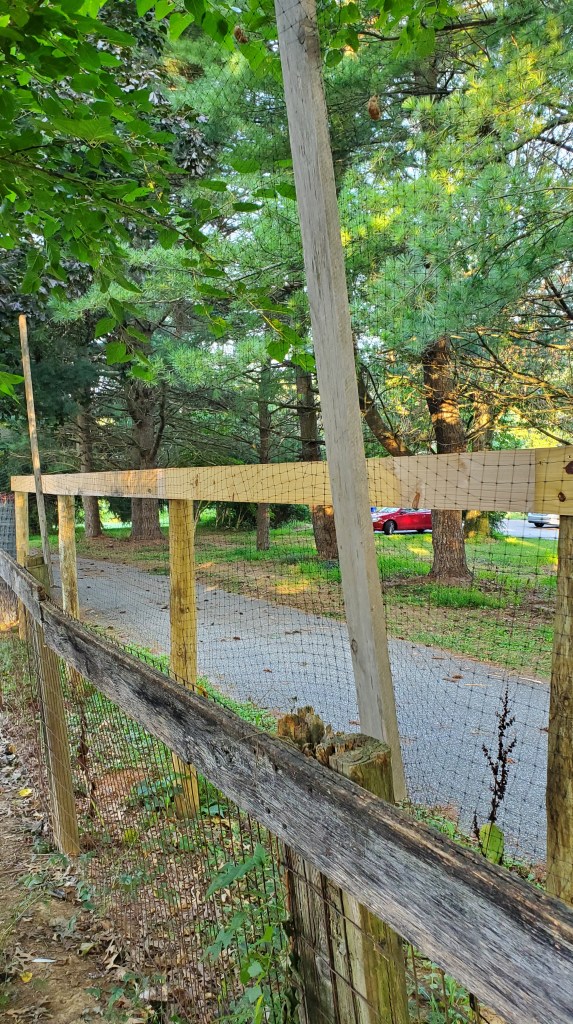
One of the successes throughout the last few months has been my chickens. Oh how I enjoy watching and listening to them. The chicks I got back on April 19 are now starting to lay eggs and they are far from being little fluffballs anymore. Just a week ago I would have been proud to say all are alive and well but we recently had some jail breaks. Each evening when I go to lock the coop I always do a head count. On Thursday, one of my browns was missing. Couldn’t find her anywhere and spent about 45 minutes looking in the dark with my head lamp. I eventually gave up and went to bed with a pit in my stomach. Thankfully, she was out pecking around on the wood pile the next morning and I was so relieved. Then, on Saturday evening one of my dominiques/barred rocks (still can’t tell the difference) was missing. Again, I spent about 30 minutes searching the yard and nearby low branches in case she was already perching but no luck. And sadly she was nowhere to be found the next morning either. Still haven’t found a trace of her which seems odd. But I didn’t want this to become a pattern with the chickens getting bolder and bolder so I asked Cactus to put up some higher mesh fencing which I hope helps.
If you have chickens, how do you keep them secure during the day? I want them to be as free range as possible but they have to be safe.
Okey dokey artichokey. It’s been 93+ degrees for what feels like the last three weeks straight so you know what I’m thinking about… FALL! This happened to me last year. It’s August, it’s hot as heck, I’m tired of sweating from every crevice of my body so I start daydreaming about cool, crisp mornings and the leaves changing color. I’m basically the inverse of Olaf. I’m more of a Spring and Fall person now and could do without the blazing summer heat that makes it so I don’t want to be outside between the hours of 10am-7pm. Oh, and then there’s the mosquitoes. But please stop me.
Planting cool weather crops in the heat of summer is a bit tricky. Seeds won’t germinate as easily in the warm soil. I know this because I put beet seeds in about two weeks ago in the shadiest spot of my garden and nothing happened. So I’ve been holding out for a few days where the temps will be slightly lower and next week looks like my chance. Honestly, I’m not sure if there is much urgency to plant at the beginning of August since the crops on my list should all be pretty frost hardy and can make it to early November. I’ll give it a whirl and may resort to starting them indoors just as an experiment.
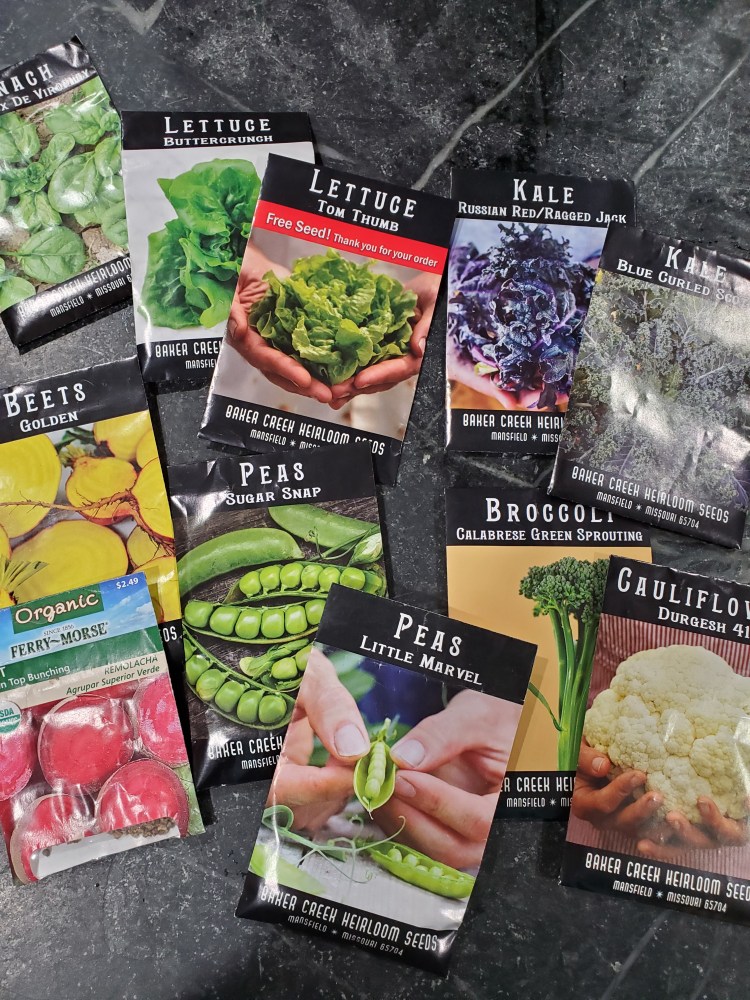
Here’s what I’m planting from seed (and I’m zone 7 for what it’s worth). For fun, I’m also grabbing some Brussels sprout seedlings from a local nursery just to see if they grow.
Beets
Kale
Peas
Sugar snap peas
Broccoli
Cauliflower
Lettuces
In other news, we harvested our first two meat chickens. Yeah, could have gone without that life experience. I’ll be pondering this for a bit before we decide to raise more next year. These guys were given to us and we did not know they were meat chickens so turned out to be more of a “gift” than we realized. Definitely makes my plant-based eating hit closer to home. I’m sure we’d all eat a lot less meat if we raised and butchered it ourselves.
I have to say, the past two weeks have been exhausting. Between COVID and all the protests, I am feeling drained, overwhelmed, angry, sad, frustrated, disillusioned, and altogether raw. It’s a lot. We’re all going through a lot. I have to remind myself to breathe. The more I let my mind wander, the more it drifts into a place that feels unsolvable and paralyzing. And nobody’s got time to be living in a world without hope.
So I hopped on over to my chicken coop last Friday afternoon to spend some time in my happy place. As I’m approaching the fenced in run I only see two chickens.
That immediately set off the alarm in my head.
I quickly scanned to the coop door, which was locked, and then my eyes darted back to the door that opens to the run, also locked. Where are my chickens?
I paused for a second waiting for the other five to pop out of the coop. I wait another second as my mind starts replaying the day before.
When was the last time I let them out to free range? Wednesday. Who else came out to the coop? I don’t know.
I walked to the coop door and unlocked it. There is nothing and no one inside.
I walk to the corner of the chicken yard and see white feathers.
All the pieces click into place… and then they don’t.
For the last two weeks, Cactus has told me he’s seen a fox in the backyard. I thought he must have been staking out our chickens and have been extra careful with them. Only letting them free range for an hour, in the middle of the day, and setting an alarm on my phone. But clearly I messed up and my mistake cost five chickens their lives. I’m so upset and bewildered. So I started doing a lot of research to better understand my enemy.
Late spring and early summer is prime fox time. They’ve had their cubs and need to find food. And with reduced activity due to COVID-19, wildlife is out a lot more brazenly. Be extra vigilant.
Secure your perimeter. This will mean many things depending on how your coop and run are set up. Being sure that your fence goes at least 2 feet deep into the ground is essential. It should also be as high as you can make it, preferably 5 feet minimum.
Have a dog that is all or part shepherd. These breeds will have a visible presence on your land and serve as a deterrent to predators who think they have an easy target.
Create a system so that you can’t forget when your flock is out of the coop. Set an alarm, do things in the same order, have some sort of signal so that everyone you live with knows the chickens are out. Everyone should be accountable for their safety, but whoever lets them out should be the person to confirm they are safely back in the coop.
Don’t tempt fate. Stay outside and nearby while your chickens are out of the coop if possible. There is a reason for all the adjectives that relate to foxes – sneaky as a fox, sly as a fox, cunning as a fox. I still can’t figure out how 5 of the chickens were out of the coop and 2 were safely in. I never separate the flock – they are either all in or all out for free ranging.
Be sure you have your closest neighbor’s phone number and they have yours. Let them know to call you if they notice anything unusual related to your flock or coop.
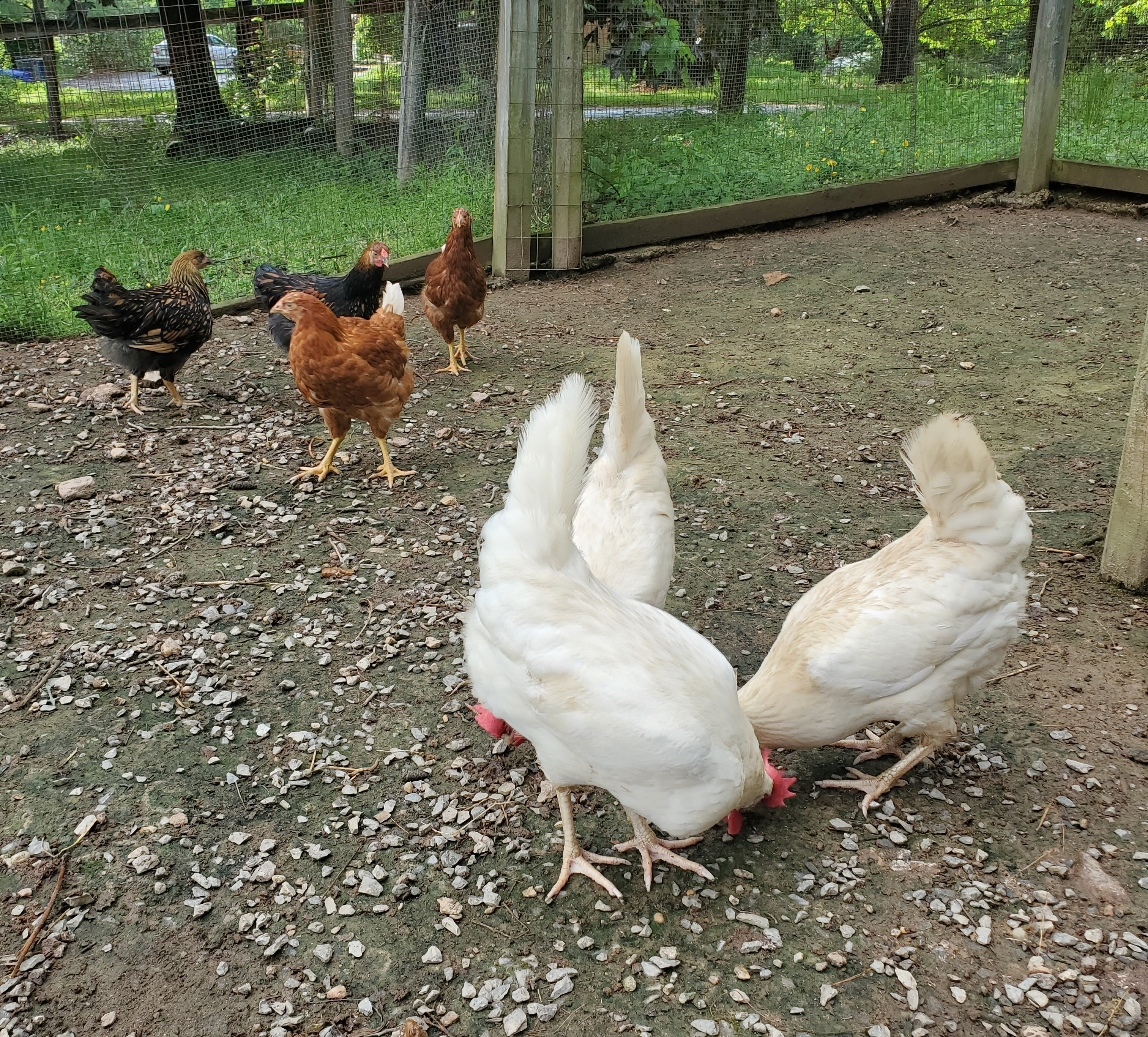
My three white leghorns, two Isa Browns, and two Gold Leaf Wyandottes. Only one Isa Brown and one Wyandotte remain.
I hope this never happens to you and I am going to do whatever I can to ensure it doesn’t happen again.
It is with a very heavy heart that I tell you we had a tragedy on the farm. I won’t go into a lot of detail. I wasn’t even home when it happened so only know second hand what took place.
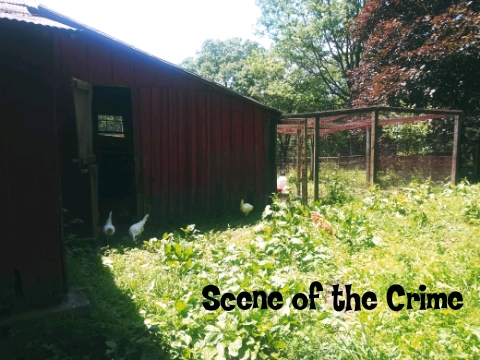
Essentially, Cactus had let the chickens out of their run to a little yard area so they could scratch and peck around. This area is right next to the coop and completely fenced except for the gate that one enters or exits through to get to the coop and run.
The chicken coop is on the left, the run is in the back and the free range yard area is right in front.
When we are going in and out, we use a big rock to hold the gate shut rather than fasten and unfasten the lock (mistake #1: lazy humans). Cactus was doing some weed wacking in the little area and at one point he stopped to take a business call and walked through the gate without properly locking it behind him (mistake #2: having to walk and talk).
While on the phone, he said he heard a scuffle and ran to the little yard area to find our schnauzer, Shume, next to a fatally injured white chicken.
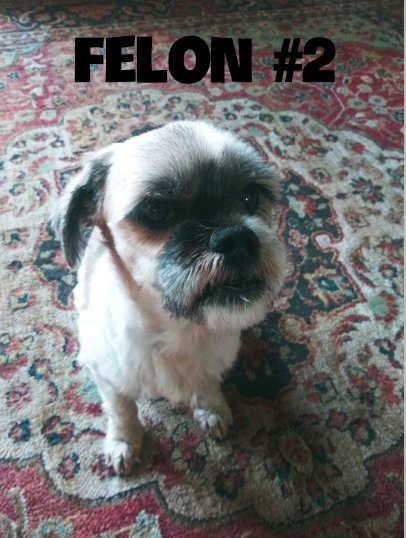
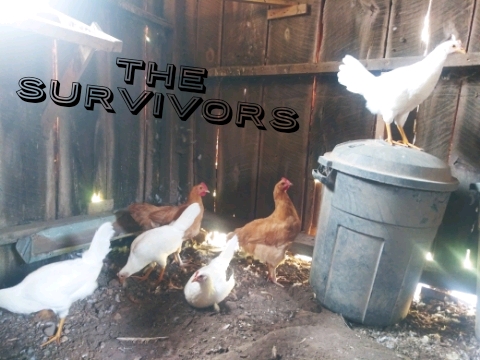
He immediately got the chickens into the coop for safety but only counted six when there should have been seven (we had a total of eight to begin with). He searched the little yard and everywhere nearby but could not find the seventh chicken. Eventually he noticed that our second dog Ozzy, a shih-tzu, was nowhere to be found. He started calling Ozzy and finally found him laying in the grass by the front of the house with a lifeless brown chicken next to him.
There are so many lessons to be learned from this event and I now know that dogs are the number one predator of backyard chickens. I never would have thought our useless little twenty pound dogs who only bark and eat and sleep were capable of anything like this.
Here are a few points to remember to save other chickens from a similar fate.
Your dogs may be loving companions and family members, but there are still thousands of years of instinctual learnings that may make them do things you never thought possible.
Chickens have pretty much no way of defending themselves from a dog, unless they can quickly get to a high enough perch.
As a human with a cerebrum, it is your job to think, plan, and perceive the dangers in a situation and protect any animal in your care.
Now, if we are visiting the chickens, which we do at least every evening after work to say hi and give them treats, we make sure the dogs are inside the house.
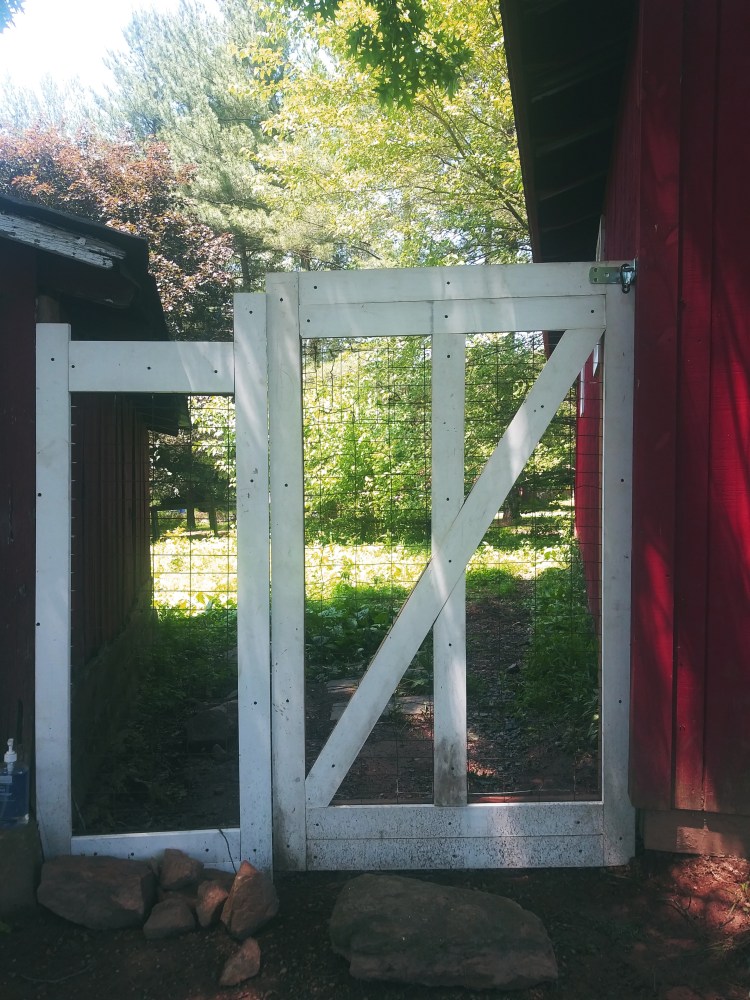
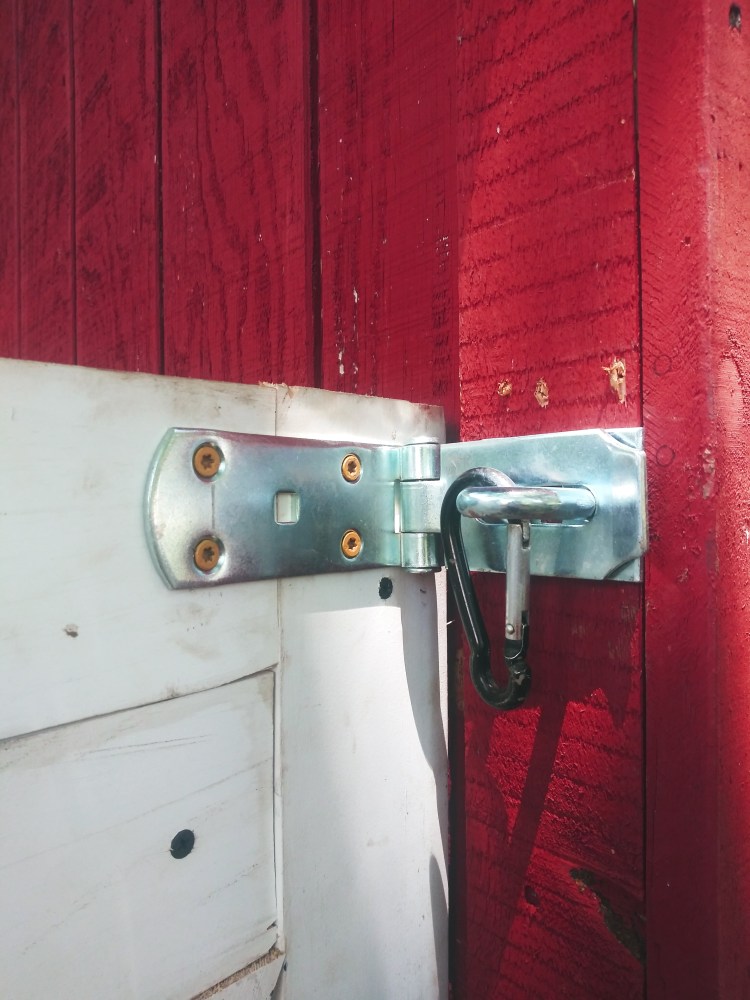
Cactus also rebuilt the gate entirely so it is much easier to lock and unlock. He did a really great job and was very upset that this happened at all. Trust me, I was not shy about pointing out that this was his fault.
This is the gate to the chicken coop and yard that Cactus re-built so it now goes completely to the ground and is easier to lock.The new and improved gate lock leading to the chicken yard
I share this to save anyone else from the same tragedy. I feel like we failed these little creatures and hope they didn’t suffer too much.




 farmcharmblog.com