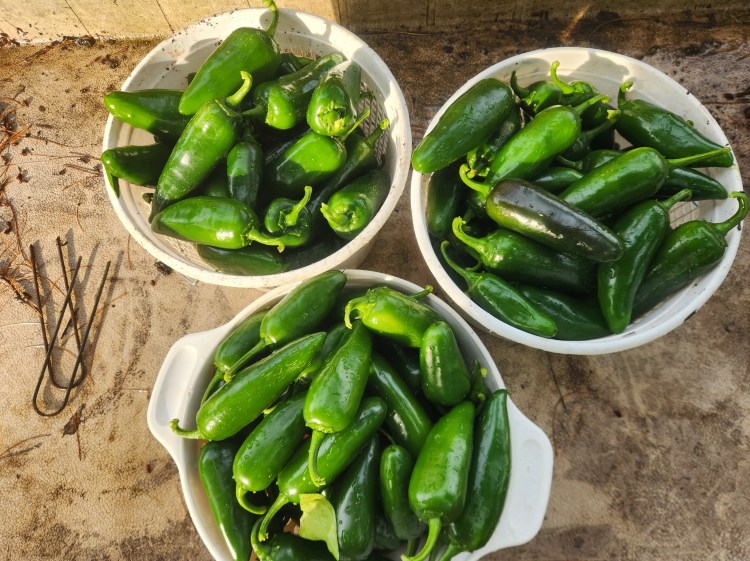
In my world, July stands for Jalapenos. And that means it’s time to Cowboy Up! Alright, hear me out before you say “I don’t like spicy foods.” I get it, you don’t need a lot of jalapenos. This is a situation where a little goes a long way.
But Jalapenos are quite versatile. I throw them on tacos, of course. Nachos and quesadillas. In my scrambled eggs with black beans and avocado. Add them to soup. Stuff them with cream cheese and roast them for a fun appetizer. We also make shakshuka for vegetarian dinners with a fresh country bread.
If you’re intimidated to try Jalapenos, start with them really thinly sliced on the diagonal. I don’t know why but they seem less potent that way.
And if you’re like me, you will become totally obsessed with Cowboy Candy. It will become your go to Friday evening munchie with your favorite adult beverage to kick off the weekend.
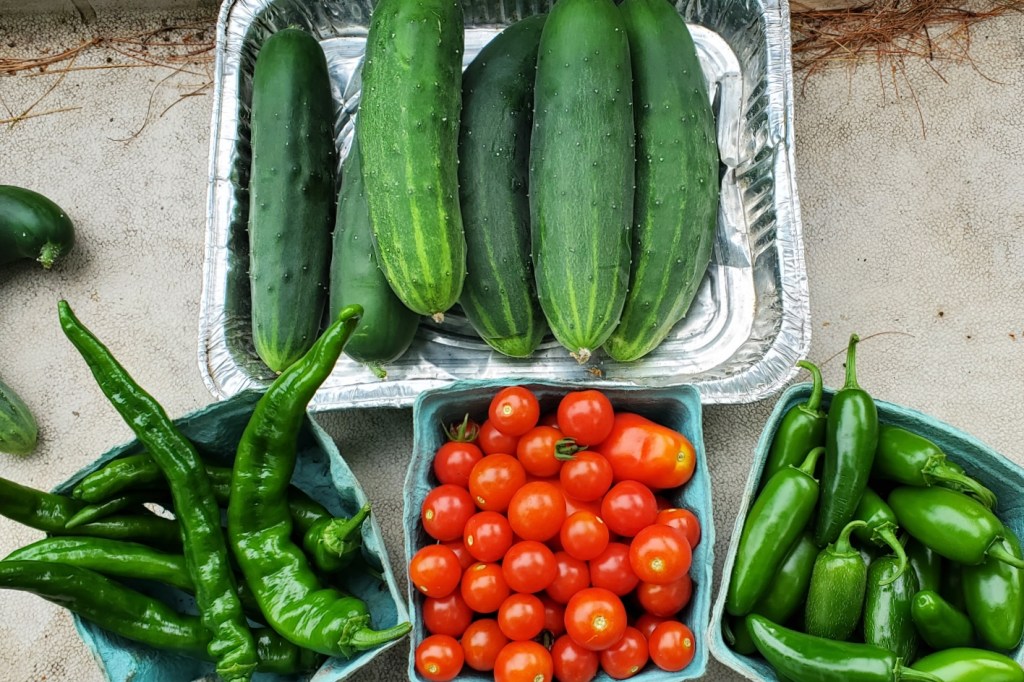
Harvest time should be in full swing for most of us. I’ve got tons of tomatoes, piles of peppers, bunches of beans, okra, onions and cucumbers. Everything feels a bit delayed this year and I’m not sure if I did everything a couple weeks later or if the weather has just been unusual.
I’ll be honest in saying that August tends to be a bit rough for me. The weather is sweltering. Mosquitoes are everywhere. My motivation is lacking. And my energy just isn’t where it was back in May.
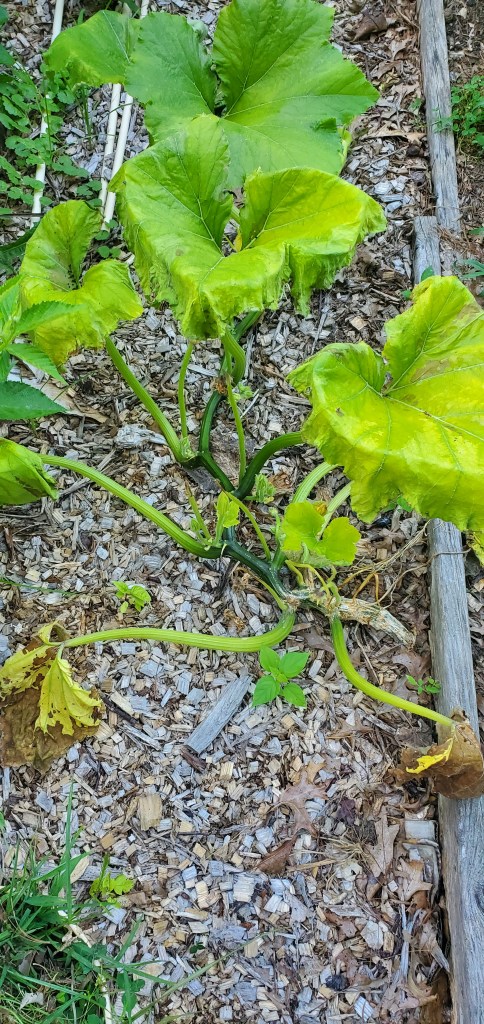
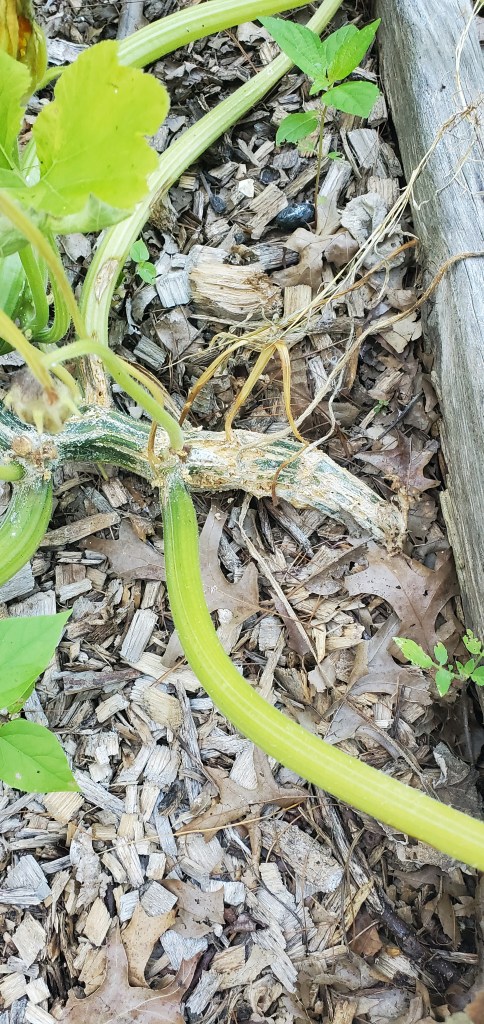
One thing that hasn’t changed is my battle with the squash vine borer. For the third year in a row, I have gotten precisely 1 zucchini before I walk out to the garden and see a sad, wilted plant, falling over and whispering “help me!” But it’s always too late. The damage has been done. It’s so frustrating!
This year I thought I was doing so well, dusting with DE around the base of the stem every 4-5 days or so and watching for signs of pests. Then Ka-POW! Could I have done more to prevent this?
I’m wondering from other more experienced gardeners when you decide a certain crop just isn’t in the cards for you or your climate? The irony is that I don’t even love zucchini. But at this point it’s become a battle of wills and I refuse to lose.
Don’t know about you, but it’s getting pretty steamy in the Mid-Atlantic. As we head into peak harvest season, that’s when I find it most challenging to get out in the garden if I don’t go first thing in the morning. Every day is pretty hot and humid (think about walking through soup and you’ll get the idea) and we get a lot of afternoon thunderstorms that are quite strong. We lost power the other day for about four hours after a storm but thankfully it came back on right around 9:30pm for bedtime.
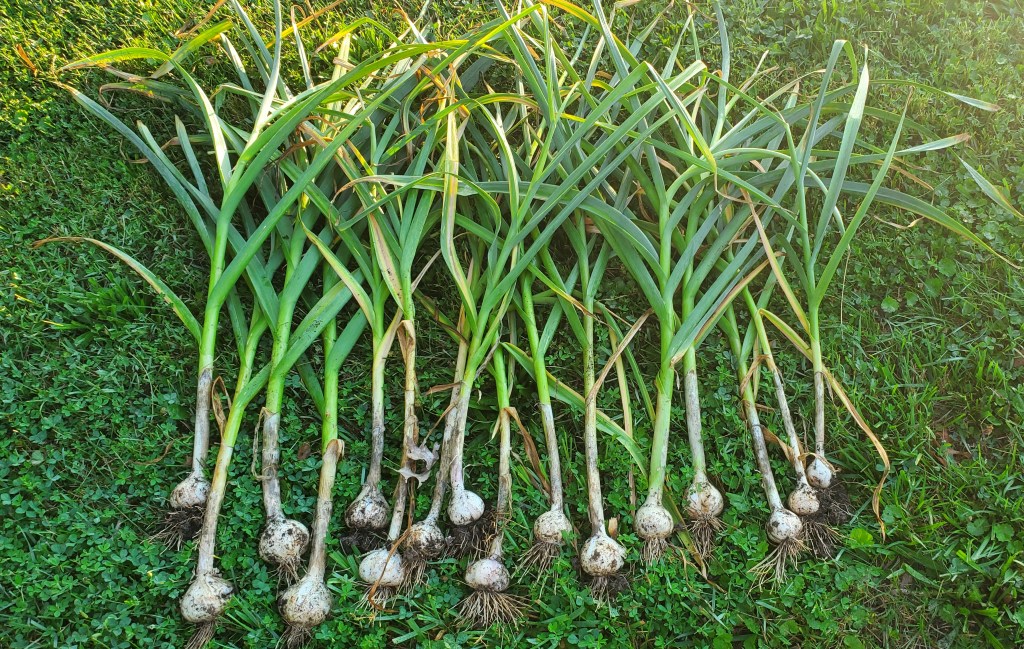
Mid- to late June is typically the time when garlic is ready to be harvested. I planted a half pound of Music Garlic in early November last year so that it would get a good 7-8 months of growing time. Last November was so mild the cloves sprouted before December so I covered them with a really thick layer of leaves and then lightly covered the bed with a layer of cardboard for the winter. I removed the cardboard in early April.
April was still pretty cold and wet so in May I started checking on the garlic every week or so. I trimmed the curly scapes that shoot up through the center so that the growth and energy would be focused toward the bulb. Then throughout June I kept checking to see when the lower layer of leaves would turn brown. That’s the sign garlic is ready to be harvested.
Garlic Harvesting Tips
When the lower layer of leaves has turned brown, pick a day or time when the soil will be relatively dry. Not right after a big rainstorm or watering.
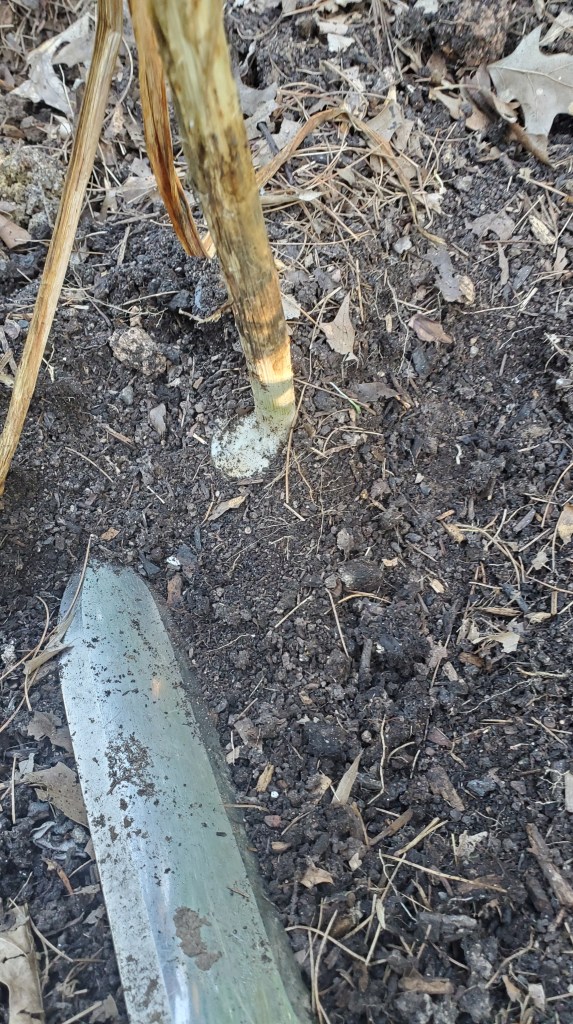
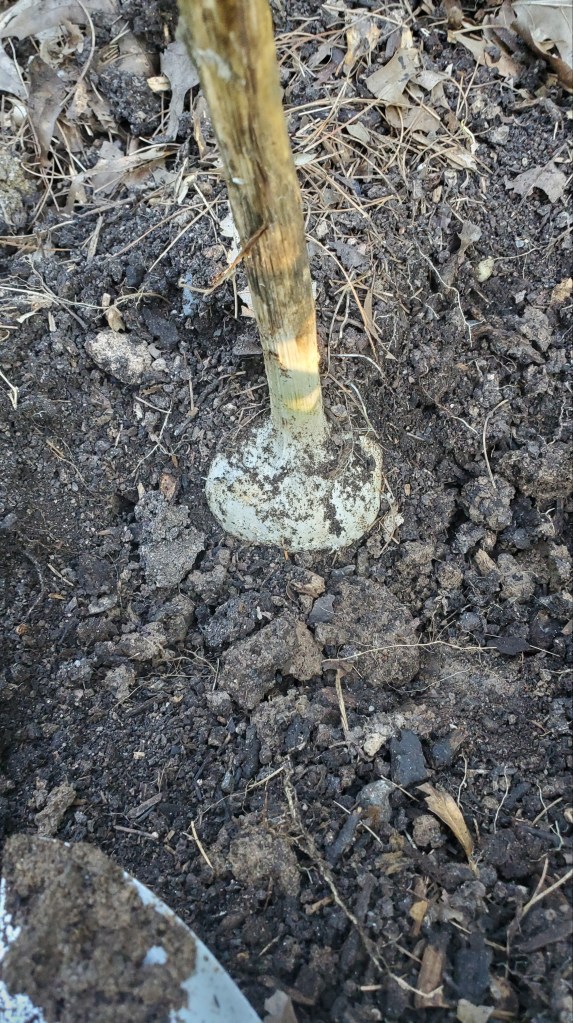
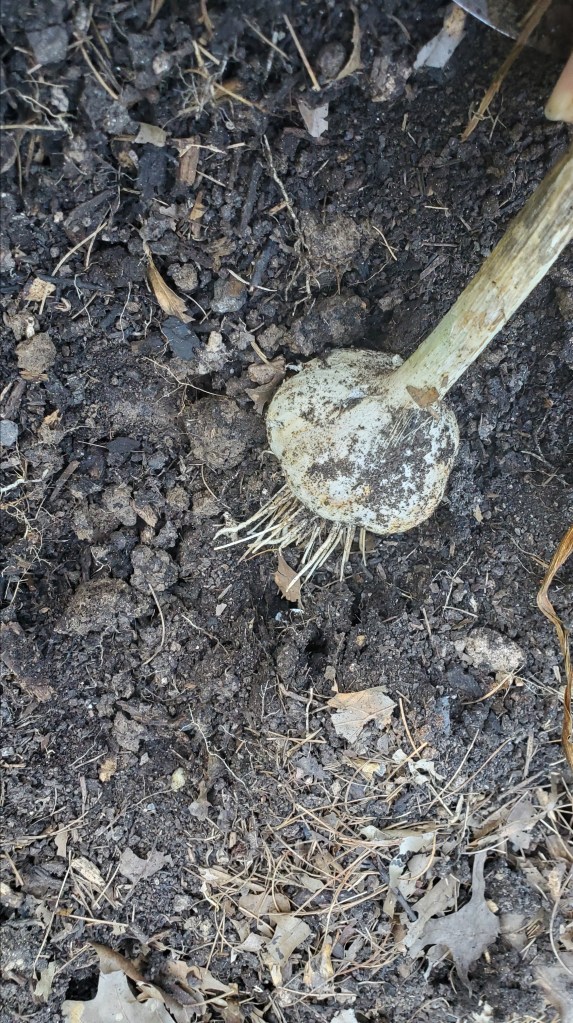
Harvest carefully using a hand shovel to dig around and loosen the roots. You DO NOT want to just grab the stalk and try to pull it out. Be careful to not pierce the bulb as that will mean you’ll need to use that bulb sooner than later and it isn’t suitable for storing.
Once you’ve dug up all your bulbs, no need to hose them down. You can just shake or brush off the extra soil.
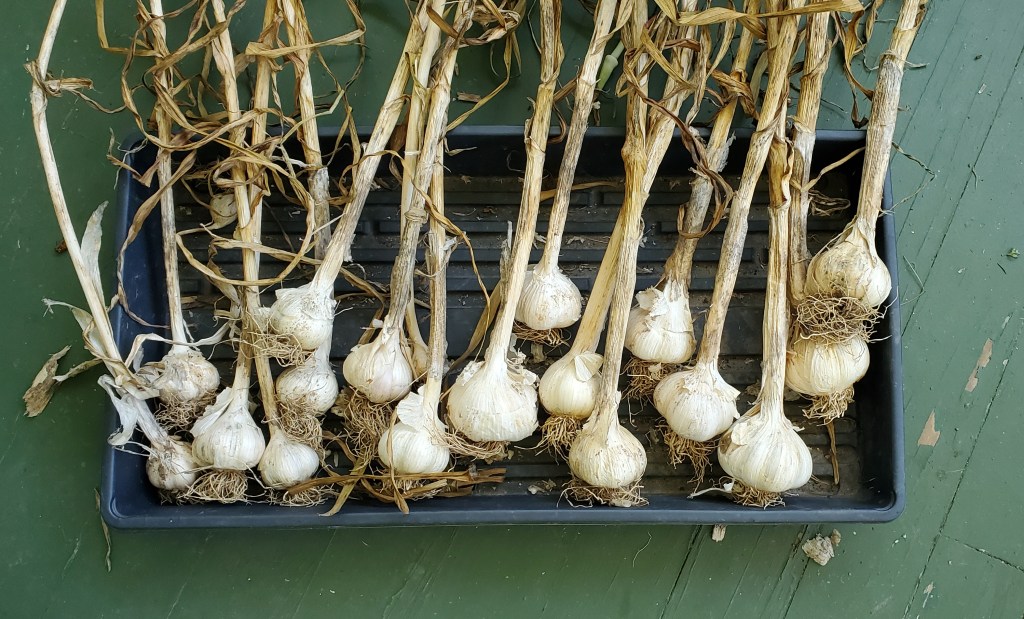
Leave your garlic in dry, shady, cool place for 3-4 weeks so it can cure. I see lots of examples of people leaving them on a picnic table or extra piece of fencing that will allow for air flow. I left mine on our front porch because it’s shaded and gets the northern exposure so it’s a bit cooler throughout the day.
After 3-4 weeks, you can trim the roots around the bottom and leave about a half inch on the neck.
Garlic should be stored in a cool location, out of direct sunlight, that gets good air flow.
Eventually, you’ll want to store enough to plant your next crop and still have enough leftover for your cooking needs for the year (which is different for every household).
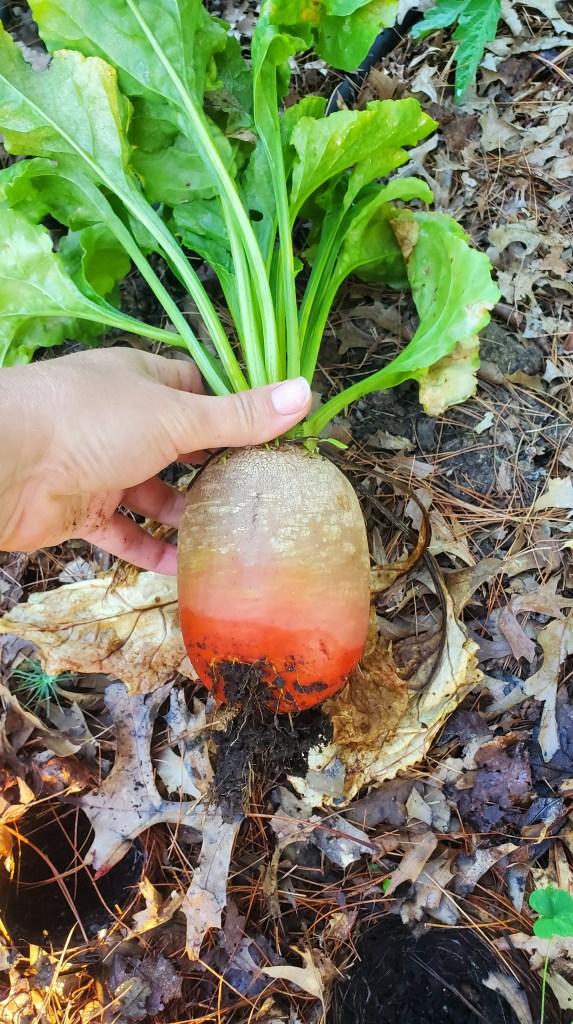
Finally, it happened to me right in front of my face and I just cannot hide it. I love that jam! If you recall, my beet crop failed miserably last Spring. I know most people are not huge fans of beets (you gotta get some rhythm, people! Oh the puns never stop), but for me this was a huge disappointment. There is not a salad I enjoy more than peppery arugula, sweet golden beets, a sprinkle of toasted pecans, some chunks of creamy goat cheese, drizzled with the easiest homemade balsamic vinaigrette (see recipe below). That’s just the perfect summer dinner with some warm, crusty French bread.
This spring, I was determined to succeed so I took a different approach and started my beets inside in early February. I did two 6-cells of golden beets and one 6-cell of ruby beets. And when I start seedlings, I always drop 2-3 seeds in a cell in a triangle formation so that I can get multiple plants.
I transplanted these in early April and should have harvested them by end of May (55-65 days usually) but I don’t know what happened. The weather kept flip flopping. We’d have 3-4 hot humid days and then a few cold days. I think I just wasn’t paying enough attention and more focused on getting my peppers and tomatoes planted. Then June came and life got busier with school getting out, planning for a vacation. La dee dah. You know the drill.
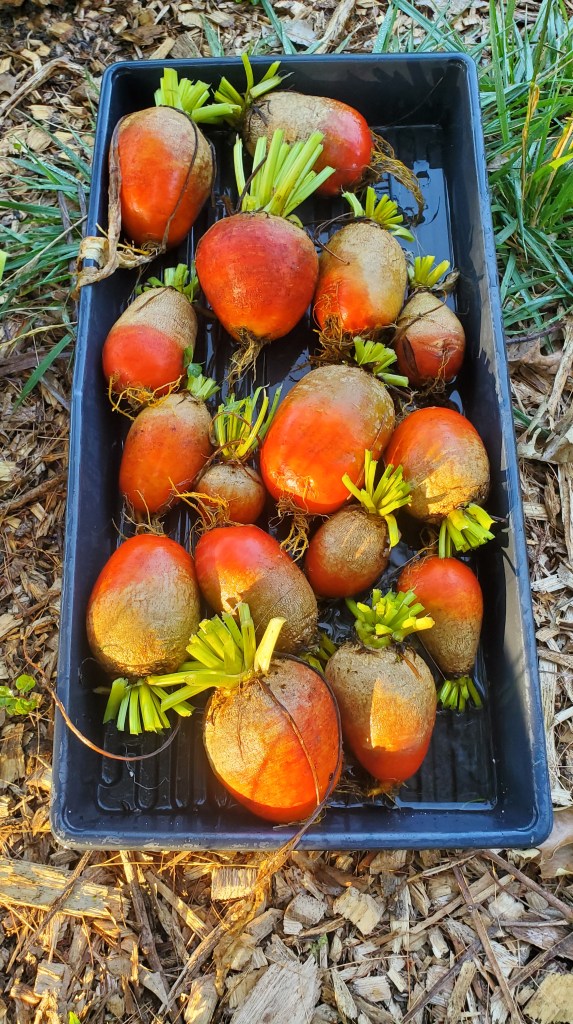
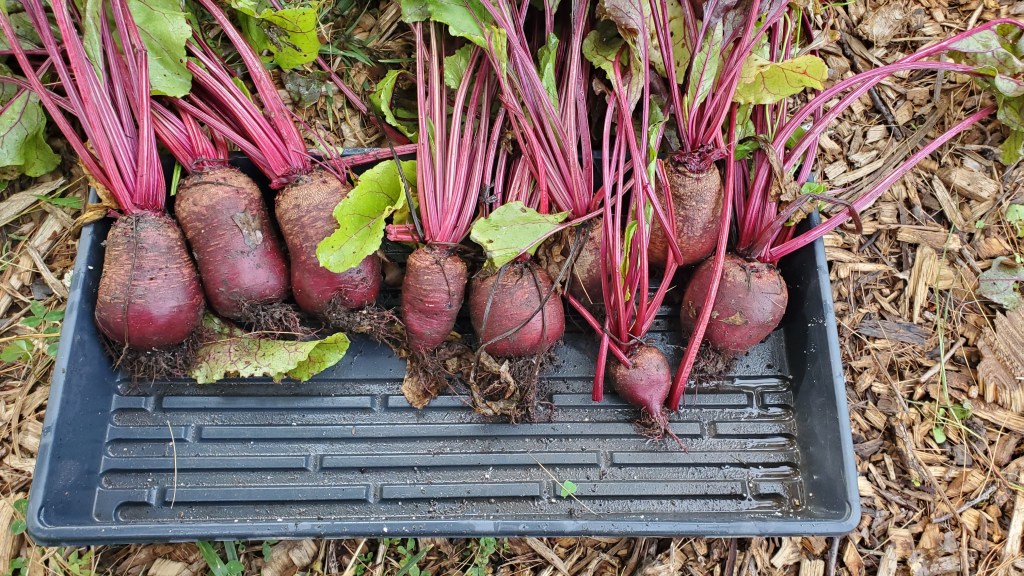
I ended up harvesting them on two consecutive days – all the golden beets one morning and all the ruby beets the next morning. I ended up with 17 of each. Never could have planned that synchronicity if I tried. I think they were all quite voluptuous and curvy.
If you’re planning on preserving, I’m sure you know you want to get them canned as quickly as possible to maintain flavor and freshness. That’s why I tend to do these things on the weekend. I’ll go out early in the morning when it’s still cool, scoop up whatever I’m harvesting, and get everything going on the stove while the house is still peaceful and quiet (as if, those words only describe my household if we aren’t home).
I followed this pickled beets recipe from the National Center for Home Food Preservation (what a mouthful!) and did a batch each morning of 8 pints. This one is super basic, so if you have a recipe you like – please share.
I don’t know why but canning always ends up being a 3-hour endeavor for me. I’m always looking for shortcuts and tips to save time while still doing it safely.
Here’s what I did:
Boil the water to cook the beets. Once boiling, add the beets and cook for 25-30 minutes.
While the beets are cooking, start heating the water for the water bath (this takes soooooo long). Simultaneously, I am heating the brine and washing my jars, lids and rings.
Once the beets are finished cooking, let them cool for about 10 minutes then remove the skins and slice them up.
Place the cut up beets in the brine for 3-5 minutes.
Last, hot pack the jars, wipe the rims, put lids on top, and screw on the rings to fingertip tight. Fingertip tight means you don’t grip it with the palm of your hand and make it crazy tight.
Finally, if I timed it right, the water bath is boiling and then I can just slide the jars right in.
Typically, my timing isn’t great because I don’t multi-task well. Instead, there ends up being a decent amount of waiting between steps, which is how this takes 3 hours of my day.
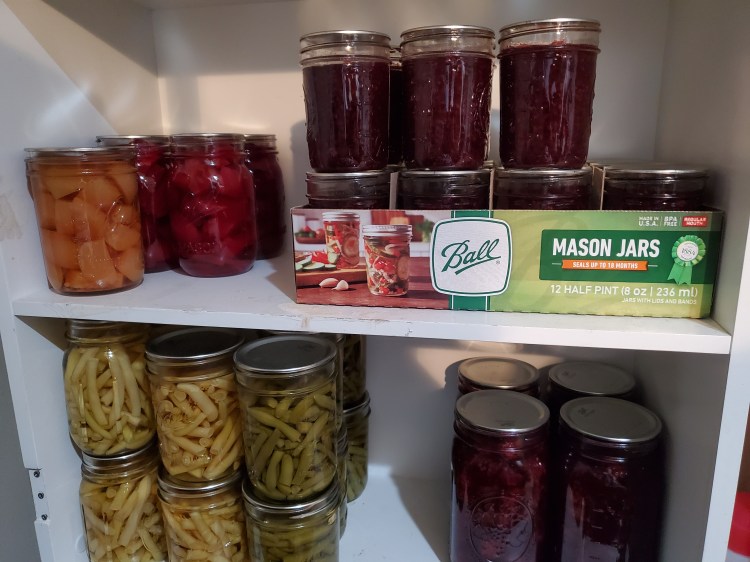
I ended up with 16 pints of gorgeous golden and ruby beets. I’m super happy with this and look forward to enjoying these this fall and winter.
Easiest Homemade Balsamic Vinaigrette
Pour equal parts extra virgin olive oil and balsamic vinegar in your dressing bottle. I usually eyeball about 3 tablespoons each.
Add a teaspooon each of dijon mustard and maple syrup.
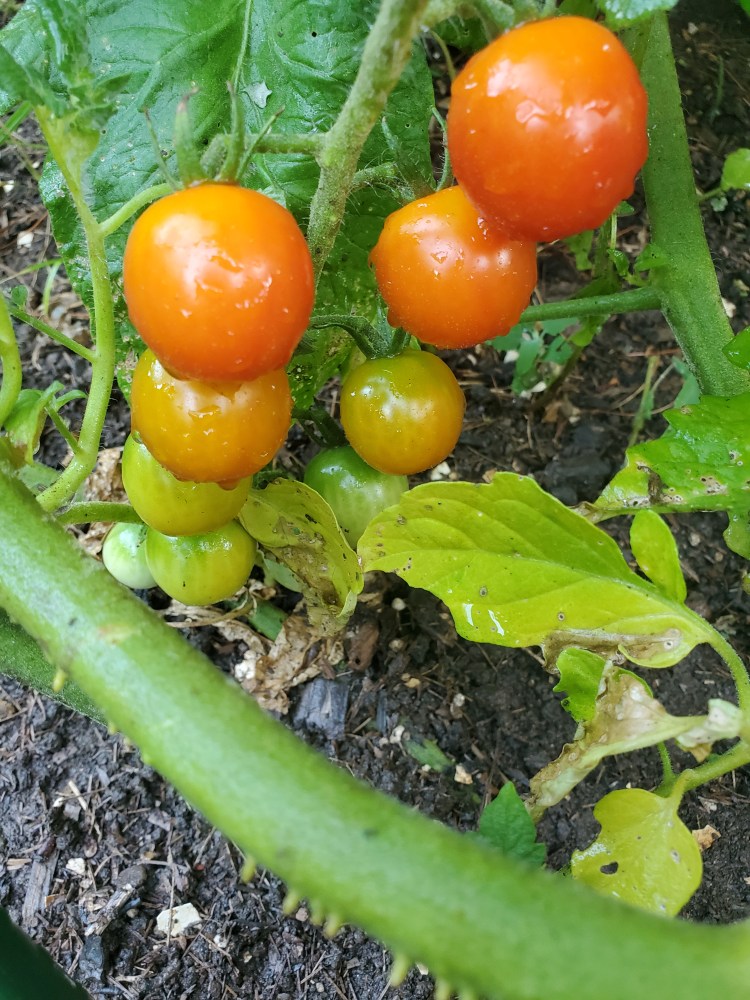
I’m not sure there is a fruit or vegetable that better illustrates the benefits of having a home garden than tomatoes. As a kid, I DID NOT like tomatoes. I thought they had no flavor and were filled with this weird juicy somewhat gooey center. Only when I had a simple cherry tomato plant in a planter on my deck some years ago did I taste the ripe, flavorful goodness that tomatoes offer.
Tomatoes, peppers and beans are my main summer crops that I grow in bulk for preserving. So it’s important that I get as big of a harvest as possible for sauces, salsas, soups and stews.
If you want to ensure a strong tomato harvest, here are the ways to set yourself up for success
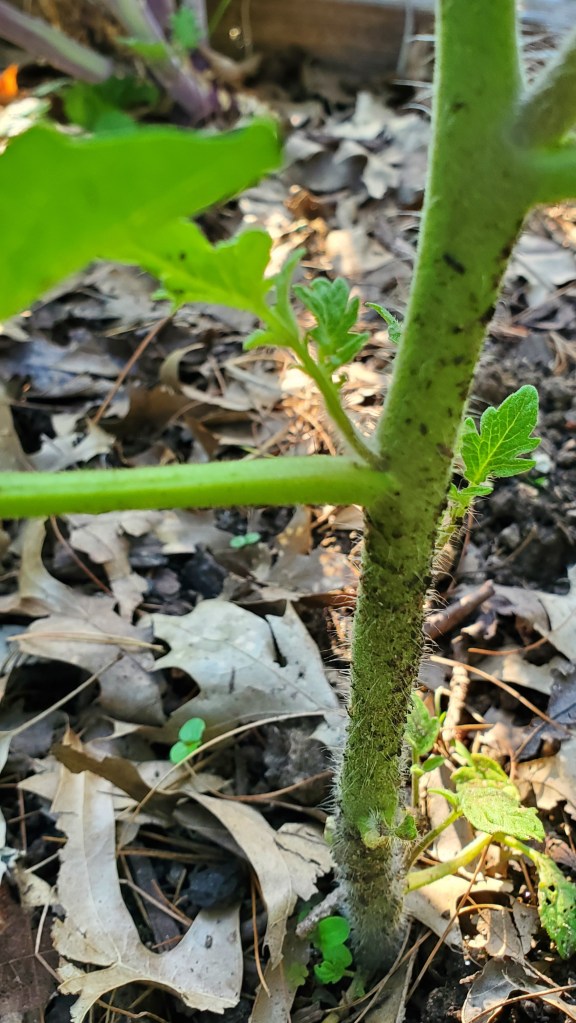
Trim all low hanging foliage. You don’t want any leaves touching the ground where they are more susceptible to soil borne diseases, like blight.
Get rid of the suckers. Suckers are the branches that grow in between the main stem and the branch. They are exactly what the name suggests – they suck extra energy and nutrients out of your plant and fruits.
Support them. I’m a big fan of clipping them to my trellis. I’ve done the cages – nope. I’ve done the A-frame and string – not for me. The clips just make so much sense and are so precise and tidy.
Water from the ground. If you don’t want to invest in soaker hoses, typically $15-20 each, make sure you are watering at the base of your tomato plants and not showering on them from above. This creates more risk of spreading disease and pathogens.
Cover your soil. Tomatoes need a lot of water and you’ll keep them better hydrated if your soil is covered. Anything like shredded leaves, pine needles, grass clippings, or straw (NOT HAY).
TRIM THOSE SUCKERSCOVER YOUR SOIL & WATER FROM THE GROUND
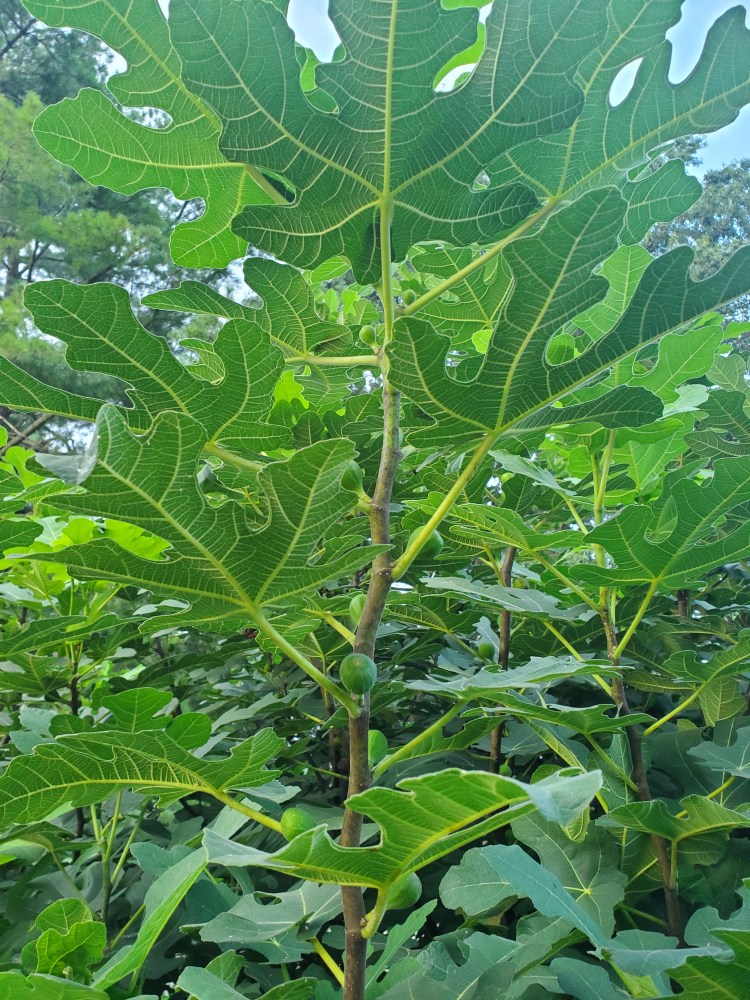
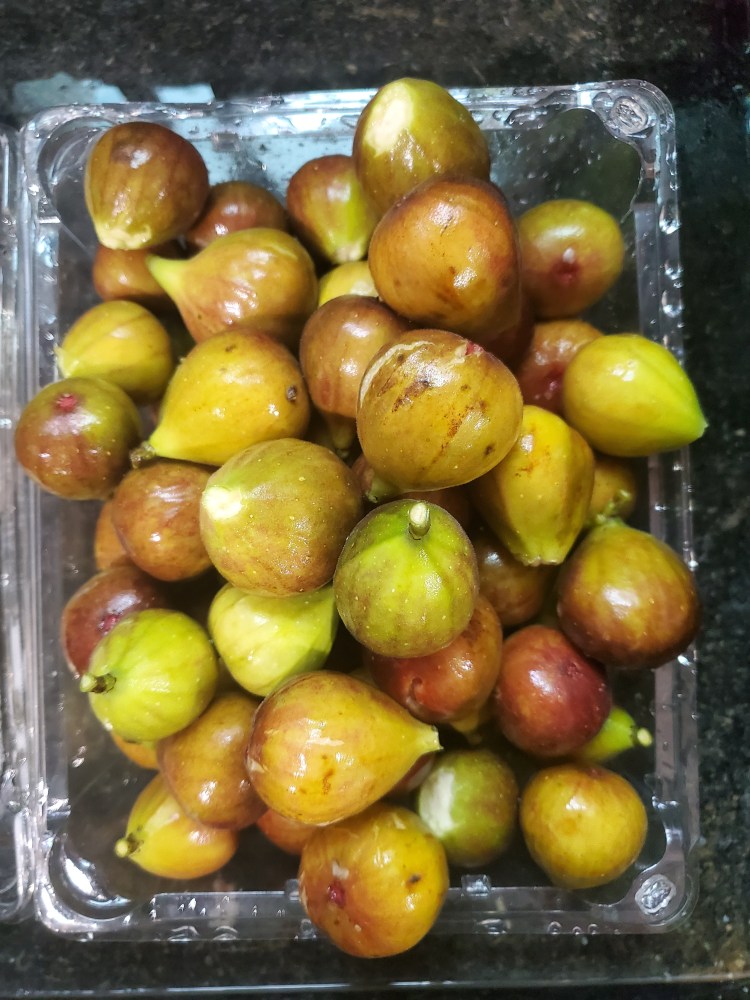
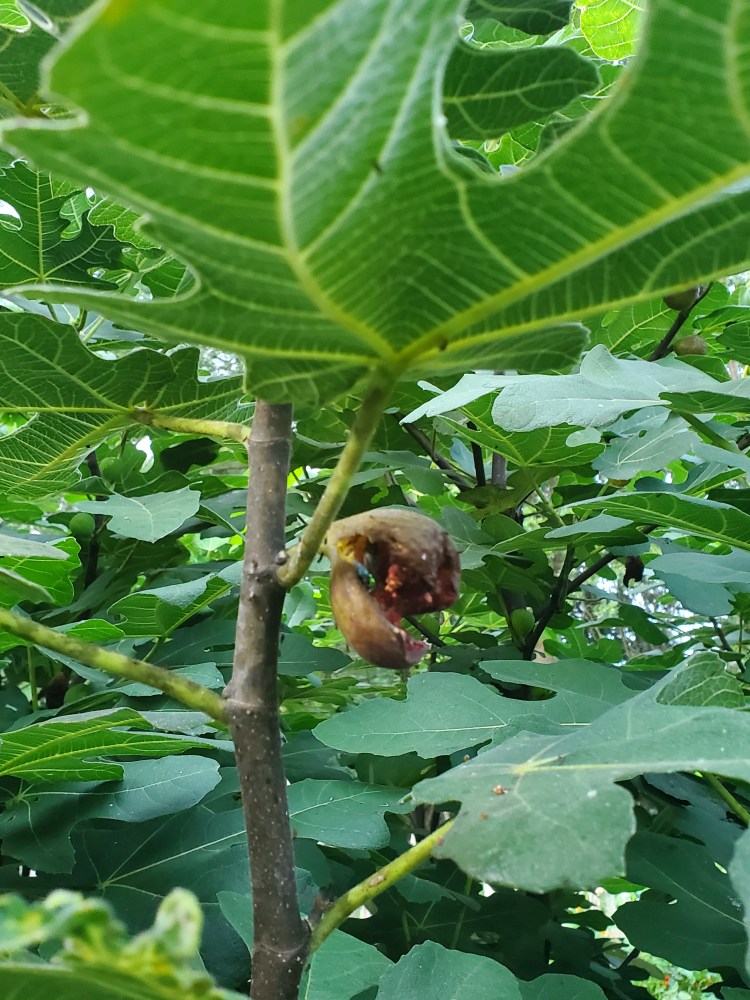
We have figs! This feels like such a momentous accomplishment. Last year, we had absolutely zero figs. We were bummed and not sure what we did wrong. I had read that fig trees can be a tad temperamental, some years great harvests and others not so much. The two main factors I researched that we had control over and thus attempted to solve for were the following.
Figs like warm climates. In the mid-Atlantic we can have some pretty cold winters with lots of snow and ice. This past winter, however, was very moderate, and I’m guessing this worked in our favor. We also did our part to insulate the roots with lots of mulch, grass clippings and leaves last November. I also read that you can bend the branches down to the ground and then cover them with a tarp to keep them protected during the winter but we did not do that.
Clear out the dead wood. We did not properly prune the dead branches the first winter we lived here and I think that contributed to lack of growth last summer. We also have some pretty invasive weeds that completely choked our raspberries this summer so they needed to be hacked back quite significantly around the base of the fig trees.
One thing I’m curious about is the number of bursting figs that are on the branches. This is interesting to me because I had so many ‘bursting’ tomatoes this summer and was wondering if it’s also due to an excess of moisture.
In any case, the figs are absolutely delicious and we have more than we can eat. I was thinking about making a fig jam but just haven’t had the time. Isn’t that always the case…
Life has been pushing me. I’m literally looking up at the sky saying, What next?!? Aside from getting punched in the stomach and throat with life-altering news last month, the chicken drama has continued (let me repeat: NEVER buy chickens on craigslist), and the stand-alone freezer in our mud room stopped working, in addition to the freezer of our fridge not cooling properly. Is it wrong that I’m having fantasies of walking away from an explosion in slow motion (a la every action movie ever) with some dirt on my face, my biceps bulging, wearing ripped jeans? I seriously want to light a match to my life right now (not literally of course).
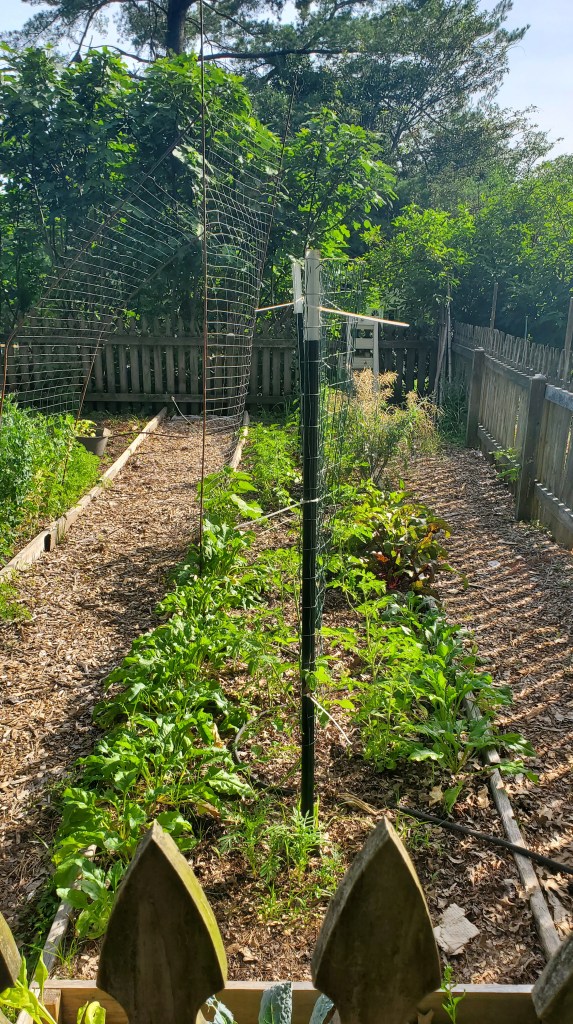
To cope I’ve been doing the time-tested approach of denial distraction. Staying as busy as I can in this sweltering heat. Out in the garden most mornings – weeding, pruning, watering and picking. I’ve said this before but the major positive of staying at home is more time in the garden (and, errr, with my family of course ;).
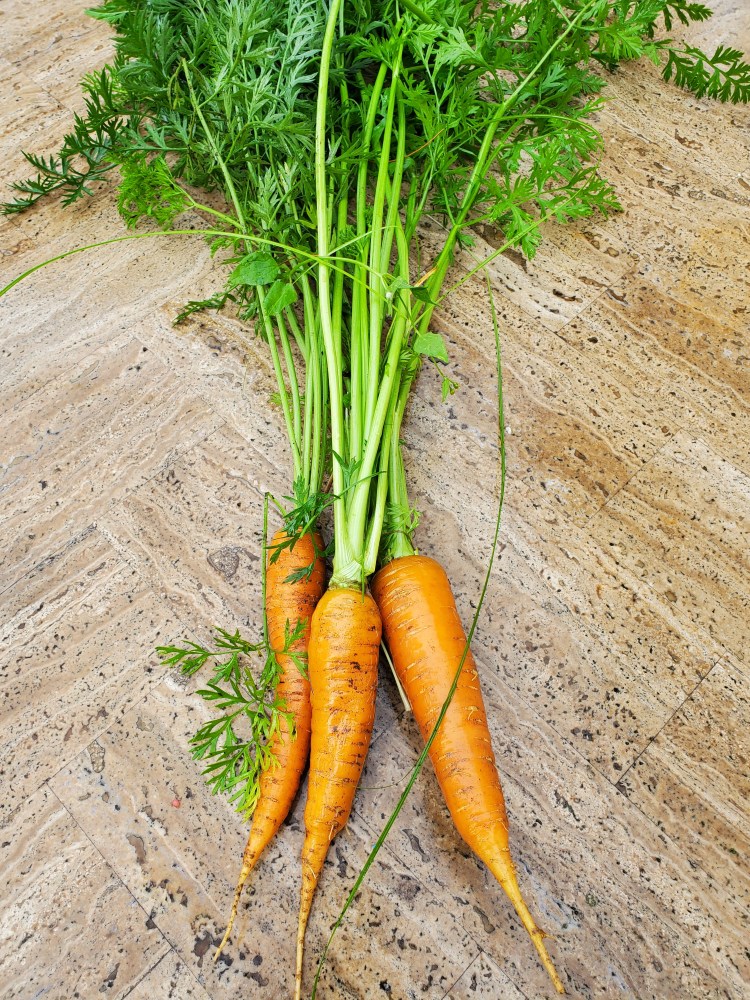
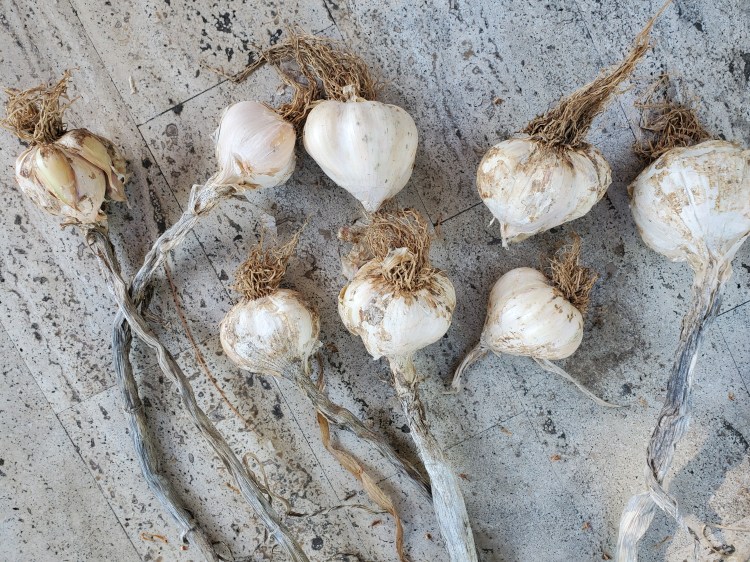
Here’s what my summer harvest is showing: carrots are cranking, green and wax beans are all over the place (must trellis these differently), two ginormous zucchinis and nothing more from that plant which feels like I did something wrong, the garlic I never knew I planted all fell over so I knew it was time to pull them and I got about 8 decent bulbs. And the blackberries just won’t stop. Japanese beetles ravaged my green beans last year and this year they are all over the berries.
Lettuce is pretty much down for now (I’ll wait until it cools off to plant more) and all my tomatoes are on the way, just starting to eat a few cherry ones (seems late). My corn is looking good, my butternut squash plant has at least 10 growing, but my cucumbers are not really producing. I also have three surprise pumpkins that are clearly an accident (must have come from the compost).
I’ve made some attempts at preserving as well. Let me tell you, the first run of the pressure cooker was such an ordeal. It’s not complicated or even difficult, I think I just psyched myself about all the ways I could mess up. Eventually, two and a half hours later, I had 6 pints of green beans. Wahoo – small wins! I’ll do a post soon on “the more you know.” My main question is will any of this stuff taste good? I could do like 40 pints that aren’t tasty and then what? Trial and error I guess
Well, I’ll be keeping going and I’m sure you will too. Things will get better and it reminds me of the scene from one of my favorite films from teenage-hood Good Will Hunting. Robin Williams and Matt Damon (call me!) are talking during one of their sessions and Robin says “You’ll have bad times, which wake you up to the good stuff you weren’t paying attention to.” I guess it was my time to get woke.







 farmcharmblog.com