
Make the Most of your Seed Starts
It seems winter is finally bidding us farewell. The flowers have all broken through and each morning is a lovely serenade of birds singing. And the daylight, oh the daylight. It feels like the winter cocoon of darkness is molting away.
My pepper and tomato seedlings are going strong. Also, many of my flowers starts are doing quite well. About this time, thinning becomes essential so that a stronger plant can emerge. If you have too many plants on top of each other, they are competing for space, nutrients, and light. But it’s always painful to just snip away what are perfectly fine growing plants. And if you are anything like me, you were perhaps a bit heavy handed in sprinkling seeds and have as many as 3-4 solid seedlings in a cell. Oh the gardener’s dilemma – to cut or not to cut?
Instead, this year I am taking a slightly different approach for two reasons. 1) I don’t always know exactly how many plants I’ll have room for out in the garden. I have a pretty close estimate but it’s not perfect. 2) There could always be an unfortunate event between now and transplanting them outside that means I lose a few plants.
I would be kicking myself if I “overly thinned” my plants and then needed a few extra later on. Best case scenario – I have a few extra seedlings that I don’t have room for and can give away to a friend or neighbor. Who wouldn’t be pumped about that?
Here’s how I recommend getting the most out of your seedling starts.
- Examine your plants to determine how many seem strong and healthy.
- Look to see if any are noticeably set apart. Pro Tip: when starting seedlings back in February and March, drop 3 to 4 seeds in each cell but not right on top of each other. Place them in the three points of a triangle or four points of a square.
- When you can see an obvious break or separation between plants, that’s your opportunity to gently wiggle them apart. Be patient with this and be willing to stop if the roots are too entwined which could jeopardize all your plants. It’s not worth it.
- Place your newly separated starts into different containers so they can keep growing.
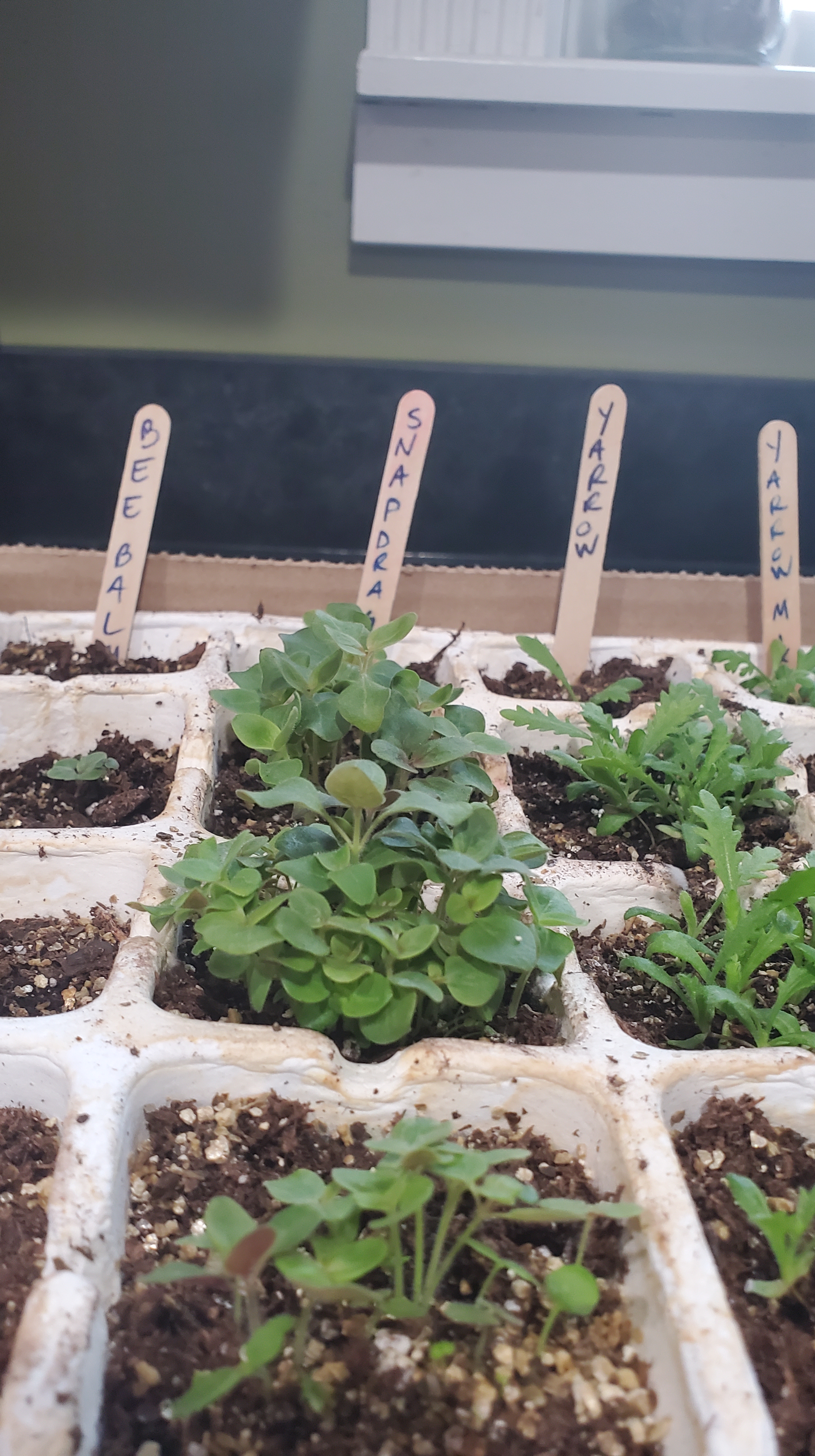
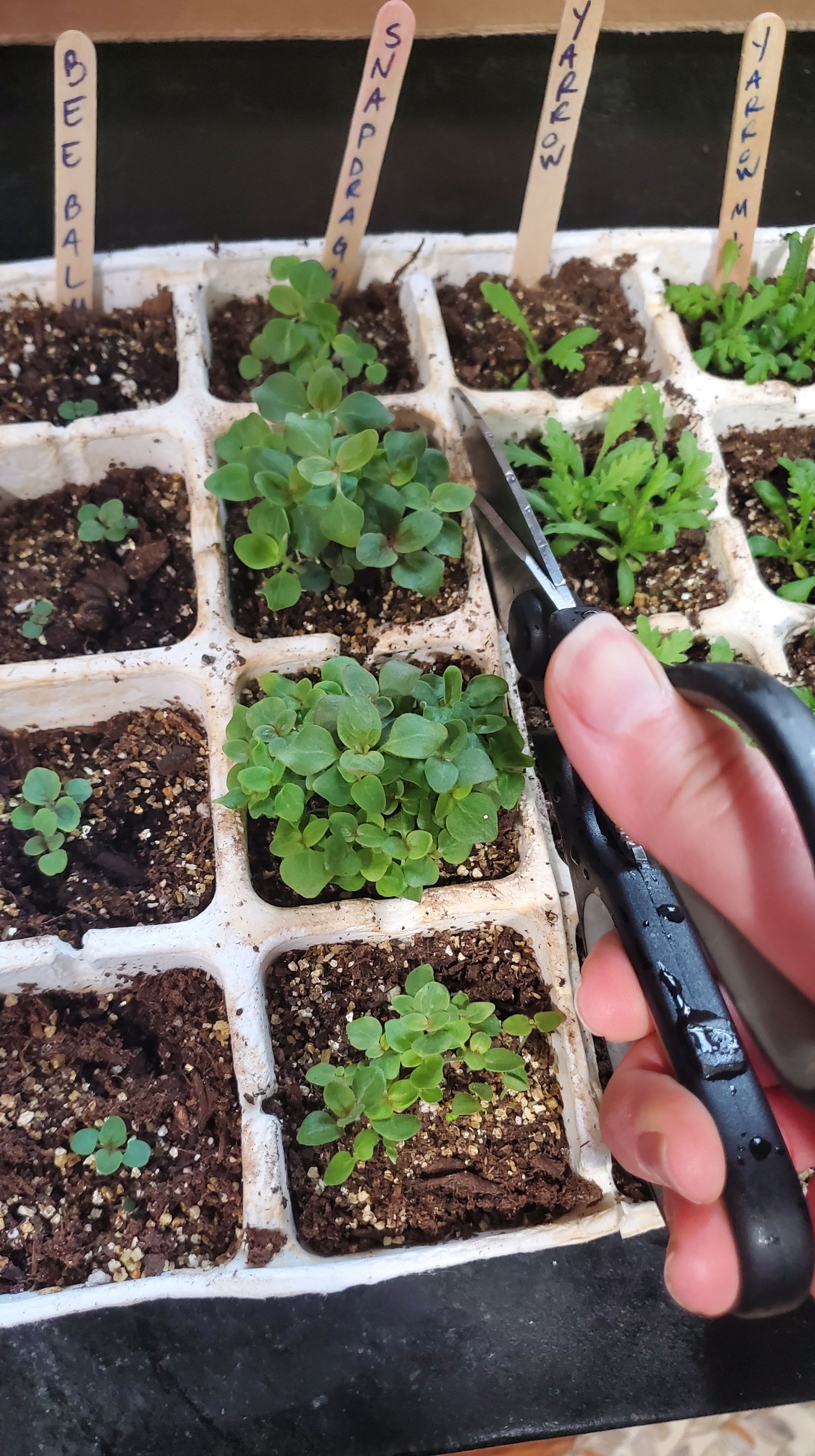
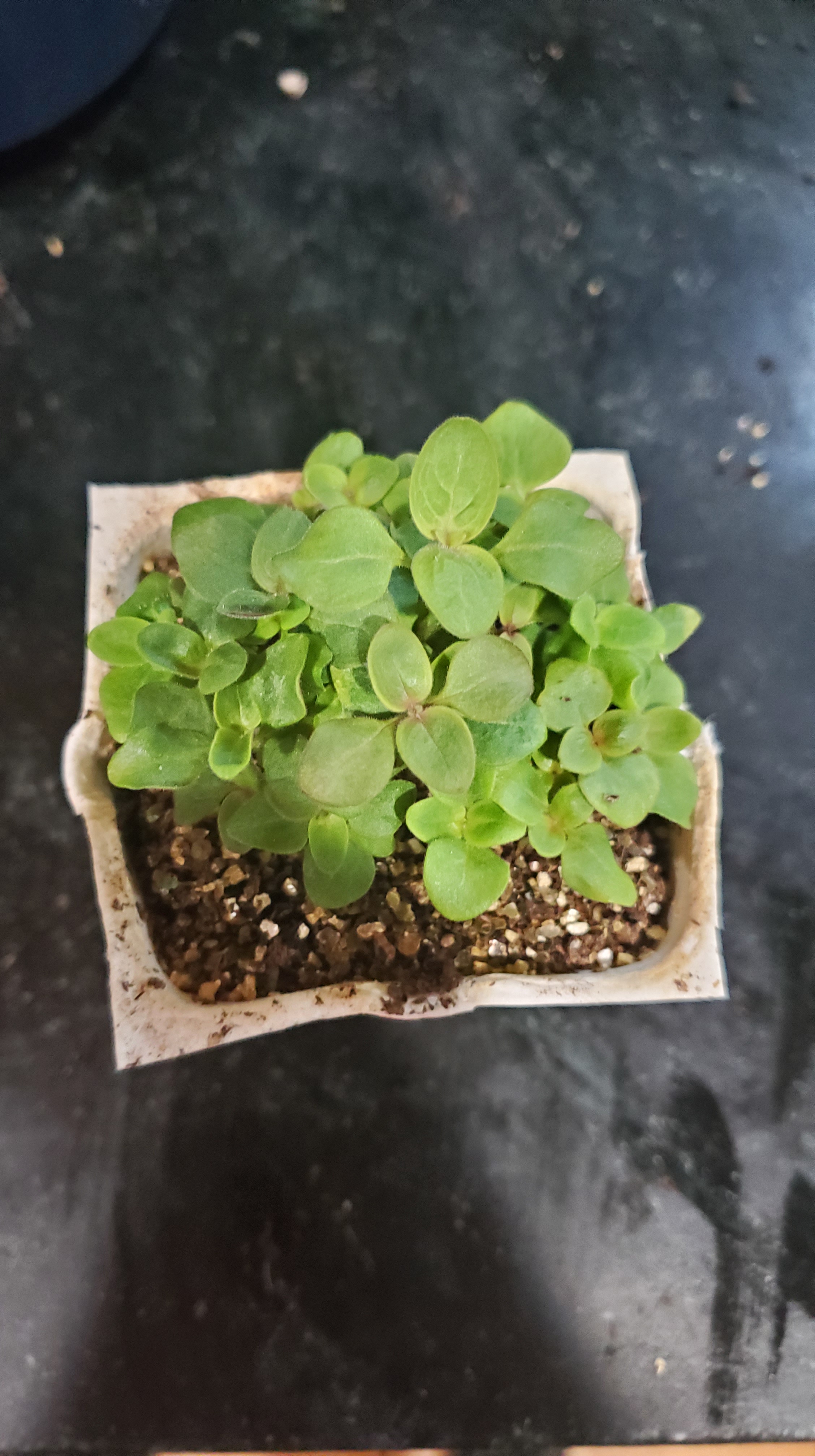
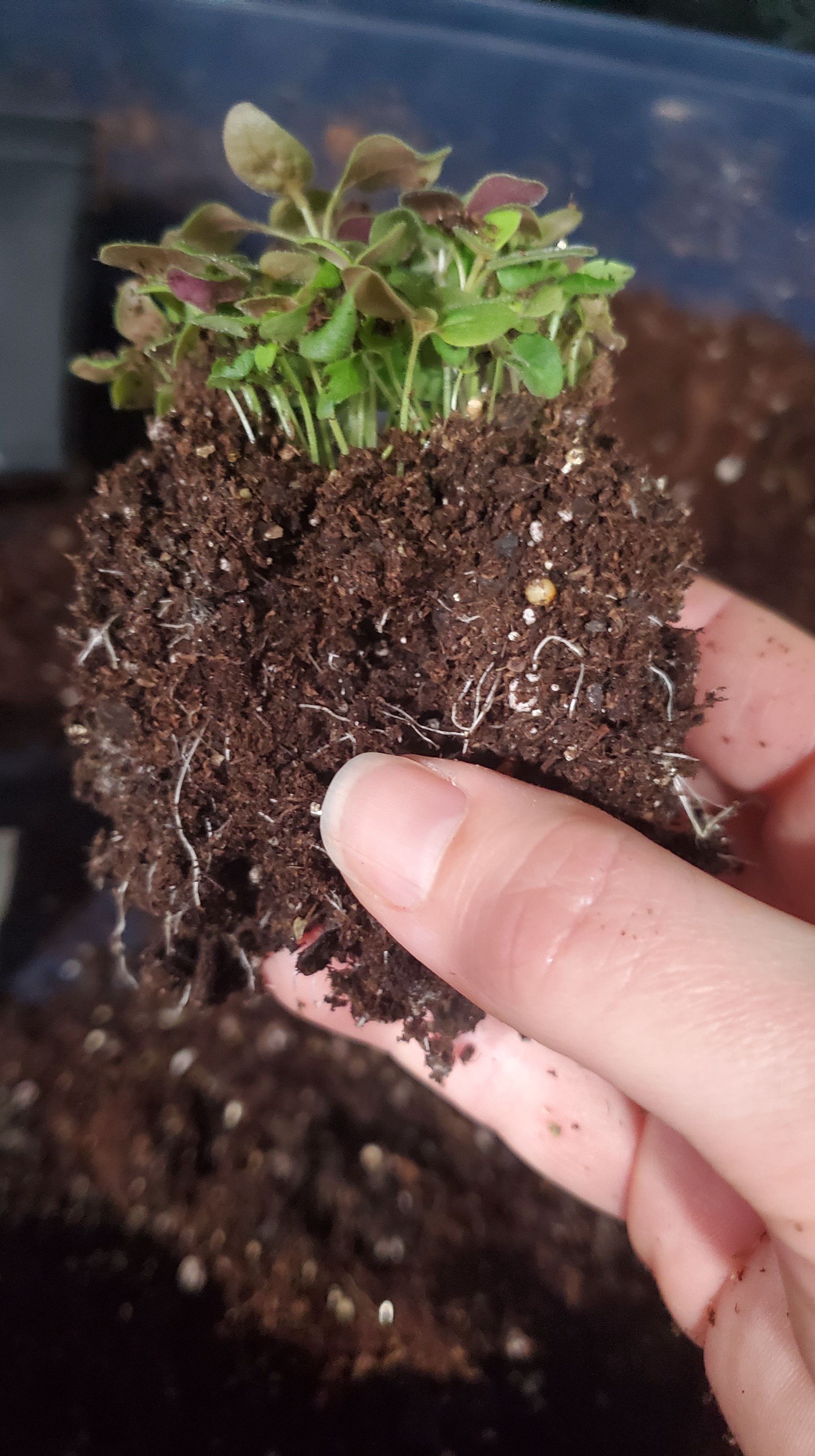

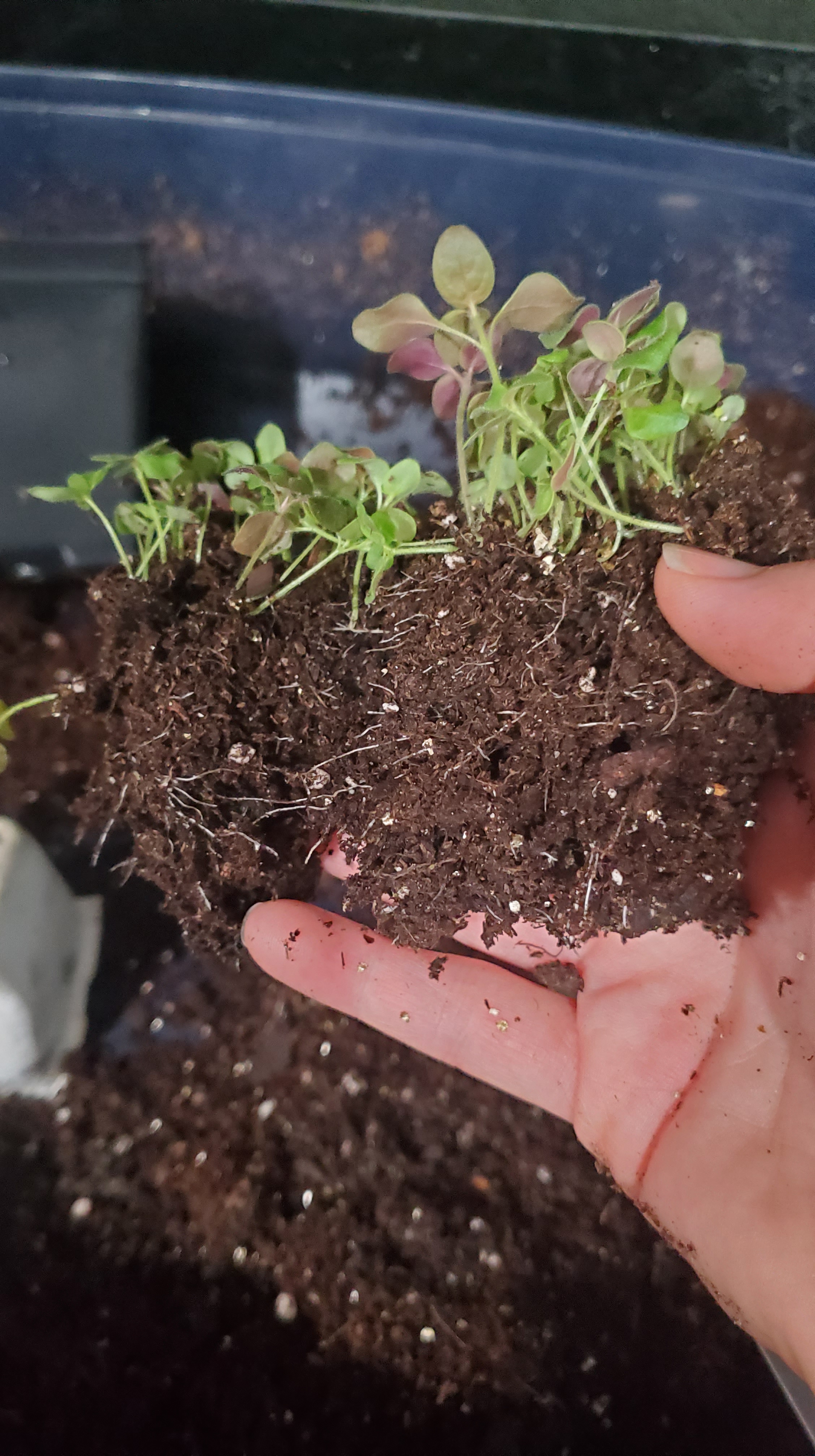
Above I separated my snapdragon seedlings and will do the same for my tomatoes and peppers. How did this go for you?
 farmcharmblog.com